Reptile & Amphibian Forums

Welcome to kingsnake.com's message board system. Here you may share and discuss information with others about your favorite reptile and amphibian related topics such as care and feeding, caging requirements, permits and licenses, and more. Launched in 1997, the kingsnake.com message board system is one of the oldest and largest systems on the internet.

Click here to visit Classifieds
Click for 65% off Shipping with Reptiles 2 You
Click to visit DM Exotics

Deformities and such!

mklmachines Sep 21, 2007 01:18 PM

I am curios as to what people's opinions are on what causes kinks, deformities and so forth? Is it incubation techniques, genetics in the parents?

Reason I am asking is because I had a clutch of five hatch, out of five two were perfectly fine. The other three: one's body was fused and the other two have kinked spines but seem to be ok.

Funny thing is I bred 2 females this year and used the same male on both, the other clutch hatched out perfectly fine. I used the same incubation techniques on both and same temperatures. 78-80 degrees hatched out around same time 68-70 days.
I am thinking that maybe it's the one female that has messed up genetics.
thanks,

Replies (58)

lbenton Sep 21, 2007 02:42 PM

Lots of environmental factors can mess things up.

Tom Anderson Sep 21, 2007 02:46 PM

I think there may be several causes. I think genetics can play a large roll.

We have a female generic alterna that's been bred with 4 different males and has produced at least 25% kinked babies with every clutch.

On the other hand, we've only produced one kinked baby from all other pairings with other females.

Tom

Aaron Sep 21, 2007 08:21 PM

I am starting to really doubt genetics is at fault. Graybands are probably one of the least inbred kinds of reptiles out there, yet they seem to have the most problems with fertility, deformities, hatch rate, etc. I think it has got to be nutritional and environmental in most cases.

swwit Sep 22, 2007 10:26 AM

>>I am starting to really doubt genetics is at fault. Graybands are probably one of the least inbred kinds of reptiles out there, yet they seem to have the most problems with fertility, deformities, hatch rate, etc. I think it has got to be nutritional and environmental in most cases.

I've had this happen to some babies over the years. What i've noticed with mine is that these deformaties were from the eggs at the bottom most part of the clutch. I've never seen it from the eggs on top or the eggs I got to in time to seperate. Since them I've keept the vermiculite/pearlite a little drier but increased the humidity in the air. So far so good.

-----
Steve W.

mklmachines Sep 22, 2007 01:38 PM

Thanks for all the input so far, I guess I will have to wait until next year to really find out if its the one female or my incubating methods and husbandry techniques. In my case it doesn't make sense: 2 females bred to the same male, one clutch of 3 perfectly fine and normal, the other clutch of 5 two were normal and the other three kink and fused. I used same feeding regiments and incubation for all of my snakes. I also hatched out 2 clutches of pyros, 1 cal kings, 1 splendida, 2 or corns, and like five nelsons clutches. None of those were kinked.

Tom Anderson Sep 23, 2007 07:32 PM

We also breed a variety of captive bred and raised kingsnakes and only have one female that throws kinked babies. All the snakes are fed the same diet and all the eggs are incubated in the same manner. I am convinced that in her case it is not incubation or diet. We've repeated the same results 4 years in a row. There's something wrong with the female, whether it's genetic or not, I am not sure.

Tom

bobassetto Sep 24, 2007 12:15 AM

BAD OVA!!!!!

bobassetto Sep 23, 2007 12:50 PM

how would moisture cause deformities???....

lbenton Sep 24, 2007 01:25 PM

Alterna are a dry climate animal and it would make sense that their eggs are designed to draw in as much moisture as possible. Now when you bury that egg in something damp they will pull in the water and swell up. This is not natural at all and that internal pressure, electrolyte imbalance, and who knows what other bio-chemical crap can not be good for the developing embryo. You can end up with fused, kinked, or bubble headed hatchlings.

Now I am not claiming to know that this in fact "the" cause of deformities and dead in the egg alterna, but I put it real high on my personal suspect list. I think a little dimple in the egg is not a bad sign at all..

Lance

bobassetto Sep 24, 2007 02:03 PM

good thoughts.....its nice to know there are real thinkers in our group....

Sighthunter Sep 24, 2007 05:58 PM

You are thinking one dimentional. They are underground most of their lives! A few feet underground the temp is around 60F and spmewhat damp so I urge you to think again. Funny they are found after and during rain storms. Eggs can dimple mut mine never do and I hatch the real hot dry types.


Image
-----
"Life without risk is to merely exist."

swwit Sep 24, 2007 06:38 PM

>>You are thinking one dimentional. They are underground most of their lives! A few feet underground the temp is around 60F and spmewhat damp so I urge you to think again.
-----
Steve W.

swwit Sep 24, 2007 06:40 PM

>>You are thinking one dimentional. They are underground most of their lives! A few feet underground the temp is around 60F and spmewhat damp so I urge you to think again. Funny they are found after and during rain storms. Eggs can dimple mut mine never do and I hatch the real hot dry types.
>>
>>
>>
>>
>>
>>
>>
>>-----
>>"Life without risk is to merely exist."

The temps are most likely quite a bit higher than that. Has anyone actually been able to get a reading? I doubt it.
-----
Steve W.

Tom Anderson Sep 24, 2007 08:28 PM

Steve,

I did a (very) little research on google when I posted about incubation in the wild a couple weeks back. The temperature in caves around the world equals the average air temp above ground. So you can add the average temperature day by day 365 days and divide by 365. I did it for Del Rio because that's the data I found. Del Rio should have a cave temperatures of 70°F and Loma Alta slightly cooler. I think North and higher altitude locations would be cooler too. I don't have a clue about humidity in a semi-desert cave. It seems like it would vary depending on how close you were to the water table or underground aquifers.

Tom

Sighthunter Sep 25, 2007 03:34 PM

A small hole that goes four feet underground four feet that is backfilled with substrate will be 54F. The average temprature of a wine cellar that is built four feet under the surface of the ground is 54F. A cave and a small hole are not a good compairison. I watch my snakes plug small holes all the time as do rodents even spiders. Think 3D
-----
"Life without risk is to merely exist."

Aaron Sep 25, 2007 06:59 PM

I read an thing about this underground warehouse Safeway(grocery company) built in Kansas. They built it in limestone and it's approxiamately a constant 55 f. It saves them alot of money on refrigeration.

Sighthunter Sep 25, 2007 07:03 PM

Yes they are close to where I live. There are also salt mines in Missouri that they use to store turkeys, Hmmm underground salt! I just give myself other things to think about, (Salt, Dry?) LOL
-----
"Life without risk is to merely exist."

Tom Anderson Sep 25, 2007 09:24 PM

Would you please stop the "Think 3D" stuff? It's not inspiring, and rather insulting. Besides, I prefer to think logically.

A 4 foot hole on in North Dakota will be cooler than a 4 foot hole in Death Valley. The temperature of a cave is directly proportional to the average annual temperature above ground. Kansas is cooler than Del Rio. The average annual temperature in Kansas is around 55°. Kansas is not alterna country.

Here's a Texas splunking site with reference to cave temperature:
http://www.utgrotto.org/newcaver/faq.asp
Another reference to cave temperature in TX:
http://www.acoolcave.com/cave-ecology.html

Both of these references are very close to the result of the calculation I made using historical temperature data for Del Rio.

Tom Anderson

Sighthunter Sep 26, 2007 05:42 AM

>Would you please stop the "Think 3D" stuff? It's not >inspiring, and rather insulting. Besides, I prefer to think >logically.

My suggestion was based on long standing problems that still have not been solved by most so where is logic in your thinking?. I have no problem with Greyband fertility or deformities, so I was trying to help. I guess if you have it all figured out than you already know this stuff or go back to the same thing that has failed for over 20 years of trying.

Breeding snakes is a relatively new thing and there is no amount of new thinking that will hurt the hobby it either works or it does not. That is logic.

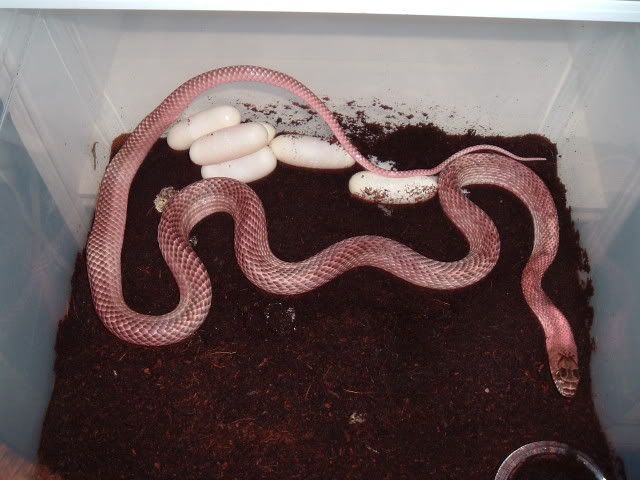
Here is a picture of a Gravid captive bred and raised specimen from Langtry that has reproduced nicely for me. She was fed Carotenoids and the yellow in the center of her saddles went away . How about them apples! Think I will join Bobalitto in a brew or two!
Image
-----
"Life without risk is to merely exist."

Tom Anderson Sep 26, 2007 07:46 AM

I don't claim to have anything figured out about alterna incubation in the wild. My comment was only related to the temperature of caves. There is no data on wild alterna incubation. I don't know if they lay their eggs in caves or above ground. I assume everything I know surrounding the incubation of wild alterna eggs.

However, I do know that caves in that west Texas are not 54°F based on data in the public domain. I don't want the people reading this forum to think that your misinformation about the temperature of caves in Texas is correct. That is why I posted a couple links to point people in the right direction.

I did not appreciate you correcting my factually correct post with misinformation and then telling me to "Think 3D".

I do appreciate your input in most cases and I didn’t intend to start a war of words.

I have relatively good luck with alterna except for one female that throws kinked babies every year. Perhaps she is missing some vitamins such as carotenoids, but she's fed the same thing as the other females in my collection that throw healthy babies. Perhaps her requirements for vitamins are different, or she metabolizes the vitamins differently.

Which carotenoids do you think improve reproduction and embryo development? I’ve heard of lizard breeders using carotene to enhance the color of orange lizards like leopard geckos and bearded dragons.

Tom Anderson

Sighthunter Sep 26, 2007 10:53 AM

The actual carotenoids that target the ovaries and eggs are Astaxanthin (first) Cantaxanthin (second) and Lutine (third). The Astaxanthin is derived from Insects and is a pink-red in color when processed by digestive enzymes. Cantaxanthin is also derived from insects and is Orange-red when digested. Lutine is yellow and is found in vegetable matter consumed by insects.

A chicken eggs color is influenced by the consumption of these items yellow to almost red. A salmons eggs color are the color of Astaxanthin. A flamingoes color is influenced by Cantaxanthin. The flesh of wild salmon is influenced by both Astaxanthin and Cantaxanthin.

Here is Astaxanthin and Cantaxanthin expressing themselves in a boiled insect similar to the orange red a shrimp or lobster becomes when boiled. This color expresses itself in acid also such as digestive acids. The best way to supplement these is to keep a couple of chickens in your yard and use their eggs yoke only and cut yoke by ½ with water and inject into the dead mice.
Image
-----
"Life without risk is to merely exist."

swwit Sep 26, 2007 04:48 PM

>>The actual carotenoids that target the ovaries and eggs are Astaxanthin (first) Cantaxanthin (second) and Lutine (third). The Astaxanthin is derived from Insects and is a pink-red in color when processed by digestive enzymes. Cantaxanthin is also derived from insects and is Orange-red when digested. Lutine is yellow and is found in vegetable matter consumed by insects.
>>
>>A chicken eggs color is influenced by the consumption of these items yellow to almost red. A salmons eggs color are the color of Astaxanthin. A flamingoes color is influenced by Cantaxanthin. The flesh of wild salmon is influenced by both Astaxanthin and Cantaxanthin.
>>
>>Here is Astaxanthin and Cantaxanthin expressing themselves in a boiled insect similar to the orange red a shrimp or lobster becomes when boiled. This color expresses itself in acid also such as digestive acids. The best way to supplement these is to keep a couple of chickens in your yard and use their eggs yoke only and cut yoke by ½ with water and inject into the dead mice.
>>
>>-----
>>"Life without risk is to merely exist."

You make some good points but I highy doubt this relates to alterna.
-----
Steve W.

swwit Sep 26, 2007 04:43 PM

We're assuming that most alterna lay their eggs inside the rocks. But I'm sure many are laid in rotting vegitation which are hot, wet and high in humidity.

-----
Steve W.

swwit Sep 26, 2007 04:37 PM

>>
>>Here is a picture of a Gravid captive bred and raised specimen from Langtry that has reproduced nicely for me. She was fed Carotenoids and the yellow in the center of her saddles went away . How about them apples! Think I will join Bobalitto in a brew or two!
>>

Adding color to food to change pigment is nothing new. But once you stop the color will return to normal. It's been done for decades to make canary's red, pink and white ones yellow. Nekton added it to their vitamins and called it Nekton Rep Color for reptiles. It's old news.
-----
Steve W.

swwit Sep 27, 2007 07:12 PM

>>
>>Here is a picture of a Gravid captive bred and raised specimen from Langtry that has reproduced nicely for me. She was fed Carotenoids and the yellow in the center of her saddles went away . How about them apples! Think I will join Bobalitto in a brew or two!
>>
>>-----
>>"Life without risk is to merely exist."

More talk about color. Please read what you wrote before responding to a post.
-----
Steve W.

swwit Sep 26, 2007 04:32 PM

>>Would you please stop the "Think 3D" stuff? It's not inspiring, and rather insulting. Besides, I prefer to think logically.
>>
>>A 4 foot hole on in North Dakota will be cooler than a 4 foot hole in Death Valley. The temperature of a cave is directly proportional to the average annual temperature above ground. Kansas is cooler than Del Rio. The average annual temperature in Kansas is around 55°. Kansas is not alterna country.
>>
>>Here's a Texas splunking site with reference to cave temperature:
>>http://www.utgrotto.org/newcaver/faq.asp
>>Another reference to cave temperature in TX:
>>http://www.acoolcave.com/cave-ecology.html
>>
>>Both of these references are very close to the result of the calculation I made using historical temperature data for Del Rio.
>>
>>
>>Tom Anderson

Finally some logical talk. Thanks Tom.
-----
Steve W.

Sighthunter Sep 26, 2007 09:12 PM

I think
-----
"Life without risk is to merely exist."

Sighthunter Sep 26, 2007 09:13 PM

You have
-----
"Life without risk is to merely exist."

Sighthunter Sep 26, 2007 09:14 PM

A problem posting
-----
"Life without risk is to merely exist."

Sighthunter Sep 26, 2007 09:17 PM

You need to pay attention to the thread. It had nothing to do with color. The thread was on Fertility. Think 1D
-----
"Life without risk is to merely exist."

bobassetto Sep 26, 2007 11:13 PM

note the time i can't sleep....going in at 6am....hospital...not the old lady...

swwit Sep 27, 2007 07:09 PM

>>You need to pay attention to the thread. It had nothing to do with color. The thread was on Fertility.

Below is what you wrote. You mention color. LOL You need to pay attention.

>>>>>>>>>>The actual carotenoids that target the ovaries and eggs are Astaxanthin (first) Cantaxanthin (second) and Lutine (third). The Astaxanthin is derived from Insects and is a pink-red in color when processed by digestive enzymes. Cantaxanthin is also derived from insects and is Orange-red when digested. Lutine is yellow and is found in vegetable matter consumed by insects.

A chicken eggs color is influenced by the consumption of these items yellow to almost red. A salmons eggs color are the color of Astaxanthin. A flamingoes color is influenced by Cantaxanthin. The flesh of wild salmon is influenced by both Astaxanthin and Cantaxanthin.

Here is Astaxanthin and Cantaxanthin expressing themselves in a boiled insect similar to the orange red a shrimp or lobster becomes when boiled. This color expresses itself in acid also such as digestive acids. The best way to supplement these is to keep a couple of chickens in your yard and use their eggs yoke only and cut yoke by ½ with water and inject into the dead mice.

-----
Steve W.

Sighthunter Sep 24, 2007 06:06 PM

Does the pH in the soil affect the hatchability of a (Greyband) egg? I ask because a greyband that lays an egg in sand that is Alkaline or one that uses a fecal contaminated animal burrow that is Acid have chosen opposites. Unlike a chicken egg that is exposed to less moisture (much less) a reptile egg seems to (in my understanding) wick up moisture from underneath. Does the pH of this water affect the albumen or embryo? Does it react with the calcium as calcium and acid will have a chemical reaction. Think three dimentional. My coachwhip snakes need acid substrate to hatch properly!
-----
Image
-----
"Life without risk is to merely exist."

lbenton Sep 24, 2007 06:45 PM

Beyond the relative amount of moisture there are going to be a ton of other factors that can impact the health of a developing embryo in the egg. I do agree that pH is a factor that must have an impact, as well as the health of the female building those eggs.. diet (obese and/or improper vitamin or mineral factors), infection, age, etc... can all play large parts. And I am sure that a huge list of reasonable factors could be thought up with some ease. But I still think that a major factor that people have trouble getting down is the moisture.

Now for a curve ball, most of us give out tap water for our animals and thier eggs, and if you let tap water set for even just a day or two the dissolved gasses like chlorine will escape. But something a spelunking tour guide pointed out that I never thought of before was that natural ground water has a vast amount of dissolved minerals and other trace elements, and if we all drank water from his cave we would never need to take a mineral supplement. Everything in that pill is in the water as it seeps through the ground. Now the stuff we treat our water with to make it "safe to drink" can impact an egg as it soaks that in with the water (and the animals that drink it too), as well as the missing minerals and trace elements that would be found below ground in the water compared to treated and filtered tap water.

What I am getting at is that there are a lot of small factors that we as keepers may not be addressing. But one that seems to play out again and again is the fact that some eggs just end up too wet.

Lance

bobassetto Sep 24, 2007 07:04 PM

the thoughts coming...this is how problems get solved.....its called cerebral low pressure areas.....eh sumptin like that...

Aaron Sep 25, 2007 11:41 AM

I think of it like an elevator through fissures in solid rock. Large masses of solid rock heat slowly and cool slowly. At the bottom of the fissures there would be permanent water. Somewhere between blazing hot surface and cool underground water just get off on the "right floor" and viola you have constant warm temps and humidity on a dry surface.
I also think the stronger and healthier the adults are they pass on those nutrients to the eggs making eggs that are much stronger, heathier, and tolerant of sub-optimal conditions. The natural diet may have alot to do with it to. Perhaps some localities have a higher rodent diet and possess genetics more capable of adapting to a 100% diet of rodents in captivity.

Sighthunter Sep 25, 2007 03:38 PM

Yes you are now thinking. Now you have a large flat rock traping the moisture underneith as moisture from the ground makes an attempt to rise to the surface from the surface heat. Flip a 3000lb rock that has holes underneith it and it will be damp.
-----
"Life without risk is to merely exist."

Aaron Sep 25, 2007 06:56 PM

Thanks but I can't take much credit. Frank Retes and Brian Hubbs has given me alot of ideas and you as well. I find your posts on nutrtion and his post on choices, opportunity and mass temps very thought provoking. You are all great keepers and hunters IMHO.

DISCERN Sep 24, 2007 07:11 PM

Lance,

Do you think that a huge factor is that maybe there is too much moisture in the substrate that eggs are commonly incubated in?

Towards the end of my snake breeding days around 1998, I ended up using less and less water in my vermiculite, and the last year, I barely put any water in the jar and mixing it with the vermiculite and still had great results.

What about temps? Are temps too high in most cases of alterna egg incubation? Could this be some sort of factor in deformities?
Image
-----
Genesis 1:1

lbenton Sep 24, 2007 07:47 PM

I am making an assumption on this, but I think that people over the years have tested a limit in temps to speed up incubation times. The trend is run things near a red line, for years now people have had great results at normal room temps, and if you look back in prior post you will see a trend by many people to use less moisture on alterna eggs. I wish I could remember the person who put this idea out so I could give the credit, but what I plan to try is get some of that plastic diffuser for office lights, it is like a grid or a mesh about a half inch thick. this can be cut to shape and used as a means to keep the egg just out of contact with the substrate, making all moisture a result of humidity and allowing more surface area for the egg to breath. Then the plan is to get the humidity up to about 100%. There is also a lot of discussion on diet, especially calcium and D3.

Rule of thumb is once you get the results you want stop changing the recipe.

jim_d Sep 24, 2007 09:15 PM

I agree with most of everything in this thread, I am not trying to solve the mystery here, but just a pose a simple idea from my experience. In captivity, when the female grayband looks to lay she seeks out a damp area in captivity, usually the nesting box. I have noticed also the eggs do seem to retain their moisture pretty well in the last few weeks of incubation.....

In the wild during may or june the female might find a similar relatively warm damp area, which over the next 8 weeks might just dry out a little as the rains move out, causing the eggs to be dryer towards the end of the incubation.

I just think that it is possible the grayband eggs have adapted to a more damp 1st half of incubation and a more dry second half.

Any thoughts?

bobassetto Sep 25, 2007 11:59 AM

to be quite frank(WHO'S THAT)...i believe that the temp has more to do with develoment than moisture.....higher temps cause faster development which i believe can cause problems...if the blueprint is for development at a certain speed....like the rpms for optimal engine performance.....maximum does not = optimal....maximum rpms for an extended time can cause some bad developments in an engine....as some of us know....just think this guy developed normally.....

Sighthunter Sep 25, 2007 03:46 PM

The other thing we experts do is stabalize temprature while in nature I find eggs under rocks about 3 to 4 inches thick. Hint, these eggs have FLUCTUATING tempratue. I had a racer lay eggs under a flowerpot in Kansas it fluctuated between 70F and 100F. THEY ALL HATCHED! NO KINKS.

If an egg breathes as heat expells internal moisture as it cools it draws moisture like a can of beer in the fridge. Think 3D
-----
"Life without risk is to merely exist."

swwit Sep 25, 2007 04:13 PM

My question is that even though this sounds good on paper is this theory or fact? If it's based on fact where and how was the data collected?

-----
Steve W.

jim_d Sep 25, 2007 04:54 PM

I have noticed that eggs at the top of the bunch seem to develop faster than those at the bottom where they contact the wet substrate. Average temperature should obviously count for something significant but development rate also has something to do with moisture, specifically a damp or wet substrate slowing the growth.

I have had some clutches go for 80 days and they are still are premature with temps in the high 70's to 80 degrees when I kept them too wet while other dryer clutches in the same incubator for the same time period (to within a few days) pop out at 68 days.

I like the 3d breathing idea that was posed with teperature fluctuation, I suspect it is beneficial and natural to have some fluctuation.

lbenton Sep 25, 2007 05:15 PM

>>I have noticed that eggs at the top of the bunch seem to develop faster than those at the bottom where they contact the wet substrate. Average temperature should obviously count for something significant but development rate also has something to do with moisture, specifically a damp or wet substrate slowing the growth.
>>
>>I have had some clutches go for 80 days and they are still are premature with temps in the high 70's to 80 degrees when I kept them too wet while other dryer clutches in the same incubator for the same time period (to within a few days) pop out at 68 days.
>>
>>I like the 3d breathing idea that was posed with teperature fluctuation, I suspect it is beneficial and natural to have some fluctuation.

lbenton Sep 25, 2007 05:19 PM

The slower development and defects may be a result of oxygen exchange. Eggs down in a wet substrate should have a reduced level of O2 for a developing embryo and this may as much or more of an issue as the pressure and electrolyte balance in the egg.

Lance

Sighthunter Sep 25, 2007 06:45 PM

I flip large rocks and collect data.
-----
"Life without risk is to merely exist."

swwit Sep 25, 2007 08:53 PM

>>I flip large rocks and collect data.
>>-----
>>"Life without risk is to merely exist."

So basically you haven't collected any data "deep" within the limestone. Only rocks that can be flipped? Ok then we still need to know if anyone has any accurate data to lets say five to ten feed into the rock. Anyone?
-----
Steve W.

bobassetto Sep 25, 2007 11:52 PM

i flip beer tabs...drink the brew...then fart....collect that data.....and while you're busy with that stick THIS 10 feet down....i'll be quiet for a few daze...see youse guyz in a few daze....i know you all will have this all figured out by then....i just hope i don't clank when i walk!!!!!

Sighthunter Sep 26, 2007 01:17 PM

I followed your lead but have not been able to fart yet. Any advise?
-----
"Life without risk is to merely exist."

lbenton Sep 26, 2007 01:47 PM

>>I followed your lead but have not been able to fart yet. Any advise?

You need to have somebody else pull your finger, pulling your own finger does not seem to work the same.

Lance

Sighthunter Sep 26, 2007 01:51 PM

Much better
-----
"Life without risk is to merely exist."

Sighthunter Sep 26, 2007 01:29 PM

Someone told me to go ask Alice. But she told me to remember what the door mouse said. How do you feed your head?
-----
"Life without risk is to merely exist."

bobassetto Sep 26, 2007 11:09 PM

organize all this data....LMAO....
thanks guys i really need to laugh right now...talk with youse this weekend

Sighthunter Sep 22, 2007 10:43 PM

My hunch for the infertility and deformities is diet. Greybands are primarily lizard eaters in the wild and lizards eat bugs. We feed domestic mice in most cases which lack the carotenoids found in insects. Carotenoids are stored in flesh, skin and the highest concentration is found in the ovaries. Insects have very high concentrations of carotenoids in their exoskeleton which they synthesize. A lizard will store high concentrations in the flesh thus transferring to the snake. There are over 600 carotenoids found in nature and they are converted into vitamins for things such as egg laying just as the carotenoid found in carrots is converted into vitamin A. If the egg is deficient it is lacking the ingredients to make a healthy snake or any snake. Domestic mice are weak in this area.
-----
"Life without risk is to merely exist."

BRhaco Sep 23, 2007 08:49 PM

no post
-----
Brad Chambers

The Avalanche has already started-it is too late for the pebbles to vote....

Sighthunter Sep 24, 2007 08:22 AM

Hey Brad, I also agree with D3. Sometimes people think in a tunnel and fail to realize that just because a Grey Banded kingsnake is not out during the day does not mean they are not sitting in the mouth of a burrow or crack of a rock getting some sun. If a blackheaded specimen was inside of a burrow with just his head in the sun he would be hard to see and most would suck down before you even knew you were there.

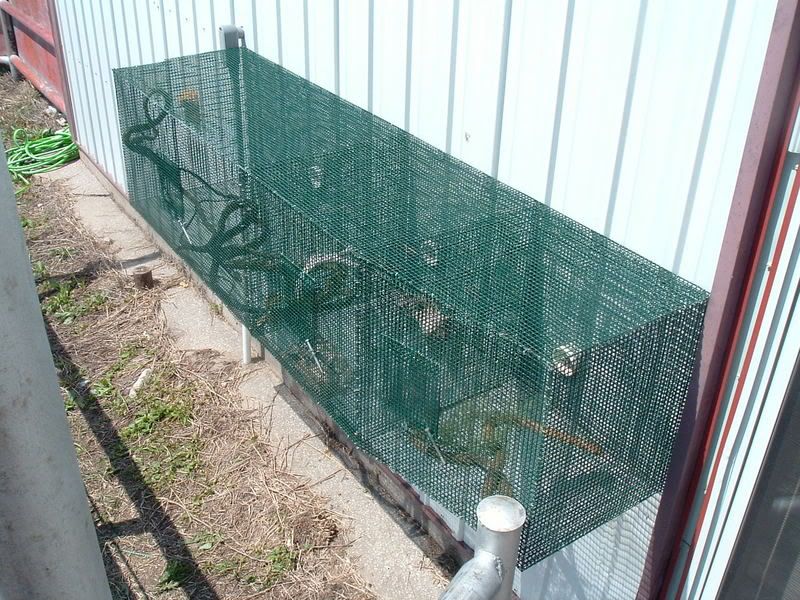
I set my snakes up with indoor-outdoor cages and watch natural behavior every day when it comes to sun. Here is my setup's for indoor-outdoor complete with doggie doors. I aught to set some GB’s up in them!


Image
-----
"Life without risk is to merely exist."

Site Tools