<?xml version="1.0" encoding="UTF-8"?>
<rdf:RDF xmlns:dc="http://purl.org/dc/elements/1.1/" xmlns:h="http://www.w3.org/1999/xhtml" xmlns:hr="http://www.w3.org/2000/08/w3c-synd/#" xmlns:rdf="http://www.w3.org/1999/02/22-rdf-syntax-ns#" xmlns="http://purl.org/rss/1.0/">
<channel rdf:about="https://forums.kingsnake.com/rss/?catid=192">
  <title>Kingsnake.com - Herpforum - Lacertids</title>
  <link>https://forums.kingsnake.com/forum.php?catid=192</link>
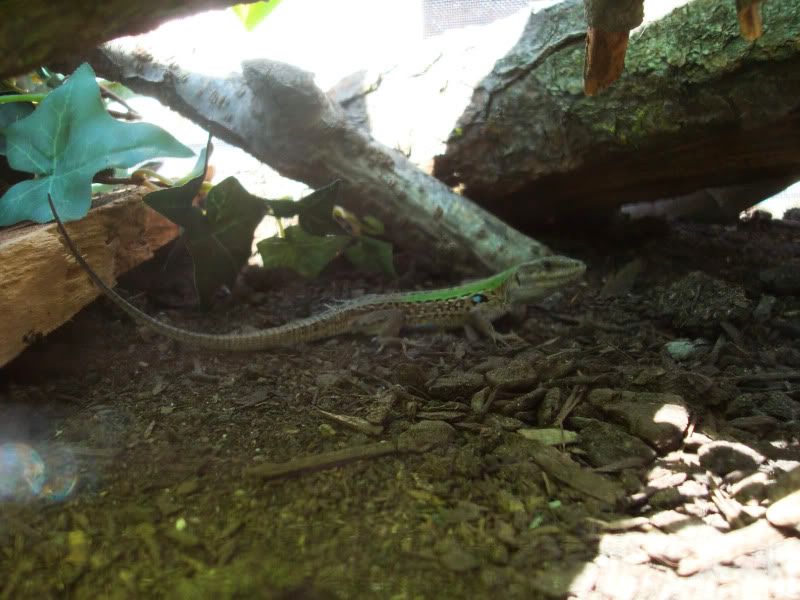
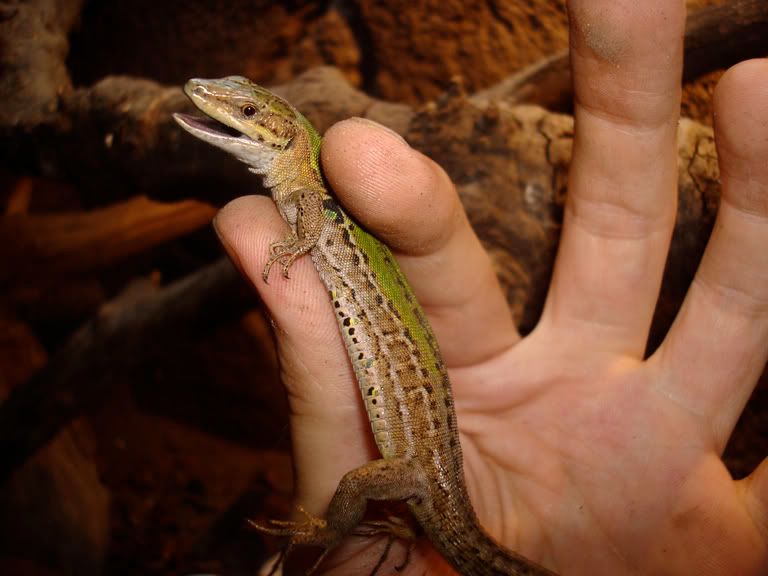
  <description><![CDATA[Lacertidae is the family of the wall lizards, or true lizards, which are native to Europe, Africa, and Asia. The group includes the genus Lacerta, which contains some of the most commonly seen lizard species in Europe. The European and Mediterranean species live mainly in forest and scrub habitats. Eremias and Ophisops species replace these in the grassland and desert habitats of Asia. African species usually live in rocky, arid areas. Lacertids are small or medium-sized lizards. Most species are less than 9 cm long, excluding the tail, although the largest living species, Gallotia stehlini, reaches 46 cm, and some extinct forms were larger still. Primarily insectivorous, Lacertids are remarkably similar in form, with slender bodies and long tails, but have highly varied patterns and colours, even within the same species. Their scales are large on the head, which often also has osteoderms, small and granular on the back, and rectangular on the underside. Most species are sexually dimorphic, with the males and females having different patterns.

Here you may post messages or questions pertaining to all aspects and issues regarding the keeping, breeding, health, and conservation of all Lacertids.

If you are a new user to this forum, please take the time to review the rules first before posting: Terms of Service.]]></description>
  <items>
    <rdf:Seq>
      <rdf:li rdf:resource="https://forums.kingsnake.com/view.php?id=2111690" />
      <rdf:li rdf:resource="https://forums.kingsnake.com/view.php?id=2007256" />
      <rdf:li rdf:resource="https://forums.kingsnake.com/view.php?id=2002062" />
      <rdf:li rdf:resource="https://forums.kingsnake.com/view.php?id=1996565" />
      <rdf:li rdf:resource="https://forums.kingsnake.com/view.php?id=1990725" />
      <rdf:li rdf:resource="https://forums.kingsnake.com/view.php?id=1892404" />
      <rdf:li rdf:resource="https://forums.kingsnake.com/view.php?id=1892402" />
      <rdf:li rdf:resource="https://forums.kingsnake.com/view.php?id=1892393" />
      <rdf:li rdf:resource="https://forums.kingsnake.com/view.php?id=1883251" />
      <rdf:li rdf:resource="https://forums.kingsnake.com/view.php?id=1883250" />
      <rdf:li rdf:resource="https://forums.kingsnake.com/view.php?id=1882072" />
      <rdf:li rdf:resource="https://forums.kingsnake.com/view.php?id=1880973" />
      <rdf:li rdf:resource="https://forums.kingsnake.com/view.php?id=1875970" />
      <rdf:li rdf:resource="https://forums.kingsnake.com/view.php?id=1870315" />
      <rdf:li rdf:resource="https://forums.kingsnake.com/view.php?id=1867141" />
      <rdf:li rdf:resource="https://forums.kingsnake.com/view.php?id=1855940" />
      <rdf:li rdf:resource="https://forums.kingsnake.com/view.php?id=1855469" />
      <rdf:li rdf:resource="https://forums.kingsnake.com/view.php?id=1852251" />
      <rdf:li rdf:resource="https://forums.kingsnake.com/view.php?id=1816238" />
      <rdf:li rdf:resource="https://forums.kingsnake.com/view.php?id=1811478" />
    </rdf:Seq>
  </items>
</channel>

<item rdf:about="https://forums.kingsnake.com/view.php?id=2111690">
  <title>Podarcis sicula</title>
  <link>https://forums.kingsnake.com/view.php?id=2111690</link>
  <description><![CDATA[<div class="rss-post"><p><strong>Original post</strong> by Garym &mdash; 2016-09-18 06:29:25 GMT</p><p>How does one catch baby Podarcis siculas? i dont want to noose adults, If i use pails as pitfalls were should i position them?</p></div>
<p><a href="https://forums.kingsnake.com/view.php?id=2111690">View full thread on Kingsnake.com</a></p>]]></description>
  <dc:date>2016-09-18T06:29:25+00:00</dc:date>
  <dc:creator>Garym</dc:creator>
</item>
<item rdf:about="https://forums.kingsnake.com/view.php?id=2007256">
  <title>Lightning Bug Toxicity</title>
  <link>https://forums.kingsnake.com/view.php?id=2007256</link>
  <description><![CDATA[<div class="rss-post"><p><strong>Original post</strong> by larryrolson &mdash; 2013-03-10 19:25:15 GMT</p><p>Does anyone know if feeding a lightning bug to a jeweled lacerta spells certain death? It was for our bearded dragon.</p>
<p>Want to field collect insects and need to know if they have an achiles heel.</p>
<p>Any experience out there?</p>
<p>thanks<br />
Larry</p></div>
<div class="rss-post"><p><strong>Reply</strong> by Nino &mdash; 2013-03-21 13:33:13 GMT</p><p>Lightning bugs (genus Photinus) contain lucibufagin toxins, chemically similar to cardiotoxins found in toad skin secretions.<br />
They are toxic (and potentially lethal) to many lizards, frogs, and even birds.</p>
<p>I'd avoid them at all costs - with all the species of arthropods you can collect in the field, why risk with fireflies?</p></div>
<p><a href="https://forums.kingsnake.com/view.php?id=2007256">View full thread on Kingsnake.com</a></p>]]></description>
  <dc:date>2013-03-21T13:33:13+00:00</dc:date>
  <dc:creator>larryrolson</dc:creator>
</item>
<item rdf:about="https://forums.kingsnake.com/view.php?id=2002062">
  <title>Steppe Lizard is gravid?</title>
  <link>https://forums.kingsnake.com/view.php?id=2002062</link>
  <description><![CDATA[<div class="rss-post"><p><strong>Original post</strong> by rkhorne &mdash; 2012-11-28 04:14:08 GMT</p><p>It appears that my female CB 2012 Steppe is not gravid?!  Does anyone have laying and incubation care information on these guys?</p>
<p>Thanks,<br />
Roger</p></div>
<p><a href="https://forums.kingsnake.com/view.php?id=2002062">View full thread on Kingsnake.com</a></p>]]></description>
  <dc:date>2012-11-28T04:14:08+00:00</dc:date>
  <dc:creator>rkhorne</dc:creator>
</item>
<item rdf:about="https://forums.kingsnake.com/view.php?id=1996565">
  <title>Steppe Lizard Sexing and Breeding Info?</title>
  <link>https://forums.kingsnake.com/view.php?id=1996565</link>
  <description><![CDATA[<div class="rss-post"><p><strong>Original post</strong> by rkhorne &mdash; 2012-09-12 03:22:22 GMT</p><p>I've been searching the web and can't find anything on how to sex the Steppe Runner, or their breeding requirements.</p>
<p>Does anyone have more than the generic info on these guys?</p>
<p>Thanks,<br />
Roger</p></div>
<div class="rss-post"><p><strong>Reply</strong> by Nino &mdash; 2012-09-21 15:23:34 GMT</p><p>Adult males have pronounced femoral pores and are usually slightly more robust than females in the neck and head region.<br />
In order to breed them a period of winter rest is required (reduced photoperiod and temperatures). Precise info on how (or if) you should hibernate them would depend on which of 6 subspecies are you working with, since the species inhabits an enormous range of habitats with significantly different climates (Armenia, Azerbaijan, China, Iran, Kazahstan, Kyrgyzstan, Moldavia, Mongolia, Romania, Russia, Tajikistan, Turkey, Turkmenistan, Uzbekistan).</p></div>
<p><a href="https://forums.kingsnake.com/view.php?id=1996565">View full thread on Kingsnake.com</a></p>]]></description>
  <dc:date>2012-09-21T15:23:34+00:00</dc:date>
  <dc:creator>rkhorne</dc:creator>
</item>
<item rdf:about="https://forums.kingsnake.com/view.php?id=1990725">
  <title>Steppe Lizard</title>
  <link>https://forums.kingsnake.com/view.php?id=1990725</link>
  <description><![CDATA[<div class="rss-post"><p><strong>Original post</strong> by Regmon &mdash; 2012-07-26 02:20:30 GMT</p><p>I was fortunate enough to grab a group of five Steppe lizards. Looks to be (maybe) 2.3 ... I'm not quiet sure what to use as substrate longterm , at the moment I'm using Eco Earth by zoomedin a standard 55 gallon aquarium... I've thought about Pool Filter Sand or playground sand.. Anyone have pictures of their enclosures and animals? Will these need to go through brumation , possibly mid 50's - low 60's F for 90 days ? Thanks in advance !</p></div>
<div class="rss-post"><p><strong>Reply</strong> by rkhorne &mdash; 2012-08-31 03:58:51 GMT</p><p>I have my recently acquired pair on Calci-Sand, with a hide box and a waterbowl with a rock in it.  One side of the cage is at 100F with the light on, the rest is cooler, maybe as high as 85F.  They appear to be doing fine in this setup and are very aggresive cricket eaters.</p>
<p>Do you know how to sex them?  They were sold as a pair, and I've searched for info to confirm they are a pair, but can't find anything of substance.  Any info you can provide would be greatly appreciated.</p>
<p>Good luck,<br />
Roger</p></div>
<p><a href="https://forums.kingsnake.com/view.php?id=1990725">View full thread on Kingsnake.com</a></p>]]></description>
  <dc:date>2012-08-31T03:58:51+00:00</dc:date>
  <dc:creator>Regmon</dc:creator>
</item>
<item rdf:about="https://forums.kingsnake.com/view.php?id=1892404">
  <title>More TL Albino Pics</title>
  <link>https://forums.kingsnake.com/view.php?id=1892404</link>
  <description><![CDATA[<div class="rss-post"><p><strong>Original post</strong> by carlsen &mdash; 2011-02-09 20:53:21 GMT</p><p>dd<br />
<img class="img-fluid" src="http://i306.photobucket.com/albums/nn265/Mfreptiles/AlbinoTimonLepidus090111008.jpg" alt="Image"></p></div>
<p><a href="https://forums.kingsnake.com/view.php?id=1892404">View full thread on Kingsnake.com</a></p>]]></description>
  <dc:date>2011-02-09T20:53:21+00:00</dc:date>
  <dc:creator>carlsen</dc:creator>
</item>
<item rdf:about="https://forums.kingsnake.com/view.php?id=1892402">
  <title>Albino TL Updates</title>
  <link>https://forums.kingsnake.com/view.php?id=1892402</link>
  <description><![CDATA[<div class="rss-post"><p><strong>Original post</strong> by carlsen &mdash; 2011-02-09 20:46:44 GMT</p><p>Hi AllÂ´,<br />
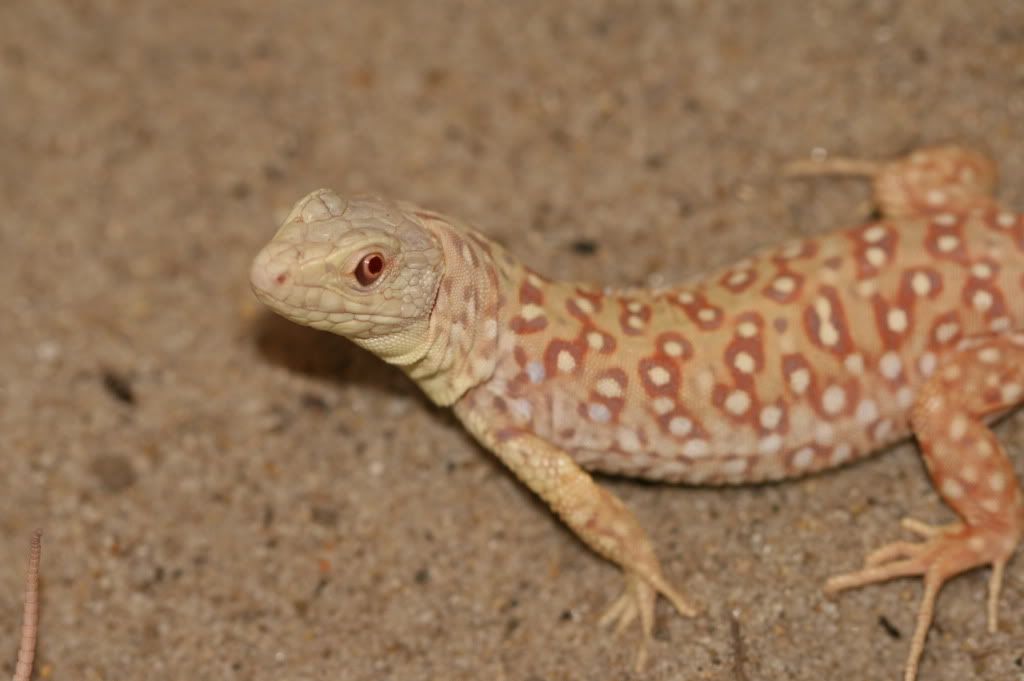
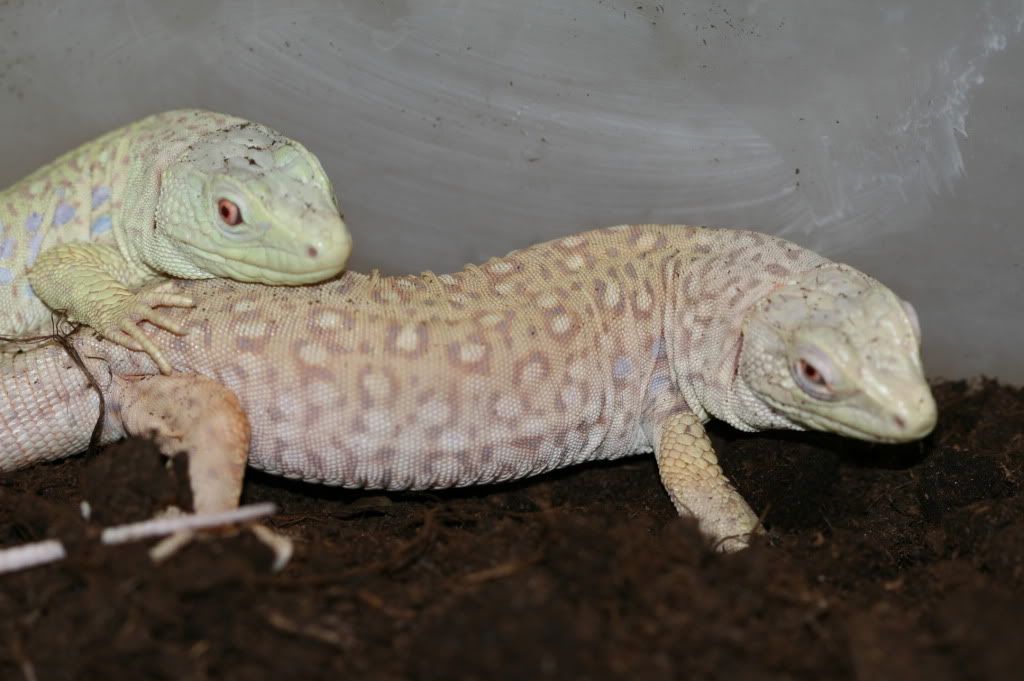
At the time being i Have been working with Albino TL since november 2009!!All My concerns about raising these Albino( Eye Problem, MBD etc. etc. ), is now eliminated!These Magnificent Albinos,just give me so much fun...<br />
They do have limited sight as other albinos.. But they certainly thrive as good as normal looking TL..and it shows the weight curve also!!! <br />
Enjoy <br />
Martin Carlsen<br />
<img class="img-fluid" src="http://i306.photobucket.com/albums/nn265/Mfreptiles/AlbinoTimonLepidus090111018.jpg" alt="Image"></p></div>
<div class="rss-post"><p><strong>Reply</strong> by TwoSnakes &mdash; 2011-03-10 11:34:23 GMT</p><p>All I can say about your albinos is &quot;WOW&quot; .</p></div>
<div class="rss-post"><p><strong>Reply</strong> by Carlsen &mdash; 2011-02-10 20:53:12 GMT</p><p>Hi,<br />
I use both UVB light and D3...As D3 vitamin i use Korvimin , but have also tryed other product with good result !!<br />
Friendly Regards<br />
Martin Carlsen<br />
contact@albinolizard.com</p></div>
<div class="rss-post"><p><strong>Reply</strong> by A_B &mdash; 2011-02-10 17:31:48 GMT</p><p>Nice animals.  Are you using UVB with them? or just a supplement d3 ?<br />
-----<br />
Come Join me and other Lacertid Fans at<br />
LacertaUSA.com</p></div>
<p><a href="https://forums.kingsnake.com/view.php?id=1892402">View full thread on Kingsnake.com</a></p>]]></description>
  <dc:date>2011-03-10T11:34:23+00:00</dc:date>
  <dc:creator>carlsen</dc:creator>
</item>
<item rdf:about="https://forums.kingsnake.com/view.php?id=1892393">
  <title>Albino Timon</title>
  <link>https://forums.kingsnake.com/view.php?id=1892393</link>
  <description><![CDATA[<div class="rss-post"><p><strong>Original post</strong> by R.Mikkelsen &mdash; 2011-02-09 19:48:25 GMT</p><p>http://www.youtube.com/watch?v=RSHe2fwBfRI<br />
-----<br />
Reptiles since 1975<br />
http://www.rolfreptiles.com<br />
Rolf Mikkelsen<br />
DENMARK</p></div>
<p><a href="https://forums.kingsnake.com/view.php?id=1892393">View full thread on Kingsnake.com</a></p>]]></description>
  <dc:date>2011-02-09T19:48:25+00:00</dc:date>
  <dc:creator>R.Mikkelsen</dc:creator>
</item>
<item rdf:about="https://forums.kingsnake.com/view.php?id=1883251">
  <title>T. Lepida</title>
  <link>https://forums.kingsnake.com/view.php?id=1883251</link>
  <description><![CDATA[<div class="rss-post"><p><strong>Original post</strong> by WC3 &mdash; 2010-12-24 20:41:33 GMT</p><p>I am also glad that I got into the jeweleds as they are fantastic animals to work with.<br />
<a href="http://captivebredcreations.com/jeweledlacerta.html">Some jeweled lacertas in my collection.</a></p>
<p>-----<br />
Wil Combs<br />
www.captivebredcreations.com</p></div>
<p><a href="https://forums.kingsnake.com/view.php?id=1883251">View full thread on Kingsnake.com</a></p>]]></description>
  <dc:date>2010-12-24T20:41:33+00:00</dc:date>
  <dc:creator>WC3</dc:creator>
</item>
<item rdf:about="https://forums.kingsnake.com/view.php?id=1883250">
  <title>G.stehlini</title>
  <link>https://forums.kingsnake.com/view.php?id=1883250</link>
  <description><![CDATA[<div class="rss-post"><p><strong>Original post</strong> by WC3 &mdash; 2010-12-24 20:38:39 GMT</p><p>I have really enjoyed working with these guys so far. I can't wait till they are of breeding age to see how well I can do with them.</p>
<p><a href="http://captivebredcreations.com/grancanaria.html">Gallotia stehlini that I am working with.</a></p>
<p>-----<br />
Wil Combs<br />
www.captivebredcreations.com</p></div>
<p><a href="https://forums.kingsnake.com/view.php?id=1883250">View full thread on Kingsnake.com</a></p>]]></description>
  <dc:date>2010-12-24T20:38:39+00:00</dc:date>
  <dc:creator>WC3</dc:creator>
</item>
<item rdf:about="https://forums.kingsnake.com/view.php?id=1882072">
  <title>Baby longtailed grass lizards hatched!</title>
  <link>https://forums.kingsnake.com/view.php?id=1882072</link>
  <description><![CDATA[<div class="rss-post"><p><strong>Original post</strong> by Esther &mdash; 2010-12-19 05:33:48 GMT</p><p>I have 1.2 longtailed grass lizards in a terrarium.  Imagine my delight in seeing a tiny tiny baby making its way along the substrate.  I got it out of there and put it into a quart deli container with some of the substrate, covered with a piece of nylon stocking (the baby could easily have escaped through the slots on one of those plastic terrariums).  An hour later, I saw an adult longtail go after some prey, and had a bad feeling.  I raced over to the tank and sure enough, there was another baby longtail racing away from its would-be predator.  I got that baby out and put it into the deli container, too.  Then I took a plastic spoon and dug around the back of the tank, discovering 4 more eggs.  I put those into the deli container as well, nested in a bit of substrate I lifted out under them.  Wow, a longtail population explosion!  I went out and got a fruit fly culture, to introduce a few flies to them tomorrow.</p></div>
<div class="rss-post"><p><strong>Reply</strong> by Esther &mdash; 2010-12-28 21:05:32 GMT</p><p>Here are 3 pics I just took of the little babies.  They are sooo cute!  Sorry for pic quality, my cell phone does not have a macro lens.</p>
<p><img class="img-fluid" src="http://images1.snapfish.com/232323232%7Ffp%3A%3A6%3Enu%3D3235%3E%3B%3A2%3E343%3EWSNRCG%3D344699379%3B33%3Anu0mrj"></p>
<p><img class="img-fluid" src="http://images1.snapfish.com/232323232%7Ffp%3A%3A7%3Enu%3D3235%3E%3B%3A2%3E343%3EWSNRCG%3D34469937%3A333%3Anu0mrj"></p>
<p><img class="img-fluid" src="http://images1.snapfish.com/232323232%7Ffp%3A%3A6%3Enu%3D3235%3E%3B%3A2%3E343%3EWSNRCG%3D34469937%3A433%3Anu0mrj"></p></div>
<div class="rss-post"><p><strong>Reply</strong> by Ritas &mdash; 2010-12-22 01:15:01 GMT</p><p>Very nice what type set up do you keep them in and are they kept like anoles?</p></div>
<div class="rss-post"><p><strong>Reply</strong> by A_B &mdash; 2010-12-21 16:16:19 GMT</p><p>Congrats!!  When can we expect to see some pictures?  <img class="img-fluid" src="https://forums.kingsnake.com/images/smiles/smile.gif" border="0" alt=""><br />
-----<br />
Come Join me and other Lacertid Fans at<br />
LacertaUSA.com</p></div>
<p><a href="https://forums.kingsnake.com/view.php?id=1882072">View full thread on Kingsnake.com</a></p>]]></description>
  <dc:date>2010-12-28T21:05:32+00:00</dc:date>
  <dc:creator>Esther</dc:creator>
</item>
<item rdf:about="https://forums.kingsnake.com/view.php?id=1880973">
  <title>Green Lacerta same as a Jeweled Lacerta?</title>
  <link>https://forums.kingsnake.com/view.php?id=1880973</link>
  <description><![CDATA[<div class="rss-post"><p><strong>Original post</strong> by IdoTHATforME &mdash; 2010-12-13 18:15:25 GMT</p><p>Are they the same or are they different species?</p></div>
<div class="rss-post"><p><strong>Reply</strong> by A_B &mdash; 2010-12-14 16:41:55 GMT</p><p>Green lacertas can be a couple different species.</p>
<p>They can be Lacerta bilineata (western Green lizard) Lacerta viridis (green lizard) <br />
lacerta trilineata (Balkan green lizard) and there are other species that fall into the the green lizard group, all of which are from the genus Lacerta where the jeweled lacertas are from the genus Timon (formerly Lacerta).  Hope that helps a bit.<br />
-----<br />
Come Join me and other Lacertid Fans at<br />
LacertaUSA.com</p></div>
<p><a href="https://forums.kingsnake.com/view.php?id=1880973">View full thread on Kingsnake.com</a></p>]]></description>
  <dc:date>2010-12-14T16:41:55+00:00</dc:date>
  <dc:creator>IdoTHATforME</dc:creator>
</item>
<item rdf:about="https://forums.kingsnake.com/view.php?id=1875970">
  <title>Adolfus jacksoni question</title>
  <link>https://forums.kingsnake.com/view.php?id=1875970</link>
  <description><![CDATA[<div class="rss-post"><p><strong>Original post</strong> by Malays &mdash; 2010-11-21 13:58:31 GMT</p><p>Hi<br />
Has anyone kept,bred Adolfus jacksoni ?</p>
<p>If so can a pair be housed together ,temp info and adult size plus any other advice,info you can help me with ?</p>
<p>I can not find any care info on them .</p>
<p>Thank you</p></div>
<p><a href="https://forums.kingsnake.com/view.php?id=1875970">View full thread on Kingsnake.com</a></p>]]></description>
  <dc:date>2010-11-21T13:58:31+00:00</dc:date>
  <dc:creator>Malays</dc:creator>
</item>
<item rdf:about="https://forums.kingsnake.com/view.php?id=1870315">
  <title>Just some lacertid pictures</title>
  <link>https://forums.kingsnake.com/view.php?id=1870315</link>
  <description><![CDATA[<div class="rss-post"><p><strong>Original post</strong> by A_B &mdash; 2010-10-30 00:17:36 GMT</p><p><img class="img-fluid" src="http://i1028.photobucket.com/albums/y341/Podarcis/DSC08832.jpg"></p>
<p><img class="img-fluid" src="http://i60.photobucket.com/albums/h8/Ameivaboy/DSC08362.jpg"></p>
<p><img class="img-fluid" src="http://i60.photobucket.com/albums/h8/Ameivaboy/DSC08360.jpg"></p>
<p><img class="img-fluid" src="http://i60.photobucket.com/albums/h8/Ameivaboy/DSC08000.jpg"></p>
<p><img class="img-fluid" src="http://i60.photobucket.com/albums/h8/Ameivaboy/IMG_2080.jpg"></p>
<p><img class="img-fluid" src="http://i60.photobucket.com/albums/h8/Ameivaboy/DSC07260.jpg"></p>
<p><img class="img-fluid" src="http://i60.photobucket.com/albums/h8/Ameivaboy/MalePodarcis.jpg"></p>
<p><img class="img-fluid" src="http://i60.photobucket.com/albums/h8/Ameivaboy/PodarcisFemale.jpg"></p>
<p>-----<br />
Come Join me and other Lacertid Fans at<br />
LacertaUSA.com</p></div>
<p><a href="https://forums.kingsnake.com/view.php?id=1870315">View full thread on Kingsnake.com</a></p>]]></description>
  <dc:date>2010-10-30T00:17:36+00:00</dc:date>
  <dc:creator>A_B</dc:creator>
</item>
<item rdf:about="https://forums.kingsnake.com/view.php?id=1867141">
  <title>Longtailed grass lizard male biting tail</title>
  <link>https://forums.kingsnake.com/view.php?id=1867141</link>
  <description><![CDATA[<div class="rss-post"><p><strong>Original post</strong> by Esther &mdash; 2010-10-17 03:50:09 GMT</p><p>I just added 2 female longtailed grass lizards to a terrarium containing a male, after cleaning out the tank and rearranging the landscape a bit.  He almost immediately grabbed one of the females' tails repeatedly, but she always was able to extricate her tail from him and get away.  Was he trying to &quot;court&quot; her or was this just a territorial fight?  This continued for much of the first night, until the light went out.  The next day, it was much more peaceful in the tank.</p>
<p>This is an ExoTerra 12x18x18 vertical tank with a nice branch and lots of vines in it, and a couple inches of loamy lizard litter for substrate.</p></div>
<div class="rss-post"><p><strong>Reply</strong> by Malays &mdash; 2010-11-22 05:19:27 GMT</p><p>Wow I looked in to them and had planned to keep a pair had no idea could be so brutal.</p>
<p>I am leaning towards Jackonsi adolfi now .</p></div>
<div class="rss-post"><p><strong>Reply</strong> by A_B &mdash; 2010-10-25 19:32:46 GMT</p><p>I dont have much experience with takydromus sp. <br />
but with my Podarcis  I have seen females give each other little tail bites.<br />
Podarcis females can be just as territorial as males (not sure if takydromus share this behavior)  When mating Lacertids are super agressive- My male podarcis would bite a female on her stomach pick her up spin her around repeatedly until she was too worn out to get away from his mating attempts. It was so severe in several instances I had to break them up as he likely would have killed her.  Not sure how much any of that applies to your situation though *shrugs*<br />
-----<br />
Come Join me and other Lacertid Fans at<br />
LacertaUSA.com</p></div>
<p><a href="https://forums.kingsnake.com/view.php?id=1867141">View full thread on Kingsnake.com</a></p>]]></description>
  <dc:date>2010-11-22T05:19:27+00:00</dc:date>
  <dc:creator>Esther</dc:creator>
</item>
<item rdf:about="https://forums.kingsnake.com/view.php?id=1855940">
  <title>Questions for lacerta keepers</title>
  <link>https://forums.kingsnake.com/view.php?id=1855940</link>
  <description><![CDATA[<div class="rss-post"><p><strong>Original post</strong> by poskok030 &mdash; 2010-09-06 13:43:14 GMT</p><p>I’m getting ready to introduce some Lacerta species in to my collection. As it is extremely hard to get any useful information about this genus in general, I’ll use this forum in hope to get some useful advices from experienced breeders. <br />
I’m interested in Timon lepidus, Gallotia stehlini and Lacerta schreiberi (all in pair or trio). All animals will be housed individually in indoor terrariums measuring 120cm x 80cm x 60cm (L x W x H). <br />
In terrariums for lepidus and schreiberi I’ll be using 150w Metal Halide Reflectors (I’m not sure if this will be necessary for Gallotia stehlini terrariums (?)) in combination with UVB lamps.</p>
<p>Some questions for the beginning will be:</p>
<p>Will these measurements (120x80x60) be ok? <br />
Can pair or trio of Lacerta schreiberi be kept in such terrarium together? <br />
Can I keep two females of lepidus or stehlini together?<br />
Also I’m curious about temperature and humidity levels for Lacerta schreiberi.</p>
<p>Thanks!</p></div>
<div class="rss-post"><p><strong>Reply</strong> by Ingo &mdash; 2010-09-30 08:58:43 GMT</p><p>Hi,</p>
<p>the setup for schreiberi should be more humid than for the other species. A dry basking place (metal halides) however of course still  is a must.<br />
Personally and lacertawise I do breed Timon lepidus and Gallotia galloti eisentrauti.</p>
<p>Best</p>
<p>Ingo</p></div>
<div class="rss-post"><p><strong>Reply</strong> by poskok030 &mdash; 2010-09-28 20:27:48 GMT</p><p>Thanks for a fast replay, Nino! I want to do everything properly but to avoid useless expends too. So metal-halide lamps in all lacerta terrariums...</p></div>
<div class="rss-post"><p><strong>Reply</strong> by Nino &mdash; 2010-09-28 18:49:20 GMT</p><p>Absolutely - like all heliophile lizards, Gallotia will thrive best under intense light source (either natural sunlight, or, in room terrariums, powerful metal-halide lamps). Of course, suficient shade areas and dark hideouts are necessary, so lizards can escape bright light and/or heat if they wish so.</p></div>
<div class="rss-post"><p><strong>Reply</strong> by poskok030 &mdash; 2010-09-28 12:21:52 GMT</p><p>Will Gallotia stehlini benefit from intensive light source?</p></div>
<div class="rss-post"><p><strong>Reply</strong> by poskok030 &mdash; 2010-09-13 11:14:43 GMT</p><p>Thanks Ingo. My first idea was to keep all animals individually so I guess I’ll stick up to it. My currently available terrariums are measuring 120cm x 80cm x 60cm (old Pogona vitticeps terrariums, six of them, which I’m planning to readapt for Lacertas) so I’ll have to make a few new ones for males lepidus and stehlini…<br />
Can you tell me something about humidity levels for Schreiber, I was thinking of using real plants in their terrarium. Will that work?<br />
Also, do you breed some of those species? If you do I’ll send you pm…</p></div>
<div class="rss-post"><p><strong>Reply</strong> by Ingo &mdash; 2010-09-11 19:42:44 GMT</p><p>For the schreiberi, the tank size is OK. <br />
For the other two sepcies it is too small  - or may hold a single female.<br />
With lepidus, trios often work well, but you have to have a close look in the beginning. Some females do mot tolerate others.<br />
For stehlini, a trio is almost impossible. Even keeping a pair constantly together is risky. Better just introduce females for mating.<br />
Gallotia males can be killers.<br />
As a minimum size for 1,1 lepidus or stehlini I do recommend 160 x 80 x 80. The bigger the better. <br />
Especially if you try to keep a pair of stehlini, the cage can not be large enough and has t be well structured, featuring hides, which are big enough for the female but too small for the male.<br />
It also is important that the female can easily get out of sight of the male.</p>
<p>Hope that helps</p>
<p>Ingo</p></div>
<div class="rss-post"><p><strong>Reply</strong> by poskok030 &mdash; 2010-09-09 16:34:00 GMT</p><p>Thanks, I know about www.lacerta.de, excellent place. But I see here a lot of experienced breeders and I would like to hear their opinion too.</p>
<p>All best,<br />
Ivan</p></div>
<div class="rss-post"><p><strong>Reply</strong> by DruckerB &mdash; 2010-09-09 12:13:55 GMT</p><p>Hi again!</p>
<p>Shouldn't you already know it, you have to visit this site :</p>
<p>http://www.lacerta.de/</p>
<p>There you will find relevant answers to at least a part of your queries, and much more.</p>
<p>Kind regards,</p>
<p>Benjamin</p></div>
<p><a href="https://forums.kingsnake.com/view.php?id=1855940">View full thread on Kingsnake.com</a></p>]]></description>
  <dc:date>2010-09-30T08:58:43+00:00</dc:date>
  <dc:creator>poskok030</dc:creator>
</item>
<item rdf:about="https://forums.kingsnake.com/view.php?id=1855469">
  <title>Lacertidae literature in English</title>
  <link>https://forums.kingsnake.com/view.php?id=1855469</link>
  <description><![CDATA[<div class="rss-post"><p><strong>Original post</strong> by poskok030 &mdash; 2010-09-04 15:31:54 GMT</p><p>Are there some good books in English language about lacertidae species or European herpetology in general?<br />
Any suggestions?</p></div>
<div class="rss-post"><p><strong>Reply</strong> by DruckerB &mdash; 2010-09-08 13:01:41 GMT</p><p>No problem. Among a number of &quot;local&quot; faunas, you may consider the following:</p>
<p>http://www.amazon.com/Reptiles-Eastern-Palearctic-Nikolai-Szczerbak/dp/1575240041</p>
<p>Notably, every Lacertid found in the Caucasus is individually dealt with.</p></div>
<div class="rss-post"><p><strong>Reply</strong> by poskok030 &mdash; 2010-09-06 13:40:03 GMT</p><p>Looks interesting.<br />
Thank you, Benjamin</p></div>
<div class="rss-post"><p><strong>Reply</strong> by DruckerB &mdash; 2010-09-06 08:30:57 GMT</p><p>I can suggest this one:</p>
<p>http://www.amazon.com/Reptiles-Amphibians-Britain-Europe-Collins/dp/0002193183</p>
<p>Otherwise, there are several valuable books in English pertaining to the herpetofauna of a given country.</p>
<p>Hope that helps.</p>
<p>Benjamin</p></div>
<p><a href="https://forums.kingsnake.com/view.php?id=1855469">View full thread on Kingsnake.com</a></p>]]></description>
  <dc:date>2010-09-08T13:01:41+00:00</dc:date>
  <dc:creator>poskok030</dc:creator>
</item>
<item rdf:about="https://forums.kingsnake.com/view.php?id=1852251">
  <title>About jeweled lacertas</title>
  <link>https://forums.kingsnake.com/view.php?id=1852251</link>
  <description><![CDATA[<div class="rss-post"><p><strong>Original post</strong> by calebjg &mdash; 2010-08-25 19:36:23 GMT</p><p>I need to find out a bit more.I found a basic caresheet.But what about cage size for a pair(can they be kept in pairs?).<br />
How much do they eat as adults?<br />
also the caresheet they only live 5yrs is this right, seems short?</p>
<p>Does anyone have a pic of an adult so I can get an idea of the size?<br />
thanks</p></div>
<div class="rss-post"><p><strong>Reply</strong> by Ingo &mdash; 2010-09-06 17:26:45 GMT</p><p>Minimum cage size for adults should be around 160 x 80 x 80 cm.<br />
They can be kept in pairs and they can eat a lot if allowed to  but should not be overfed.<br />
10 larger insects per week plus some fruit are enough.<br />
Males can reach up to 90 cm, but most do not exceed 55 to 65 cm in total lenght. Females stay smaller (on averadge 45 to 55 cm) and only reach about 2/3 of the weight of an adult male.<br />
And yes, they live longer: Up to 30 years, maybe more.<br />
Hope that helps</p>
<p>Ingo</p></div>
<p><a href="https://forums.kingsnake.com/view.php?id=1852251">View full thread on Kingsnake.com</a></p>]]></description>
  <dc:date>2010-09-06T17:26:45+00:00</dc:date>
  <dc:creator>calebjg</dc:creator>
</item>
<item rdf:about="https://forums.kingsnake.com/view.php?id=1816238">
  <title>Any lacerta breeders left in U.S.?</title>
  <link>https://forums.kingsnake.com/view.php?id=1816238</link>
  <description><![CDATA[<div class="rss-post"><p><strong>Original post</strong> by alecfeldman &mdash; 2010-05-17 16:38:09 GMT</p><p>Just curious if anyone but myself is actually working with any real numbers of lacerta species in the U.S. Very curious to know.</p>
<p>Thank you,<br />
Alec <br />
alecfeldman@hotmail.com</p></div>
<div class="rss-post"><p><strong>Reply</strong> by choppergreg &mdash; 2010-05-19 13:06:04 GMT</p><p>Well I guess I just started with the Italian lacertids. If the egss hatch this will be a great new project for me. considering I only work with snakes.</p></div>
<p><a href="https://forums.kingsnake.com/view.php?id=1816238">View full thread on Kingsnake.com</a></p>]]></description>
  <dc:date>2010-05-19T13:06:04+00:00</dc:date>
  <dc:creator>alecfeldman</dc:creator>
</item>
<item rdf:about="https://forums.kingsnake.com/view.php?id=1811478">
  <title>OK, got the long tailed grass lizards...</title>
  <link>https://forums.kingsnake.com/view.php?id=1811478</link>
  <description><![CDATA[<div class="rss-post"><p><strong>Original post</strong> by Esther &mdash; 2010-05-03 03:14:13 GMT</p><p>I sprayed a double layer of paper towel thoroughly with Provent-a-Mite and allowed it to dry.  I put the long tailed grass lizards in, with a plastic plant, water bowl, and tiny cup with 2 waxworms in it.  I know that any prey animal that touches the paper towel will die.</p>
<p>What else can I do to make sure these guys aren't carrying anything which could ultimately harm the 2 female green anoles I want to house them with?</p></div>
<div class="rss-post"><p><strong>Reply</strong> by Bianca &mdash; 2010-05-04 10:20:13 GMT</p><p>A friend of mine has a few . I think they drink water from mistings .</p>
<p>She never treated them for mites just bought them at pet store and set them up in 20 gallon tall tank.</p></div>
<p><a href="https://forums.kingsnake.com/view.php?id=1811478">View full thread on Kingsnake.com</a></p>]]></description>
  <dc:date>2010-05-04T10:20:13+00:00</dc:date>
  <dc:creator>Esther</dc:creator>
</item>
</rdf:RDF>