<?xml version="1.0" encoding="UTF-8"?>
<rdf:RDF xmlns:dc="http://purl.org/dc/elements/1.1/" xmlns:h="http://www.w3.org/1999/xhtml" xmlns:hr="http://www.w3.org/2000/08/w3c-synd/#" xmlns:rdf="http://www.w3.org/1999/02/22-rdf-syntax-ns#" xmlns="http://purl.org/rss/1.0/">
<channel rdf:about="https://forums.kingsnake.com/rss/?catid=26">
  <title>Kingsnake.com - Herpforum - Salamanders &amp; Newts</title>
  <link>https://forums.kingsnake.com/forum.php?catid=26</link>
  <description><![CDATA[Salamander is a common name of approximately 550 species of amphibians that are typically characterized by a superficially lizard-like appearance, with slender bodies, short noses, and long tails. Most salamanders have four toes on their front legs and five on their rear legs.

Moist skin usually makes them reliant on habitats in or near water, or under some damp protection, often in a wetland. While salamander species are fully aquatic throughout life, others take to the water intermittently, and some are entirely terrestrial as adults. Salamanders are capable of regenerating lost limbs, as well as other body parts.

Here you may post messages or questions pertaining to all aspects and issues regarding the keeping, breeding, health, and conservation of species and subspecies of Salamander and Newts.

If you are a new user to this forum, please take the time to review the rules first before posting: Terms of Service.]]></description>
  <items>
    <rdf:Seq>
      <rdf:li rdf:resource="https://forums.kingsnake.com/view.php?id=2114820" />
      <rdf:li rdf:resource="https://forums.kingsnake.com/view.php?id=2112344" />
      <rdf:li rdf:resource="https://forums.kingsnake.com/view.php?id=2111966" />
      <rdf:li rdf:resource="https://forums.kingsnake.com/view.php?id=2111490" />
      <rdf:li rdf:resource="https://forums.kingsnake.com/view.php?id=2110339" />
      <rdf:li rdf:resource="https://forums.kingsnake.com/view.php?id=2028562" />
      <rdf:li rdf:resource="https://forums.kingsnake.com/view.php?id=2028465" />
      <rdf:li rdf:resource="https://forums.kingsnake.com/view.php?id=2027575" />
      <rdf:li rdf:resource="https://forums.kingsnake.com/view.php?id=2025406" />
      <rdf:li rdf:resource="https://forums.kingsnake.com/view.php?id=2024975" />
      <rdf:li rdf:resource="https://forums.kingsnake.com/view.php?id=2024021" />
      <rdf:li rdf:resource="https://forums.kingsnake.com/view.php?id=2023155" />
      <rdf:li rdf:resource="https://forums.kingsnake.com/view.php?id=2022688" />
      <rdf:li rdf:resource="https://forums.kingsnake.com/view.php?id=2022495" />
      <rdf:li rdf:resource="https://forums.kingsnake.com/view.php?id=2019984" />
      <rdf:li rdf:resource="https://forums.kingsnake.com/view.php?id=2014278" />
      <rdf:li rdf:resource="https://forums.kingsnake.com/view.php?id=2010030" />
      <rdf:li rdf:resource="https://forums.kingsnake.com/view.php?id=2008061" />
      <rdf:li rdf:resource="https://forums.kingsnake.com/view.php?id=2007701" />
      <rdf:li rdf:resource="https://forums.kingsnake.com/view.php?id=2006593" />
    </rdf:Seq>
  </items>
</channel>

<item rdf:about="https://forums.kingsnake.com/view.php?id=2114820">
  <title>Where to find Newts in PA/DE/NJ?</title>
  <link>https://forums.kingsnake.com/view.php?id=2114820</link>
  <description><![CDATA[<div class="rss-post"><p><strong>Original post</strong> by Picmac &mdash; 2019-02-18 22:03:14 GMT</p><p>Does anyone know where to find newts in Southeast PA, South Jersey or Wilmington area?</p>
<p>-Thanks <br />
Mike</p></div>
<p><a href="https://forums.kingsnake.com/view.php?id=2114820">View full thread on Kingsnake.com</a></p>]]></description>
  <dc:date>2019-02-18T22:03:14+00:00</dc:date>
  <dc:creator>Picmac</dc:creator>
</item>
<item rdf:about="https://forums.kingsnake.com/view.php?id=2112344">
  <title>Thrips- Are they deadly to Salamanders?</title>
  <link>https://forums.kingsnake.com/view.php?id=2112344</link>
  <description><![CDATA[<div class="rss-post"><p><strong>Original post</strong> by Takahashi &mdash; 2017-04-01 17:58:52 GMT</p><p>I'm a first time Salamander owner, I have a black spotted sal. My question is: I found some Thrips in my aquarium, from the top soil I'm using that I mixed with some Coconut fiber substrate. I moved him out of the aquarium for now until I figure out what's up with it. I don't think he's eaten any, and I've read about them, apparently they only eat plants and stuff. So, what should I do? I'm low on funds, so I'd really like to avoid pouring the whole aquarium out. The bag was $10 :/</p></div>
<p><a href="https://forums.kingsnake.com/view.php?id=2112344">View full thread on Kingsnake.com</a></p>]]></description>
  <dc:date>2017-04-01T17:58:52+00:00</dc:date>
  <dc:creator>Takahashi</dc:creator>
</item>
<item rdf:about="https://forums.kingsnake.com/view.php?id=2111966">
  <title>Proper Tiger Sal setup</title>
  <link>https://forums.kingsnake.com/view.php?id=2111966</link>
  <description><![CDATA[<div class="rss-post"><p><strong>Original post</strong> by CaiusV &mdash; 2017-02-21 16:10:12 GMT</p><p>Half of the tank is a substrate mixture of eco-earth coconut fiber and peat moss, and the other half is water. Problem I'm having is I've only just discovered that semi-aquatic sals like my tiger really like to dig. Mine doesn't. There is no seperating partition between the substrate and the water, it just flows together and seeps in which waters the bamboo I have growing in the tank. Is he maybe not digging because he tries and there's water where he digs and he doesn't like it, or maybe does he just not dig because his little hide is enough privacy for him to not want to dig? I've also been told that it was very very bad to have the water touching the dirt like that, even though they're born, raised, and live in like conditions in the wild. Is that true? If so, what would be the best way to seperate the dirt from the water while maintaining a natural gradient from kne to the next without something like a glass container in the dirt holding the water?</p></div>
<p><a href="https://forums.kingsnake.com/view.php?id=2111966">View full thread on Kingsnake.com</a></p>]]></description>
  <dc:date>2017-02-21T16:10:12+00:00</dc:date>
  <dc:creator>CaiusV</dc:creator>
</item>
<item rdf:about="https://forums.kingsnake.com/view.php?id=2111490">
  <title>Japanese Fire Bellied Newt</title>
  <link>https://forums.kingsnake.com/view.php?id=2111490</link>
  <description><![CDATA[<div class="rss-post"><p><strong>Original post</strong> by afebles92 &mdash; 2016-06-18 19:53:43 GMT</p><p>Does anyone know of a breeder for japanese fire belly newt in the NJ USA Area? I have been searching for several days but had no luck</p></div>
<p><a href="https://forums.kingsnake.com/view.php?id=2111490">View full thread on Kingsnake.com</a></p>]]></description>
  <dc:date>2016-06-18T19:53:43+00:00</dc:date>
  <dc:creator>afebles92</dc:creator>
</item>
<item rdf:about="https://forums.kingsnake.com/view.php?id=2110339">
  <title>What Kind Of Salamander Larvae?</title>
  <link>https://forums.kingsnake.com/view.php?id=2110339</link>
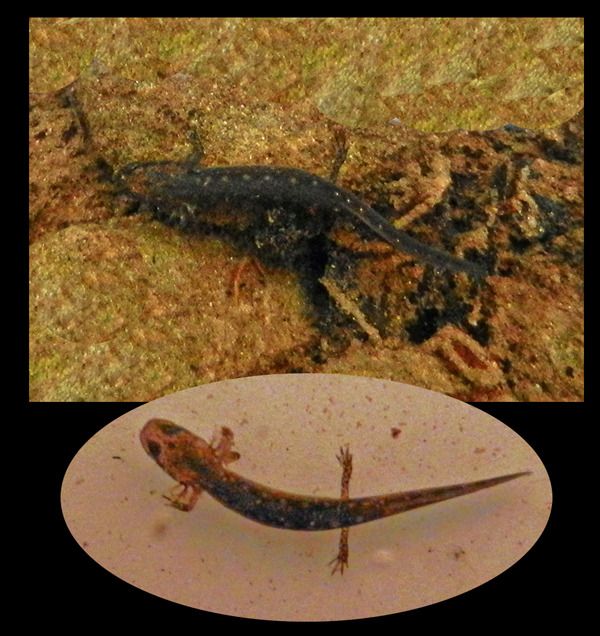
  <description><![CDATA[<div class="rss-post"><p><strong>Original post</strong> by OldTime &mdash; 2015-08-18 15:20:04 GMT</p><p>I found a couple of these larvae yesterday scrambling around in the shallow waters of a creek here in the Poconos. I would say they are a bit over a ½ inch. Sorry the photographs are so blurry but they were taken just before sunset and my camera doesn't do well in low light conditions. Anyone have any idea what species these are?</p>
<p>I posted this on another website but I think I stumped them. I'm hoping someone here might have some ideas!</p>
<p><img class="img-fluid" src="http://i104.photobucket.com/albums/m181/doctorkazoo/both-op_zpsdcdcs0dj.jpg"></p></div>
<p><a href="https://forums.kingsnake.com/view.php?id=2110339">View full thread on Kingsnake.com</a></p>]]></description>
  <dc:date>2015-08-18T15:20:04+00:00</dc:date>
  <dc:creator>OldTime</dc:creator>
</item>
<item rdf:about="https://forums.kingsnake.com/view.php?id=2028562">
  <title>Hellbenders</title>
  <link>https://forums.kingsnake.com/view.php?id=2028562</link>
  <description><![CDATA[<div class="rss-post"><p><strong>Original post</strong> by curtoid3142 &mdash; 2015-06-27 21:29:10 GMT</p><p>Can anyone tell me where i can find hellbenders near Boone,NC?  I am going to visit family there soon and I've always wanted to see one in the wild.</p></div>
<p><a href="https://forums.kingsnake.com/view.php?id=2028562">View full thread on Kingsnake.com</a></p>]]></description>
  <dc:date>2015-06-27T21:29:10+00:00</dc:date>
  <dc:creator>curtoid3142</dc:creator>
</item>
<item rdf:about="https://forums.kingsnake.com/view.php?id=2028465">
  <title>paddle tail salamanders</title>
  <link>https://forums.kingsnake.com/view.php?id=2028465</link>
  <description><![CDATA[<div class="rss-post"><p><strong>Original post</strong> by bemont &mdash; 2015-06-12 10:49:01 GMT</p><p>hi,im new here <img src="https://forums.kingsnake.com/admin/images/smiles/teeth.gif" alt=":D" class="smiley">..bought some paddle tail salamanders and it died..it had some white cotton like thing stuck to their bodies and i heard it was fungus..i bought 1 more and it still died..any help?? :/ thanks!!</p></div>
<p><a href="https://forums.kingsnake.com/view.php?id=2028465">View full thread on Kingsnake.com</a></p>]]></description>
  <dc:date>2015-06-12T10:49:01+00:00</dc:date>
  <dc:creator>bemont</dc:creator>
</item>
<item rdf:about="https://forums.kingsnake.com/view.php?id=2027575">
  <title>Fire Belly Newt Set Up</title>
  <link>https://forums.kingsnake.com/view.php?id=2027575</link>
  <description><![CDATA[<div class="rss-post"><p><strong>Original post</strong> by jlynnstites &mdash; 2015-01-09 06:50:19 GMT</p><p>Hello,</p>
<p>I have had a fire belly for six months now. With it there are two rainbow tettras, two male fancy tale guppies, and a male betta. All get along well they are in a 10 gallon with six gallons of water. There are plastic plants sticking out of the top so the newt can get out of the water. Gravel bottom.</p>
<p>Ideally I would like my newts tank to have a filter and some aquatic plants. I'd also like a cleaner substrate. I have seen many different options. Some say most anything others say you can't have gravel.</p>
<p>So my question is what other newt keepers have found. Ideally I'd like to use dirt, just seems better IMO, or sand, or cocunut fiber since I already use both for my leopard gecko and these two are cheap. I'd also like a bottom of the tank filter.</p>
<p>Again that's my ideal set up, something that works well to cut down on cleaning. But what I want more than anything us your opinions on what has worked best for you and why.</p>
<p>Oh, I'll be getting a turtle dock too so he has a proper dry spot.</p>
<p>Thanks for the help.</p>
<p>Jessy</p></div>
<p><a href="https://forums.kingsnake.com/view.php?id=2027575">View full thread on Kingsnake.com</a></p>]]></description>
  <dc:date>2015-01-09T06:50:19+00:00</dc:date>
  <dc:creator>jlynnstites</dc:creator>
</item>
<item rdf:about="https://forums.kingsnake.com/view.php?id=2025406">
  <title>new salamander</title>
  <link>https://forums.kingsnake.com/view.php?id=2025406</link>
  <description><![CDATA[<div class="rss-post"><p><strong>Original post</strong> by pmbugily &mdash; 2014-07-15 21:00:47 GMT</p><p>Hi, I recently bought what was supposed to be an axolotl that turned out to be a salamander. Within a few days of having him his gills shrunk. The store said they must have recieved tiger salamanders instead. We have moved him from an aquatic tank to a tank with mulch and a area to swim. The problem is he has not eaten since he has changed. When we first got him he was in water only and ate one fish. Since then he has not eaten anything. We have tried earth worms, blood worms, crickets, wax worms, and meal worms. Nothing! Its been a little over a week and I am getting worried. I would be grateful for any advice.</p></div>
<p><a href="https://forums.kingsnake.com/view.php?id=2025406">View full thread on Kingsnake.com</a></p>]]></description>
  <dc:date>2014-07-15T21:00:47+00:00</dc:date>
  <dc:creator>pmbugily</dc:creator>
</item>
<item rdf:about="https://forums.kingsnake.com/view.php?id=2024975">
  <title>Ensatina klauberi?</title>
  <link>https://forums.kingsnake.com/view.php?id=2024975</link>
  <description><![CDATA[<div class="rss-post"><p><strong>Original post</strong> by bisch7 &mdash; 2014-06-28 21:09:59 GMT</p><p>Has anyone built a refrigerated tank before? I am looking at building a show piece tank for like a coffee table tank that is cooled. I want to be able to keep some Ensatina in there safely and was curious to see if anyone has built a cooled tank before. I have great plans for filtered running water living moss and plants and all that. I find klauberi and pictus every year but refuse to take due to their sensitive nature but would believe they would make a great show piece.</p></div>
<div class="rss-post"><p><strong>Reply</strong> by mincus &mdash; 2017-11-02 00:44:37 GMT</p><p>>>Has anyone built a refrigerated tank before? I am looking at building a show piece tank for like a coffee table tank that is cooled. I want to be able to keep some Ensatina in there safely and was curious to see if anyone has built a cooled tank before. I have great plans for filtered running water living moss and plants and all that. I find klauberi and pictus every year but refuse to take due to their sensitive nature but would believe they would make a great show piece.</p>
<p>I have, The trouble you will have is in the viewing, you will get condensation on the glass and not be able to see inside.</p>
<p>I use coolers for mine</p></div>
<p><a href="https://forums.kingsnake.com/view.php?id=2024975">View full thread on Kingsnake.com</a></p>]]></description>
  <dc:date>2017-11-02T00:44:37+00:00</dc:date>
  <dc:creator>bisch7</dc:creator>
</item>
<item rdf:about="https://forums.kingsnake.com/view.php?id=2024021">
  <title>ADULT EUROPEAN FIRE SALAMANDER WON&apos;T EAT</title>
  <link>https://forums.kingsnake.com/view.php?id=2024021</link>
  <description><![CDATA[<div class="rss-post"><p><strong>Original post</strong> by cbryson &mdash; 2014-05-25 18:57:51 GMT</p><p>Hi all again!<br />
I am in need of some advice. My adult female European Fire Salamander has suddenly stopped eating.  She gave birth back around March 6 of this year to 15 larvae.  One of the larvae was cannibalized and sadly the other 14 passed, the last passing only a couple of days ago.  I followed everything I had read and all advice I had been given to raise the babies but still it didn't work.  I thought the last 3 were going to make it as they had began to eat small crickets and were growing but they just stopped eating no matter what I tried to give them.  My adult female though, Ms. Darwin, is a different story.  I've had her almost 6 months and up until recently she has done wonderful.  She is adjusted to her environment, it is kept at the optimal temperature for her, and she has had no changes to her environment.  Until recently she was an avid eater of her crickets.  However, since she stopped eating the crickets, I tried to give her some live meal worms today and as of yet she has not eaten them either.  There are no vets anywhere in the vicinity that cater to amphibians, reptiles, etc.  I'm not sure what the issue could be!  Any advice would be so appreciated!  Thank you in advance!</p></div>
<p><a href="https://forums.kingsnake.com/view.php?id=2024021">View full thread on Kingsnake.com</a></p>]]></description>
  <dc:date>2014-05-25T18:57:51+00:00</dc:date>
  <dc:creator>cbryson</dc:creator>
</item>
<item rdf:about="https://forums.kingsnake.com/view.php?id=2023155">
  <title>HELP! MORPHED FIRE SALAMANDERS!!!</title>
  <link>https://forums.kingsnake.com/view.php?id=2023155</link>
  <description><![CDATA[<div class="rss-post"><p><strong>Original post</strong> by cbryson &mdash; 2014-04-24 21:01:21 GMT</p><p>Hello all,</p>
<p>I need urgent help/information! I have 14 newly morphed European Fire Salamanders.  They all have morphed at different rates.  The oldest of them will be morphed for 7 days on Saturday, 04/26/14.  I have tried numerous ways to get them to eat.  I've only had one so far that ate one single blood worm and nothing since from any of them.  I need to know how long it will be before I should expect them to begin to eat!  I'm so afraid that they will not make it.  I've brought them so far that I don't want to lose them now.</p>
<p>Please someone tell me how long newly morphed Fires will go before they eat.  Also, please if anyone knows any tricks to make feeding easier then I will be so grateful.</p>
<p>I've tried feeding them bloodworms, cut up night crawlers, fly larvae, and even a small cricket.  I use tweezers to try to feed them but not luck yet.</p>
<p>Thank you in advance to anyone that can help!</p></div>
<div class="rss-post"><p><strong>Reply</strong> by OrangeHeterodon &mdash; 2014-04-28 18:19:10 GMT</p><p>I usually keep Eastern Newts and various terrestrial Floridian salamanders such as slimies and two-lines. The newts are aquatic, but have a terrestrial eft stage that just needs a damp environment. The actual salamanders I have kept use a fully terrestrial damp environment as well, not water except after heavy rains causing flooding (in the wild). To be on the safe side you could take a deli container lid and fill it with water. It gives a slight minor depth of water at ground level so that the small salamanders can get in and out without an issue. I would think that the damp paper towels, if kept so, should be enough. I have not kept European fire salamanders before though so I would go with the dish to be on the safe side as I do not know much about their natural history. Are the metamorphosed babies on land areas, bog areas, or still at the lake? This can tell you more about the actual requirements. Again, good luck <img class="img-fluid" src="https://forums.kingsnake.com/images/smiles/smile.gif" border="0" alt="">.</p></div>
<div class="rss-post"><p><strong>Reply</strong> by cbryson &mdash; 2014-04-26 19:19:27 GMT</p><p>Hi there! <br />
Thank you so much for all of the information and your hasty reply. I'm getting them set up as you said but do have one question that may be stupid. Since I will be putting in wet paper towels do I still need to provide a water dish as a means for them to get water? I figure I would need to but just want to be absolutely certain. Like I said, I don't want to lose any of them. They've come too far. Thank you again!</p></div>
<div class="rss-post"><p><strong>Reply</strong> by OrangeHeterodon &mdash; 2014-04-25 23:17:06 GMT</p><p>You could try an easy to monitor tub. For the newly morphs ones you could put them in plastic containers with wet paper towels, a piece of cork to hide under, and some food. This will make it easier for them to find food, as they may have a hard time in substrate and may not want to take from your hands.</p>
<p>Also try more than blood worms, offer appropriately sized crickets, wingless fruit flies, and other worm types such as small earthworms and red worms which are similar but easier to find at smaller sizes. They may not want blood worms. If the blood worms are dead, it may stem to that many amphibians have motion based vision and eat when they see food move. I usually use small to medium sized north american land-dwelling salamanders such as slimy salamanders, mud salamanders, and dwarf salamanders.</p></div>
<div class="rss-post"><p><strong>Reply</strong> by CindySteinle &mdash; 2014-04-25 15:49:10 GMT</p><p>From what I understand, live is the most important when trying to feed newly morphed babies.</p></div>
<p><a href="https://forums.kingsnake.com/view.php?id=2023155">View full thread on Kingsnake.com</a></p>]]></description>
  <dc:date>2014-04-28T18:19:10+00:00</dc:date>
  <dc:creator>cbryson</dc:creator>
</item>
<item rdf:about="https://forums.kingsnake.com/view.php?id=2022688">
  <title>Tilden park salamander</title>
  <link>https://forums.kingsnake.com/view.php?id=2022688</link>
  <description><![CDATA[<div class="rss-post"><p><strong>Original post</strong> by 4dnospolk &mdash; 2014-04-08 22:35:53 GMT</p><p>Turned a log over in Tilden park in nor cal and found this little beauty.<br />
<img class="img-fluid" src="http://gallery.kingsnake.com/data/208445image-med.jpg"></p></div>
<p><a href="https://forums.kingsnake.com/view.php?id=2022688">View full thread on Kingsnake.com</a></p>]]></description>
  <dc:date>2014-04-08T22:35:53+00:00</dc:date>
  <dc:creator>4dnospolk</dc:creator>
</item>
<item rdf:about="https://forums.kingsnake.com/view.php?id=2022495">
  <title>European Fire Salamander Larvae--HELP!!!</title>
  <link>https://forums.kingsnake.com/view.php?id=2022495</link>
  <description><![CDATA[<div class="rss-post"><p><strong>Original post</strong> by cbryson &mdash; 2014-03-31 23:31:25 GMT</p><p>Let me give a little background before I ask my question which may seem absurb to some.  I recently bought my first European Fire Salamander but was not informed that she was a female nor that she was pregnant.  Since this is my first amphibian, I am still learning!  Therefore, much to my surprise about 3 weeks ago I had 14 new little Fires to care for.  I have been doing so very well thus far I think.  However, my question is this.  Knowing that will be morphing soon, I need someone to please give me information about when I will know for certain when to take them from being completely aquatic to a semi-aquatic environment.  I have a fear that I will not know when the time is right and that they will drown because I did not move them quickly enough.  If anyone has anyone information that could help me, please let me know.  April 8, 2014 will be the 4-week mark since their birth.  Thank you in advance.</p>
<p>Candace</p></div>
<div class="rss-post"><p><strong>Reply</strong> by cbryson &mdash; 2014-04-22 21:25:49 GMT</p><p>I'm actually planning on doing just that! I've got 8 of the 14 that have thus far morphed. I working on now trying to get them to begin to eat. As soon as I get them stabilized, I'm going to post pictures and post what all I've done to raise them! It's been one heck of a learning experience! <img class="img-fluid" src="https://forums.kingsnake.com/images/smiles/smile.gif" border="0" alt=""></p></div>
<div class="rss-post"><p><strong>Reply</strong> by CindySteinle &mdash; 2014-04-16 14:13:43 GMT</p><p>Share your experiences and some pics!  Never know if someone would need this down the road!</p></div>
<div class="rss-post"><p><strong>Reply</strong> by cbryson &mdash; 2014-04-13 23:36:13 GMT</p><p>Hi there!</p>
<p>I know this reply is about a week after your reply to my request for help but I wanted to thank you! I had found a website that described almost exactly what you did as far as setting up a morphing tank for them and I have since done so. I tend to forget to check my email and when I did so just yesterday I saw your reply and just wanted you to know I had not ignored your response!  The 14 babies are still doing well and are growing so rapidly. I hope to see them begin to leave the water soon! So again, thank you! Take care! <img class="img-fluid" src="https://forums.kingsnake.com/images/smiles/smile.gif" border="0" alt=""></p></div>
<div class="rss-post"><p><strong>Reply</strong> by OrangeHeterodon &mdash; 2014-04-08 00:34:25 GMT</p><p>I realised my directions may not be 100% clear. When I refered to &quot;4 inches down from the top&quot; I meant holding just the lid in a vertical angle, 4 inches from the top of the lid and 4 inches in from the side of the lid. Don't make an incision on the side of the tub unless adding some filtering device otherwise making it escape proof and water proof gets in the &quot;too hard category,&quot; at least for me.</p>
<p>Again, good luck.</p></div>
<div class="rss-post"><p><strong>Reply</strong> by OrangeHeterodon &mdash; 2014-04-08 00:31:41 GMT</p><p>Hopefully this isn't too late.</p>
<p>I use to breed Eastern Newts for fun until it got to be too much, then I gave some to education, and returned the rest to the lake with surrounding wetlands that I acquired the adults from near my house. That is my experience and here is my point:</p>
<p>What I did, considering you only have 14 this should be easy, is a half and half enclosure. I set up a large 30 gallon holding tub (shallow and wide) with a self-made screen top -- really easy and I'll explain in a sec. I then filled the bottom with gravel and pushed it all to one side of the cage. This way, when the larvae were ready to become full-fledged efts, they could make the move to land without me being present. I added several clubs of &quot;terrarium moss&quot; bought in a box from my local pet store as well as some &quot;frog moss&quot; which was boxed sphagnum moss. I am pretty sure that you have figured out filtration and feeding by this point, not to mention your care is for a dif species. Basically just add gravel in an area that makes a gradual progression to an elevated land area.</p>
<p>Ok here is how I secured the top. I took the top of the 30 gallon  tub and 4 inches in from the side and down from the top I made an incision with a strong pocket knife. I then took a saw (in this case also on the knife) and cut out an area on the lid of the tub. I then stapled a wire screen over the lid of the cage after making sure it was pulled tight and voila.</p>
<p>Hope this helps! <img class="img-fluid" src="https://forums.kingsnake.com/images/smiles/smile.gif" border="0" alt=""></p></div>
<p><a href="https://forums.kingsnake.com/view.php?id=2022495">View full thread on Kingsnake.com</a></p>]]></description>
  <dc:date>2014-04-22T21:25:49+00:00</dc:date>
  <dc:creator>cbryson</dc:creator>
</item>
<item rdf:about="https://forums.kingsnake.com/view.php?id=2019984">
  <title>preserved/ frozen fire salamander</title>
  <link>https://forums.kingsnake.com/view.php?id=2019984</link>
  <description><![CDATA[<div class="rss-post"><p><strong>Original post</strong> by bballengee &mdash; 2013-12-05 20:52:39 GMT</p><p>Hello community,<br />
I am researching morphological variation in cb and wild Fire salamanders/ Salamandra salamandra. I am seeking preserved or frozen specimens. Please contact me if you have such specimens and I can pay for shipping and handling. brandon.ballengee@gmail.com<br />
Thank you very much,<br />
Brandon<br />
<a href="http://brandonballengee.com/research-interests/">Link</a></p></div>
<p><a href="https://forums.kingsnake.com/view.php?id=2019984">View full thread on Kingsnake.com</a></p>]]></description>
  <dc:date>2013-12-05T20:52:39+00:00</dc:date>
  <dc:creator>bballengee</dc:creator>
</item>
<item rdf:about="https://forums.kingsnake.com/view.php?id=2014278">
  <title>Dusky or 2-Lined?</title>
  <link>https://forums.kingsnake.com/view.php?id=2014278</link>
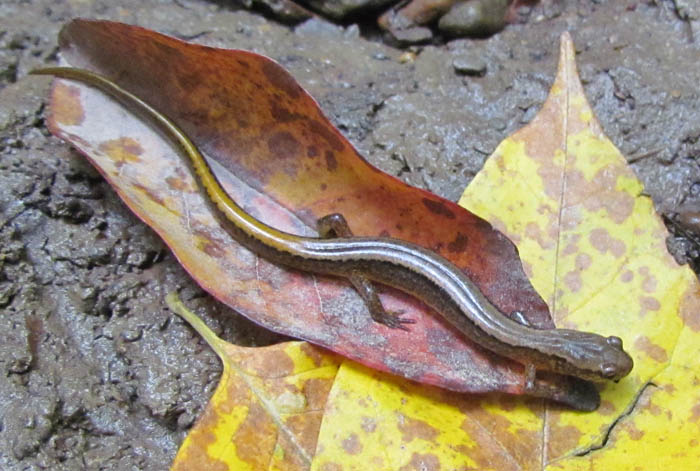
  <description><![CDATA[<div class="rss-post"><p><strong>Original post</strong> by oldtime &mdash; 2013-08-02 18:13:22 GMT</p><p>Are these Dusky Salamanders (Desmognathus fuscus) or Northern Two-Lined salamander(Eurycea bislineata)? I always thought they were Two-Lined but now after looking at some photos on the web I'm not sure!<br />
<img class="img-fluid" src="http://imageshack.us/a/img198/4738/bt1n.jpg" alt="Image"></p></div>
<div class="rss-post"><p><strong>Reply</strong> by oldtime &mdash; 2013-08-05 22:38:01 GMT</p><p>Thanks for answering! And by the way I love your blog. It's a lot like mine only better, LOL</p></div>
<div class="rss-post"><p><strong>Reply</strong> by tspuckler &mdash; 2013-08-05 21:57:57 GMT</p><p>2-lined<br />
<img class="img-fluid" src="http://thirdeyeherp.com/wordpress1/wp-content/uploads/2012/11/2l_6515.jpg" alt="Third Eye Herp"><br />
<a href="http://www.thirdeyeherp.com/">Third Eye Herp</a></p></div>
<p><a href="https://forums.kingsnake.com/view.php?id=2014278">View full thread on Kingsnake.com</a></p>]]></description>
  <dc:date>2013-08-05T22:38:01+00:00</dc:date>
  <dc:creator>oldtime</dc:creator>
</item>
<item rdf:about="https://forums.kingsnake.com/view.php?id=2010030">
  <title>Salamanders in Minnesota?!</title>
  <link>https://forums.kingsnake.com/view.php?id=2010030</link>
  <description><![CDATA[<div class="rss-post"><p><strong>Original post</strong> by ace_froman18 &mdash; 2013-05-07 02:28:30 GMT</p><p>So today was our first near 80 degree day in MN... Weather has been nice....<br />
I always read about how all you people go &quot;Herping&quot; and as an avid outdoorsman thought this would finally be easy as it was a perfect spring day..... I have tried Herping other times throughout our summers to no avail. The only thing I can ever find are frogs in ponds.... I have flipped over 50 logs near inland ponds and.... Nothing......</p>
<p>Where the hell are snakes and salamanders?</p>
<p>Ever. .?</p>
<p>I only read about people who find several every day and through years of being an outdoorsman, I have never seen a wild salamander... Ya ive found the occasional garter snake crossing my path. Painted and snappingnturtle.... But never a salamander...</p>
<p>My mother tells of her farm in northern Minnesota, and how she used to have 10000s of salamanders migrating over the gravel roads some days....</p>
<p>How can i catch the salamander in its natural habitat?</p>
<p>Help <img class="img-fluid" src="https://forums.kingsnake.com/images/smiles/smile.gif" border="0" alt=""> I just wanna find one! It's frustrating!</p></div>
<div class="rss-post"><p><strong>Reply</strong> by ace_froman18 &mdash; 2013-05-07 04:14:20 GMT</p><p>50 logs today... Some days much more than that!</p></div>
<p><a href="https://forums.kingsnake.com/view.php?id=2010030">View full thread on Kingsnake.com</a></p>]]></description>
  <dc:date>2013-05-07T04:14:20+00:00</dc:date>
  <dc:creator>ace_froman18</dc:creator>
</item>
<item rdf:about="https://forums.kingsnake.com/view.php?id=2008061">
  <title>Yellow Spotted Salamander</title>
  <link>https://forums.kingsnake.com/view.php?id=2008061</link>
  <description><![CDATA[<div class="rss-post"><p><strong>Original post</strong> by Thamnophis05 &mdash; 2013-03-22 17:40:33 GMT</p><p>My facility recently aquired a yellow spotted salamander, has anyone kept these in captivity before? Any ideas on feeding?<br />
It is currently feeding on crickets while we wait on waxworms. It is being housed in a 10g tank with coconut fiber and moss and a log to burrow under. It is amibient room temperature with a humidity level between 60 and 70%.<br />
Any suggestions would be appreciated.</p></div>
<div class="rss-post"><p><strong>Reply</strong> by thamnophis05 &mdash; 2013-03-25 00:49:34 GMT</p><p>Thanks for the information!</p></div>
<div class="rss-post"><p><strong>Reply</strong> by Luis &mdash; 2013-03-24 12:05:21 GMT</p><p>BTW you do not need a large or deep water dish for spotteds just enough for them to soak in.</p>
<p>This topperware is much bigger and way deeper than spotteds need it just happens to be that 3 lines need land and water.</p>
<p><img class="img-fluid" src="http://gallery.kingsnake.com/data/60583_lined__set_up-med.jpg"></p></div>
<div class="rss-post"><p><strong>Reply</strong> by Luis &mdash; 2013-03-24 11:47:15 GMT</p><p>I have two marbled and three lines (kept separate) which posting pics in gallery today and have had them for a year .<br />
Marbled are kept same as spotteds and same family.</p>
<p>As food gut loaded crickets are great and I find them better than mealworms .</p>
<p>The key is temperature, they need it COOL . Mine are kept at 68 but others I know have kept them up to 74 , they seem to stress if higher for to long.</p>
<p>You never see them much as they are considered mole salamander family (as are spotteds) .</p>
<p>Flat corkbark to hide under or driftwood is great, they do not like light but it will not hurt them as long as it doesn't give off heat.<br />
I use those spiral no heat bulbs for the plants which are rooted directly in substrate and they help eat waste.<br />
I mist the tank daily .</p>
<p>They need it moist and the substrate you use is great, I find moss to acidic for them.</p>
<p>A water dish they can soak in is great and as you know look at pets (well they hide close to 24/7 , lol) not handle type pets as their skin is sensetive as far as absorbing any soap,etc on your hands.</p></div>
<p><a href="https://forums.kingsnake.com/view.php?id=2008061">View full thread on Kingsnake.com</a></p>]]></description>
  <dc:date>2013-03-25T00:49:34+00:00</dc:date>
  <dc:creator>Thamnophis05</dc:creator>
</item>
<item rdf:about="https://forums.kingsnake.com/view.php?id=2007701">
  <title>Fire Salamanders</title>
  <link>https://forums.kingsnake.com/view.php?id=2007701</link>
  <description><![CDATA[<div class="rss-post"><p><strong>Original post</strong> by ssshane &mdash; 2013-03-16 01:02:05 GMT</p><p>I am really starting to enjoy keeping these, anyone else keep them?</p>
<p><img class="img-fluid" src="http://i63.photobucket.com/albums/h127/SSuperiorSSerpents/Salamanders 2013-/Sallyb_zps63663146.jpg"></p>
<p><img class="img-fluid" src="http://i63.photobucket.com/albums/h127/SSuperiorSSerpents/Salamanders 2013-/Sallyc_zps91eda1bd.jpg"></p>
<p><img class="img-fluid" src="http://i63.photobucket.com/albums/h127/SSuperiorSSerpents/Salamanders 2013-/Sallya_zps7c5250df.jpg"><br />
-----<br />
Shane@SSuperiorSSerpents.com<br />
http://www.ssuperiorsserpents.com/</p></div>
<div class="rss-post"><p><strong>Reply</strong> by Luis &mdash; 2013-03-24 23:45:32 GMT</p><p>Great looking fire.</p>
<p>I wish I could keep them but my coldest temp is 68 and my cool temp salamander and darter (fish) room varies from 68 to low 70s.</p>
<p>A friend in NY has fires in his basement .They were CB , he purchased them from kingsnake years ago . They LOVE wood over rocks and caves made out of driftwood or hollow driftwood is what they seek out.</p>
<p>If I had cooler temps I would certainly keep them as find them the prettiest of the salamanders and great eaters.</p></div>
<p><a href="https://forums.kingsnake.com/view.php?id=2007701">View full thread on Kingsnake.com</a></p>]]></description>
  <dc:date>2013-03-24T23:45:32+00:00</dc:date>
  <dc:creator>ssshane</dc:creator>
</item>
<item rdf:about="https://forums.kingsnake.com/view.php?id=2006593">
  <title>Anyone keep Florida peninsula newts</title>
  <link>https://forums.kingsnake.com/view.php?id=2006593</link>
  <description><![CDATA[<div class="rss-post"><p><strong>Original post</strong> by Fleck &mdash; 2013-03-01 20:19:13 GMT</p><p>Anyone keep Florida peninsula newt (N. v. piaropicola)?</p>
<p>From what I understand they skip the eft stage but do enjoy a haul out area from water .</p>
<p>I am planning on a pair for a 20 gallon long half filled with water , floating plants, few planted plants ,floating piece or corkbark as haul out area, temps 72 to 74 .</p>
<p>Not sure if temp bit to high?</p>
<p>Thank you</p></div>
<p><a href="https://forums.kingsnake.com/view.php?id=2006593">View full thread on Kingsnake.com</a></p>]]></description>
  <dc:date>2013-03-01T20:19:13+00:00</dc:date>
  <dc:creator>Fleck</dc:creator>
</item>
</rdf:RDF>