Posted by:
DMong
at Thu Feb 3 11:23:09 2011 [ Email Message ] [ Show All Posts by DMong ]
And let's not also forget about the 3o plus long years they have been right here in THIS country and also bred to countless folks polyzona, abnorma, and stuarti over the years because they never knew the differences either!!..LOL!. Because historically, to most ALL people who have EVER BEEN in this hobby, any snake that has fairly wide triads and a snout band has ALWAYS basically been considered a "Honduran" milksnake. I also guarantee some are far more genuine hondurensis than others too depending on whatever any "Joe-Blow" has been breeding his to.
Now don't get me wrong folks, I very much love working with these Hondos, and have had many of them over the years just like everyone else has. Mine all key-out great as hondurensis too. The only real difference here is that I know what good examples are supposed to look like and what the other Latin subspecies are supposed to look like. Once you start getting into mixed percentages of lineage, the identification becomes vertually all but impossible.
Someone,..ANYONE! please attempt to tell me I am wrong and this is not so..HAHAAHAA!!
The simple fact is, if you do NOT know the difference,...you do NOT know the difference......simple as that.
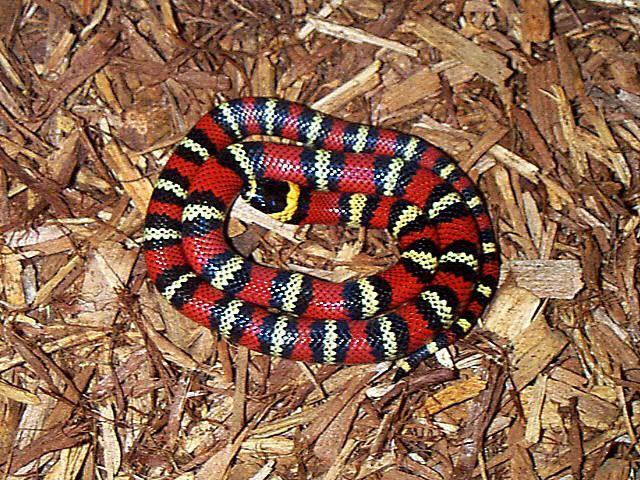
I would consider this normal non-het for anything tangerine I had back in the very early 90's to be about as authentic a hondurensis as any could be.

Hmmmm?, now I wonder what this snake might have been bred to afterwards when I sold it to a local pet store back in the mid-90's??? 
~Doug
-----
"a snake in the grass is a GOOD thing" 
my website -Serpentine Specialties
[ Hide Replies ]
|








 exactly Kevin.... - DMong, Thu Feb 3 11:23:09 2011