Posted by:
DMong
at Wed Sep 21 00:57:11 2011 [ Email Message ] [ Show All Posts by DMong ]
Hi Amy,......
Well, first off, tricolor and tangerines are very normal wild-type colorations, and not simple recessive mutations. They can be extremely variable when mixed, even within any given clutch. They can be on either far end of the scale, or anywhere in between depending on the parent lineage that produced them.
Since hypos and amels still involve red, orange and yellow pigment(erythrin and xanthin), and anerythristics(or maybe even more accurately termed extreme hypo-xanthics) do NOT display these pigments(or hardly anyway if indeed hypo-xanthic). All that is left to display is any pale remaining coloration when those colors are gone, which is a very light pinkish-gray in the RBR(red body rings) and pure white, or off-white, translucent pinkish color in their inner triad rings(rings of three).
What's really strange is, the anerythristic gene itself that is also one of the two composites of the double homozygous ghost morph always leaves the inner triad rings substantially lighter, even in what "would" be a tangerine phenotype, or even a tangerine bi-colored phenotype. Anery's and ghosts simply NEVER display what would normally be the red body rings and the light inner triad rings the same shade like it is displayed in many tangerine hypos and tangerine amels.
It is actually most of the time quite impossible to tell if an anery or ghost would normally be a tricolor or a tangerine because of this phenomenon. One can only distinguish if a ghost or anery would have normally been a tangerine when they display VERY WIDE inner triad rings. This is always far more indicative of tangerine forms. Tricolors and many intermediate "peach" phase animals generally have thinner inner triad rings, but not necessarily always. So basically, you can tell if an anery or ghost WOULD have normally been a tangerine phenotype if it has extremely wide inner triad rings.
And by the same token, if an anery or ghost has very thin inner rings and they are PURE snow white, you can be relatively sure it would have normally been a tricolor. Many tangerine ghosts tend to have somewhat less of a contrasty pure snow white inner ring color, and is a bit more of a creamy, translucent pinkish beige coloration.
for some reason anery's are virtually impossible to tell unless their inner white rings are extremely wide. the inner ring color itself doesn't seem to be much different in anerys. But can be a bit more noticeably different in many ghosts however.
This anery I produced would have possibly been an intermediate peach, but hard to really say.......

And this ghost would have DEFINITELY been a tangerine without question, or even a tangerine bicolor due to her EXTREMELY WIDE translucent, creamy pinkish-beige inner rings........
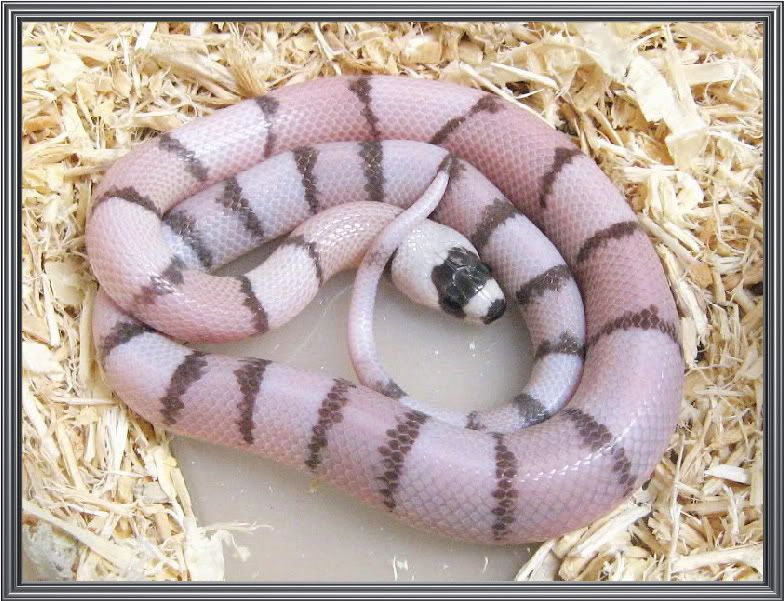
same snake a bit older.....
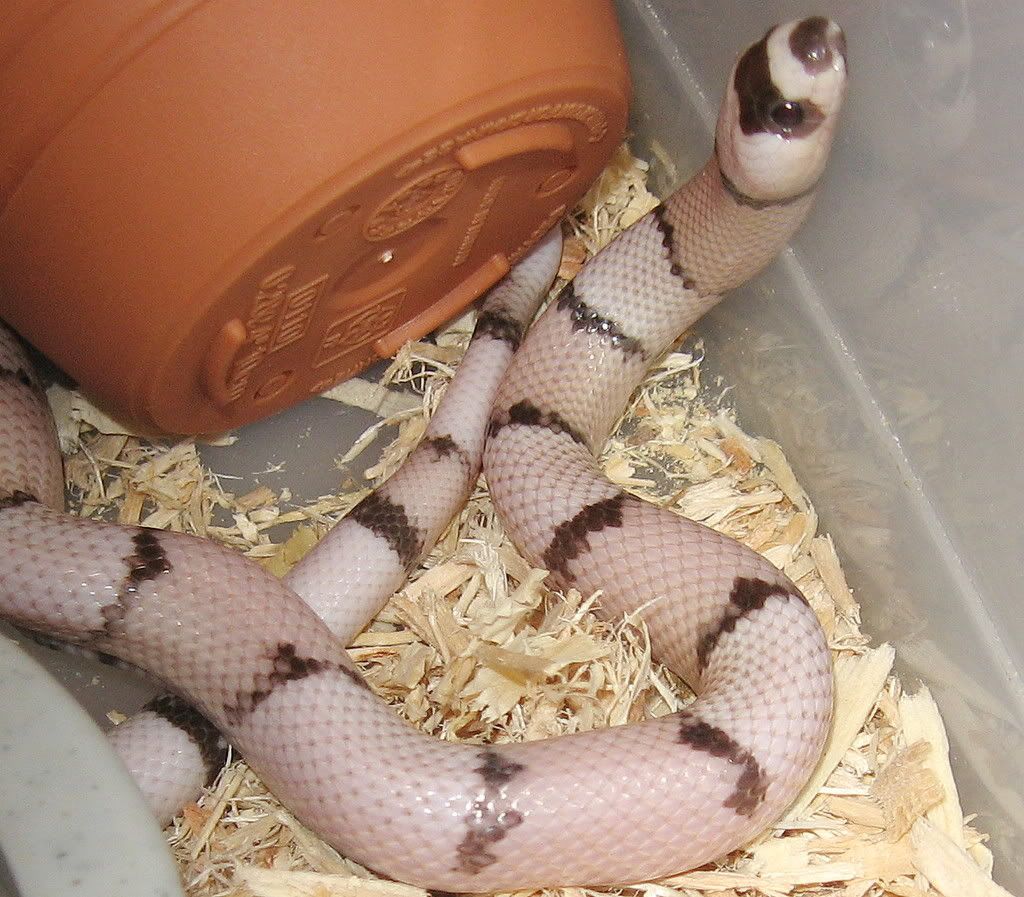
On the other side of the coin, this ghost would have most certainly been a tricolor since it has thinner, pure snow-white rings as a hatchling.....
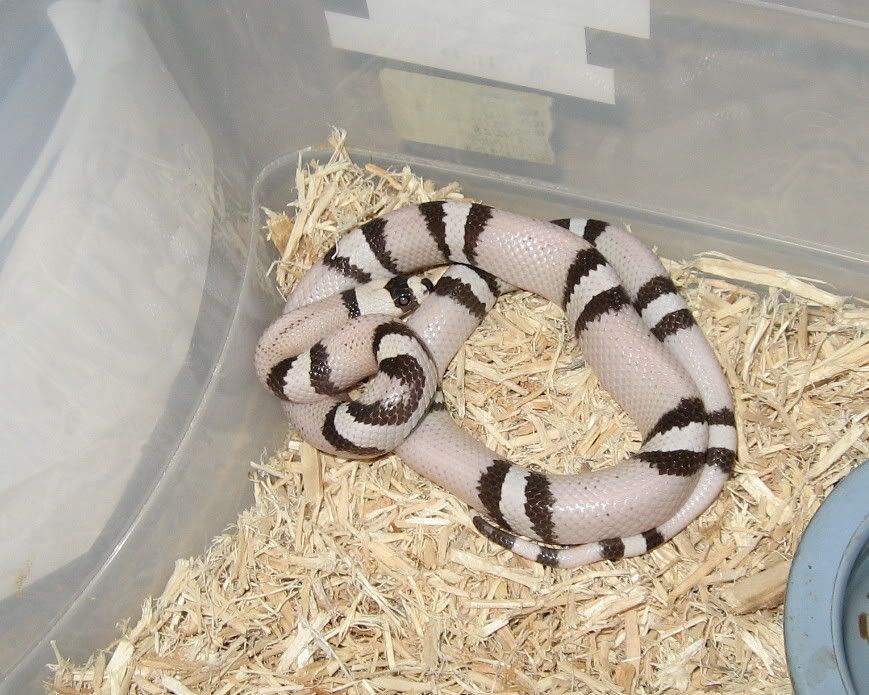
another shot of him as he matured a bit more.....
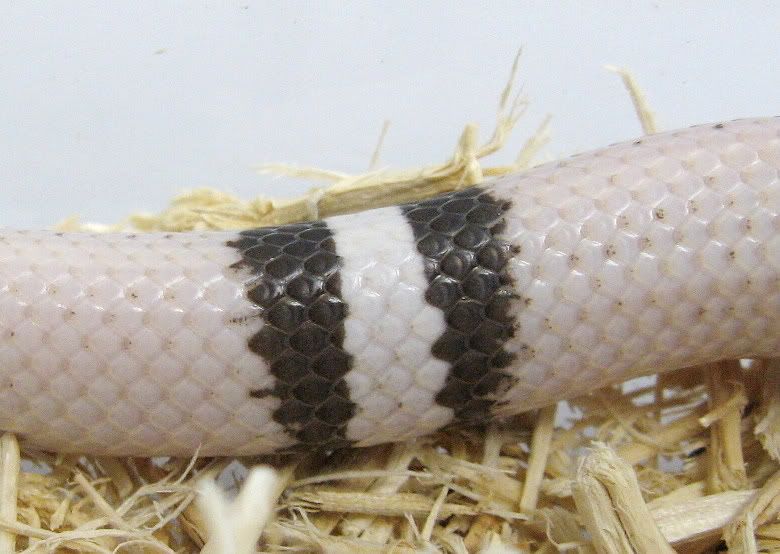
You can see some of the different looks here too in the same clutch....
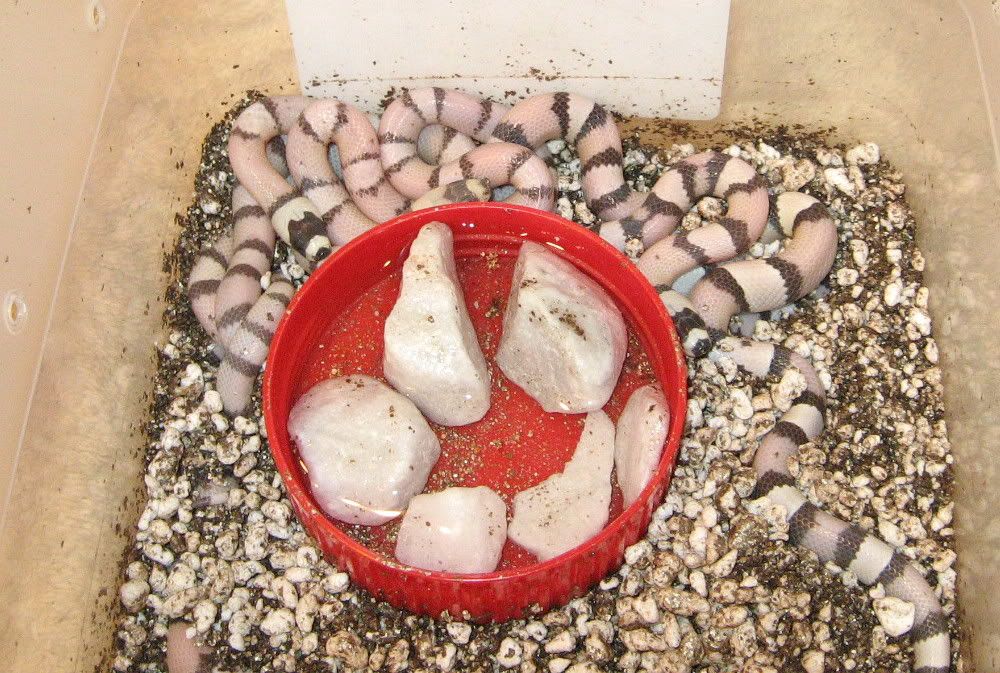
This one is likely a tangerine type....
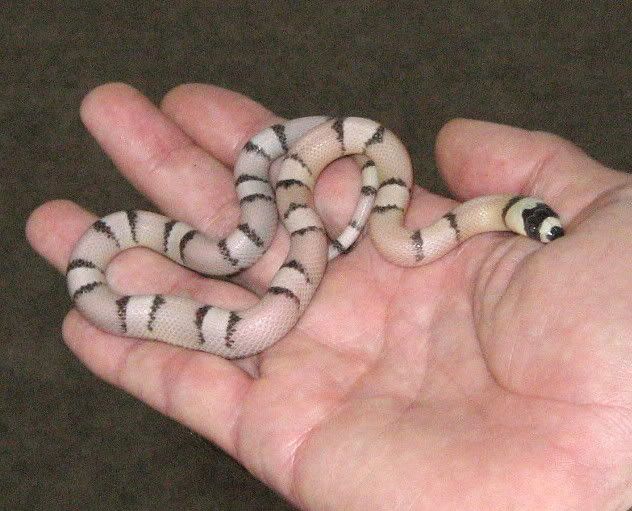
Anyway, I have a lot more pictures of anery's and ghosts, but to really answer your question....you will never see an anery or a ghost that is visually bicolored with the very same colors in the RBR and inner rings. The anerythristic gene itself makes this impossible for some reason as opposed to the hypo and amels that still contain erythin and xanthin(reds and yellows). They of course can easily be bicolored.
I know this may have been a bit confusing, but I hope I explained it well enough to where it made some sense anyway..LOL..
cheers!, ~Doug
-----
"a snake in the grass is a GOOD thing" 

serpentinespecialties.webs.com
[ Show Entire Thread ]
|