Reptile & Amphibian Forums

Welcome to kingsnake.com's message board system. Here you may share and discuss information with others about your favorite reptile and amphibian related topics such as care and feeding, caging requirements, permits and licenses, and more. Launched in 1997, the kingsnake.com message board system is one of the oldest and largest systems on the internet.

Click for 65% off Shipping with Reptiles 2 You
Click for ZooMed
Click here for Dragon Serpents

Why BURMESE STARS are elite in the trade

Columbia Mar 05, 2006 07:15 PM

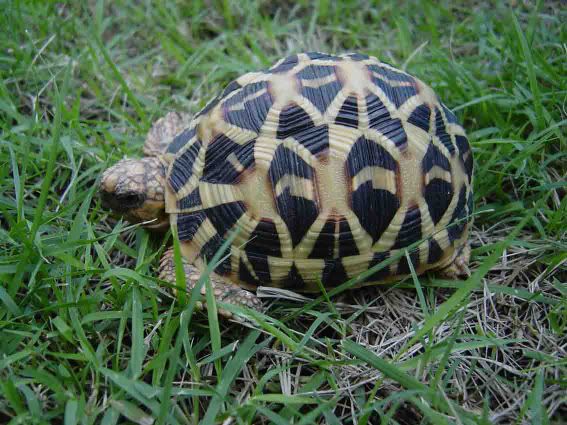
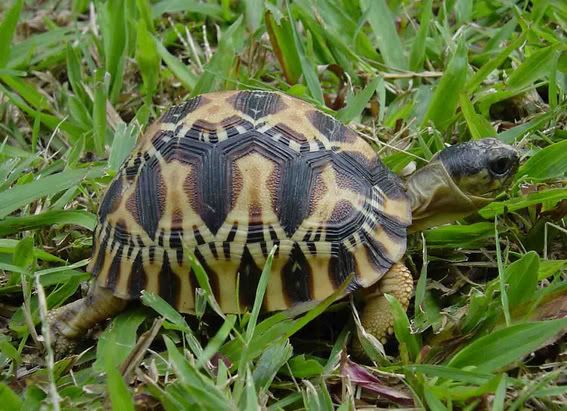
As many of you know, the Burmese Star Tortoise, or Geochelone Platynota, is considered by many tortoise experts all over the world to be the most beautiful tortoise in existence (radiata, and G elegans often tie for this title as well). Over the years, while radiata have been constantly bred by renowned breeders around the country, the Burmese Star has not.

There are only a handful of trusted breeders of Burmese Stars in the world, to name a few: Jerry from PNW turtleworks, Jeff Gee, Bill Zovickian, and Pete Mimikos. In a recent expedition in the wild conducted by trained volunteers and dogs, 400 hours were spent, netting only 5 tortoises. This information can be found on wikipedia.

In a few years, or perhaps even less, this animal will likely make it onto the CITES list, which will make their value skyrocket. Get yours now, before it's too late!

Replies (14)

JohnH Mar 05, 2006 08:07 PM

I agree that this species is among the most beautiful of all turtles and tortoises. I personally wouldn't put elegans in the same category as radiata and platynota though.

Regarding the 4 people you have identified, 2 of them have not hatched burmese stars themselves but have offered for sale burmese stars produced by other people. Also, 2 key names left out are Will Ahrens and Pete Gardiner. There are also a couple AZA institutions that have successfully reproduced these including, Bronx Zoo and Zoo Atlanta.

Lastly, platynota are CITES listed- CITES Appendix II. They would undoubtedly be listed as CITES I based on their very low numbers but the Govt. of Burma (Myanmar) must request this recognition as the species is only found in Burma. Burma is not a CITES signatory and cares more about running a miitaristic govt. than a soon to be extinct tortoise. Many believe the wild population is functionally extinct already and the remaining population rivals that of the very rare yniphora tortoise.

Columbia Mar 05, 2006 09:06 PM

Yes, I'm sorry to have left out the names of very established breeders of Burmese Stars. Also added to the list should be Dr. Peter Liu from Taiwan, who is very knowledgable regarding the behavior and growing patterns of the tortoises. His website can be viewed here, and should be considered the bible to all Burmese Star breeders and enthusiasts:

http://home.kimo.com.tw/foolzoo/

Concerning the extremely rare yniphora tortoise, evidence does not indicate that the Burmese Star is anywhere close to being as endangered as the plowshare. There are perhaps 250 left in the world, and although the exact numbers of the Burmese are unknown, it is estimated that there exist at least a few thousand, if not a few tens of thousands. In fact, wild Burmese are still seen occasionally in Chinese food markets. The plowshare tortoise is much much rarer than the Burmese Star. This data is from Dr. Peter Liu.

As far as concern for the Burmese goes, there are only a handful of distinct bloodlines that are owned by the lucky breeders in the US. Some bloodlines have a "high blonde" variety of Burmese, which makes them more valuable than "high black" specimens. In particular, the blonde varities with the elongated flower-petal shape pattern are often considered to be the most desirable when it comes to shell patterning.

Burmese Star prices will likely increase within the next few years. They are among the highest prices paid for any species of rare tortoise to date, ranging from $1500 to well over $2000 for babies. Juveniles, which are rarely seen in the market would likely go over $3000, and adult specimens are worth at least $8-9k in today's market. In the next few years, as wild populations of this rare and magnificent tortoise continue to plummet, the prices will appreciate significantly, and the lucky breeders of this tortoise will see their profits soar as demand remains constant.

In response to the previous poster, G elegans, especially the Sri Lankan variety is considered by some to be more beautiful than radiata and platynota, which is why I put them in the list. However, Sri Lankans are nowhere near as rare or scarce as their Platynota cousins, which is why many experts would not put them in the same category. Actually, radiata are MUCH more common than platynota as well, so perhaps there should even be a distinction among the radiated and burmese star tortoises.

As far as my own tortoises, I keep them in a laundry basket that is approximately 2x3. I feed my tortoises a variety of greens, with carrots, tomatoes, and Mazuri tortoise chow. I literally do not do anything to care for these animals other than provide them with a UVB light and heater, and bathe them once every few days in warm water. These are extremely hardy and easy to keep animals. I keep them right in my college dorm room, and they are magnificent to watch and study. In addition to being great stress relievers, I find their company fun, and every visitor I've had have complemented their beauty.. which is truly astonishing.

In short, this is a truly magnificent tortoise, and I feel truly lucky to own several specimens. I cannot wait to watch them grow and maybe even forming a breeding colony someday. If any fellow Burmese or high-end tortoise enthusiasts would like to contact me for more information or trade information, please do so. My email address is il2117@columbia.edu.


simias Mar 05, 2006 09:55 PM

Burmese stars are certainly beautiful, but I would URGE anyone contemplating buying one to find out if the animal has truly been captive bred, or more often, one of the many smuggled animals sold falsely as captive produced. Be part of the solution, not part of the problem. I've seen Burmese stars in the wild in one of the few remaining habitats in Burma where they occur; their situation is really dire, and getting worse rapidly due mainly to the illegal pet trade.

Columbia Mar 05, 2006 11:31 PM

Very true, because it's important to be a conservationist, not an exterminator. Perhaps more posters can elaborate on the rarity of radiata vs burmese star. This is still not entirely understood.

simias Mar 06, 2006 12:44 AM

actually, burm stars are far more rare in the wild than radiata - in the right habitat in Madagascar, radiata can be quite abundant. The listing of species as CITES appendix I involves some politics, and really burm star need the designation right now. Onecan still go into illegal animal markets in Asia and buy smuggled burm stars for $100 or so -

JohnH Mar 06, 2006 08:06 AM

The wild population is/was decimated for food markets in China since the Chinese have more 'buying power' since its currency was converted and the emergence of a 'middle-class' citizen resultung from economic capitalism that has sprung up in the last decade. This new found wealth in China has brought luxuries that did not exist before. One of these unfortunately is the desire to consume the more rarer and expensive turtles and tortoises, in this case platynota. Prior, cheaper more readily available animals were chosen.

There are also those that breed the tortoises outside of their habitat that put offsrping back into the pet trade. There are radiata being bred outside of Madagascar in places like Thailand, Singapore and Japan. I have heard that there is the occasional captive bred yniphora to be found in a pet market as well.

mrcota Mar 06, 2006 10:48 AM

I have spent a significant amount of time in all three countries you listed in your second paragraph. In Thailand, there is not even a rumor of someone ever producing eggs from G. radiata, yet alone producing offspring. I would think that would be very big news here if that were to happen and there would at least be a rumor of that happening.

Singapore would have a very rough time doing anything with captive bred progeny, if they did have any, since there are no exotic reptiles allowed in Singapore. Of course, some make it in, but to get it in, it has to be a very small specimen, like a hatchling, and they take a long time to sexually mature. Did the Singapore Zoo produce these G. radiata offspring? I did not remember them having G. radiata last time I was there.

Those baby G. radiata coming into Japan are most probably being smuggled in, as Japan launders more illegal reptiles for shipment into the US and EU than anyone, by making them legitimate- giving them false paperwork- like they were captive bred. Many Australian reptiles have been taken (smuggled) into Japan and sold to the US with the "appropriate" paperwork. If you look into the origin of some of the rarer Australian reptiles in the US, you will find many came from Japan, but things get fuzzy from there, there is no trail- no real trail.

G. yniphora young that are making it to the markets (there are not too many) in Asia are coming from Madagascar, not from anyone captive breeding them.

I have looked a great deal into how some of these animals are making their way into the pet trade. Where are you getting your information from?

mrcota Mar 06, 2006 03:31 AM

For being as rare as you claim, there are certainly many that come out of Myanmar. It is one of the more common tortoises available in the Asian pet trade, although it does demand a high price, higher than that listed elsewhere in this thread.

As someone listed in this thread, CITES listings are more politically based and even more commercially based than on the basis of how much a species needs protection. Since the country of origin is often the one who initiates changes of CITES status and Myanmar is not a signatory, it is highly unlikely that it will change its status to Appendix I.

I have seen MANY Geochelone platynota and although they are a very attractive tortoise and I would rank it as one of the most beautiful species, but I believe that the Southern Indian/Sri Lankan Geochelone elegans or a Geochelone radiata with a decent pattern definitely compare with them.


Cheers,
Michael

Columbia Mar 06, 2006 10:46 AM

Does anyone know what the burmese star situation in Japan is like? Are they as popular as they are in the US? What is it like in countries like Singapore and Thailand?

mrcota Mar 06, 2006 10:54 AM

They all seem to like them. Tortoises appear to sell more than any reptile. Unfortunately, the more rare, the more popular. With G. platynota being beautiful and rare, it is especially popular.

Columbia Mar 06, 2006 11:19 AM

Is there any way to get specimens other than hatchlings on the market?

mrcota Mar 06, 2006 06:19 PM

Most of the G. platynota I have seen were adults and sub-adults. The problem is going to the US or EU with them, because they do not have any paperwork.

THAsia Mar 08, 2006 08:28 PM

There are at least six specimens with CITES paperwork in the US, perhaps more now. So hold tight and you will be able to get specimens with CITES documentation...which could be handy when they become CITES 1.
-----
Michael
http://turtletracker.com

THAsia Mar 08, 2006 08:26 PM

Japan has imported thousands of playtnota over the years. You can find them on Japanese auction sites (or you could several months ago) in large numbers. They are all smuggled but Japan seems really lax on their regulations. I saw quite a few platynota for sale in China in 2001. Usually they were behind the scenes but occasionally you could find them in open markets.
-----
Michael
http://turtletracker.com

Site Tools