I have only seen one in my lifetime and that was at the San Diego zoo some 30 years ago. Would be nice if someone had a pic. I would imagine someone does. I have been working with caroteen and find that it DOES influince color in snakes. Snakes that eat Bats and Bugs get mega doses of caroteen in their diet. I have some data that suggests that caroteen given to gravid females can also influince color in neonates!
-----
Reptile & Amphibian Forums
Welcome to kingsnake.com's message board system. Here you may share and discuss information with others about your favorite reptile and amphibian related topics such as care and feeding, caging requirements, permits and licenses, and more. Launched in 1997, the kingsnake.com message board system is one of the oldest and largest systems on the internet.


Red Sub-oc
Sighthunter
Apr 17, 2006 12:02 AM
Replies (49)
zach_whitman
Apr 17, 2006 12:06 AM
I'd love to hear more about that.
cheers
Sighthunter
Apr 17, 2006 12:10 AM
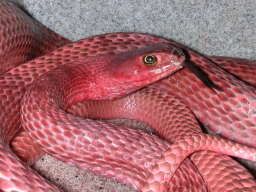
This is a wild caught Bat Eating Coachwhip as it was found. I use Flamingo Chow to enhance color on captives and it works on yellow and red. I have turned yellow snakes orange.
-----
alex
Apr 17, 2006 09:04 AM
Do you think the snakes are healthy at mega-doses of b-carotene? If it is converted into vit. A in the body, that could be a bad thing as it is easy for animals to be overdosed on the fat soluble vitamins as they have no method of excreting it from the body. In mammals, this is rate limited by Vit. A stores, but reptiles I've never seen much on the way of nutritional studies. B-carotene also is not homogenous, it just requires that they be C40H56 with a B-ionone structure. How long term has your study been & what carotenes are they on? Approximately what dosage are you snakes receiving through their diet? Do you know anything about the metabolism of it in reptiles? I don't and I'm curious 
In humans there is a syndrome where the skin becomes orange at high doses, but the effect is transient upon cessation of the excessive intake (the classic example is a group of men who decided to stop smoking and started eating enormous quantities of carrots)
I'm also not convinced that either snake you've shown is the result of B-carotene administration. The coachwhip might be expressing different forms of melanin for example (there is a difference between eumelanin and phaeomelanin, but they bind to the same site in cells for uptake). There's also the possibility that a normal dose of Vit. A may restore function that's lacking in most snakes (again, we have little on true dietary requirements for them, so are you correcting some underlying immunosuppression or allowing expression of a downregulated gene?) The Spilotes may have that orange colour from the carotenes, but his pattern is almost certainly unaffected by it, and I've seen orange colour in other Spilotes.
Can you post any of your data? I'd love to see it. I think you need some big cohort studies though....
Sighthunter
Apr 17, 2006 11:27 AM
I started by using natural sourced that are not oil based. I used fresh squeezed carrot juice mixed with egg yokes from range chickens that have very orange yokes. I mix in equal part of water and inject it into frozen thawed rats and mice. Over dose is impossable. I gut load chicken chicks with flamingo chow that has carotenoids for my larger snakes. I have been doing this for about seven years. I know the sub-ocs will blush orange when fed yoke/carrot juice. Here is a pic.
-----
Sighthunter
Apr 17, 2006 11:29 AM

-----
mchambers
Apr 17, 2006 10:08 AM
with all due respects, how do you KNOW this snake pictured of wild caught was in fact a " bat eating " snake ? Of my 40 years of looking in west Texas the snake in this picture while beautiful is nothing more than a good looking M flagellum testaceus from the west area of Big Bend that we see. ( some found north and east of Big Bend ). The book " the snakes of Texas " by Alan Tennant list food prey of wood rats, a lot of lizard prey, birds, and even rattlesnakes with the mentioning of bats as food. In captivity and the ones we kept and bred, the captived adults as the neonates showed no lesser pigmentation of lesser color on a diet of mice.
-----
Sighthunter
Apr 17, 2006 11:33 AM
I have a bridge that has bats. The coachwhips have bat bites and have been caught in the act of eating bats. Buzz Ross was with me so he is a credable source. The coachwhips around that bridge are very pink and they are brown a very short distancr from the bridge. I have been studieng the snakes for about four years.
-----
mchambers
Apr 17, 2006 01:07 PM
LOL ! I'll have to go to the alterna forum on this one. Just kidding !
-----
BillMcgElaphe
Apr 17, 2006 03:35 PM
Aw Come on..... Don't pick on Buzz....
Who would entertain you at 2 AM by building pebble snakes on Boy Scout Road?
-----
Regards, Bill McGighan
Sighthunter
Apr 17, 2006 06:16 PM
Did he mix any red berrys in with the pebbles? He makes good ice coffee too.
-----
BillMcgElaphe
Apr 17, 2006 06:22 PM
I think he did!
Whatever, it really was quite convincing when the headlights of the car hit them!
-----
Regards, Bill McGighan
Sighthunter
Apr 17, 2006 06:33 PM
He has got me more than once we did pull a real Milk from boyscout last year to make up for buzzes pebbles.
-----
Sighthunter
Apr 17, 2006 11:42 AM
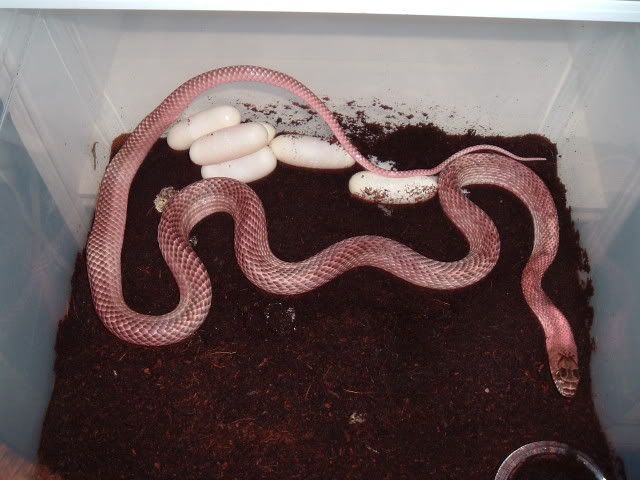
With all due respect I am one of the only breeders of coachwhips in the US and certainly the person that has been working with them the longest. I have been Breeding them and raising them for 11 years and there is a BIG difference between the ones that get caroteen and the ones that don't.
-----
Sighthunter
Apr 17, 2006 11:51 AM
Here is a Mexican Beaded Lizard I accidently turned pink!

-----
Sighthunter
Apr 17, 2006 12:27 PM
The only point I was trying to make is that diet influences color. Since I am the person that has done this the longest looks like you will have to take my word for it. The Barkers had tried this with in-conclusive results but did happen to have the Yellowiest carpet pythons anywhere around. I am by no way an authority and do not claim to be, but don’t you think it is odd that to make orange bearded dragons you have to gut load beta carotene? I in no way want to overcompensate to get my point across but I will make any and all information available to anyone interested. There does seem to be a difference between the synthetic carotinoids in flamingo chow and natural sources. The synthetic seems to affect other aspects of color in an unnatural way such as turning my beaded pink. There does have to be the genetic ability for an animal to use the vitamin. Seems that Sub-ocs that show some orange will benefit where others will become a brighter yellow. I have data on Spilotes, Yellowtail Cribo, Sub-ocs, Beaded lizards, Coachwhips and a few others. I am no scientist but have been playing with this more than most other people.
-----
mchambers
Apr 17, 2006 01:32 PM
said the carotene could or could not influence color. Said that I have observe the same coloration of red coachwhips just as brite ( maybe more ) and just as red/pink ( maybe more ) in wild populations as the picture. Here is more tobacco for your pipe > I have seen even more pinkish in wild heloderma. Maybe because age wise i have hunted more years and have been fortunate to see these ? Oh , I know the Barkers also. Alluding ( I may be wrong in reading your post and sorry that i may ), to the fact of not a lot of documentation of breeding coachwhips in captivity or a color of coachwhip, there are STILL people out there that couldn't care less to the herp community on what they think and or they don't even know of such and in this case the last red coachwhip breeding by my friend isn't computer savvy let alone having a computer. LOL ! I'm not a FULL pledge Herpetologist just a herpetoculterist like they call us. So I also don't have all of the answers or whys.
-----
dustyrhoads
Apr 17, 2006 01:43 PM
Yeah those Red/Pink coachwhips are REALLY common up here in southern Utah. And I have seen them from elsewhere too.
Suboc.com
Sighthunter
Apr 17, 2006 06:28 PM
Pink are found everywhere my point is DIET. Helioderm eat quail eggs in the wild (caroteen) Coachwhips eat bugs, lizards etc... My point is that when I feed flamingo chow in particular to my subadult coachwhip you can see veins of intense pink within a few sheds. You seem to like an argument as you have something to say about anything I post so if I give you a cataqlogue of effects you will need to dispute it.
-----
phiber_optikx
Apr 17, 2006 10:45 PM
Just curious why Dasypeltis scabra aren't orange then since they are specialised eaters and eat only eggs.... I am sure diet has something to do with a TEMPORARY pigment alteration but you can't have anything permanent unless there are genetics behind it.
-----
0.1 Snow Corn "Hope"
1.0 Ball Python "Wilson" (Castaway)
1. Orange Albino Black Ratsnake "Chunk" (Goonies)
.1 Orange Albino Black Ratsnake "Peaches"
0.0.1 Mexican Black Kingsnake "Onyx"
Sighthunter
Apr 18, 2006 12:01 AM
What started all this is when you catch a coachwhip that is screaming pink in the wild it fades within a year or two. I raise falcons and the caroteen determines how yellow the feet get. I thought why not see if it has the same relationship with snakes so my first subject was a coachwhip but I started trying it on spilotes and others. In coachwhips synthetic Caroteen works best and colors the ventral surface first. Once the belly colors up it begains to bleed into the scales. In spilotes the orange starts the same on the ventral surface but bleeds into the scales from the center of each scale kinda weird. Not all snakes color up in a predictable manner but there is a definate connection between caroteen and color.
-----
zach_whitman
Apr 18, 2006 09:55 PM
very interesting stuff...
how long do the snakes keep the enhanced color when you stop gutloading?
Sighthunter
Apr 20, 2006 01:35 AM
It varies from species to species. Just think of iut like this a wild very pink Coachwhip will fade out after two years and stay that way unless vitamins are used.
-----
Sighthunter
Apr 17, 2006 12:23 AM
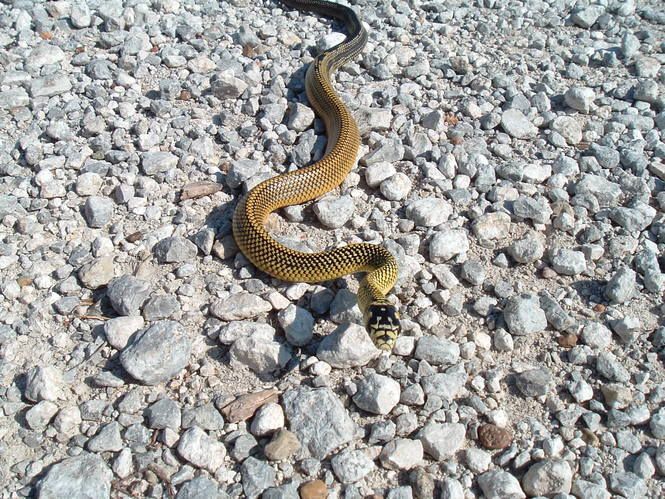
I had heard stories about Spilotes that were orange when they came in. My theory was that they were feeding on hatchling birds high in caroteen. I started feeding my captive Spilotes caroteen and they started turning orange but to my suprize my pair of very light yellow adults produced this!
-----
BillMcgElaphe
Apr 17, 2006 05:01 AM
Most interesting thread, Bill.
Looking forward to see more on this in the furture as others try to duplicate what you have experienced.
Thanks.
-----
Regards, Bill McGighan
Sighthunter
Apr 17, 2006 08:39 AM
I am more than willing to share information as it becomes avalable...........Glad you have enjoyed this thread, keeps us all thinking.
-----
dustyrhoads
Apr 17, 2006 01:01 PM
titles of scientific evidence (aka an article or paper) that deals with feeding these "color-influencing" supplements (for lack of a better term)?
That would benefit everyone here and would be interesting to see.
The red phase animals (Trans-Pecos Rats) have been found in the Davis Mtns., but photos are hard to come by.
I know a few people that have had them in the past, and one person that now has one.
The trouble is that fewer subocs are found on the Boy Scout Road than many places within their range, and only a portion of those have the nice red color.
Subocs typically match the substrate where they are found, though still variable. Kinda similar in how Crotalus cerastes usually matches the color of sand/dirt where it is found.
The ones from limestone are often yellowish. The ones from igneous rock areas are often darker and are brown/red.
Dusty Rhoads
dustyrhoads
Apr 17, 2006 01:16 PM
Just so that everyone here understands...
Bill is suggesting that diet can influence the presence of red and yellow color pigments in snakes.
The truly wild orange and red animals turn into that color ontogenetically, and received those color traits from their parents. And there diet is NO different than the animals that exhibit the grays, tans, browns, yellows, olives ,etc.
Furthermore, the orange animals usually come from a specific locality (ie Panther Canyon). Michael Price, Dean McInturff, Shannon Brown and Aaron Mattson have all found orange animals there.
Mike Price is NOT stuffing his feeder mice with carrots. LOL
Just thought I would make that clear. LOL
Dusty R.
Sighthunter
Apr 17, 2006 06:31 PM
We both have animals from Micheal Price. Mine was light orange and when fed caroteen it blushes within one shed. If i discontinue it fades to dark yellow. I can do before and after shots for you if you wish.
-----
Sighthunter
Apr 17, 2006 06:22 PM
I found three sub-ocs on boyscout road last year and all were green. The orange actualy come from one canyon over but three have been pulled from boyscout. If you notice orange prefer lizards and may account for the orange coloration. I know that Barry Kuehn hac caught three screaming orange and all three were released due to feeding preference for lizard. If you need documentation I will have to write a paper for you. Barrys screaming orange were pulled from river road.
-----
BillMcgElaphe
Apr 17, 2006 06:30 PM
I found and orange/red on BS Road in '89.
I was living in Florida at the time and had such a poor record with Subocs that I resolved not to collect any, no matter how good looking they were.
I stopped, admired it, and let it go.
I also had no idea how special they were until I stopped and talked to Buzz in the mid 90's.
-----
Regards, Bill McGighan
Sighthunter
Apr 17, 2006 06:37 PM
I started looking for someone to provide me with captive hatched orange a few years ago ans was shocked no one has had breeding success with them.
-----
dustyrhoads
Apr 17, 2006 08:09 PM
No one has had success with orange?? That's defintely new to me! Mike Price has for YEARS and so has Dean M.
Suboc.com
dustyrhoads
Apr 17, 2006 09:03 PM
..on about 3 or 4 accounts.
Orange subocs don't eat any more lizards than tan or gray or purple-spotted or mother-of-pearl ones do!!! LOL!
You're killing me, Smalls. LOL
Again...back to the chalkboard...color is naturally selected for when that color is cryptic or when it is the same color as the substrate. Ever heard of Charles Darwin? Contrary to what some may say, he was a pretty clever boy.
THAT is why there are red/orange subocs on (go figure) red/orange dirt.
Directly from Werler and Dixon's "Texas Snakes" book (2000) on pg. 66, it reads, "Adults of this species consume mostly small mammals, some birds, and EVEN FEWER lizards."
Later, it goes on to show the findings from an OFFICIALLY PUBLISHED article (the word 'credible' comes to mind when I see those two capitalized words together) in a scientific herp journal by Reynolds and Scott where they examined the contents of the stomachs of many wild subocs.
Their diet was 83.3% rodents and 16.7% birds. Hmmm...my calculator says that those two numbers equal 100%. How about that!
That means the lizard diet of ALL the wild subocs they surveyed was a whopping 0%.
Man! Isn't it truly amazing when you go to **ACTUAL** sources of verified scientific information to find the truth?! What a marvelous modern concept!
Dusty R.
Sighthunter
Apr 18, 2006 12:19 AM
To be truthful the orange animals that I have seen are pathetic and yes I am talking about mine also. Nothing has come close to the one at the San Diego Zoo. I would love to see this so called RED you have access to Dusty. I would love to see one again.
-----
Sighthunter
Apr 18, 2006 12:09 AM
Michael had no orange avalable just some locality hets he owed me. My orange is just one of his exact locality peppers hill hets you may ask him.
-----
Sighthunter
Apr 18, 2006 12:10 AM
Het for Blonde not orange!
-----
BChambers
Apr 19, 2006 07:51 PM
I think (no, I'm sure) this is a case "different blind men feeling and describing different parts of the elephant.
Dusty is definitely right on in all his points about naturally occurring red suboc morphs-there's no denying ol' Chuck darwin's laws!
On the other hand, I'm equally sure if I start stuffing my small group of locality subocs with beta carotene, I'll see some brighter yellow or even orange color in a few sheds. It's worked for me on birds, fish and even poison dart frogs-why not snakes?
Best regards
Brad Chambers
dustyrhoads
Apr 19, 2006 08:56 PM
Loved the "Chuck Darwin" comment, Brad. You're right about the "blind men" comment too.
As a last comment, I just want to say that I totally agree that beta-carotene enhances the color of herps. And that is nothing new in the herp industry either. People have been doing it with their green iguanas for years, and I was doing it with my pet iguana 15 years ago as a teenager.
The only beef (or beefs) that I had with this thread is that there were a few untrue comments made.
It was said by someone that orange TPRS's need b-carotene to stay orange. That's wrong. They actually start out brown or golden-brown. Much like bloodred corns, they increase in intensity with age. Again, I have no doubts whatsoever that supplements will boost color, but color does not fade on a diet of regular mice; it brightens.
It was said that orange ones eat more lizards. Actually my best mousers that I have are my River Road orange and golden-orange animals. And like I already posted, adult wild subocs are primarily mousers and secondly bird-eaters. Lizard diet is less than 1%.
And lastly, someone said that he or she was suprised to find that no one has had success with producing the orange phase.
That is again false. They breed just as true as any other locality color morph just like Miami phase or Okeetee phase corns...and just like with those corns...anyone who has bred them knows that all hatchlings from a given clutch are not created equal.
Nuff said on the subject. Let's let the dead dog die already. lol
But I have to ask, how do you get the flamingo chow (or whatever it is that is being used) in the snake? Is it something that can be sprinkled on the mouse or fed to the mouse?
Anyway, sorry to have already driven this in the ground a log time ago!
Dusty
Suboc.com
Sighthunter
Apr 20, 2006 01:48 AM
I would like to see some before and after shots of wild orange sub-ocs two years after captivity. I have two from river road that have faded to half their brightness while the het for blonde I gutloaded started to glow orange. I am sure that there are populations of Sub-oc that are lizard feeders. How do I know because they will accept lizards not mice in captivity. What is the difference? Lizards eat insects and insects are very high in beta caroteen. And yes you have hard data Berry Kuehn has had three carrott orange Sub-ocs and they all refused mice but ate lizards. Just do your homework and call him instead on line rhetoric.
-----
dustyrhoads
Apr 20, 2006 03:29 AM
okay...seriously...my final, last comment on the matter...
I think you've got your definitions of "doing your homework", "hard data" and "online rhetoric" a bit mixed up.
An example of online rhetoric would be you telling me to go ask "Billy Bob Snake Keeper" about his "hard" data, because that really doesn't hold any water. Know what I mean?
An example of really "doing your homework" would be often calling someone who has thoroughly researched, written an article on suboc locality morphs, and bred more subocs than anybody else (aka someone like Mike Price)...OR maybe reading and citing an actual documented, published field study on this forum.
And I have done both.
Good day!
Dusty R.
Sighthunter
Apr 20, 2006 12:02 PM
You do not deal with the issues. I have discredited your claimes and can offer proof at every turn. You claim to be an expert but it was not you who spent seven years of your life studieng this. For your information I happen to be the President of a corporation that makes a living studying animals. You on the other hand are trying to manipulate the masses and get upset when you have NO data on a subject. Present the issues one at a time and you will have hard data one at a time. No more rhetoric.
-----
MaxPeterson
Apr 21, 2006 12:09 AM
Do you think we can turn this durned wabbit orange, if we stuff it full of carrots???
How 'bout the atrox who eats it???
Maybe we could feed it the shirt!
Got any jobs available in that there corporation of your'n???
Huh? Huh? Huh???!!! 

-----
"I got out of the business because it's almost impossible to do business without breaking a law some place, whether you knowingly do it or not."
Tom Crutchfield
Sighthunter
Apr 21, 2006 10:15 AM
I saved that rabbit from Barry Aaron. I hired him on as a Rabbit catcher but he abused his priveliges. I have immediate openings for rabbit catchers and rabbit trainers.
-----
MaxPeterson
Apr 21, 2006 11:14 AM
Why are you picking on Barry??????
You never hired him, & he had nothing to do with that rabbit!
Now, seriously, if you took the dye from that shirt...
You could color up all kinds of snakes!
-----
"I got out of the business because it's almost impossible to do business without breaking a law some place, whether you knowingly do it or not."
Tom Crutchfield
woodsrider
Apr 21, 2006 02:41 PM
Yep, why are you picking on me? You are the one with your pants a little unzipped in that pic!!!!???!!!! And running down that poor Jackalope doe. Was the Jackalope buck too fast for ya???
B
woodsrider
Apr 21, 2006 02:44 PM
Oh, and I'd like to see the size of the atrox that would be able to scarf that j.rabbit down.!!!!!
B
MaxPeterson
Apr 21, 2006 03:37 PM
I've got two here that could do it - They'd probably puke afterwards though 
-----
"I got out of the business because it's almost impossible to do business without breaking a law some place, whether you knowingly do it or not."
Tom Crutchfield
dustyrhoads
Apr 21, 2006 09:44 PM
I just wanted to apologize for calling you a liar and for arguing with you in a contentious manner. I'm sure you're a great guy, and I really appreciate that you share your thoughts and photos from time to time on my blog (and hope that you continue to do so), and that you also have a passion and love for these animals.
Good luck with your critters and other pursuits.
Sincerely,
Dusty
Sighthunter
Apr 21, 2006 11:49 PM
Apology accepted. No hard feelings. It is almost that time of year. Thim to collect some Bogertophis!
-----
