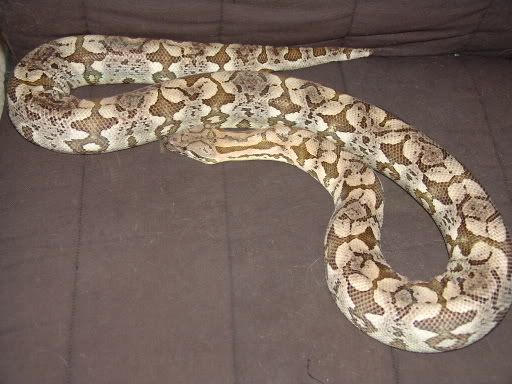
Daytona was this weekend and us breeders had to get ready or just make it to the show and meeting. This is the largest snake show in the world and it is very important to us reptile lovers. So, this should be a slow time on the boards.
As to the color change, Dumerils are noted for color change some do not even need to shed to change my newest clutch had nine and some stay dark most of the time and some stay light. I tool the lightest colored two [both females] out and put them together then divided the boys and girls up. an hour later and the lightest female was as dark as the darkest male.
Like some other snakes the color change seems to be a mood thing. I have noted a night and day color change too. Lighter during the night.
I tend to sort these by lightest and pinkest as keepers. Some of the darker ones get some green tinges that are atractive too.
The dark snakes seem to get darker with age, the ligter ones may stay lighter or go dark. Only a few get lighter with time, as their primary shade. The change from hue to hue is a mood thing as far as I can tell.
The Papuan python [Apodora papuana] has the extraordinary change from a pale light mustard yellow to nearly black. My standard house snakes, mainly the males do a five or six shades change from normal to lighter at night, every night.
The Dumerils go only a few shaded up and down and seem to have this change more with mood than night and day.
Your lighter with each shed may indicate a shift to a normal lighter stage. Most like the darker normal stage. It can also indicate a lack of UV light or bioflavonoids in the diet, color pigments in the foods diet could also be a problem?
The rodents need a good diet high in dark color foods to bring out the complex colors in snakes!