


Reptile & Amphibian Forums

Welcome to kingsnake.com's message board system. Here you may share and discuss information with others about your favorite reptile and amphibian related topics such as care and feeding, caging requirements, permits and licenses, and more. Launched in 1997, the kingsnake.com message board system is one of the oldest and largest systems on the internet.

Click here for Dragon Serpents
Click for ZooMed
Click here for Dragon Serpents

The lizards issue....resurrected....

chrish Sep 15, 2006 05:54 AM

Interesting post regarding alterna breeding success down below, but I wanted to comment about the feeder lizards idea.

Do any of you have a problem with the idea of collecting feeder lizards? What about someone collecting hundreds of them and selling them to everyone else (which is happening, BTW)?

If I found out my pet king cobra had higher hatch success when I fed it a diet of lepidus, would you guys be OK with me taking every lep I find and putting them in my freezer? Laugh if you will, but consider the question seriously for a moment - would it bother you?

I know some lizard species are abundant, but what is the harvestable surplus? We don't know. So do we collect until we damage the population enough to notice a drop in abundance?

But my biggest issue isn't really one of population dynamics. My biggest problem is that it sends a bad example to the non-herper world that we are so focused on getting babies to sell out of our "pets" that we will collect other wild herps to make this happen. You might not feel that way, but if you are taking wild lizards to increase your reproductive success that is what it looks like from the outside. We have enough of an image problem in this hobby already.

Now if you say you can do this with Hemidactylus geckos and Brown Anoles, you have my support. But if you are taking native lizards, I have an ethical problem with it.

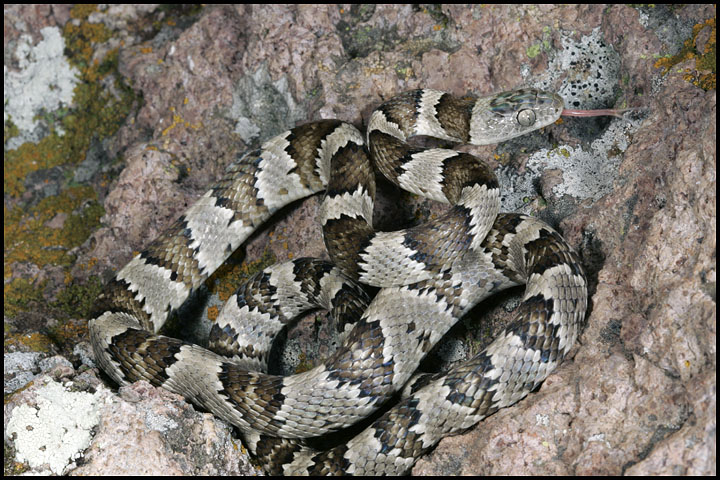
Assuming this lizard thing is true, maybe we can't produce gray-bands very successfully in captivity because they won't do well on a diet of mice.
So what? Let's not produce them successfully then.
(Don't give me the line that it reduces collecting pressure - that's a fallacy).

There are other plenty of interesting species that aren't bred in captivity due to the difficulty of keeping and breeding them, maybe alterna tends towards that end of the continuum. (Anyone produce and cbb Farancia this year?)

Enough alterna are produced now to satisfy the demand, even without taking wild lizards. Even if every kid doesn't get one this year, maybe he has to wait until next breeding season. I don't have a problem with their being slightly more demand than supply.

Just my opinions. (Steps down off soapbox). Let the hatred and personal vitriol begin, as necessary.
-----
Chris Harrison
San Antonio, Texas

Replies (32)

Eby Sep 15, 2006 06:23 AM

Another Option:

What about DOR lizards?

I live in south Brewster county and see DOR lizards of many species on a regular basis. I've even found AOR snakes trying to peel DOR lizards off the pavement. Obviously, the week old pancake variety wouldn't do too well, but fresh and lightly damaged (other than being dead!) road kill is easily obtainable.

Has anyone ever used DORs for scenting or feeding?

Pick-up a half dozen on your next trip, throw em in your freezer and give it a try.

bobassetto Sep 15, 2006 06:29 AM

that guy chris showed great insight to the issue....i've used dor lizards to feed graybands, when i'm in "country" for an extended period of time...

swwit Sep 15, 2006 09:37 AM

Bob there's nothing about you that's "country". You're "I" talian. LOL

-----
Steve W.

Damon Salceies Sep 15, 2006 09:17 AM

I don't think anyone can argue that harvesting wild lizards for the purpose of maintaining a captive population of snakes is ethically responsible. I think every attempt should be made to pursue viable alternatives. Trying to be a responsible charge for the snakes we keep requires that we explore our husbandry techniques and do everything within reason to keep them in a manner that suits them. I've been exploring the diet issue for quite some time and the necessity of lizards is unavoidable for testing. I've tried to do what I could to minimize the detrimental effects of feeder-lizard collection by taking animals from developed/developing urban areas. I certainly don't think that rural lizard harvests are a good idea.

With the help of suggestions from a few friends, I'm going to try a few more ideas this next season. I will post my results.

Brad Alexander Sep 15, 2006 10:16 AM

Chris, I understand where you are coming from, you certainly have some interesting points to think about. However, I do think you are taking it a bit far. I seriously doubt that the small amount of alterna breeders willing to put out the effort and/or cash to do lizards is going to make any serious or long term impact on lizard populations. The mere idea of being able to over collect most small feeder lizard types is incomprehensible, even in one particular area. Could the population in a small area be effected? Yes, you bet it could. But to think that we could over collect Uta and Sceloporus type lizards to the point of wiping out a population is a bit over the top. I realize this is not exactly what you are saying but the only way I could be convinced of not collecting lizards for my animals is that there is either a more nutritional mouse available or if I could actually believe that there would be any serious effect on wildlife. And when I say serious, I mean honestly detrimental, not just an idea or actual minor decline.

I understand the argument that it’s not just the lizards in that area but also the animals that prey on those lizards that will be affected. Well, I still say it could never be to any extreme point. Although I do care, I’m just not that anal about such things and honestly feel it is not a huge deal. With what you are suggesting, one has to give some thought as to where we draw the line. If we are going to be that concerned and think that collecting lizards in volume like this is very serious, then that’s not the only place we should be drawing some hard lines. When will it end? Do we get rid of roads because cars kill millions of lizards a year?

I have two spots locally where I have tapped into a reservoir of lizards for about 3 years now. I also have a friend that does the same thing in the same areas and he feeds his animals exclusively lizards (I’ve tried talking him out of it for the simplicity of mice alone but have gotten nowhere with him). The method we use to collect these lizards is pretty good, I couldn’t imagine a better way. Even though we have hit these areas year after year, we have not put even a dent in the populations. Now I’m sure there are areas where one or more collectors could put a small dimple in an isolated population, but it would be difficult. Of course I’m talking about Uta and Sceloporus type species, which, in many areas, are quite abundant.

How many years in a row did Dan buy a 1000 plus lizards from the same guy? Did he tap out of lizards in his area? I seriously doubt it or he would not have been able to supply lizards over the long haul.

Paving over their habitat, that’s a different story all together. We all know what that does. But even at that extreme, I can still find a lot of Uta and Sceloporus in my neighborhoods.

For me, if I don’t honestly believe it has a serious impact, I see no ethical problem in buying or collecting them. If my animals are healthier and happier with lizards, I intend to do both. Not to be a snob, but I really don’t care what the general public thinks. I’m not about pleasing them. I run my life by my own set of standards and morals just as you do. If you feel it would be detrimental to collect lizards for a colony of alterna, then you shouldn’t do it. And voicing that opinion is healthy too, I do understand.

I’m sorry, judge me however you’d like, but I just can’t buy into the idea that it is anywhere near easy to over collect feeder lizards.

Brad Alexander Sep 15, 2006 10:19 AM

I guess I replied in the wrong spot.

I also wanted to note that I will be trying other ideas regarding feeding my snakes mice as well.

Robert Haase Sep 15, 2006 11:26 AM

...by the fiheries industry regarding Atlantic Cod. Are you familiar with the Allee effect? Trophic cascade effects? I'm simply presenting the facts that can be found in any population biology/conservation biology text and not sitting in judgement on any individual's choice of action.

The following is a great source of information on the subject:

Groom, M. J., G. K. Meffe and C. R. Carroll (2006) Priciples of Conservation Biology Third Edition. Sinauer Associates, Inc., Sunderland, MA USA. 779 pp.

I will be glad to correspond with you further on the subject if you wish.

Best,

Bob

Brad Alexander Sep 15, 2006 12:21 PM

But there is a big difference. The cod industry was/is huge. I didn't say it would be impossible to severely exhaust a population of lizards, just that it would be very difficult. A scale on the order of cod fishing I'm sure would make a difference. But yes, you're right, that is something to consider.

Thanks for sharing the info,

Brad

Robert Haase Sep 15, 2006 12:38 PM

...I just wanted to point out that it is possible, because I think a lot of people on this forum are not up on conservation or population science, and therfore act or think in terms of their "perception" of how organisms may respond to population pressures. One of the more interesting things I discovered while studying island night lizards was that they are apparently "density dependent", in other words they have a minimum density level requirement for reproduction. If the density of lizards falls below a certain threshold for some reason, they will not reproduce at all even though there are seemingly numerous adults of both sexes present in a given plot. I suspect that this may be the case for many lizard (and snake) species. We simply don't know what effects reproduction in the wild in such terms, and it's not wise to assume that as long as there are some individuals remaining, nature will take its course and there will be more produced. That logic was applied to many organisms exploited by man, which later proved erroneous. Thanks a bunch for your response.

Got any more pix of Trimorphodon from Mexico? I find my old interest in that genus being rapidly revived!

Cheers,
Bob

Brad Alexander Sep 15, 2006 01:14 PM

Again, good points and interesting example about the Island Night Lizards. Not that I am trying to argue, but a point to bring up would be devastating fires and their effects on populations. I would imagine, not certain, that a good percentage of lizards would perish, leaving a smaller number to bring the population back. Assuming (and I realize there is a lot to assume) this is the case, then it would stand to reason that could handle large population declines. Again, this is only an assumptions, so who knows? I am obviously biased to my way of thinking but I do try to be open minded about it all.

Here's a tau from this year, not sure if you seen it yet or not.

Brad

chrish Sep 15, 2006 02:26 PM

You guys are correct, we probably can't wipe out Uta populations by collecting a few hundred or even thousand. But as I said in my original post -

But my biggest issue isn't really one of population dynamics. My biggest problem is that it sends a bad example to the non-herper world that we are so focused on getting babies to sell out of our "pets" that we will collect other wild herps to make this happen. You might not feel that way, but if you are taking wild lizards to increase your reproductive success that is what it looks like from the outside. We have enough of an image problem in this hobby already.
.......
Assuming this lizard thing is true, maybe we can't produce gray-bands very successfully in captivity because they won't do well on a diet of mice.
So what? Let's not produce them successfully then.

-----
Chris Harrison
San Antonio, Texas

LBenton Sep 15, 2006 02:35 PM

Yup....

Even if we could never put that dent in it...

Brad Alexander Sep 15, 2006 03:01 PM

That's all fine and dandy, but I will never follow the ideology of perception. I am what I am and that's all that I am. I'm not what I want other to believe I am.

We will never be able to control what others think of me/us, no matter what he subject matter. So, being who you are regardless seems to be the right choice to me. To ask someone not to do something due to perception, I'll never understand.

Damon Salceies Sep 15, 2006 04:25 PM

I wish more of the world was as intellectually honest about things...

Brad Alexander Sep 15, 2006 08:42 PM

I think?

Damon Salceies Sep 15, 2006 09:49 PM

Totally meant as a compliment! I get tired of a society that seems sometimes to be so eager to avoid offending people that is dodges authenticity and sacrifices its principles to do so. Good on ya Brad!

swwit Sep 15, 2006 03:13 PM

A while back we discussed the impact that roadside collecting has on alterna. Some said it wasn't significant and others said they have seen a decline. There is no reason to beleive that lizard populations would differ from snakes. Under some peoples analogy taking lizards from the roadside and taking snakes should have the same results, a decline. Is it ok to take the lizards because they are to be used as food? I feel that we should stick with mice until lizards can be bred effectively enough to supply peoples needs. Which probably wont happen.
-----
Steve W.

swwit Sep 15, 2006 09:46 AM

The problem must be more than mice vs. lizards for food. In 20 years of breeding alterna I've had maybe 10 total snakes dead in the egg. I average about 50-80 alterna eggs a year and I'm not counting all the other snakes I produce. I've only fed the adults mice and never any lizards. No dusting with suppliments and I have alterna producing good eggs at 14 yeras old. Go figure.
-----
Steve W.

BlueKing Sep 15, 2006 11:39 AM

First: YOU ARE WHAT YOU EAT, this INCLUDES MICE!!!I made this point in the long thread below . . .
There IS a very realistic solution to this problem as I have stated in the long thread below that will keep everyone happy, even the Lizards!!!
Remember the old saying: You are what you eat!!! Feed your mice a diet of wild insects mixed with dried grains and such, and I'm willing to bet that your alterna will grow faster AND produce more without EVER feeding it a lizard. And I bet those mice will even taste better to the alterna!
OR>>>>>Feed your mice cheaply (dogfood or table scraps), which are very fatty and low in nutrition and see what happens:
I KNOW there IS a difference!!! I have seen it myself with crickets fed to lizards from a petstore vs. getting your own insects (turn on porchlight at night and you've got a variety), and grasshoppers and beetles etc. during the day.
My lizards fed on wild insects always grew faster looked more robust, had more energy and were more colorful than any that I've had that were fed on the same ol' store bought crickets.

So if a mouse eats a diet similar to a lizard & gets exposed to a little UV (which won't harm it), there can't be too much difference in nutritional value . . .

OK, on the other side: If one were to collect thousands of lizards in a given area, I don't think that we could EVER put a dent in the population of lizards when you consider that 98% of land is private property and roads bisect ONLY less than 1% of suitable habitat, which would give "lizard collectors" very little real eastate in the first place. Why do you think that alterna are found and collected year after year after year in the same exact cuts all the time!!! Last time I visited with a friend of mine (a year ago), we found 4 alterna in just 24 hours, visiting the same areas as people have 30 or so years before us!!! If we can't even put a dent in the alterna population, how can we possibly do so with millions and millions of lizards???
BTW: All my alternas eat mice exclusively and are quite happy (I believe). . .lol!
My .3 cents

Zee

-----
"I am an expert on everything, but I know so little and have so much to learn!" -Carsten "Zee" Zoldy-

LBenton Sep 15, 2006 02:31 PM

I would not want to be the one to clean the lizards off any part of that 1% of public habitat. If we impact the food source where we collect, there will be a cascade effect.

I know that migration from the 98% would fill it in soon enough. But I would think a few people could ruin a favorite set of cuts for at least little while. And with repeated effort, they could could keep it ruined.

Another thing, I would bet folks that harvest lizards in bulk use drift fences and pitfall traps. Very effecient, and there will be times that we all need to buy lizards. But we should also make every effort to use a domestic feeder source, which it looks like everybody pretty much supports anyway.

Bugs, grains, and some UV have to be a great starting point. I am waiting for the mouse breeders to catch wind of this thread and set aside a portion of their colony for special diets and grow lights. I know that some of us would pay more for them (hint, hint).... maybe all that would be needed is to take some just weened hoppers and raise them for a few/several weeks in a larger free range type deal? I would bet that could be off the ground real quick.

BChambers Sep 15, 2006 02:47 PM

...Is the ecological differences between lizard species, the "R" strategist (Uta, etc) vs. K strategist (S. poinsetti, cyanogys etc.) dichotomy. I can readily imagine populations of a large, territorial and relatively slow-reproducing live-bearer, like crevice spinys, could be severely impacted by such collecting. But a small, fecund openlands species such as Uta or small whiptails could probably be collected by the hundreds from a several-acre area without ever being depleted to a noticeable extent.

Now, this does NOT mean I would advocate such a course of action, however!

Brad Chambers

mike17l Sep 15, 2006 03:31 PM

R vs K selection, is a very good point to bring up. Snakes in general are very k-selected. They reproduce, and get to breeding age very slowely, relatively speaking. Many lizards, uta and whiptails are alot more R-selected breeding more and at a younger age.

Here is an example, Coyotes are hated by ranchers, farmers, and hunters alike and are very R-selected. Many people will shoot a coyote on site, but will not actively hunt them. When a small percentage of coyotes are taken out of a population, the population, that is left, will in response produce more coyotes. So if a land owner shoots only 10-20% of a coyote population on their land, they will see an increase in coyotes above the 10-20% taken. The land owner would have actuallt had less numbers of coyotes on his land if he had not shot any animals. If the land owner had however actively hunted coyotes and killed 80-90% of the animals, there would have been a detramental impact on the population.

We can look at R-selected lizards similarly. If we only take what we see, and not activally hunt them, the population that is left will respond, by producing more lizards. But, however, if we go out, activally collect, searching for every lizard we can find, we will eventually have a negative impact on the population.

Now, I have a friend here in Kingsville (message me for contact info) who is a commercial collector, though I do not always agree with what he does, I realize that it is necessary. He must make a living and people need lizards and other commercially collected reptiles. (he does have mexican hog-nosed and mexican milks from time to time) Is his collecting hurting populations of lizards? Possibly, but he does not think so, he has not seen a decline in numbers or size of any species he collects (including alot of atrox). But, if there is a decline, he will be the one to pay the price, along with the environment.

All that being said, heavy collecting and collecting in general has a place, but we as the collectors, need to self regulate, making sure that we do not over collect an area, or we will be the ones to pay the price.

-----
South Texas Herps

mike17l Sep 15, 2006 03:33 PM

perhaps gerbils, or some other leaner rodent would be the way to go?
-----
South Texas Herps

antelope Sep 18, 2006 09:47 AM

I know that gerbils worked well to start my subocs, but I would eventually like to see the collection on mice. I am down here as you all speak pairing up my splendida and going for the last chance alterna. I would have no problems with taking a few lizards legally collected to support your own habit but would encourage to look around and not take from the same place always. Some cuts seem to have lizards while others seem to not have any, although I know better, they see you first 98% of the time! I have a few lizards for scenting but don't intend to try the lizard option at this time.
Todd Hughes

LBenton Sep 15, 2006 04:07 PM

Some animals will take mice, but only if you use a lizard as some part of the deal. And it may be a good idea to mix in some percentage of frozen lizards for some snakes. After all there is good reason to believe a mixed diet would improve an animal’s overall health. I think all this can done without a major crises of ecology or perception. The trouble will be if a number of us now decide to convert our feeding routine over to an all or mostly lizard diet for a breeding colony.

Me, I have no problem getting a bag of lizardsicles to scent rodents with for stubborn animals in captivity. Or even from time to time feed a lizard out for variety. After all who does not love a good cookie from time to time! But I would have no plan to run a colony on lizard feeders. Not even getting into the perception / ecology of it, such a thing would be an expensive pain the a_$ anyway

Eby Sep 15, 2006 05:06 PM

Not to proud to ask.

What is R factor and K factor?

I can make some guesses based on the context of the above post, but I'm often way off in my assumptions (just ask my wife).

BChambers Sep 15, 2006 10:15 PM

I know I'm not the best one to answer this, but since I was the one to bring it up......

Put simply, R and K are ecological shorthand used to broadly catagorize species based on their primary reproductive "strategy". Keep in mind the following is oversimplified and many species exhibit some combination of the two traits.

"R" species "live fast, die young", and leave LOTS of offspring behind. They succeed by producing so many offspring so quickly that a few are bound to survive long enough to breed the next generation. Such species are very resistant to even high mortality rates-in fact even seem to thrive in the face of predation. Good examples include chicadees, rabbits, most rodents, many anurans,and our aforementioned small sceloporine lizards...With some exceptions, the only sure way to drive these guys to extinction is to completely remove their habitat!

"K" species live long lives, but produce relatively few offspring each breeding season. They often put an inordinate amount of reproductive "effort" into each individual offspring. For them, the loss of even a few youngsters to predators, disease, natural disaster, etc. can have calamitous consequences. If you want to see a good example of a "K" species, get up and look in the mirror! Others include california condors, most chelonians, and many snakes, particularly large viperids. Timber rattlesnakes are a great example. It's very possible to drive such species to local or even total extinction through overcollection.

Hope this helps!

Brad Chambers

Eby Sep 15, 2006 10:44 PM

Thanks for the info. Very helpful.

mike17l Sep 15, 2006 10:59 PM

Brad hit the nail on the head.
R - quick to reproduce (mice, insects, frogs, coyotes, ect)
K - slow to reproduce (elephants, rhino, large mammals in general, alterna and many kinds of snakes)

And like Brad said, animals usually are not entirelly one way, they usually sway towards one direction.
-----
South Texas Herps

Aaron Sep 15, 2006 09:59 PM

I thinks it depends. Generally speaking I don't think there are enough grayband keepers to cause a serious decline. The herps we see declining from harvest are as far as I know all species which fuel the human consumption market, namely food and skins. For these markets there is a virtually inexausable worldwide demand. Now if all of the demand for feeder lizards was to be supplied by just a couple commercial collecters who only collect from a couple areas I could see local declines occuring.
I think the number of snake keepers willing to pay high prices for lizards year in and year out or those able to invest the time needed to personally collect large amounts of lizards are few.
Pesonally I know I am not going to do either of those things and I have a pretty decent size collection of alterna.
More than likely I may try collecting enough feeder lizards to feed one or two pairs for a month before hibernation and a month after and see if it helps any. If it does I may continue to do so enough to do a rotating schedule for one or two pairs per year but there is no way I am going to invest thousands of dollars in a hobby that for me barely pays for itself already, if that, and already requires a large amount of my time. Beyond that I will stick with mice and my current approxiamate 50% fertility/hatch rate an be content with that.
I suspect if anything this would simply deter more people from keeping graybands in the first place.

bobassetto Sep 16, 2006 10:00 AM

hello....AAAAARRRROOONNNNN

Aaron Sep 16, 2006 10:13 AM

Hey Bob! How are those pyros doing? I will have some snakes for you shortly. How about we continue this conversation through email.

Site Tools
