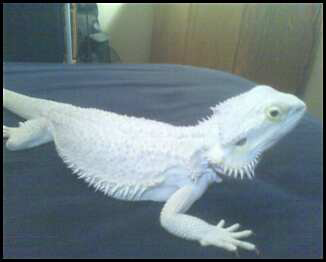
lol. just got my oder of Hornworms from Mulberryfarms.com. Wow. They were on sale so i got 4 cups for 30$ I think. They are HUGE! Ill try feeding tommorow, my beardie ate right before they got here. They are beautifl, healthy looking, not smelly, or anything. Great  Hope Athena Likes them. Here is a DECENT pic of Athena. She is 2 years old and a Snow Phase. The pic does her no justice, as it was taken from a decent camera phone....
Reptile & Amphibian Forums
Welcome to kingsnake.com's message board system. Here you may share and discuss information with others about your favorite reptile and amphibian related topics such as care and feeding, caging requirements, permits and licenses, and more. Launched in 1997, the kingsnake.com message board system is one of the oldest and largest systems on the internet.



holy.... wow.
legalizefreedom
Nov 22, 2006 04:09 PM
Replies (8)
legalizefreedom
Nov 23, 2006 03:06 PM
Damn, my beardie wont touch them. I bought 40$ worth (including shipping) too! Ugh!!!!! lol any suggestions, thy are supposed to be VERY good for thema nd 40$ is alot to throw away. Actually I have to KILL them all since we have alot of tomato/tobacco plants around this area. They are pests I guess so am I just screwed?
rubywitch
Nov 24, 2006 10:15 AM
Wow, my dragon loves the hornworms I brought home from the last retile show. Maybe you can sell them to another local herper?
I'd take them off your hands if you were in the area  We have quite a few hornworms in the area locally but I wouldn't feed them to reptiles since the normal 'wild' diet includes tobacco and tomato leaves, all toxic for most pets.
RubyWitch

PHLdyPayne
Nov 24, 2006 11:25 AM
Maybe try and mix the hornworms in with greens, might make them more appealing to your dragons.
Not sure what other pets you have, but rats will eat them, hedgehogs too, probably any animal that eats insects will enjoy the hornworms. If you have nothing that will eat the hornworms, it will be a good ideal to put them up for sale in your area, this way you can recoop some of the cost in buying them.
Or, you can let them pupate and try feeding the moths to your dragons instead. If they still won't eat them, then you will have to destroy the moths/cocoons/worms if you can't sell them off. Definitely don't just let them go.
-----
PHLdyPayne
legalizefreedom
Nov 24, 2006 04:33 PM
Im trying to sell them in the area. Thanks for the greens/hornworms idea. OH YAY as I was typing this message my Kottonmouth kings - Hidden Stash 3 came in the mail with sticers and a free magazine. I wasn't expecting this cd for a few more days. King nake is LUCKY Now that my day is made im gonna go watch the free DVD it comes with Thank for the adice. ill let the bigs die off because all I have is one bearded dragon at the moment if no one wants to buy them. Would freezing kill them with less torture to the poor things. lol some of these are 4 inches long or more and I'd feel bad just smashing them or anything. lol. Well I'll try finding a way.  Stupid horn worms. maybe it's because of the bright green color, since alot of bugs with bright colors mean theya re poisoness in the wild doesn't it?
PHLdyPayne
Nov 24, 2006 06:04 PM
Wild hornworms are poisonous, so that could be the problem. However, they are not native to Australia so may not be recognized by dragons as something that could be poisonous. Bright colors is pretty much a common thing used in the wild to represent poisonous. Then again, many animals mimic the bright colors and patterns to keep predators away. Just look at most milk snakes and kingsnakes, many have similar bright colors as the venomous coral snake but are themselves, harmless (unless you are a rodent or another snake, LOL). Dart frogs and arrow frogs also have this bright coloring to warn predators they are poisonous. Many caterpillars are poisonous to eat just as hornworms are but again, many are mimic poisonous species bright colors to try and fool predators.
Domesticated feeder horn worms are fed a special diet which doesn't contain the toxins wild horn worms acquire from their natural food, tobacco and tomato plants. This is the same with poison arrow and poison dart frogs. These animals don't produce their own toxins but can retain toxins consumed in the food they eat. Hence why the term 'poisonous' is most often used to refer to animals that are toxic to eat or handle but don't actually produce poisons themselves. Thus, animals that can produce toxins are normally referred to as venomous (ie rattle snakes, coral snakes, scorpions, spiders, etc.). This may not be the true origins of the usage of these two words but it is how I understand it anyway.
-----
PHLdyPayne
legalizefreedom
Nov 24, 2006 09:28 PM
Well I know that feeder hornworms are not poisoness I just didn't know if ym beardie would think they were. shes never eaten brightly colors feeders besides meal/super worms.... silkworms/wax worms/cricket and the like are not very colorful so IDK....
Black_Wolf
Nov 27, 2006 06:56 AM
you could try dusting the hornworms so they would be more white-ish and not as bright. It would also make 'em smell more like food it's use to eating so it might actually take 'em. Just an idea. Been loookin for a place in FL that might have 'em. I got a large male beardie who won't eat pet store crickets cause they too small for him lol Gotta give him superworms and bait shop crickets(after properly gut loading them for a few days mind you).

-----
1.0.0 Bearded Dragon (Rex- "normal" orange fire)
1.0.0 Bearded Dragon (Glutany- German Giant Mix)
0.1.0 Okeetee Corn (Okatee)
1.1.0 Spotted Python (Hotdog and Shoelace)
0.1.0 Jungle Carpet (Teprak)
0.2.0 Dwarf Hamsters (Tipsy and Bubblegum)
1.0.0 Rose Hair Tarantula (Goopy)
1.0.0 Boyfriend (Brian)
legalizefreedom
Nov 28, 2006 01:51 PM
Try wormman.com for superworms and mulberryfarms.com for hornworms.
