Reptile & Amphibian Forums

Welcome to kingsnake.com's message board system. Here you may share and discuss information with others about your favorite reptile and amphibian related topics such as care and feeding, caging requirements, permits and licenses, and more. Launched in 1997, the kingsnake.com message board system is one of the oldest and largest systems on the internet.

Click here to visit Classifieds
Click for 65% off Shipping with Reptiles 2 You

Stupid question...bhp's and coloration

squamiger Dec 25, 2006 12:33 AM

I have seen photos of black, red, axanthic, hypo, latent, albino, and calico phases or morphs of blackhead pythons. I have also read some descriptions that say that they vary in coloration according to locality. Some may even refer to them as eastern and western varieties, while other sites say that their coloration is random and hard to define by geographic locations.

So my question is: are the bands of red or black coloration determined by locality or by genetics? If it is based on genetics, then can one clutch have babies that are black-banded and babies that are red-banded? This question should be concerning those animals that do not carry the hypo gene. Which raises another question: how do you tell the difference between a light colored red animal and a hypo individual? Thanks for any insight.

Yeah, I realize that it's 1:30 AM on Christmas Eve, so Merry Christmas. I drank too much coffee and the kids' gifts were too easy to put together, so now I'm killing time until my sleepiness overtakes the coffee.

Derek Morgan

Replies (11)

mturner01 Dec 25, 2006 04:29 AM

Hi Derek,
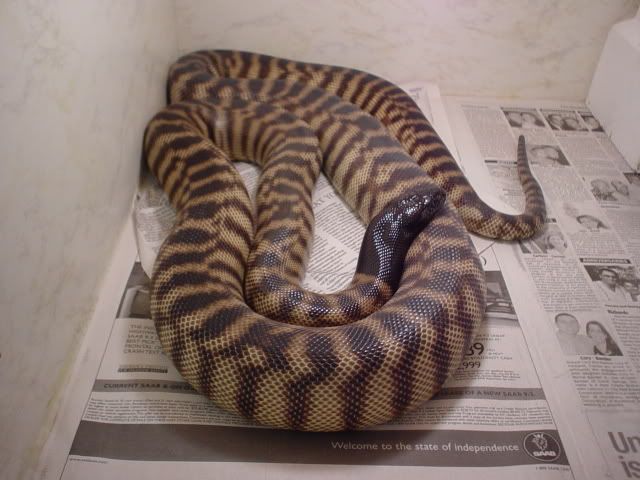
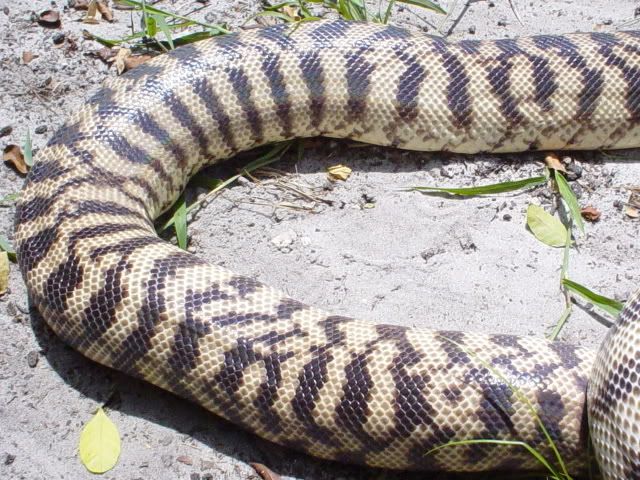
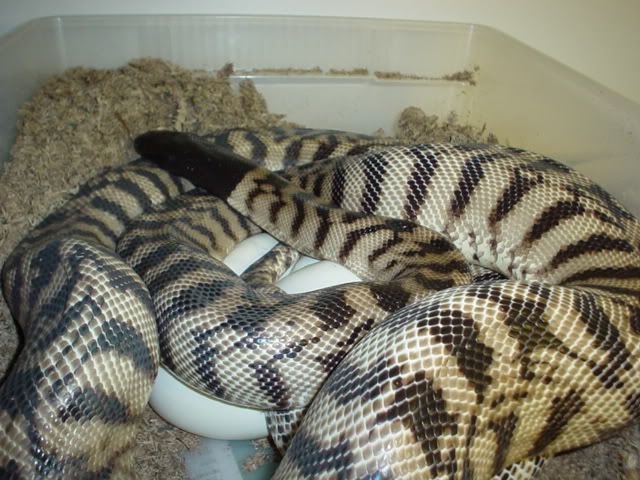
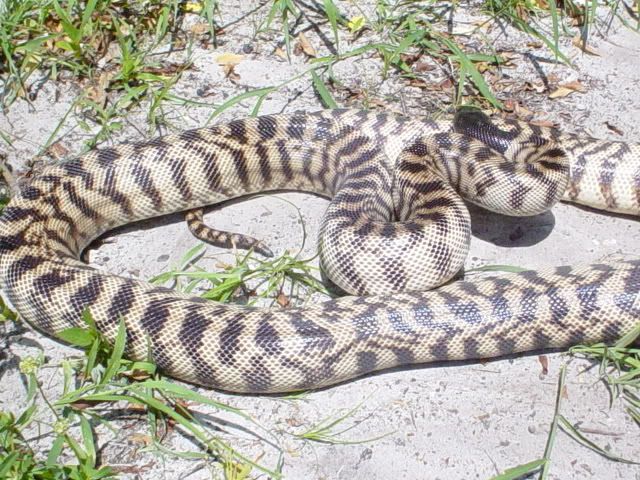
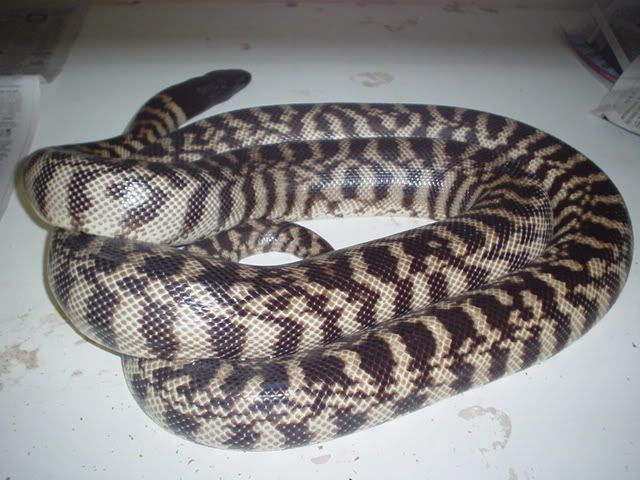
Looks like you and I are in the same boat, I just got up too early to do my Santa duties! In my experience, band coloration is more hinged on genetics than on locality. I have hatched bright red, deep black, and russet brown babies all from the same clutch several times. Below are two photos from a clutch hatched three years ago. The dad is red and the mom is black.


I think that locality does indeed have something to do with Aussie BHPs, but U.S. blackies have been criss-crossed around so much that I am just very cautious assigning locale terms to animals we see here. Derek Roddy is doing some interesting ork with locality animals and he may chime in if he catches this post.
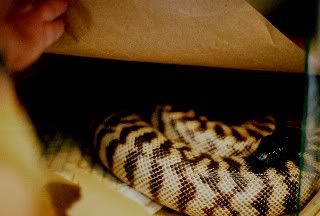
As for your second question, the hypo gene expressed itself has loudly different than the nicest reds. There will be very reduced or no black on the top of the back where the bands cross the spine. The dark pigment on the tail will be more of a purple color. The eyes are often lighter and youcan see the pupil fairly well. Many that I have seen also display some patchiness of the chin and throat area with red and/or white patches in the dark hood. Also, in good lighting, the hood will not be as dark as normal when held side-by-side with other animals. Finally, the belly is often crystal clear and devoid of markings or smudging. All of these are variable, of course, but you get the general idea. Here are some that we feel will prove to be hypo in time.


-----
Matt & Nicci Turner
www.selectiveorigins.com

Jaykis Dec 25, 2006 11:41 AM

Hi Matt!! I was also going to say genetics, even before I saw it was you posting
-----
1.1 Blackheaded pythons
1.0 Woma
2.1 Aussie Olives
1.1 Timors
1.0 Angolan Juvie
1.1 Savu
1.1 Juvie Bloods
1.1 Juvie Balls
1.1 IJ Carpets
1.1 Coastal Carpets
1.2 Macklotts
1.1 Papuan Olives
1.0 Jungle Carpet
2.2 Scrubs (on breeding loan)
0.1 Jungle/Diamond cross
0.1 child, CB
0.1 wife, WC

Doug T Dec 25, 2006 12:04 PM

Thanks for taking the time to share your insights and pic's.

Doug T

squamiger Dec 26, 2006 12:33 AM

Hey Matt

Thank you for the pics and the explanation. They sound much like my bush vipers that I am used to dealing with. The variable bush viper can be any color under the rainbow and you can sort of guess what the babies are going to look like by looking at their parents. But you will always get a mix of colors, just not a dramatic mix if the parents' colors are similar. When you breed two green animals, you will get primarily green babies. But if you breed a red animal to a black animal, you may get some black and some red babies, but there will be other colors as well. You may also see some greens or even yellows and I think that is determined by the recessive genes of the parents. Without a color there to be dominant it allows other colors to show up.

I was a biology major and I took genetics, but I am a landscaper by trade and I have lost the terminology through many years of not using it. With bush vipers this doesn't matter because I don't think that any color trends can be carried through with any regular certainty (you will never see a "tiger phase" Atheris squamigera, in my opinion). With blackheads it sounds like you can control what you get with the babies, to an extent. Then can I assume that if you breed two blacks all of the babies will be black? Same for reds? Has anyone determined whether red or black is the dominant trait? If you breed a red and a black will some of the babies be black but carry a red recessive gene that may show itself down the red when it is bred?

I'm just curious here, no other reason for the meddling. I'd better quit before I get any more over my head. Lol. Take care.

Derek

jsargent Dec 26, 2006 07:51 PM

Derek,
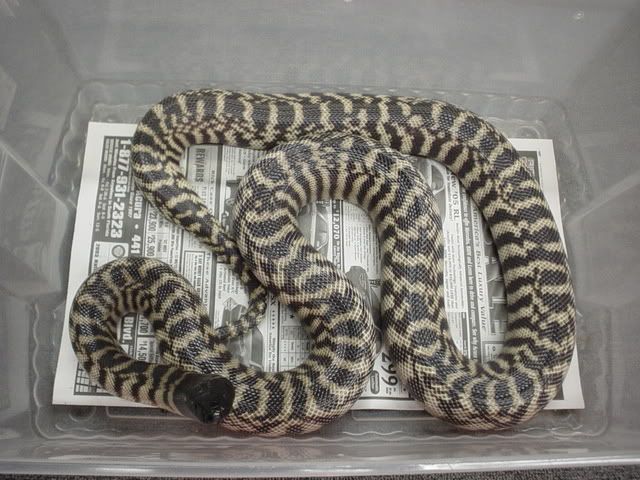
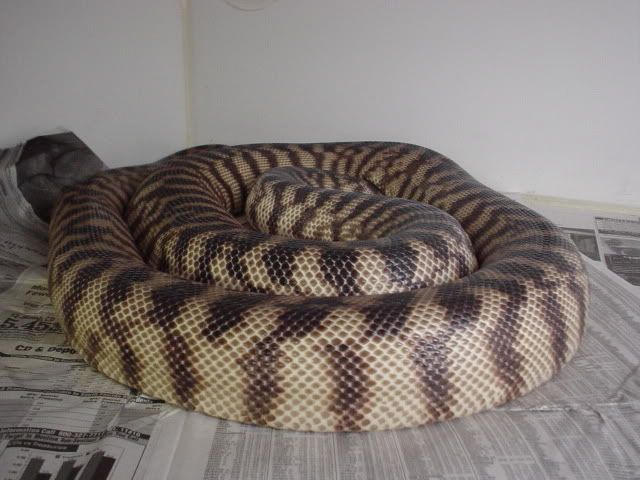
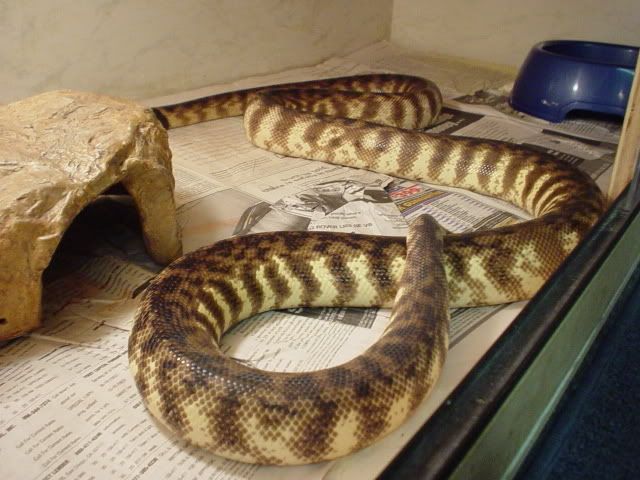
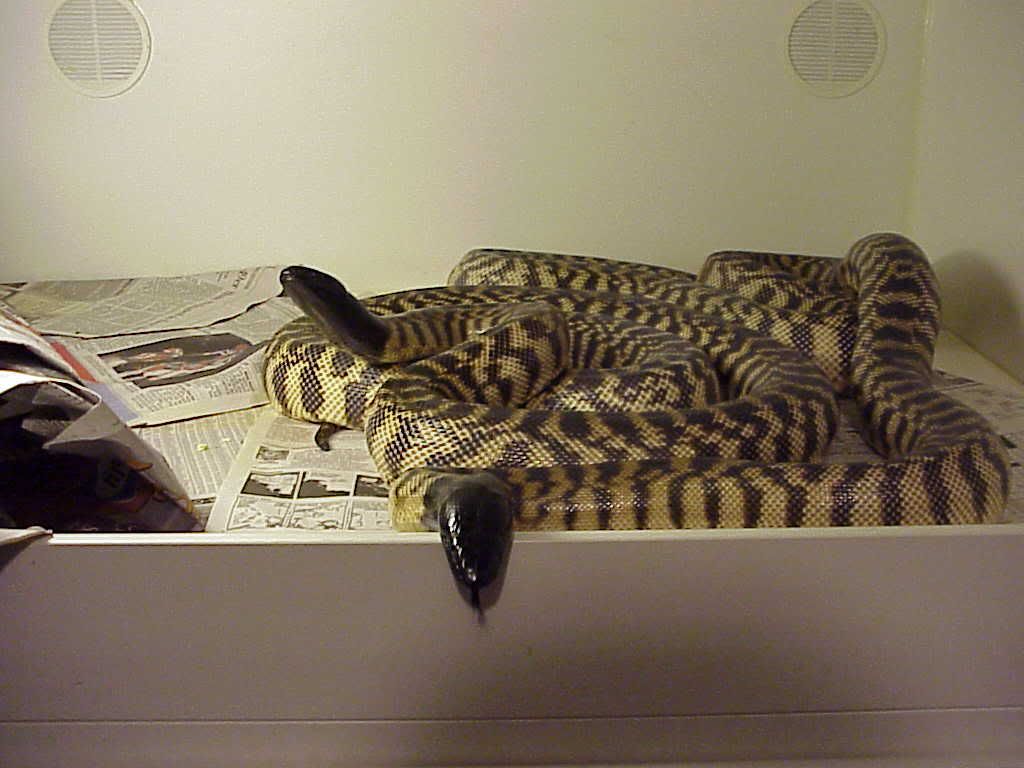
Matt said it all...and very well I might add. I am experiencing the same situations as can be seen by the attached pics. All animals shown are from the same 2006 clutch. I believe it's more genetics than anything else. There is defineatley something "lurking" in the background. Discovery is just around the bend...just the tip of the iceberg.

Jim

Split Rock Reptiles

squamiger Dec 28, 2006 05:44 AM

Hey Jim

So are the center picture and the animal on the left in the bottom pic possible hypo animals, or reds? I understand that the top pic is of a possible hypo animal since the chin is colored. It is a nice illustration of how you get blacks mixed with other colors in one litter. I'm still wondering if you would get straight black babies from a black on black breeding if both parents have black genes, and the same with red parents. From what you guys have said, that may be irrelevant to discuss in US collections since the gene pool is somewhat muddy, so I may be beating a dead horse. I've just had too much time on my hands during the holiday break. I do find what you guys are doing extremely interesting. I found a wonderful website on genetics and I've been dusting off the cobwebs in my brain and I will be watching to see what kind of break throughs you guys have this year. Thanks for the info and the pics.

Derek

Tom Keogan Dec 28, 2006 07:15 PM

Derek, welcome to the BHP group. Matt this is the red female I was speaking about, she is real light with a very light belly. Her chin is very very slightly faded but nothing like the pics Jim has or like one Nuyten sent me. I think she is just a red but I wish she was a hypo, either way I hope she breeds this year. Jim what camera do you use for all your pics? They are great! Tom

derekroddy Dec 29, 2006 09:05 AM

I would have to agree with what has been said. The Hypo's , Axanthic, Albino, and the calico? would have to be a genetic thing.
There are however many different looks to BHP's in their natural habitat.
For instance...
The red sand center of Aussie where BHP's are found seems to yeild more red banding where as the 80 mile beach area where the sand is really white, you get BHP's that look more Black and white.
I've noticed that most of the "morphs" have come out of queensland animals. I don't know whether that's just because there is more of them floating around in captivity.
True west animals are hard to find here because of the very few that made it to the states to begin with. To make it more difficult, breeders in the past were not concerned with keeping locale animals together. If you have a great looking Black and White male...it was going to get bred to every ugly female that was waiting to be bred.
Now thankfully, with guys like Matt, Jim, Myself and a few others...we can start to make a better future for them here in the states.
From the information I've been able to dig up over the last 8 years....I've found that BHP's have 3 different locale throughout their range in Aussie. There are 3 different scalelation patterns on the heads of different locale animals.
And we have them all here in the states. Now this is not proven but I have yet to find info or pics of any animals that came from a certain range that the head scales didn't match up. Now this is interesting because I have seen evidence of mixing 2 "locale types" and getting both in the litter here in the states!!! This screws us here in the states because we will never be able to undo the interbreeding, and know exactly what we have.
In Aussie, these scale differences really make me wonder how much water this info really holds.
I have all three type of head scales and will let you know this year what I find.
I'll get some picture up of the different head scales this week so you can reference to your animals.
Here are some of mine.
Enjoy.
Derek Roddy.


squamiger Dec 30, 2006 08:42 AM

Hi Derek

Wow, that is very interesting about the head scale counts. I have never heard anything about that before (granted, I'm a newbie to bhp's). I am very interested in seeing your pics displaying the different scale counts. That makes good sense about the different colorations due to sand color, as well.

Those are very nice animals! They are the sharpest contrasts of white/black that I have seen anywhere. Is that due to your efforts of selective breeding, or more due to the tendencies of others to post more pics of their morphs versus pics of their "normal" animals? I understand the excitement behind the morphs and the eventual outcome of them being proven, but I personally prefer the normal colorations of white/black and yellow/black animals. Of course, I would be happy to have them all one day.

Thank you for sharing your pics and your information. I look forward to your future posts.

Derek Morgan

derekroddy Dec 30, 2006 02:24 PM

Derek, Thanks for the words about my animals.
I've been very selective about the animals I have acquired, and searched long and hard to find the animals that we're right for me.
I too am a fan of the really stark contrasted black and white BHP's. I like the "morphs" and such but... I don't think enough has been done with trying to improve the "normal" BHP's in captivity yet.That's why I've decided to focus my efforts on locale info and trying to do the best I can with what we have here in the states.
I haven't hatched any from the "better" pair yet so...... I'm really looking forward to getting some results from them. I'm sure the babies will be some of the best "normal" BHP's hatched to date.
Tom, Jim and Matt have some of the nicest animals around too!!! So, should be a very good year for the BlackHead.
Cheers.
D.

squamiger Dec 30, 2006 08:13 AM

Thanks Tom. This male looks a lot better in person than in your pics, so I was happy. His pattern looked kind of muddy in your pics for some reason. That's a nice looking female, too. From my experience, I think that composition of a pic has more to do with it being good than the camera type or brand. My brother consistently takes better pics of the same stuff that we catch in the field because he has the patience and the knack to get the right angle and frame the subject correctly. I just don't have a good eye for it. Take care.

Derek

Site Tools