I just wanted to post this here, in case someone reads it here, and doesn't see it on the other gecko forums....
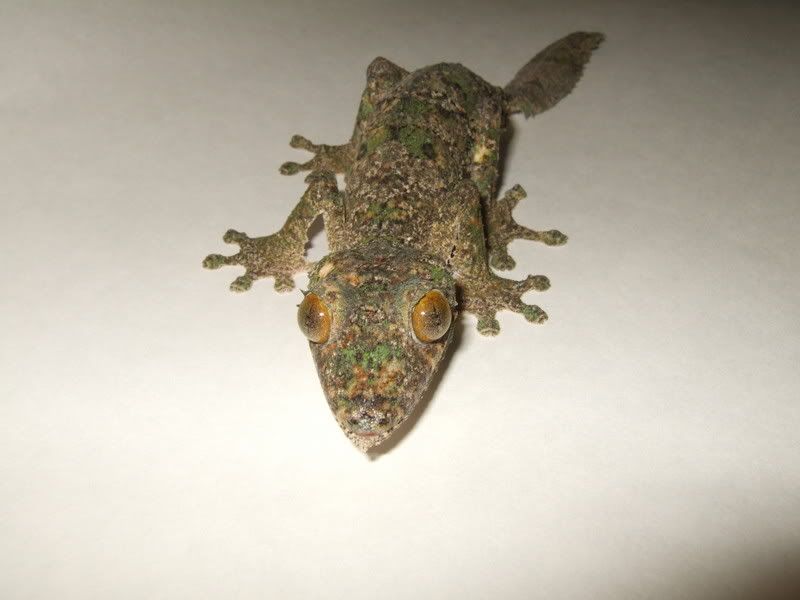
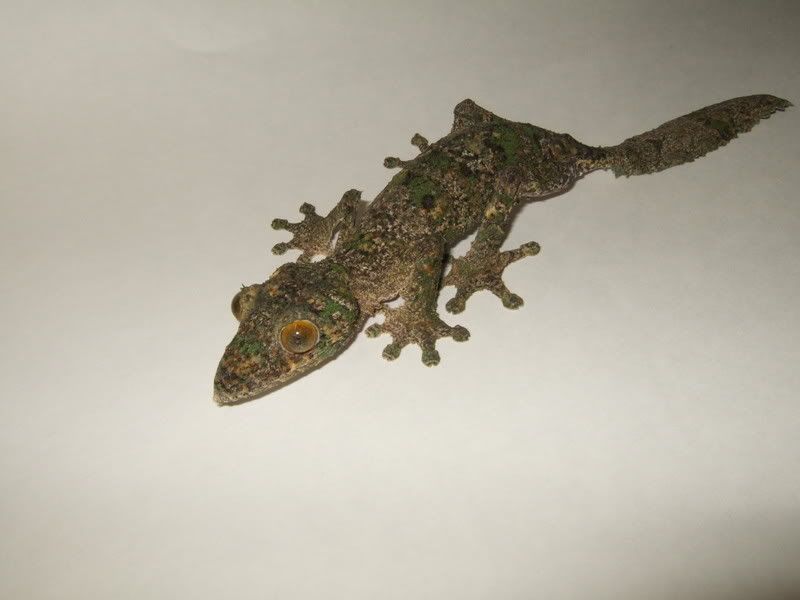
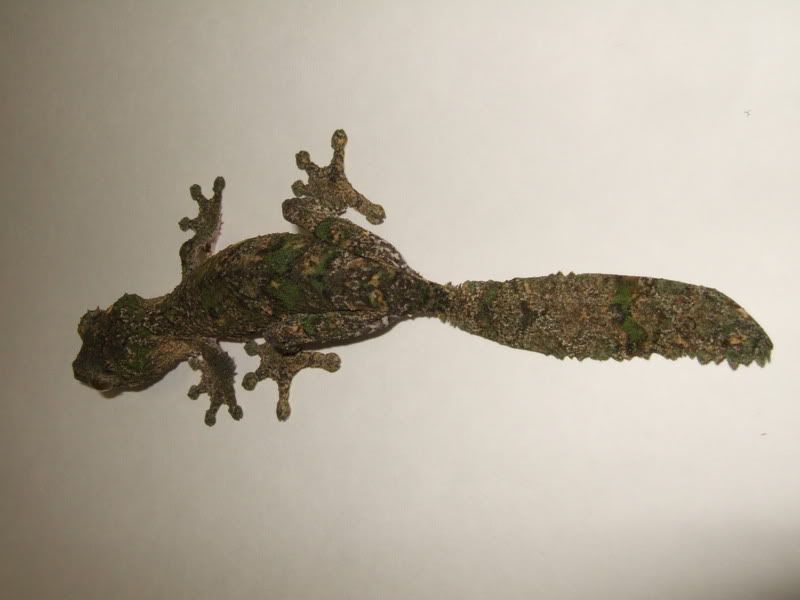
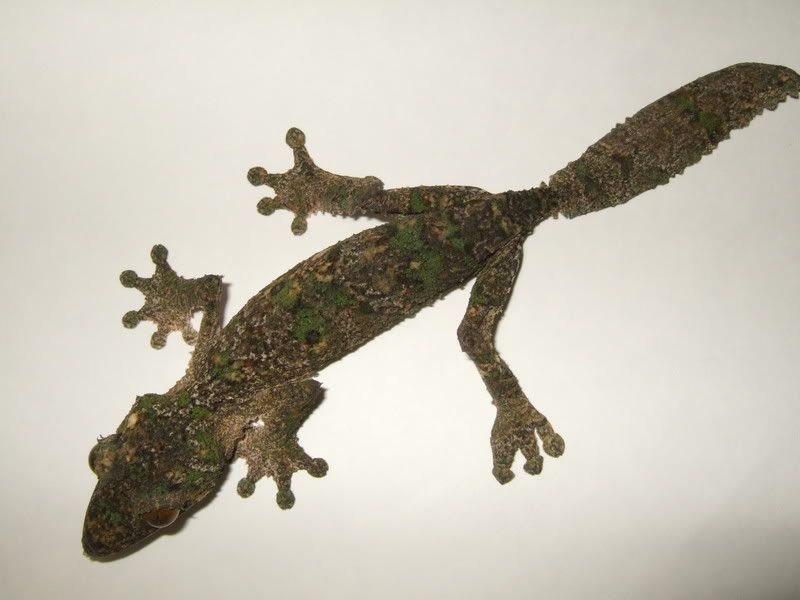
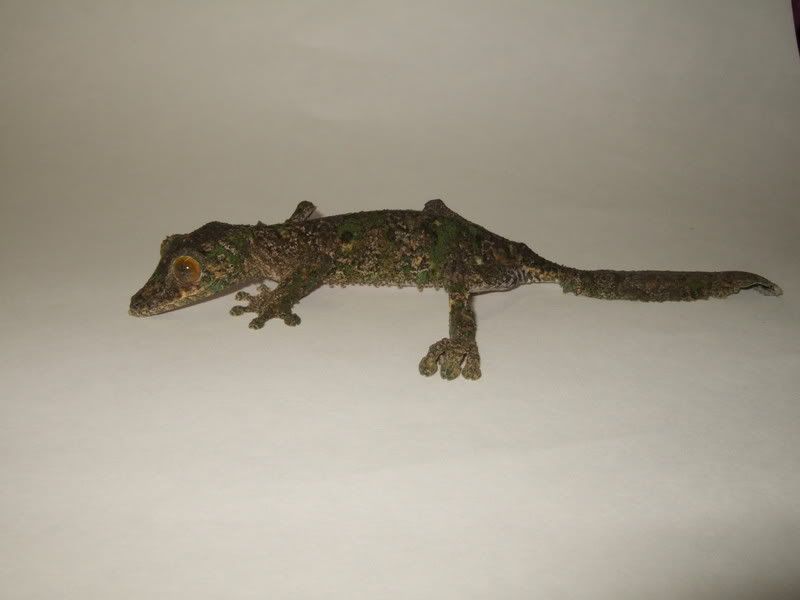
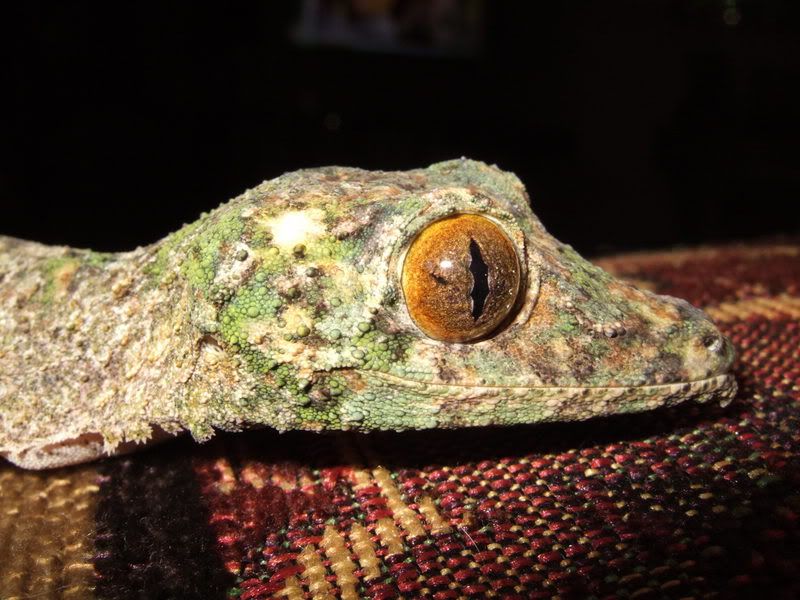
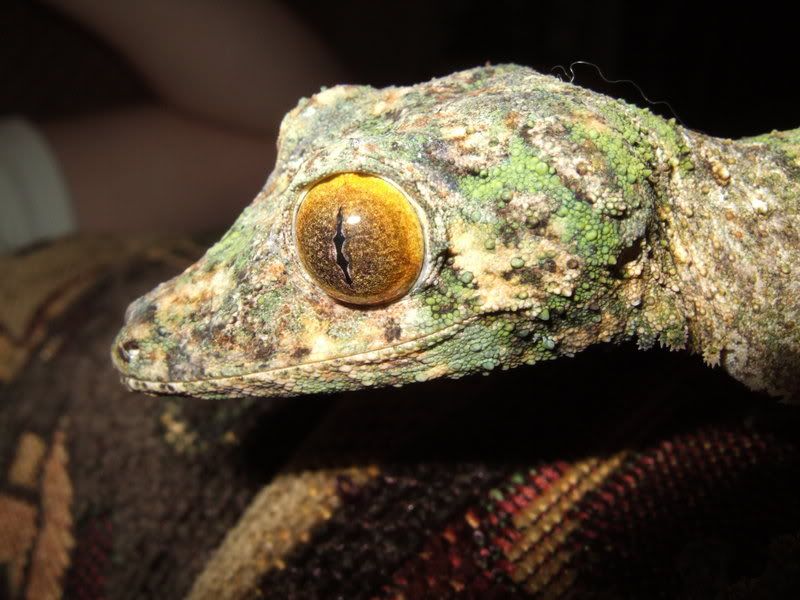
I'm still getting about half and half with sikoraes and henkelis. People keep telling me it's definately one and others are 100% sure it's the other.
First off, maybe you should be asking people who know something about Uroplatus. Anyone that knows anything about Uroplatus would tell you 100% positively that the animal in question is a U. sikorae.
It's one thing to buy something on a whim, and know what you've got, but the person selling the animal to you should at least be able to tell you what species it is.
U. henkeli have a bit broader head, are about 3 times the size of sikorae, and will never be the color pattern that your U. sikorae has.
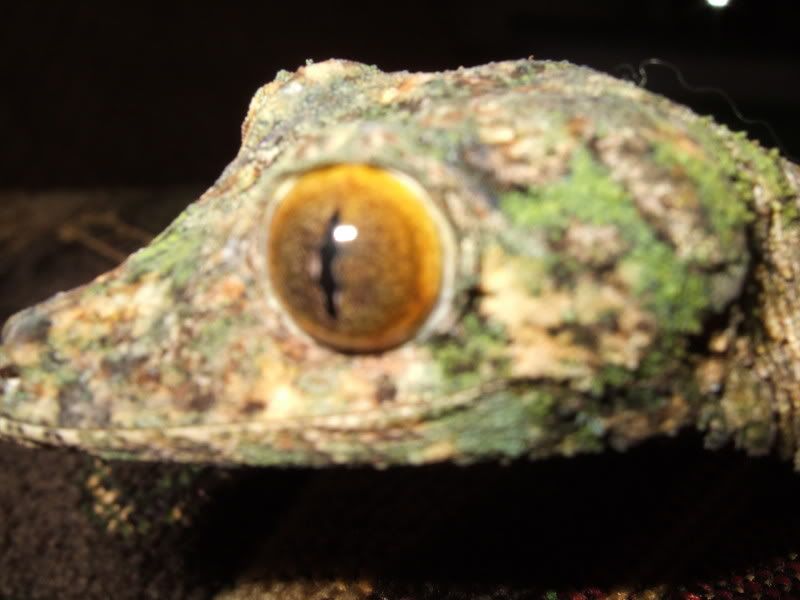
As previously stated, the eyes are different, and I believe your photos show this quite apparently. What yellow 'ring' don't you notice?
After reading my post and realizing it may sound somewhat rude, I decided to snap some photos of each species, to try to help you recognize the differences. Sometimes I forget that I may have had the same questions a few years ago when starting out with Uroplatus. The best way to learn, is to examine as many photos of the different species as possible in your free time, and hope that whomever has taken the photos, actually knows what they've got.
For starters, an adult U. henkeli female, not colored up, in about the plainest color pattern you can find. When she colors up, you can see the leopard like pattern pretty much all over her body. The pattern can faintly be seen if you look closely.

Next, an adult U. s. sikorae female with a banded color pattern. Notice how the center of the eye is darker, and the outer 'ring' is yellow

Next, let's shoot for a size comparison
U. henkeli on the left, U. s. sikorae on the right

and finally, the eyes....
U. henkeli eye ( can be more gray, and will turn pinkish when coloring up)
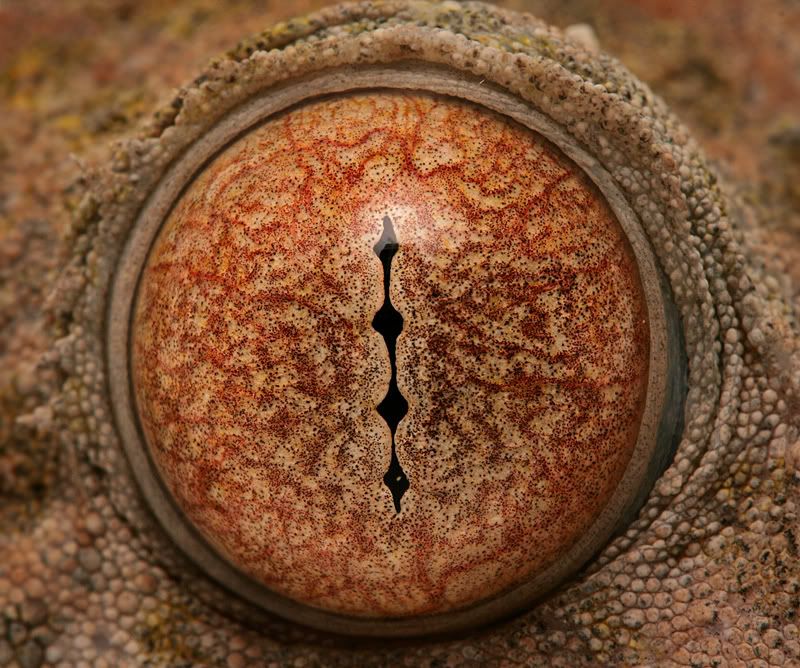
U. s. sikorae eye, typical example ( photo courtesy of my wife Sarah ( while I was creating this thread))

These are some of the most obvious differences to point out, and a few of the things you can analyze to distinguish between the species.