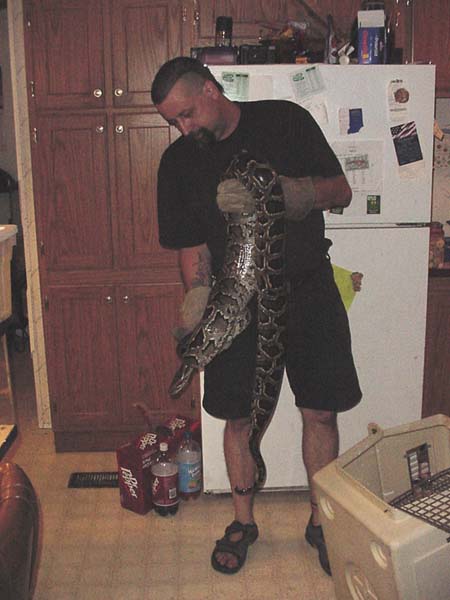
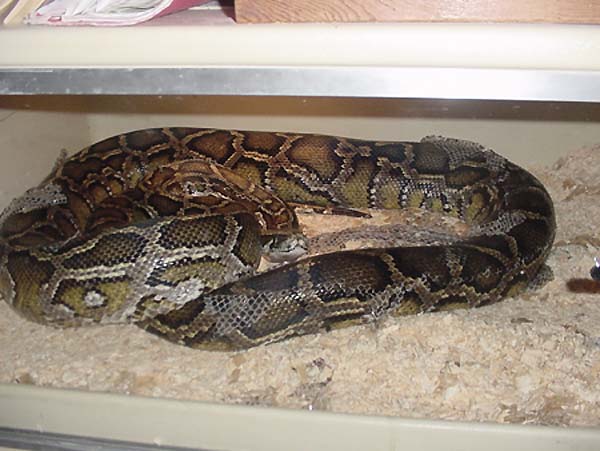
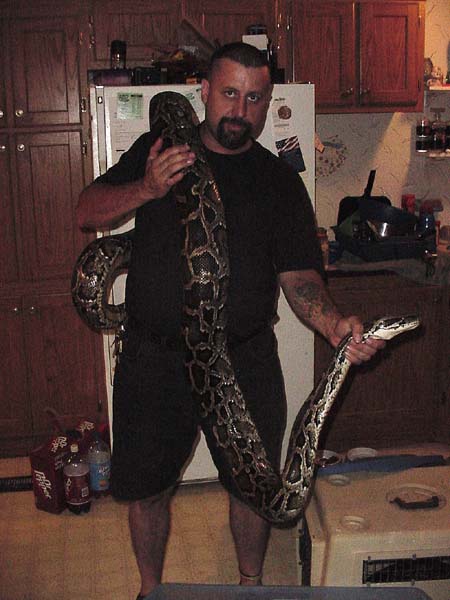
Those are nice, normal colored burms but I do have a few comments (and they are not meant to be negative in any way but rather to inform and educate other folks who may not have a lot of experience in working with burms).
1) Burms are not "mean" - if these snakes have a tendency to strike, this is usually a sign that something in their environment is not quite right (lack of secure hiding areas, parasites, improper temps, poor diet, etc.)....sure, some burms just stay aggressive but having raised 100's of burms, only a small handful never calmed down for me.
2) Environment - incomplete sheds are a sign of a poor environment. Burms must have high humidity and warmth to remain healthy. Sure, everyone experiences a bad shed every now and then, but I have a feeling that this could be a common occurance with this particular animal. Humidity can be easily remedied by adding a cool air vaporizer in the room where the cage is located. Daily mistings with lukewarm water works great (I do both).
3) Handling - restraining an already aggressive burm by the neck is a sure fire way to keep that burm from ever trusting people. If this burm is aggressive, the only way it will ever trust being handled by people is through TLC...this means that you want to become as non threatening to the snake as possible and this only comes through a LOT of time in allowing the snake to get used to being around you and seeing you as a non threat. Restraining a burm (or any snake) by the neck will only make matters much works; plus, it is very dangerous for the snake because the bones in their neck region are very small and delicate and prone to break should the snake all of a sudden begin twisting on you. I am sure you just did this in order to take the picture but I just don't want other folks to think that this is a proper method for handling burms; it isn't.
Rob Carmichael, Director/Curator
The Wildlife Discovery Center
City of Lake Forest Parks & Recreation (IL)