Reptile & Amphibian Forums

Welcome to kingsnake.com's message board system. Here you may share and discuss information with others about your favorite reptile and amphibian related topics such as care and feeding, caging requirements, permits and licenses, and more. Launched in 1997, the kingsnake.com message board system is one of the oldest and largest systems on the internet.

Click here to visit Classifieds
https://www.crepnw.com/

"Cage & Habitat Design Forum?" Not

TJG Apr 09, 2007 12:51 AM

This message is not to just be negative, but I have searched this forum many times looking for new ideas and inspiration. What I find is posts about "Rat racks" and pictures of a just completed cage that is constructed of unfinished pine, pvc pipe, and plexiglass which is about a 1/3 the size it should be for the Boa pictured. Cage is right! I am interested in building habitats that offer some small particle of diversity this creature would experience in the wild. I will try to contribute my ideas and thoughts and hopefully others will too.

Water Dragon enclosure http://gallery.pethobbyist.com/data/67002lizard-6.jpg

Carpet Python enclosurehttp://gallery.pethobbyist.com/data/670021pic.bmp.jpg

Iguana outdoor sunning cage
http://gallery.pethobbyist.com/data/67002cage.JPG

Replies (34)

chris_harper2 Apr 09, 2007 11:36 AM

I understand where you are coming from. This forum is more about the basic structure of the enclosure and not about the habitat. Most of the habitat information takes place on the corresponding taxonomic forums.

That's probably appropriate if you think about it. There are some issues, however. Namely that a lot of people on the taxonomic forums put together a great habitat but don't have the structure to properly support it, most often from improperly constructed or sealed wooden cages.

But back to the point, I often try to read the other forums, even for species I don't keep. There's a lot of good information about setting up natural habitats on a variety of forums and I learn a lot from it. It's just that very little of it is here.
-----
Current snakes:

0.0.1 Gonyosoma oxycephala - Java locale (green)

0.2 Gonyosoma oxycephala - Malaysian locale (green)

1.2 Gonyosoma oxycephala - Java local (green)

2.2 Gonyosoma janseni - Seleyar locale (all black)

1.2 Gonyosoma janseni - Celebes locale (Black & Tan)

tectovaranus Apr 09, 2007 12:52 PM

I gree with the origonal poster, I make a living designing and building naturalistic enclosures and have been waiting to see the advances in reptile husbandry put to use by the general reptile keeping public. I come here every couple months to see if anything is shakin', usually nothing but completely backward set-ups. What gives? why has the keeping public shunned the amazing advances in husbandry in favor of sterile, breeder type set ups. Perhaps it is the fact that reptiles are advertised and treated as commodities( an investment quality reptile!) and not as subjects of fascination and study. Reptiles in captivity have the ablity to light a fire of compasion/conservation in the public, but are wasted as educational tools and embraced by the money hungry.
Again, with all of the advances, why are we keeping reptiles in FISH TANKS? How is that acceptable. I can't even begin to tell you the horror stories of the animals I hatched out, sold and were killed by inexperienced keepers who got terible advice ( all good advice drowned out by the bad) fish tanks are for fish, not reptiles, ever. Rack systems are for designed to help people, not animals.Not that racks are bad per se, I just don't understand who Enjoys( ???) keeping their piebald ball ( or whatever) in a rack system, how is that fun? please I would love to know.
Ben Aller

chris_harper2 Apr 09, 2007 01:02 PM

What gives? why has the keeping public shunned the amazing advances in husbandry in favor of sterile, breeder type set ups.

No idea, and I agree. But again, I'm not sure this is the forum. Sure there are a handful of us who can discuss it, but ulimately until these conversations start taking place on the respective taxonomic forums nothing will really come of it.
-----
Current snakes:

0.0.1 Gonyosoma oxycephala - Java locale (green)

0.2 Gonyosoma oxycephala - Malaysian locale (green)

1.2 Gonyosoma oxycephala - Java local (green)

2.2 Gonyosoma janseni - Seleyar locale (all black)

1.2 Gonyosoma janseni - Celebes locale (Black & Tan)

chris_harper2 Apr 09, 2007 01:41 PM

How about some pictures of some of your habitats?
-----
Current snakes:

0.0.1 Gonyosoma oxycephala - Java locale (green)

0.2 Gonyosoma oxycephala - Malaysian locale (green)

1.2 Gonyosoma oxycephala - Java local (green)

2.2 Gonyosoma janseni - Seleyar locale (all black)

1.2 Gonyosoma janseni - Celebes locale (Black & Tan)

tectovaranus Apr 09, 2007 03:13 PM

Funny comment about this not being the right forum, every single time I've posted a pic of a naturalistic set up on a taxonomically specific board I'm quickly told to "take that crap to the cage forum-that's what it's for"
At least now when someone hands me that line I can show them your post.
Here are a few crappy as hell pics,I'm working on dragging good photographers to my stuff, as I can't seem to take a decent pic to save my life.
this is an exhibit I built for a large ( obeese!) water monitor for the East Bay vivarium in Berkeley Ca.
These are before the substrate, plants and animal were in it.
I have got to get back there and get some good pics.


A few other pics


how about some of yours?
I totaly dig those red-tailed ratsnakes, have a friend who has a solid blue/grey one.
Cheers,
Ben

chris_harper2 Apr 09, 2007 03:25 PM

Nice work. Are those a combination of real and fake logs?

Is the flooded exhibit the water monitor exhibit or is that another project.

I have had one or two blue Gonyosoma and one orange one. Right now I only have green which is fine given they are my favorite.

Here is one of the more attractive greens I have had. This guy inseminated a lot of eggs, unfortunately one unlucky event after another meant none of them hatched.

My orange one who is no longer with us. There is one of these in the US right now in another collection:

Here is a hatchling G. janseni from Seleyar. One of my babies. Hope to pair up a group of these this summer:

This is what the Seleyar G. janseni look like as adults. They are basically all black G. oxycephala. This is not my picture nor is it my specimen.

And here is a G. janseni from Celebes.

-----
Current snakes:

0.0.1 Gonyosoma oxycephala - Java locale (green)

0.2 Gonyosoma oxycephala - Malaysian locale (green)

1.2 Gonyosoma oxycephala - Java local (green)

2.2 Gonyosoma janseni - Seleyar locale (all black)

1.2 Gonyosoma janseni - Celebes locale (Black & Tan)

tectovaranus Apr 09, 2007 03:40 PM

Wow! those guys are just stunning. That is the first orange one I've seen, very cool. My buddy ( Jeremy Epstein of upscale reptiles) has some nice ones, but has also had difficulty breeding them. He is also working with the 100 flower snake ( molendorphi, not sure of the spelling) they are quite cool( literaly!)
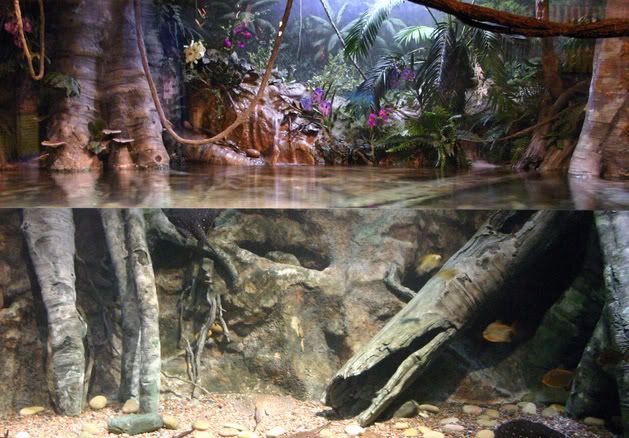
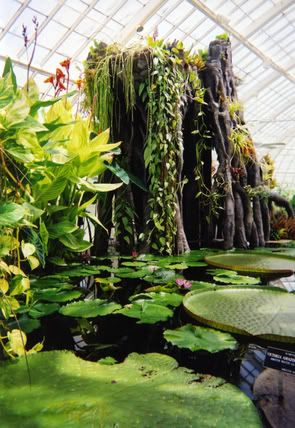
About the pics, first 3 are the water monitor exhibit, then one of my personal set ups for Varanus dumerilii, then a freshwater river ray exhibit for The Monteray Aquarium, last is a pic of a stiltroot tree at the Conservacy of Floweres in S.F Ca
they are all artificall.
Here is one of my monitor set-ups that has a combo of real and fake plants/branches

and some babies thrown in for good measure

Cheers,
Ben

chris_harper2 Apr 09, 2007 03:53 PM

Nice pictures and beautiful babies. I used to keep both Dumeril and Black Roughnecks, although quite a while ago.

Tell your buddy he is welcome to contact me regarding breeding. I have gotten fertile eggs but no hatchings (long story). I have put together quite a pile of literature from around the world and have helped others get their Gonyosoma to breed.

I believe the G. oxycephala benefit from night-time temperature drops. In fact the only time I have witnessed copulation is when temperatures dropped to the mid sixties.

Some people can't drop their rooms that low so misting systems can be utilized to create some evaporative cooling.

Lastly, they sometimes stress in too large of cages, although this shows up in poor feeding more than breeding. Obviously one has bigger things to worry about than breeding if a snake is not eating.

But if his snakes are sporadic feeders and/or picky he might look into building up the security in the cage, whether it be through plants or arboreal hides or both.
-----
Current snakes:

0.0.1 Gonyosoma oxycephala - Java locale (green)

0.2 Gonyosoma oxycephala - Malaysian locale (green)

1.2 Gonyosoma oxycephala - Java local (green)

2.2 Gonyosoma janseni - Seleyar locale (all black)

1.2 Gonyosoma janseni - Celebes locale (Black & Tan)

chris_harper2 Apr 09, 2007 04:06 PM

Just curious, but what are your thoughts on DIY artificial backgrounds? Specifically what you think are easy methods and materials for the novice to try to use?

I have done concrete rockwork for zoos and museums but that is it. The approach I used was heavy and very messy.

I have done some very basic experiments in my garage with foam and drylok hydraulic cement paint and I think it has a lot of potential. I have seen one fish background done this way and it turned out fairly well. However, as you know, underwater backgrounds can be a lot more forgiving due to the visual aspects of water and the natural algae growth that occurs over time.
-----
Current snakes:

0.0.1 Gonyosoma oxycephala - Java locale (green)

0.2 Gonyosoma oxycephala - Malaysian locale (green)

1.2 Gonyosoma oxycephala - Java local (green)

2.2 Gonyosoma janseni - Seleyar locale (all black)

1.2 Gonyosoma janseni - Celebes locale (Black & Tan)

tectovaranus Apr 10, 2007 10:44 AM

I also keep rudicollis, have for years, but just last year I picked up a group of hatchlings and am raising them up now, they are about a year old and are just now sexually mature so I hope to be breeding them this year. Were you successfull with either of the roughnecks? I am always interested in breeding data.
I will pass the offer on to Jeremy, although he is quite the accomplished colubrid breeder, he produces thousands of snakes yearly. I suspect that your advice about security is right on the $, and will pass it on to him.
Which zoo's and meuseums did you do rockwork at? perhaps I have seen your work?
As far as DIY I'm all for it, but the aproach must be realistic, let me explain.
Most who set out to make a "background" think first of aesthetics then availability of products then of the needs of the animal- copletely bass-ackward.
Function must come before fashion, just having a nice looking rockwall will do diddly squat for the animal.
I think using the term background is a bad place to start, you need to think about cage furniture that will serve a purpose and allow the animal to display natural behaviors, i.e short basking intervals, secure themoregulation, long periods of hidding etc, then maybe start thinking of aesthetics.
I do not use concrete for small set-ups, way too much hassle, and yes it will leach. I suggest using fiberglass for structure then using a sculpting epoxy for "texture".
There are several companies that make epoxy that is specifically designed for use in animal habitats and will not leach chemicals.
Gotta get out to the shop today, I'm out of time.
Cheers,
Ben

chris_harper2 Apr 10, 2007 11:06 AM

I have never attempted to breed any monitor species so no data there.

Which zoo's and meuseums did you do rockwork at? perhaps I have seen your work?

I did some at Cleveland for small modular displays in their education department. That was nearly 20 years ago. Later I did a bunch for a small zoo in Grand Island, Nebraska. I guess a couple of books about zoos mentioned the reptile house I built and gave it nice comments. It is now closed and torn down - typical economics of small zoos.

I helped out a bit with some small displays at interpretive centers and museums in SE Nebraska. Nothing major.

When Omaha built their huge rainforsest I got to go out and work with the Larsen crew and learned a TON, although I doubt any of my work is actually on display there. Maybe a small section here or there that they neglected to cover up I did get to help make some faux vines with cable and some sort of catalyzed rubber mix. I imagine those were used.

I generally agree with you about faux rock-work but may differ in some regards. At the zoo I tried to create the most realistic textures I could. I made rubber molds of actual rock surfaces and then pounded them into curing concrete to create texture.

For the private terrarium use I have a different attitude. I like to use the rockwork to provide usable structure for the animal but I don't think the texture is all that important, especially in a heavily planted cage. I think something just to provide a juxtaposition to the otherwise geometric and smooth nature to cages is all that is necessary - albeit with the emphasis on providing usable structure for the animals in question.

Don't get me wrong, I would go as realistic as possible if I had the time or the skill, but I think that it's easy to get so wrapped up in that and end up with a less attractive project unless you really do a good job. Sometimes rockwork that is meant to look real looks more fake than rockwork that is just meant to break up the geometric shape of the cage. Does that make sense?

At any rate, I'd like to try some for my displays but can't decide on the technique. Fiberglass and epoxy are out, however. I hated working with the stuff.

-----
Current snakes:

0.0.1 Gonyosoma oxycephala - Java locale (green)

0.2 Gonyosoma oxycephala - Malaysian locale (green)

1.2 Gonyosoma oxycephala - Java local (green)

2.2 Gonyosoma janseni - Seleyar locale (all black)

1.2 Gonyosoma janseni - Celebes locale (Black & Tan)

odatriad Apr 12, 2007 03:31 PM

As Ben pointed out, most of the "fake rock backgrounds" you see photographs of on various online fora (both herpetolocultural and aquacultural websites), look exactly like that- fake rocks. Aside from everything which Ben's already stated, the major issues that I see with the hobbyist-backgrounds, is that very few individuals actually take the science behind geological formations into account when designing and constructing their backgrounds.

Few ever study or research how rocks are formed, and as a result, they almost always lack defining features that real rock has, leading to an extremely fake appearance. Such features may include stratification, leaching of minerals, fissures, crevices, asymmetry, and coloration.

Instead of glopping tile ground on some arbitrary foam base shape, why not take the time to sculpt something after an authentic formation or escarpment (photographs come in handy here).

What's even worse, as Ben pointed out, is when these backgrounds are not even remotely functional for the species residing within the enclosure. I laugh at the veiled chameleon (and many other species) enclosures with large rock escarpment backgrounds, as such a feature is completely worthless to the animal itself, and serves the keeper exclusively. This is such a waste when one can do many things to maximize the usability of an enclosure for a given species by various other means.

I am with Ben on this one. As we have discussed many times before, this hobby needs a serious kick in the @ss, and people to need to step away from their aquarium/rack system mentality, and approach herpetoculture with an ecological approach, offering conditions which are familiar to specific species, which they are specifically adapted for....

Bob

chris_harper2 Apr 12, 2007 03:54 PM

Okay, but to play devil's advocate, what's wrong with a "rock" that is the epitome of function but lacks in form (how natural it looks, based on your descritption)? As you suggest in your post, function trumps form.
-----
Current snakes:

0.0.1 Gonyosoma oxycephala - Java locale (green)

0.2 Gonyosoma oxycephala - Malaysian locale (green)

1.2 Gonyosoma oxycephala - Java local (green)

2.2 Gonyosoma janseni - Seleyar locale (all black)

1.2 Gonyosoma janseni - Celebes locale (Black & Tan)

odatriad Apr 12, 2007 09:28 PM

I just think that there is an equilibrium which can easily be met, which incorporates functionality (most important) with aesthetics. If you are going through the trouble of creating a rock background for an enclosure, why not strive for absolute realism, rather than half-@ssing it? I see the current trend in herpetoculture as just that- the "it's good enough" approach to reptile keeping.

Basically, my post was adding on to what Ben had already said, in that it would be very easy for us to improve on what is commonly practiced in herpetoculture regarding enclosures.

Bob

chris_harper2 Apr 12, 2007 09:52 PM

I see where you are coming from, but if we take that argument to its logical conclusion, any definition of that equlibrium becomes completely tautological and really has nothing to do with the animal(s) in question and we should just forgo keeping them altogether. It's a great goal and a great idea, but the fundamental arguments just fall apart under examination. Like anything for that matter.

Let's face it, as far as we know a presumably perfect rock wall from a functional standpoint could be made from epoxy rocks that look real or empty Fruit Loop boxes dipped in epoxy. And I think you and I could certainly agree that either approach would be a huge improvement over what we see in most enclosures, although the cartoon bird would be a bit distracting to look at

Sort of like the picture further up with the fence lattice in the cage. Not natural at all but in a well planted enclosure it provides a lot of natural surface area for an arboreal or semi-arboreal monitor. And I personally think it provides a nice juxtaposition between natural and un-natural. It prevents the cage from going over the top and the natural aspects to the point that it looks fake. For further examples of exhibits that are natural to the point of being fake, just visit almost any major zoo.

I personally like the juxtaposition between the natural and un-natural. Like some of the exhibits you see where the rockwork is the face of a god from some Cambodian temple but almost overgrown with plants. I think those are cool and I think that slapped together rockwork can also look cool.

But of course, proper function should be the goal. I'd gladly carve an accurate replicate of a Cambodian temple if I thought it would provide a functional perch for my Gonyosoma spp.
-----
Current snakes:

0.0.1 Gonyosoma oxycephala - Java locale (green)

0.2 Gonyosoma oxycephala - Malaysian locale (green)

1.2 Gonyosoma oxycephala - Java local (green)

2.2 Gonyosoma janseni - Seleyar locale (all black)

1.2 Gonyosoma janseni - Celebes locale (Black & Tan)

tectovaranus Apr 14, 2007 11:08 AM

Wish I had more time to respond, but I'll give it a go.
The defeatest appathetic atitude displayed here is one of the main problems with our hobby. I always wonder, what if the civil rights movement had this same take- "it's so ingrained, how will we ever stop it!" we would still have segragated schools if nobody took a stand. Same deal here, yes it is a huge mountain to climb, but things must change if our hobby is to survive, much less accomplish anything.
And I'm not talking about making every enclosure" naturalistic" per se, just bringing the husbandry level into this decade would be a good start. I really don't understand the resistance to progress in this field.
Chris, you mention coating boxes with epoxy as a good alternative or start, man this is a VERY old concept, one that you can see failing miserably in zoo's accross the contry, it's called "refrigerator box" style, go to any zoo with rockwork from the 40's on, you can actually see how they stacked the boxes and sprayed gunnite over them. Guess what- they suck, and are not functional.(An example can be seen at the S.F zoo's polar bear exhibit)
The thing that really gets my goat is that there are many functioning alternatives that are out there but have been rejected due to this " it's too hard waaaa" mindset. Just pick up any of the wonderfull animal behavior books by H. Hediger, particularly" The psychology and behavior of animals in zoo's and circuses" written in 1968, contains answers to many of the problems we deal with today, including exhibit design.
David Hancocks also wrote an amazing book on this subject recently that has been summarily dismissed by the zoo community because his ideas are new and different. Of course the zoo's that have implemented his ideas ( woodland park zoo, bronx zoo) are having huge successes, but yeah, its too hard to find an equalibrium .....hogwash....we as a group are just too damn lazy!
Hell, if Carl Hagenbeck could do it over a 100 years ago why can't we improve husbandry in this day and age?
Just my wild ramblings...pay no mind
Ben

chris_harper2 Apr 14, 2007 11:27 AM

Ben, please understand my posts have only been to play "devil's advocate" and offer a counter opinion. And the box example did specifically state to the effect of "assuming otherwise identical fuction". At least I think it did. If I failed to write that I apologize.

Let's face it, these philosophies of keeping will go nowhere with the two extremes in responses we often see. I have seen many a post where someone posts a cage with fake rockwork that looks bad but really provides a lot of usable structure for the animal and a heck of a lot more thermal mass than almost any other cage I have seen. The two extremes I see are 1) that looks horrible and more "natural" looking rockwork would be better for the animal (with no mention of why or function or thermal mass, etc.) or 2) the rockwork is endangering the animal as it's too hard to clean, not sterile, etc.

I'm sorry, but both responses don't further the idealogies that you and I share, and I think we share quite a few.

If you want to push these things in the hobby, I think that's what we need to fight.
-----
Current snakes:

0.0.1 Gonyosoma oxycephala - Java locale (green)

0.2 Gonyosoma oxycephala - Malaysian locale (green)

1.2 Gonyosoma oxycephala - Java local (green)

2.2 Gonyosoma janseni - Seleyar locale (all black)

1.2 Gonyosoma janseni - Celebes locale (Black & Tan)

-ryan- Apr 14, 2007 05:13 PM

Zoo exhibits are for the people that go to the zoo, not the animals that live in the zoo. They look pretty, but a lot of them aren't terribly great.

If you want to learn how to give reptiles a habitat that really benefits them, you've got to talk to Frank Retes. Other than that, check out the pro exotics website. They use a lot of the usual husbandry for snakes and such, but check out pics of their monitor habitats, and read some of the care sheets.

Besides, it's more than stupid rock walls. It's temperature, humidity, substrate, security. That's what's important to a reptile. It doesn't matter if the walls look like rocks. Frank Retes is in my opinion the most successful reptile breeder (especially keeping in mind the information he's given the monitor community and the reptile community as a whole), and most of his setups consist of a few feet of good dirt to dig in, a scrap pile (mostly plywood tossed in a pile) to bask on and hide in, good heat sources (with basking spots up in the 160's), and a lot of choices. His habitats don't look nice, because that's not what they're for, yet I'll bet that his reptiles are healthier and better off than most others in captivity.

-ryan- Apr 14, 2007 05:20 PM

Here's a good post about setting up a usable cage in the monitor forum. Though it's intended use is for small species of monitor, this exact cage would be suitable for many species of lizard and tortoise, and some species of snake. I use a very similar (almost identical), yet larger setup for some of my russian tortoises. No rock walls, but a cage that is very good for reptiles. Notice there isn't much (any) ventilation. Seems crazy? There's method to the madness.

http://forums.kingsnake.com/view.php?id=1291805,1291805

tectovaranus Apr 14, 2007 08:39 PM

Um.. I don't think that you are quite grasping the concept.
We are talking about implementing new husbandry into exhibitry/ cageing ( note the various references of "function vs fasion".I think we all agree that zoo's and zoo husbandry needs serious help, as well as the hobby.
Personaly, I don't favor the trough-style cageing, lots of wasted space and in my opinion, not enough room for dirt, drainage etc, but they are easy and do work.
So yes there are plenty of "stupid rock walls" the task is to actually contribute and advance, to that end do you have anything constructive to add?
Ben

-ryan- Apr 14, 2007 11:04 PM

quit being so self-righteous.

oh, about the reptiles? Well, I hope someday you grasp the concept that keeping reptiles isn't about what the human wants.

Matt Campbell Apr 17, 2007 11:23 AM

>>quit being so self-righteous.
>>
>>oh, about the reptiles? Well, I hope someday you grasp the concept that keeping reptiles isn't about what the human wants.

I don't think tectovaranus was being self-righteous. The thread became a discussion regarding how to design cage furnishings that were both attractive and realistic while being fully functional for the animals housed within the enclosures. As for your comment about zoo exhibits being designed for the publics viewing pleasure, I think you're wrong. As an employee of a zoo, I know that whenever we redesign an enclosure we take into account the animals individual needs first of all and then figure out how to make the animals needs be met while still maintaining an exhibit that is visually appealing to the public where the animal is visible. I honestly don't think too many people would go to the zoo if all the snakes were housed in bare cages with newspaper substrate. As for Frank Retes - he's a great guy and he's done a lot to advance monitor husbandry, but he's done nothing more innovative than looking at an animals needs and duplicating those environmental needs in a captive situation. Those wonderful Retes-stacks are nothing more than a bare bones substitute for a crevice laden rock wall in the wild. My point is that this forum will never get any more interesting unless there are more serious discussions about how to truly create the most stimulating environments we can in captivity while keeping them visually appealing. You can create something for a herp that is visually appealing and maybe even realistically depicts it's natural habitat while at the same time meets the environmental and behavioral needs of the animal. Saying that all naturalistic vivarium design is only for the keepers benefit and not the animal's in just plain narrow-minded.
-----
Matt Campbell

"I only went out for a walk and finally concluded to stay out till sundown, for going out, I found, was really going in." John Muir

TJG Apr 10, 2007 05:32 AM

Damn thats what I've been trying to say, I was so pissed last night which was my motivation. Very well said on all points. You reminded me of when i first got into reptiles. I would sit in my reptile room for hours with a beer (several) and just observe my reptiles in the enclosures I built for them with almost no expense spaired. I spent so much time with the reptiles they considered me aa a "no threat" and ignored me altogether eventually. I used to be fired up for breeding and building custom habitats until I was down on my luck and I got a job at PETCO as the "Reptile Specialist" whatever that means. I started out trying to create proper habitats and educate people on what was required. But after I saw the process of odering a reptile, maintaining it, and the ultimately selling it or putting it in a black bag for freezer. Just one typical order would consist of 15 baby Green Iguanas jammed into a burlap sack and thrown into a shipping box (vendor sucks, all PETCOs use the same reptile peddlers) then we would soak them because they had fecal matter all over them and then immeadiately to the sales floor where little Suzie isbegging her mom for a cute green lizard. They are clueless to the fact that this animal is capable of 5-6 feet. I also went against the corporate pog on how each cage should be setup. Thats when I realized that when you are selling animals for profit you loose site of wellness and quality of life, also morality of keeping a wild animal that will never be domesticated. So i will probably pursue the habitats and some rare breeding but nothing on the top ten list of reptiles. The name of my company will be Second Nature and the our motto wil be that our habitats offers some of the diversity your herp would encounter in the wild!

-ryan- Apr 11, 2007 02:24 PM

Looking at your habitats, they look nice for the human, but they don't serve the animals. If you want to learn about how an enclosure can best serve the animal, then you're probably best off on the monitor forum. FR and the gang tend to have the best ideas for keeping reptiles happy and healthy.

By they way, it's the internet. Get over it. Not everything is going to be exactly the way you like it. Yeah, a lot of people keep their reptiles in crappy conditions, but that happens. There's not really anything you can do about it. I've tried explaining to people that there are better ways to do things, and people are stubborn. It's not always about education, it's about 'what works for me', which is the wrong attitude.

So I guess I'm for what you're saying, but I don't mind the fact that some forums don't fit exactly what I think they should. I spend most of my time on the surfing the monitor forums anyways, because some of those guys build, hands down, the best reptile habitats on the forums (unless you're worried more about how they benefit you than the animals).

TJG Apr 10, 2007 02:32 AM

Thank you for the reply, I had hoped to spark up some conversation but I disagree with you. This forum should be about habitat design or all things cagey. I have been visiting specific species forums for years on this site and when I come to this forum I'm looking for fresh ideas that someoneelse may be doing with a turtle pond that I could incorporate into my tropical izard cage. Ok now I' going to [bleep]: how many "Is this substrate right? posts do I have to endure? When I became interested in keeping herps I read everything I could get my hands on, and then when I had read all of the books three times then I asked questions. Ok I'm done. I was really pleased to see all of the higher thought replys to this post. I am currently constructong an adult Carpet Python enclosure with some fresh ideas I will document the process and post when complete on both forums!

chris_harper2 Apr 10, 2007 08:42 AM

I never said this forum should not be about putting together habitats, I only explained why things are the way they are. So I don't see what you're disagreeing with me about.
-----
Current snakes:

0.0.1 Gonyosoma oxycephala - Java locale (green)

0.2 Gonyosoma oxycephala - Malaysian locale (green)

1.2 Gonyosoma oxycephala - Java local (green)

2.2 Gonyosoma janseni - Seleyar locale (all black)

1.2 Gonyosoma janseni - Celebes locale (Black & Tan)

tectovaranus Apr 09, 2007 12:58 PM

I would also add that the enclosures in the pics also seem woefully inadequate. was this meant to show good or bad set ups?
No offense intended, we might as well be truthfull here.
Cheers

hedder062474 Apr 09, 2007 09:44 PM

Hi guys I was just following your post about habbitats. I usually only read the dart frog forum, classifieds, and look at the photo galleries. I find it intresting that you are discussing natrual habitats that are made without using an aquarium.
I think that most pet owners that own thier pets because of the love of the hobby and animals that they choose to keep, would like to make such habitats. But the information in my opinion is not that easy to find.
I would love to build enclosure such as the one that you showed in your pictures. The problem is getting to such information. I have been trying to find such information for a long time now. I would love to build my own habitat that would be natural for frogs and a seperate one for day geckos. I have been looking for ways to water proof wood without it being toxic to the animals I would intend to keep in it. I read where cement could be harmful to such animals is this true??
I guess what I am trying to say is that there are some of us out there that would love to build the type of enclosure you are talking about but have no clue where to find proper materials and so forth to do so. Sorry for spelling errors..not the greatest speller in the world.

junglehabitats Apr 10, 2007 04:18 AM

For the most part do what they were here for, Also I think the majority of those posting here normally are doing larger constrictor caging and well not sure you have ever tried cleaning a well put together "habitat" setup after a 10ft boas plops out 5lbs of the rabbit she ate two weeks ago lol But that can really negate the aspect of a natural setup.

Now if a person keeping a few species that can become a more realistic thing but if your keeping MANY species a natural habitat setup can be overwhelming to clean ( speaking from constrictor experience . With geckos and smaller snakes and many venomous snakes a natural setup is much easier to maintain and even doing so with multiples due to the output from the tenant's is smaller so easier to clean.

Personally I think and have seen many cases where people start off with great intentions of natural setups and once they fall behind in upkeep the entire setup suffers and the animal will end up suffering in the end due to the keeper gets over whelmed and starts lacking on the upkeep and it all fades from there.

To end my lil thoughts

I think people will get better information on actual species setup and requirements and what they need in them in a specific animal related forums , even here not everyone may know a species needs for plant life etc what is good what isnt good for them but people are more apt to know what exactly a dart frog needs in the habitats in the dart frog forums then the caging forums ...

same with a chameleon id ask habitat info in a lizard forum before the caging forums actually
-----
__The Revolution has begun ... www.junglehabitatsplastics.com_

signature file edited, contact an admin 6/12/06

tectovaranus Apr 10, 2007 10:53 AM

Yes, I have large constrictors in natural set ups, done that for over 10 years, big poo is no problem if you design properly.
The issue is that most don't design for the animal, just the keeper and it needs to be a combo, great for the animal, servicable for the keeper. I'll try and find some pics of my large boas pooing on a tree for ya!
Cheers

chris_harper2 Apr 10, 2007 08:50 AM

I have been looking for ways to water proof wood without it being toxic to the animals I would intend to keep in it. I read where cement could be harmful to such animals is this true??

I'd be happy to discuss this, but we should probably start a separate thread. Go ahead and do that and let me know more of what you want to do.

Regarding cement, it can raise the PH of water when submerged but I do not consider it toxic once it is fully cured. I have seen some very rare frogs, lizards, snakes and turtles crawling over fake rocks made from concrete so it can't be too bad.
-----
Current snakes:

0.0.1 Gonyosoma oxycephala - Java locale (green)

0.2 Gonyosoma oxycephala - Malaysian locale (green)

1.2 Gonyosoma oxycephala - Java local (green)

2.2 Gonyosoma janseni - Seleyar locale (all black)

1.2 Gonyosoma janseni - Celebes locale (Black & Tan)

TJG Apr 10, 2007 05:47 AM

Thats a fair question the time I had some size constraints, and to be honest with you I always plan to build the next larger enclosure as grow. Not only that an actice lizard after about 2-5 years has torn up a cage pretty good!

tectovaranus Apr 10, 2007 10:55 AM

MY issue with those cages was not size but functionality.
They don't seem to offer anything usable for a captive reptile.
More later, gotta run.
Cheers

Matt Campbell Apr 11, 2007 08:19 PM

You are correct in some respects. The vast majority of posts on this forum are for rodent racks or snake racks. Unfortunately, most people who're interested in naturalistic cage design go to other forums [on other websites] to get there information. Another factor at work here is that many herp keepers simply don't put much thought into creating truly naturalistic setups for their animals. It's a larger problem with the herp culture in the states. In Europe it's a whole different ball game in terms of what the average keeper puts into creating a habitat for whatever herps they're keeping. The only thing that's going to broaden the horizons of people viewing this forum is to see actual examples of caging and habitat designs that go beyond the basic wood or glass box.
-----
Matt Campbell

"I only went out for a walk and finally concluded to stay out till sundown, for going out, I found, was really going in." John Muir

Site Tools