Reptile & Amphibian Forums

Welcome to kingsnake.com's message board system. Here you may share and discuss information with others about your favorite reptile and amphibian related topics such as care and feeding, caging requirements, permits and licenses, and more. Launched in 1997, the kingsnake.com message board system is one of the oldest and largest systems on the internet.

Click here to visit Classifieds
Click for ZooMed
Click here to visit Classifieds

Pros & cons of buying captive hatched...

medusah Apr 26, 2007 10:26 AM

Those of you thinking you will find the next BIG morph in a bag of captive hatched farmed babies are kidding yourselves...

These hatchlings are scrutenized with giant magnafying glasses for any minute pattern or color anomalies, you get those that are not held back with the special ones.

I'm also guilty of buying captive hatched females in the past, from this experience, I can honestly say that these cheap CH females were problematic to get started, fed infrequently, took much longer to get to breeder size when compared to raising captive bred females of same age. The contaminants in the bowl of soup water over there are enough to load up these day old hatchlings with nasty bugs that are next to impossible to get rid of.

Do not take my word for it, experiment yourself, get yourself a few quality true captive bred animals and raise them along side these farmed babies and let me know 3-4 years down the road how you feel...

Do yourself a favor, spend the extra bucks on true captive bred animals, you will not regret it...

Please share pros and cons

Brian A.
Replies (11)

rabernet Apr 26, 2007 10:50 AM

I've not noticed a difference in growth rate or health of my CH compared to my CBB girls.

I personally wouldn't purchase a bag of ball pythons, simply because I prefer to cherry pick certain looks, but my CH girls were well started before they were offered for sale. No fasts this winter for me for any of my modest collection of 15.

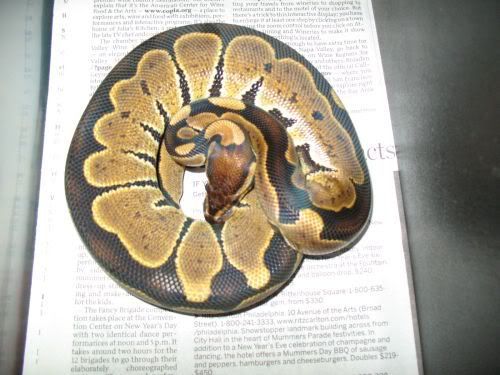
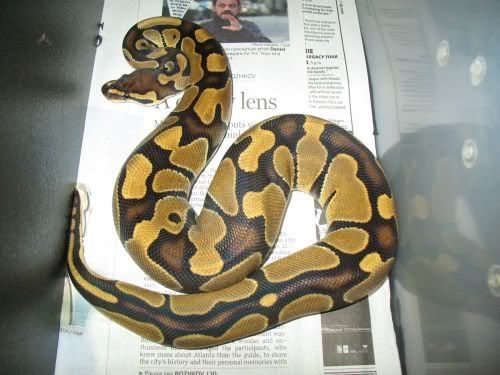
CH Female

CH Female

CBB Female

morphed Apr 26, 2007 12:12 PM

For the past few years i have observed both our own CB animals and our CH animals. My CH have grown quicker and are much less pickier with food. Out of the starting gate i only had 6 CH animals out of 400 last year that didnt eat, out of my CB animals i had close to 20 that needed special attention to start on their own. I agree with the fact that they could get parasites from the water, but when i first got CHs in i tested them for everything under the sun and everything came back negative. To this day i have never had a CH that i raised come down with anything. I have a CH female that is 2 years old, this was her first year breeding, she weighs 2,900 grams eats everytime offered and has 12 eggs in her as we speak. Once again just my experience. I would caution people from buying bush babies in the next few months, for they have been exposed to the wild and have fed and drank in the wild, they normally have external parasites and also can carry internal parasites. The same goes for imported adults, unless you know what you are doing and can diagnose and treat your animals, you can run into many problems. As far as CH babies go, i think they are great. We normally get ours started on hopper mice the second they shed, and they take off. I prefer my CB possible het and het females over CH But as far as just normals go I actually at times prefer CH ... Just me though

I will have to post some pics of a pair of brothers that just came in from Africa, later tonight. They shed in the bag i set them up the day i got them soaked them and gave them a hide. The next day both ate for me. I have had them for a week and half now and they have eaten 3 times already. They are little chow hounds, and amazing looking animals...

Kim
N.A.R.C

Lance Apr 26, 2007 12:44 PM

I disagree 100%. I`ve worked at an importer for over 20 years and have personally raised hundreds of CH balls. The balls that come in fresh are exactly like raising any cb ball. The problem arises when importers bring in babies late in the season that are already in bad shape and then they sell them to newbies who don`t know any better. THOSE ch balls are problematic and should never be imported. But anybody that has worked with a large number of balls can pretty much tell that by looking at the animals. 95% of my female normal breeders are ch animals and i would take them over ch anyday. Because i have some incredible looking females, the likes of which i have never seen on any of the normals i have produced. And if you are in the right position you can still find morphs imported as regulars. Just my .02.

Lance Apr 26, 2007 12:46 PM

it`s supposed to read "i`d take ch over CB anyday"

medusah Apr 26, 2007 12:58 PM

WOW! I respect your opinion BUT on the contrary, I'd personnaly take CBB normal females over any normal import CH females...

morphed Apr 26, 2007 02:12 PM

I actually agree 100% with you Lance. I would of corse rather have my het and poss het females that i produced since i know there genetics, but when it comes to 100% for normal then i also actually prefer CH... After working with thosands of them i do feel they are better feeders, plus there are so many cool looking normals, i have produced some nice looking babies, but some of the CH still blow my mind ..
Also my 2 cents
Kim

JP Apr 26, 2007 02:13 PM

Newly hatched imported babies, that arrive and are settled in before their first meal, are EXACTLY equal to cabtive born and bred in terms of likelihood of feeding issues, other health issues, etc. If you think about it, how could they be different? In both cases, they have hatched within the last week or so, and in neither case have they had a chance to pick up any parasites, and in neither case have they "imprinted" on any particular prey type that could cause feeding problems later on. I supposed the only con would be that newly arrived hatchlings might be a bit dehydrated, but that is super fixable super easy. I mean, its not like they sit in some crate on a boat for a week or more.

Now, one benefit to the "captive hatched" babies is that their will be far more genetic diversity. When you buy captive bred "normals" you're very often buying someone's rejects. In other words, Joe Blow breeds brother to sister possible hets in hopes of producing a visual morph, and then normals get sold off for cheap. They often have at least some degree of inbreeding. While not proven that some inbreeding hurts the vigor of a snake, it certainly can't help.

Now, WC juvies, subadults, and adults are very difficult to work with in a lot of cases...highly parasitized, problem feeders, scarred, injured, sick......

bhb Apr 26, 2007 03:17 PM

I think Kim is spot on with this one. For whatever reason I do have a larger percentage of CB animals that require a little extra effort to get feeding. I have been importing in large numbers of CH babies for about ten years and when you buy them from the right exporters, set them up properly as soon as you get them and give them the proper husbandry they seem to thrive better then the CB. I really don’t have any data that would lead me to believe that down the road one is better then the other, but as far as babies go, I really think CH are a little easier to get started. That’s of course in large numbers like we work with. I would imagine that if you had one clutch of baby Balls that you would be able to get each and every animal to thrive with very little problems.
There is a different issue when it comes to the ecology of the importing. This is a touchy topic and I think for the most part it’s being managed very well. In Ghana they have to release all the females that lay back in to the wild and also a small percentage of the hatch as well. It’s not as regulated in Togo or Benine, but for the most part I think that they keep a relatively good handle on it. So I would guess if I had any problem with it at all, I would want to make sure that these animals will still be abundant in the wild fifty years from now. Will they? I really don’t know, but they does seem for now to be an endless supply of them. Maybe they said the same thing about the dodo bird?
Lastly, although it is extremely rare for new morphs to come in as a normal, it does happen on rare occasions. When we bring in 20,000 babies, we might find a few Yellow Bellies or something not too noticeable. But trust me when I tell you that they are very good at spotting things and they don’t slip through too often. There is such a small profit margin for the exporters on normal babies that for the most part they count on a few specials here and there to make their profits for the year. They don’t want to give their profits away!
I hope I shed a little light on things from my experiences. Good luck with all the babies.

www.myspace.com/bhbreptiles (for fun people)
real website coming later this century!

J35J Apr 26, 2007 03:31 PM

I'll follow suite here.... I managed a pet store that specialized in reptiles for about 5 years and we would always get in 200-250 ch ball every year and would have few problems with them. CH babies are pretty much equal in my eyes to cbb.

AaronMJones Apr 27, 2007 05:22 PM

Ditto to Barczyk. It seems that, overall, captive hatched babies feed more vigorously and are a little less picky that their captive bred counterparts. The captive breds are spoiled from day 1 and get a bratty attitude!

Aaron

PHLdyPayne Apr 26, 2007 03:52 PM

My guess it would depend on the source of captive hatched babies. If the source takes poor care of them after they are out of the egg, or just tries to take them from incubator into bag and right into the shipping box withs as little delay between incubator and shipping box as possible...or just keeps them in a box with 20 other recently hatched babies, leaving soiled drinking water and soiled bedding... the health and condition of these babies certainly won't be good when it gets to the final buyer.

To my knowledge, none of my females are captive hatches, not even sure I would know how to get a captive hatched...other than going through a pet store.
-----
PHLdyPayne

Site Tools