

Reptile & Amphibian Forums

Welcome to kingsnake.com's message board system. Here you may share and discuss information with others about your favorite reptile and amphibian related topics such as care and feeding, caging requirements, permits and licenses, and more. Launched in 1997, the kingsnake.com message board system is one of the oldest and largest systems on the internet.

https://www.crepnw.com/
Click here to visit Classifieds

New Data (indoor-outdoor)

Sighthunter Jun 22, 2007 05:27 PM

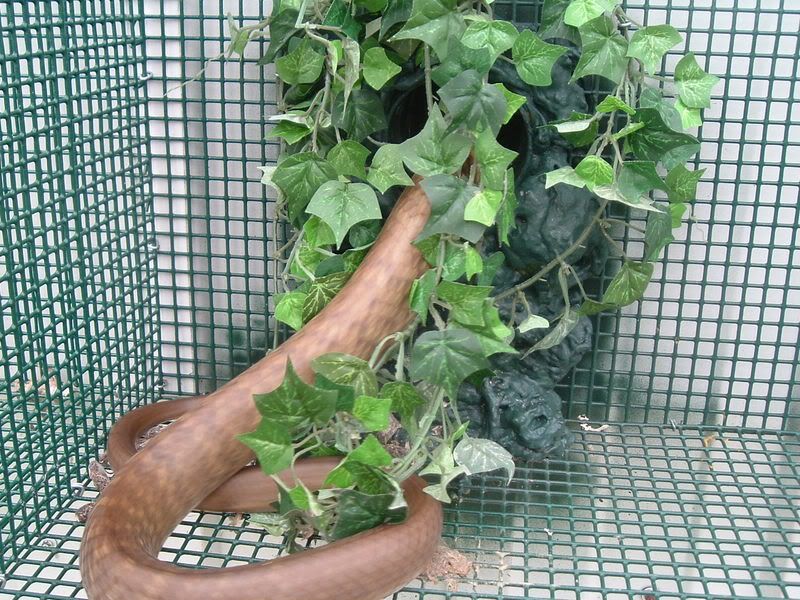
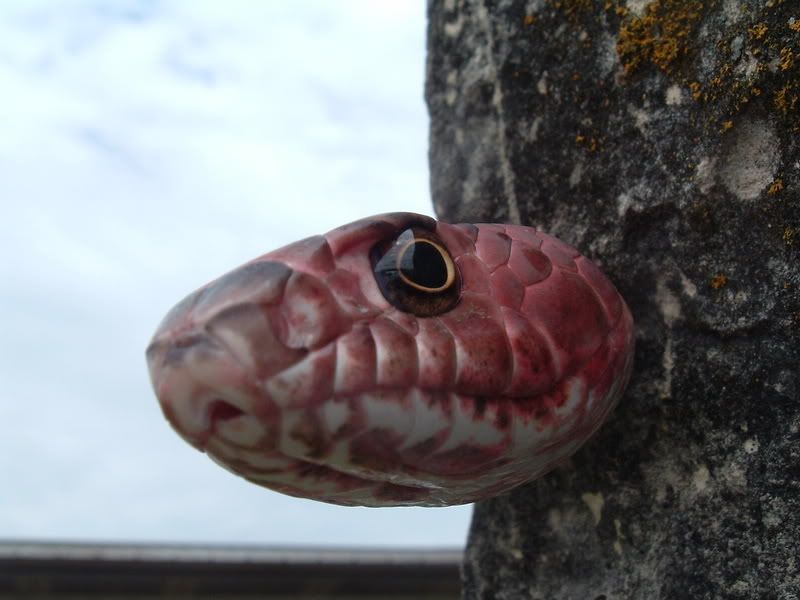
I have some new thermal regulation data, interesting stuff. I noticed that all the snakes come outside to bask at the same time Coachwhip, Cribo and Pseustes. They come outside around 9am for an hour or so but my coachwhip will stay out until 12:00 reaching a body temperature around 98F. What is interesting is the data on my Uni’s. They maintain a body temperature around 86F while the subjects under artificial light seldom use the light and stay in a hide around 78F “Big Difference”. The second amazing thing is they either keep their tail or head outside for the balance of time as the coachwhip so they receive approximately the same exposure to natural sun. What is odd is they all have basically the same routine. When they are going to shed they come in and stay in until the process is complete. I'll keep you all up to date...Bill

-----
"Life without risk is to merely exist."

Replies (10)

robertbruce Jun 23, 2007 03:18 AM

Bill,

The staying indoors during shed is easy. The snakes are uncomfortable in open spaces because their eyesight is much poorer. They feel more secure in an enclosed area.

The part about the Cribo exposing only a portion of its body while the coachwhip is fully basking means to me simply that the coachwhip wants to maintain a higher temperature. I know, it could be something different, but the simplest explanation is that the Cribo is exposing only part of its body because that is all that is necessary to maintain its desired body temperature. (Remember also, Indigo Snakes and Cribos transpire much more than most other snakes, and so they cool down more quickly and can't maintain their body heat as well).

The part about the preferred temperature being 86F for the Cribo when sunlight is available but the desired temperature in the 70s when only artificial light is available, that is really strange. 86F sounds a little high to me, to begin with. My Easterns start to become restless above 84F. Maybe the slight difference is just Unicolor vs Eastern. But, why doesn't the animal in artificial light want to obtain the same temp? It is almost as if access to natural sunlight stimulates within the Cribo the desire to be warm.

That is the really strange part.

Robert Bruce
robert.bruce@sbcglobal.net (310) 502-6311

Mike Meade Jun 23, 2007 09:30 AM

I don't like to get too warm, and I don't like basking in the sun. But there are individual Homo sapiens who do, and they enjoy the sun so much they will bask in it until they are much warmer than they would normally be comfortable with.

Maybe snakes are individuals too?

Sighthunter Jun 23, 2007 10:43 AM

Mike, we are warm blooded therefore we rely less on basking to function. In the cold blooded world things are not that simple. Cold blooded is a misleading term, a better term would be variable temperature blood. If our blood was subjected to those extremes we are dead in short order. Snakes and other variable blooded animals rely on their ability to manually manipulate their environment by either basking to achieve warm blood but unlike us they have the ability to also turn off their metabolism by simply crawling underground where eventually the temperature is stable at 56F except in consistent cold environments where reptiles cease to exist. My point is that using your desire to bask or not does not facilitate your ability to function. Lets not forget these snakes we keep in captivity are hardwired to function a certain way in the wild and all I am trying to do is observe wild behavior to better understand what is required to have vigorous captive specimens. I do not think the current high infertility in most peoples Indigo snakes is normal in nature in fact I know it’s not. I do not have to share my research on line but I do. It is not meant to benefit me but your snakes and everybody else’s snakes. Research is just that it is what it is, nothing more nothing less.


-----
"Life without risk is to merely exist."

Mike Meade Jun 23, 2007 11:57 AM

I'm not sure if you think I was being critical...if so, I'm not. I love the research you do and am glad you post it.

My point basically was that it is simpler to hypothesize that the snake likes the sunlight than it is to propose the sunlight makes the snake want to be warmer. Sure, the sunlight does make the snake warmer than we see in "typical" captive situations, but the snake has a choice and can move away if necessary. If you kept it that warm with no way to escape the heat, it would die.

The second point is that one data point is interesting, but insufficient to draw conclusions. I've seen sibling snakes behave quite differently from each other and I'm sure you have too.

You are on to something, we just need more people repeating what you've done to get enough data before jumping to a more complex conclusion than "This snake likes to sun himself and he gets warm as a result".

I hope I'm making sense....

Sighthunter Jun 23, 2007 12:03 PM

Sorry, I'm hyper and my mind goes off sometimes. I actualy didn't take what you sad as offensive I just got to typing and it came out different than I had planned.
-----
"Life without risk is to merely exist."

Mike Meade Jun 23, 2007 12:08 PM

Which is plural, sort of. When I first read the thread I thought you had one in the indoor/outdoor set up.

How many cribos do you have with this access to sunlight? How are you measuring the snake's temperature? Might the greater air flow outside lead to increased transpiration and some core heat loss?

Sighthunter Jun 23, 2007 01:00 PM

I keep Rubidus, Unicolor and Blacktail. The Blacktail’s and Unicolor’s have access to natural sun. I take body temperature readings with a laser temp gun accurate to within a degree. I do think air flow has something to do with the equation and that is a good point. I have noticed they prefer to stay out on cloudy days so it might be excessive heat that causes them to go back in. The Coachwhip will stay outside at sustained body temp around 100F. My hunch is most of the answers are temperature related. One unexplored field is parasites. Don’t you find it odd that the wild snakes do fine in the wild with parasite loads? My hunch is that by spiking their body temperature or cooling down they keep parasites in check. I was in Texas with Bob Clark and we witnessed multiple rattlesnakes coming out of burrows at 33F one degree above freezing, killing parasites? It was warmer underground in their burrow.
-----
"Life without risk is to merely exist."

Sighthunter Jun 23, 2007 10:25 AM

Could it be that there is an addiction to sun? Could it be that there is something in sun that they eat up in a sense? The vitamin D in sun or some other component. Could it be that it kicks in a biological trigger to bask? Along with the basking behavior their metabolism had doubled or tripled they eat like horses. If in fact they are mimicking wild behavior then there may be more to this. In nature the routine seems to be come out and meet the morning sun as observed in wild racers, same in captivity. After becoming warm they have a few options. Heat has two functions helps digest food and increases energy level for foraging. My hunch is that it is a chain reaction in reverse. They now have sun therefore they bask, Since they bask they digest food quicker and burn more energy because they are stimulated to forage for food which is biologically implanted in them. By coming indoor to shed they are less exposed to predators and do not burn reserve energy while not foraging for food. I can now feed a very large meal every other day if I choose to. I have often wondered if snakes in the wild will bask just inside of a burrow and then suck down a burrow when they feel the vibration of someone coming, in fact I am sure they do. I am sure with the onset of cool weather they will stop feeding on their own and spend less time outside. To properly replicate the natural world I should cool room down as I do yearly when outside temps drop off.
-----
"Life without risk is to merely exist."

robertbruce Jun 24, 2007 04:31 AM

Hi Bill,

Here are a couple ideas to try. Take the snake that is under artificial light and give it ten minutes of sunlight every day or every other day. Then see if it wants to bask under the artificial light to stay in the 80s when it is inside. Easy to try.

I would also like you to try heat tape or a heat rock instead of the artificial light. A trivial explanation would be that there is something about the artificial light that the animal doesn't like, maybe even something like a pulsating electromagnetic field or flickering of the light source. Humans can't see the 60 Hertz flickering of lights but maybe snakes can. (To do this perfectly, you would probably need a DC heat source). If you put heat tape behind a metal plate, the EM field will not pass through.

Robert.

Sighthunter Jun 25, 2007 12:13 AM

Yep, my hunch was the cycling of the light also. Falcons have to reflex so fast and they process images so fast a TV set and lights are nothing more than flashing light to them from 60hz effect.Likewise a Coachwhip for instance and my hunch other Racer species have the same problem with artificial light in that they have splt second reflexes and process images quite a bit faster than we do so that they see artificial light as an irritation. I have slid heat pads under cages before and hat them used in the morning by Coachwhips.
-----
"Life without risk is to merely exist."

Site Tools