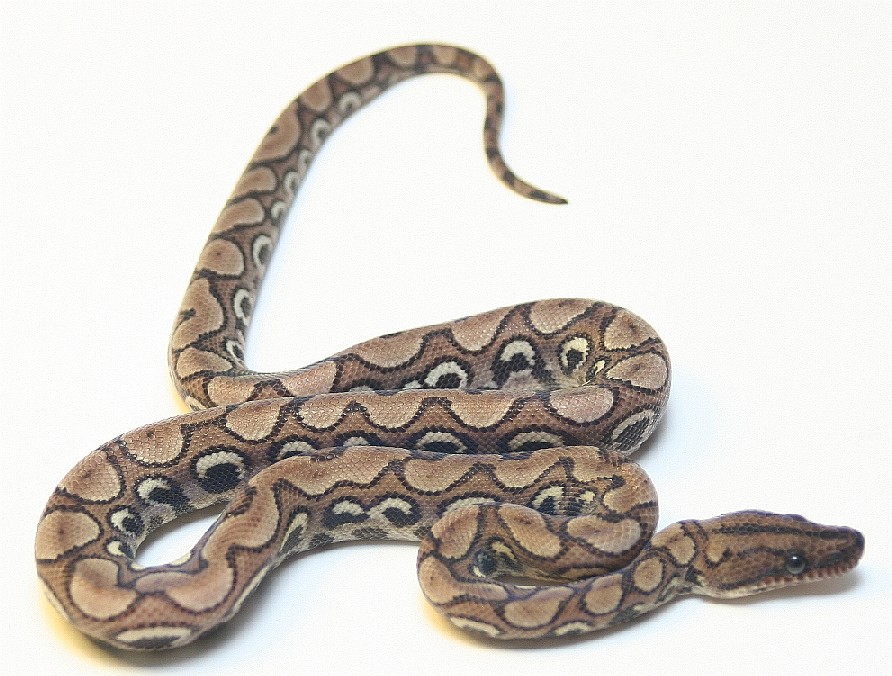
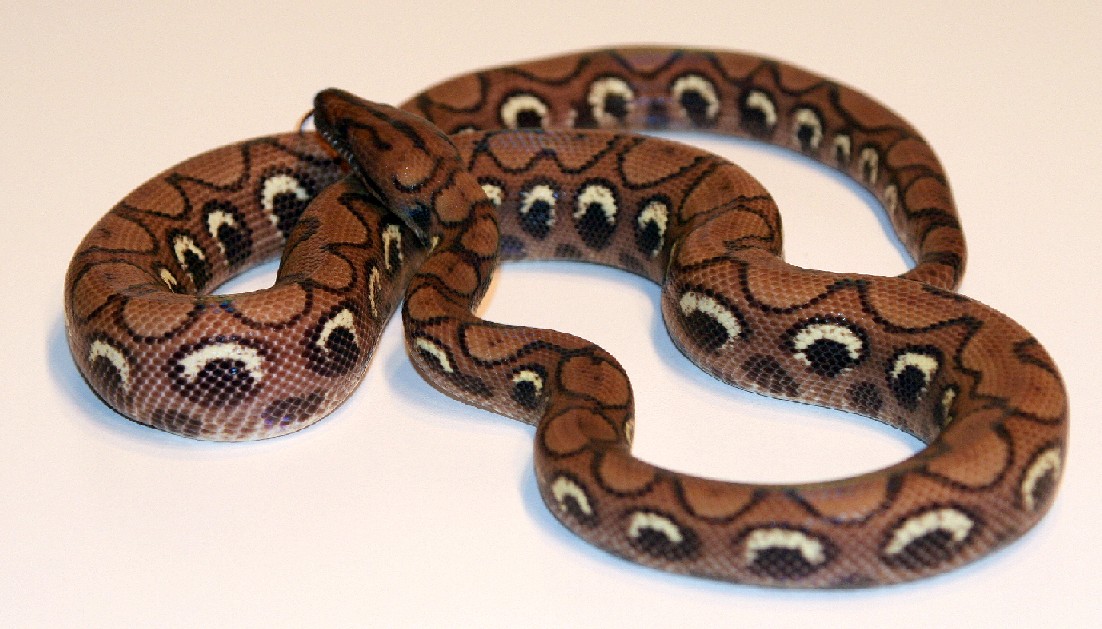
what do yall think?
http://market.kingsnake.com/detail.php?cat=62&de=519297
Welcome to kingsnake.com's message board system. Here you may share and discuss information with others about your favorite reptile and amphibian related topics such as care and feeding, caging requirements, permits and licenses, and more. Launched in 1997, the kingsnake.com message board system is one of the oldest and largest systems on the internet.



what do yall think?
http://market.kingsnake.com/detail.php?cat=62&de=519297
I saw that and was wondering too. I don't know a whole lot about the Anery gene, but at first glance it looks more like a light colored newborn BRB (pre-shed) to me.
What do you experts think?
-----
Aubrey Ross
I'm no expert either, but unless the color of the photo is way off, it sure looks like red pigment is present. As far as the statement, "...they do brown out a bit as they age.", is that true?? Again, I'm fairly new to the genetic aspects of snake keeping, so I may be way off, but I thought that an anery animal would be born without red pigment; the snake wouldn't "brown out" as it ages.
If I'm off base, please someone correct me. If not, well, I hope someone doesn't pay $5K for that guy!!
Thanks,
Ed
I don't know about an anery but it does have reduced coloring but what brb doesn't especially the ones that haven't had their first shed. I'm assuming that it hasn't shed yet Johnathan but pics of last years "anery's" would be greatly appreciated and also more than two initials. If it is a new line then I would love to know where he got them from, if he didn't say wild caught then it hard to imagine that they are a new line unless two lucky SOB's have het anery's and he just happen to buy hets from two different people-chances are slimmer than slim. Or if he bought two siblings and someone had a het anery and didn't know it and 50% of the offspring were het anery and he just so happened to get two het carriers, but how could the seller not have known though. Het anery's are only what 3.5k so I doubt they are next to none het carriers of the anery gene floating around. I mean I doubt they have more than 4 litters a year of anery's (Brain Sharp and Robert Seib) so having something that is so highly regarded would not be bought at a pet store so my guess is as good as yours. Sorry for the rant and all the typing but I just want some background info so I'm gonna e-mail him for pics of last year's litter at one year age but if he doesn't have any than how can he call them an anery unless it is a leaky gene anery I mean
Bob
Anery from Brian Sharp "Tawney"
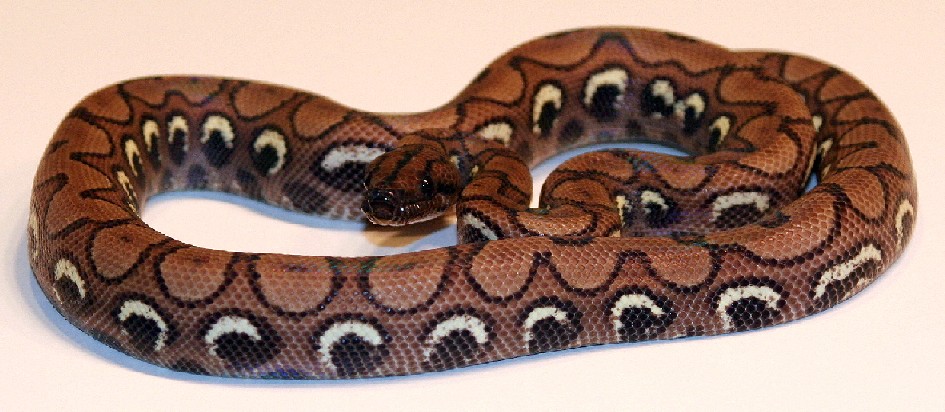
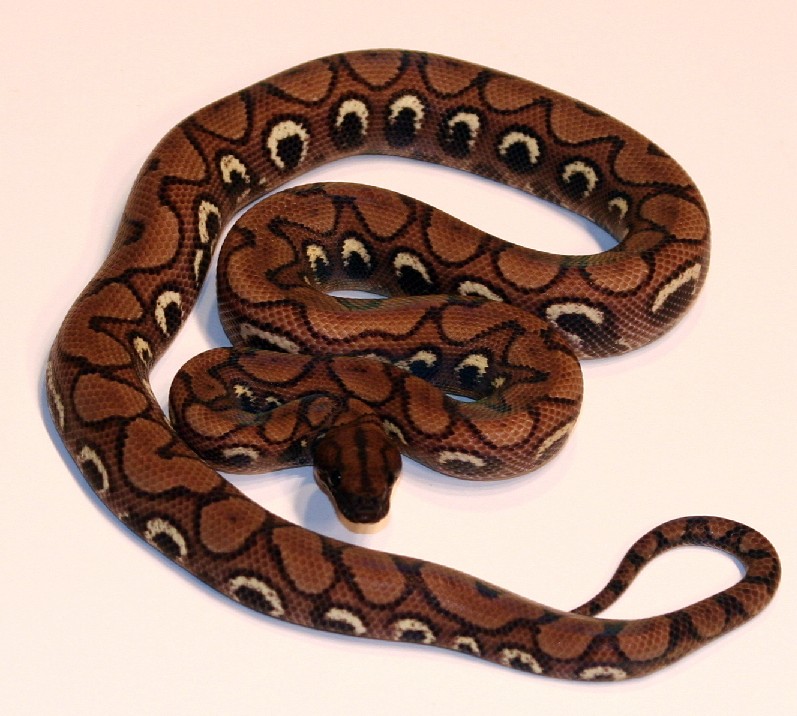

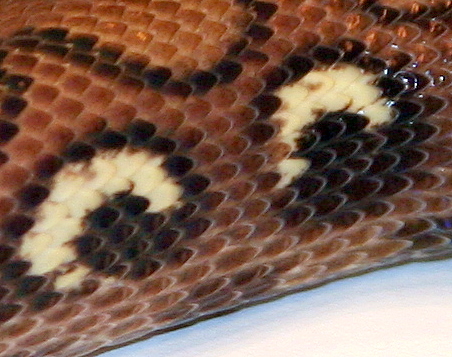

nuf said
-----
Thanks,
Dave Colling

www.rainbows-r-us-reptiles.com
0.1 Wife (WC and still very fiesty)
0.2 kids (CBB, a big part of our selective breeding program)
LOL, to many snakes to list, last count:
24.36 BRB
19.19 BCI
And those are only the breeders 
lots.lots.lots feeder mice and rats 
Some anerythristic bloodlines are strange. Some look very anerythristic at times and then change. Those snakes look way too much like normal babies before the first shed. I have an adult that looks way more anerythristic than those snakes and it is not worth $7K IMO. If someone wants $7K for a snake from an unknown or undescribed bloodline they need to at least show PICs of the parents.
Jeff
>>Anery from Brian Sharp "Tawney"
>>
>>
>>
>>
>>
>>
>>
>>
>>nuf said
>>
>>-----
>>Thanks,
>>
>>
>>Dave Colling
>>
>>www.rainbows-r-us-reptiles.com
>>
>>
>>
>>0.1 Wife (WC and still very fiesty)
>>0.2 kids (CBB, a big part of our selective breeding program)
>>
>>LOL, to many snakes to list, last count:
>>24.36 BRB
>>19.19 BCI
>>And those are only the breeders
>>
>>lots.lots.lots feeder mice and rats
He's only asking $5k so we should all jump on them!!
-----
Thanks,
Dave Colling
www.rainbows-r-us-reptiles.com
0.1 Wife (WC and still very fiesty)
0.2 kids (CBB, a big part of our selective breeding program)
LOL, to many snakes to list, last count:
24.36 BRB
19.19 BCI
And those are only the breeders
lots.lots.lots feeder mice and rats
Hi Jeff,
Thanks for the info, now I am even more curious. Specifically, how do the ones that look anerythristic change? From what to what? What's a bit confusing here is that there could be a difference between "looking anerythristic" and actually being anerythristic. (Like there could difference between "looking albino" and actually being albino.) This seller is saying anerythristic, which as everyone so far seems to agree, is, at best, suspect.
What's also interesting is the comment in the ad "..I do not know if it's compatible with other lines." Does that make any sense, at least with a truly anerythristic snake? If I understand basic genetics correctly, if this snake is truly anerythristic and it's bred to another anerythristic snake (regardless from what line), then the babies will be anerythristic.
Is there a scientific name for reduced red/orange pigment (ie, similar to hypo-melanism for black pigment?) Hypo-erythrinism maybe??
Don't mean to be so serious about this, but like you said, since the asking price is thousands of dollars...
Thanks,
Ed
Even in the two reliable anery lines we know of (Seib and Sharp), we do not know how the gene operates. It may be recessive, dominant, codominant, or none of the above.
If two animals display the same condition (anerythrism for example) and they are unrelated, it may be that the condition in both animals is due to a "defect" in the same region of DNA. However, it may be that a mutation in one region of one animal's DNA produces the anerythrism. In the other line, it may be a mutation in a completely different region of the DNA. The mutation may be further along or earlier on in the pathway towards whatever pigment is producing the red coloration. In this case, the two lines may not be compatible. If the condition were recessive, you would have to have two recessive copies at the same point on the DNA to produce the desired result. Although both parents are double recessive at one area of the DNA (loci), they most likely have at least one dominant gene at the other (maybe two dominant genes). When they get together, their offspring will have at least one dominant copy of the gene at each loci. I believe this is the case witht he two distinct lines of albino boa constrictor in the U.S. Someone please correct me if I'm wrong.
I completely agree with you that this is big money to be spending on a snake. Unless proof of the lineage is available, it is a very big gamble
-----
Mike Lockwood
www.tooscaley.com
Hi Mike,
Thanks for the reply. I guess my major point is that since the definition of anerythrism is lack of all red pigment, then an animal can't be called anerythristic if it has red pigment.
Maybe "light orange", "hypo erythristic", etc., but not
anerythristic.
My assumption was that anerythrism was simple recessive and in only one area of DNA. That seems to be the assumption with other species, you see "xx% het for anery" all over the place. I guess that assumption may not be true! So now I'm even more curious.
Is that general assumption (ie, anerythrism is simple recessive) for other species not true, or is there something different about anerythrism in rainbow boas?
Thanks, great discussion!
Ed
Mike is saying that this could like the Sharp and Kahl albino lines which are both t-negatives and just like the type 1 anery and type 2 anery and why they aren't compatible. Dave (rainbows-r-us) post shows the color change from silver to brown. Sharp's anery's have whitish looking crescent color and Seib's have yellowish color but non have orange hence the lack of erythrin. Jeff has a brb male that took on a "ontogenic anerythistic" change at about 18 months or so and it does have a little red by the head but this animal is awesome. Last year he unveiled Santaremo and the timeline pics were awesome and I would love to see them again but I'm saving them this time Hope this helps and anybody correct me if I am wrong
Bob
Hi Bob,
Ah, thanks for the clarification. Possibly two distinct types of anerythrism.. now I'm getting it. (Sorry, thick skull.) I just searched the web, looks like there are also two possible types (A and B) in corn snakes as well as boa constrictors.
I'd love to see any more pics that folks might have pertaining to
this subject.
Thanks,
Ed
I know that you can see some anery pics of Seib's line which is on his website. I am having computer problems so I can't give the url link but if you go up to Businesses and click on it then go to Eastern Indigos-Robert Seib then go to his links and then his anery pic page and you are there. One more pic I know of is this one that Brian Sharp has on his site which you may have seen already and of course Dave's post. Here is the one from Brian's site

Bob
Here you go
Seib's line of anery's
I'm guessing ghost brb's will probably maintain a color more like what the anery babies start out as. To my knowlege, I don't believe anyone has created any ghosts yet but no doubt more than one breeder is working on this project. Can anybody here say who will have the first litter or do we have to wait for the drumroll when it actually happens? I'm new here at this forum so if it's been discussed before I'm unaware.
if I were my money would be with the founder of hypo brb's. He has a hypo male het anery and was gonna produce double hets with a mating of his hypo to a friends anery and low and behold 2 little anery's popped out so go figure. Realize what the genetic make-up of those anery's are and he should have a good shot at some ghosts in the future,well I'm pulling for him at least.
Bob
Thanks Guys! I did some web surfing this morning, saw a bunch of pictures including Seib's site. Since his yearling anery's look very reddish/orange to me, I guess I'm still not understanding why these would be called "anerythristic." But no need to beat that to death. Maybe it's just semantics, I'll just call the different mutations Type 1 and Type 2.
I did learn a lot over the past 24 hours (thanks mainly to you guys). I didn't realize there are possibly different types/strains of mutations for one particular type of pigment (or lack thereof.) For example, there are supposedly THREE incompatible types of axanthism (ie, no yellow pigment) in ball pythons (all simple recessive)!
That kind of opens my eyes a bit, since I can't simply assume two anery's (for any species, not just BRB's)will *always* be able to produce anery offspring.
Thanks,
Ed
Hey Ed,
I think it was Bob who told me that anerythrism in Boa constrictors is a complicated gene. Sometimes it behaves like a dominant gene and sometimes recessive. Didn't you say something about this Bob? So... I never make assunptions until I have proof of how the gene works.
I agree with you though. Calling an animal anery if it shows red pigmentation is a little silly.
I'd like to clear up the msconception that Sharp's anerys have bright white crescents while Seibs do not. I know no offense was meant by this statement. The fact is that it's not true. The anery that Dave poats from time to time has very nice crescents. I've seen plenty from Brian's line that do not show crescents as bright. I've seen animals of Roberts that do. I don't believe the degree of whiteness in the crescents is related to the anery gene.
I also agree with you that this is a good discussion.
-----
Mike Lockwood
www.tooscaley.com
I did Mike. I don't know about it behaving like dominant and recessive but I know anything that involves genetics goes straight over Bob's head lol fellas but I'm trying though. Sorry for throwing misconceptions out there btw too Mike Hey Mike I didn't want to throw this out there but don't you have an adult anery that is not brown. I'm pretty sure you showed me 2 pics but I just couldn't get over it that it looked the way it did. Now all this talk just makes me want to meet everyone so hopefully in two years time Mike I will be able to meet you and several others at Daytona
Bob
Ed,
..Over the last 10 years I have seen baby BRBs that really did look anerythristic and then they grew up to be normal looking. There were several of them at the Daytona Expo 5 or 6 years ago and some people paid good money for them and they apparently all grew up as normal looking adults. I have one that was normal looking as a baby and at around 18 months changed to look very anerythristic. I have had other babies that sort of looked anerythristic and then also grew up to be normal looking. I am just not sure about what is going on with the two known anerythristic bloodlines. It seems to me that we do not know the answers about the known bloodlines and know even less about the unknown ones. I would not pay premium money for a baby from an unknown bloodline unless the seller showed me PICs of a pair of VERY anerythristic looking parents mating and the baby would need to look very anerythristic rather than just slightly different like the ones in the ad.
Jeff
>>Hi Jeff,
>>
>>Thanks for the info, now I am even more curious. Specifically, how do the ones that look anerythristic change? From what to what? What's a bit confusing here is that there could be a difference between "looking anerythristic" and actually being anerythristic. (Like there could difference between "looking albino" and actually being albino.) This seller is saying anerythristic, which as everyone so far seems to agree, is, at best, suspect.
>>
>>What's also interesting is the comment in the ad "..I do not know if it's compatible with other lines." Does that make any sense, at least with a truly anerythristic snake? If I understand basic genetics correctly, if this snake is truly anerythristic and it's bred to another anerythristic snake (regardless from what line), then the babies will be anerythristic.
>>
>>Is there a scientific name for reduced red/orange pigment (ie, similar to hypo-melanism for black pigment?) Hypo-erythrinism maybe??
>>
>>Don't mean to be so serious about this, but like you said, since the asking price is thousands of dollars...
>>
>>Thanks,
>>Ed
Thanks Jeff, this is great info. I'm not personally planning to spend $5K-$7K for an anery BRB right now (got 3 sons I need to feed and send to college ), but I certainly appreciate you mentioning this so I and others are aware of it.
I'd love to get into a BRB project to try to help figure things out, but again that's just too much money right now. I'll just have to live vicariously through this forum.
Ed
Help, tips & resources quick links
Manage your user and advertising accounts
Advertising and services purchase quick links

