What is a Yellow Belly? Is it just a color morphs? Or is it a Het.? I thought they were Het. Lucy. But then I recently saw a picture of a "Super Yellow Belly". Is there such thing as a super Het.?
Thanks
Josh
Welcome to kingsnake.com's message board system. Here you may share and discuss information with others about your favorite reptile and amphibian related topics such as care and feeding, caging requirements, permits and licenses, and more. Launched in 1997, the kingsnake.com message board system is one of the oldest and largest systems on the internet.



What is a Yellow Belly? Is it just a color morphs? Or is it a Het.? I thought they were Het. Lucy. But then I recently saw a picture of a "Super Yellow Belly". Is there such thing as a super Het.?
Thanks
Josh
Yellowbellies don't look THAT much different from a normal, but they are also known as "het ivory".
The super yellowbellies you saw are probably the "Super stripe yellowbelly"...which is a yellow belly bred to a new mystery gene.
Luecistics are different then ivories.
-----
"What is man without the beasts?
If all the beasts were gone,
men would die from great loneliness of spirit.
For what happens to the beasts,
soon happens to men.
All things are connected."
-Chief Seattle (Duwamish Tribe)
My mistake! Thanks, and is it 100% het.?
http://www.nextworldexotics.com/hgyb.htm
That's how to spot a yellowbelly/het ivory.
-----
"What is man without the beasts?
If all the beasts were gone,
men would die from great loneliness of spirit.
For what happens to the beasts,
soon happens to men.
All things are connected."
-Chief Seattle (Duwamish Tribe)
Wow, Thats alot of help! It really explains it... Confusing to me! Lol
Actually Yellowbellies are a color morph, and some would probably call them a pattern morph too because of the disguishable ventral markings and flames along the sides of the snakes. Not all yellowbellies are created equal.....meaning that just like pieds or just about any other proven morph we know, some will be extreme and some will be.....well.....so so......but regardless of the look, from my personal breeding and those of other keepers.....an ugly yellowbelly can throw some extremely nice offspring and the Ivories produ ced from such animals are all variable as well.
A Yellowbelly when bred to another Yellowebelly will produce the Ivory Ball python. So the Yellowbellies are the dominant version and the Ivories are the Co-dominant version.
On a side note:
Let's try to stay away from reffering to dominant morphs as "het's" as this only seems to confuse not only newcomers to the hobby but some more experienced keepers too......we dont call Pastels hets for Super Pastles...
just my thought on that..... 
Anyway...here is a good belly shot of some normal looking balls
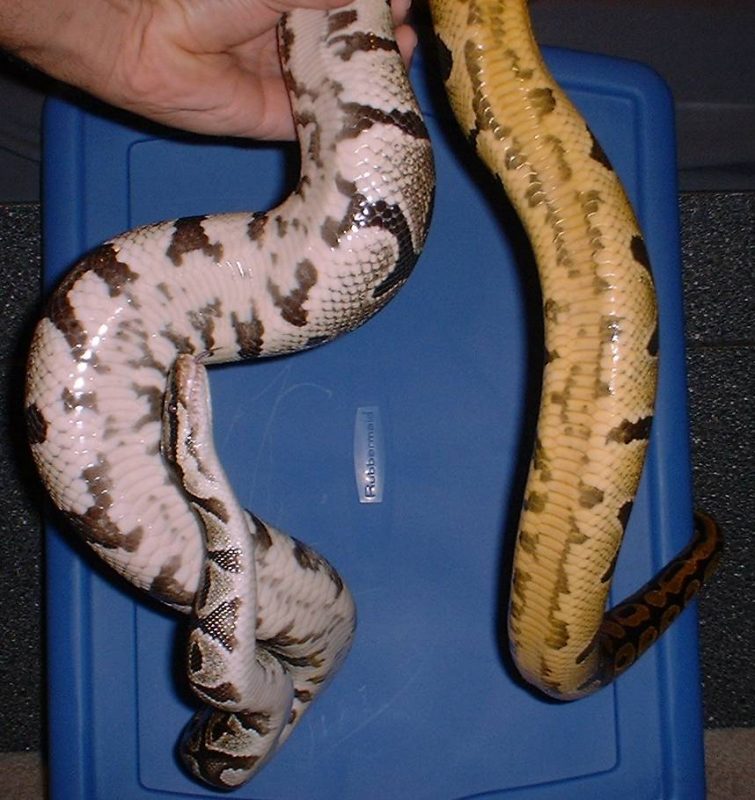
Here are a few different classic yellowbelly belly shots.
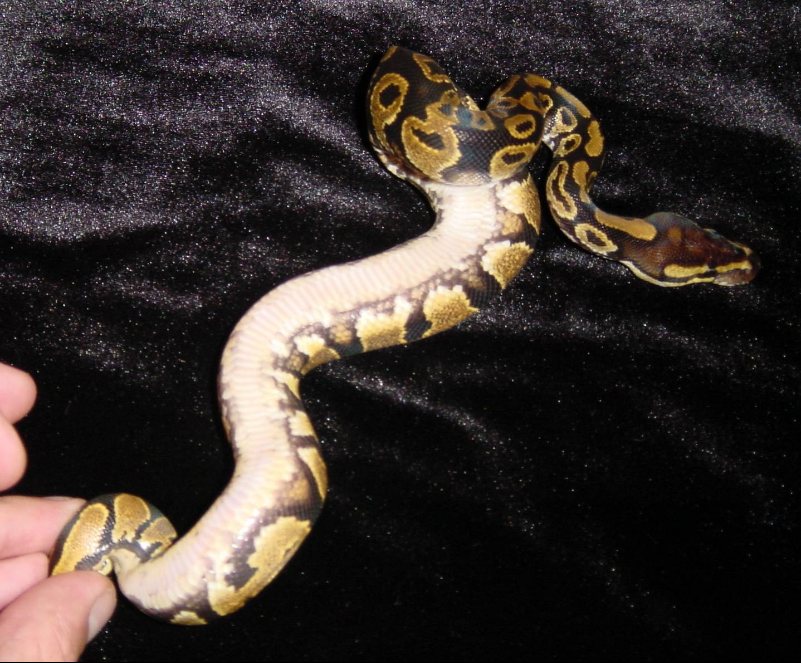
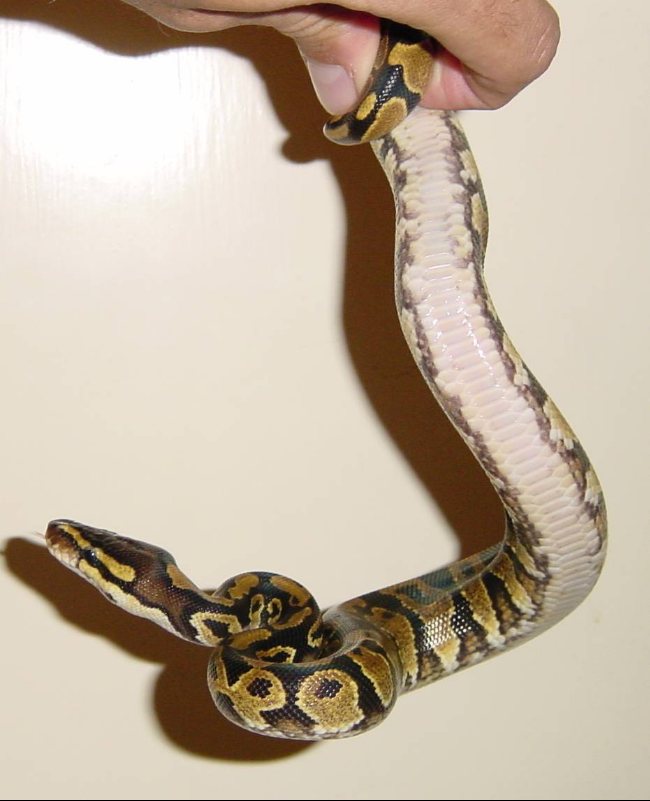
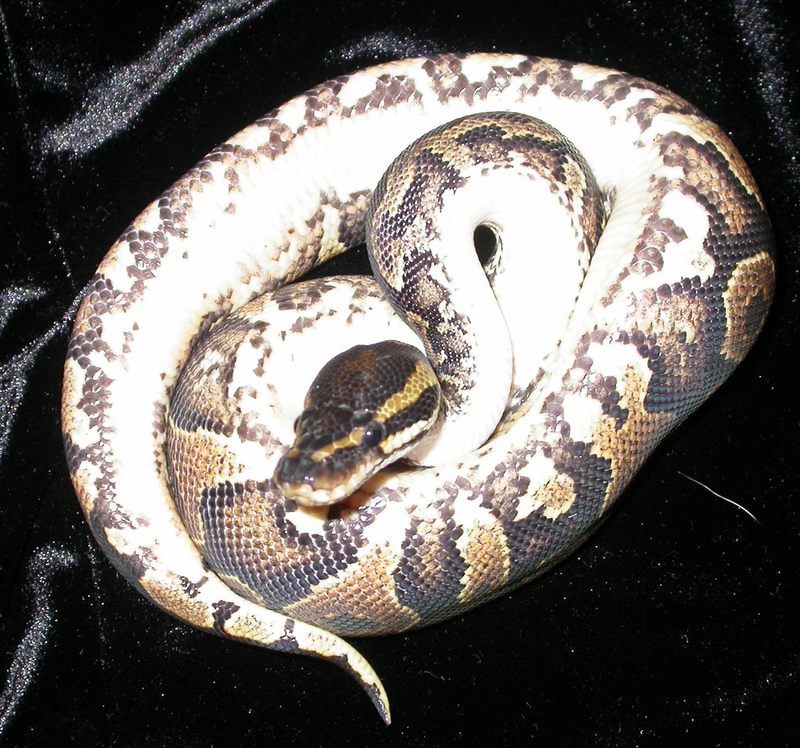
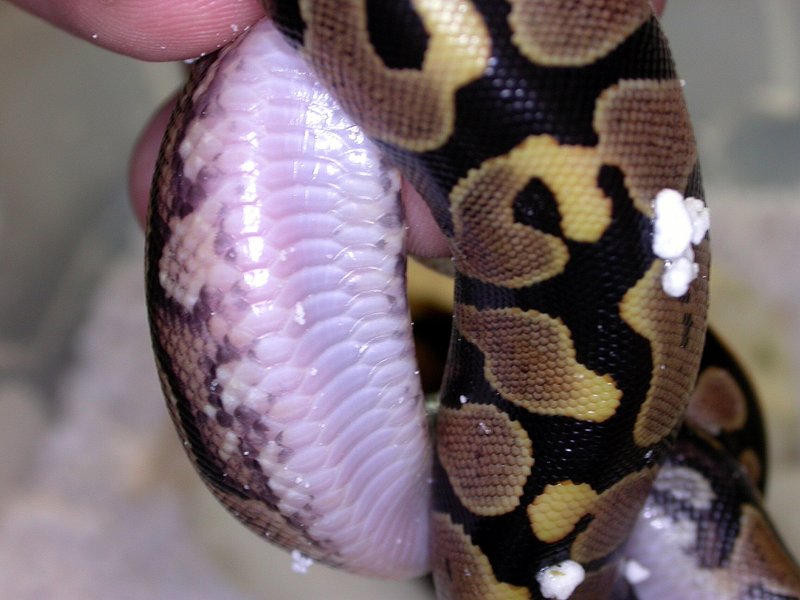
Hope this helps some...
Jared H
Jared,
Great pictures!
I do have a few bones to pick with the following:
"A Yellowbelly when bred to another Yellowbelly will produce the Ivory Ball python. So the Yellowbellies are the dominant version and the Ivories are the Co-dominant version."
Dominant and co-dominant refer to the way a mutant version of a gene reacts with other versions of the gene, generally the mutant version reacting with the normal version/allele of the same gene. A mutation is classified as dominant if in the heterozygous animal the mutant allele completely dominants the normal version of the gene so that even the homozygous mutant doesn't look different. A gene is classified as co-dominant if in the heterozygous animal both alleles have an effect so that the homozygous mutant version looks different when there is no longer a normal allele present. So the mutation type (recessive/co-dominant/dominant) doesn't change for a given mutation depending on if you are looking at a heterozygous animal or a homozygous mutant animal. The yellow belly gene is defined as co-dominant BECAUSE the heterozygous genotype has the non normal yellow belly phenotype and the homozygous genotype has the different non normal ivory phenotype. The yellow belly and ivory phenotypes are heterozygous and a homozygous form of the co-dominant yellow belly/ivory gene but it's incorrect to refer to them as co-dominant and dominant forms. The difference between ivory and yellowbelly make the mutation type co-dominant and it doesn’t change.
"On a side note:
Let's try to stay away from referring to dominant morphs as "het's" as this only seems to confuse not only newcomers to the hobby but some more experienced keepers too......we don’t call Pastels hets for Super Pastles...""
This is more a matter of personal preference but I think if the newbies learn the real meaning of heterozygous (having an unmatched pair of genes – you also need to know the mutation type to know if the het looks normal or not) the multi gene co-dominant crosses would be much easier to understand. I think the main confusion is the experienced keepers who first learned about heterozygous with recessive morphs and now think het means normal looking gene carrier. Realizing that a bumblebee is a double het for the pastel and spider genes and that a super pastel is homozygous for the pastel gene makes it much easier to predict the offspring, IMHO. On the pastel side it's like any homozygous X heterozygous, a 50/50 split chance of het (pastel) and homozygous (super pastel). On the spider side it's like any het X normal, a 50/50 split of het (spider) and normal for spider. Start thinking about the results of breeding a couple different NERD quadruple gene combinations together and you will eventually need to break everything down to genotype (het/homozygous) and then use the same rules that apply to the genotype of the offspring regardless of mutation type (recessive, co-dominant, or maybe some day dominant). I think the ball python industry will need to eventually accept the wider use of heterozygous in genetics so why not help newbies learn it right from the start!
Ok, stepping off the soap box ...
Good post , only thing I would want to clarify is that the Ivory is the dominant and the YB is the co-dominant version... Very helpful reply other than that little bit of confusion.. Anthony McCain Reptiles.....

I know I saw a major breeder's web page once use "dominant" when they should have used "homozygous" and "co-dominant" where they should have used "heterozygous" so I thought about pointing the switch out but either way it's still totally wrong. Did the book also continue this misuse or why is it so common? There is no dominant version of yellow belly. It's still a co-dominant mutation type no matter if you are looking at a yellow belly or an ivory. I bet the corn snake people laugh at ball python genetics lingo.
Agreed on the misuse of "dominant" and "codominant". A snake with a yellowbelly//normal gene pair is heterozygous, by the standard genetics definition of the word (as found in King & Stansfield's Dictionary of Genetics and at http://dictionary.reference.com).
>I bet the corn snake people laugh at ball python genetics lingo.
Dunno. But most of them are just as clueless as the ball python guys. It's just easier for them to seem knowledgeable when all the common mutants are recessive to normal.
Paul Hollander
Alas I abandoned my first love the corn snake years back and haven't really followed it much. I did get the idea that most of their mutations where still recessive which does simplify things. I suppose the reason balls have so many dominant type mutations is that they are harvested from the wild on the order of a hundred thousands a year. A very broad genetic swath to pick odd balls out of. Maybe some new recessive corn snake mutations are being found by captive breeding as I would expect the ratio of wild bred to captive bred babies to be much lower for corns than balls.
At any rate, I have had a few e-mail conversations with what seemed to me to be very knowledgeable corn snake breeders. I gathered that there was a community effort to prove that striped and motley where alleles of the same gene and that animal with both alleles looks motley.
Sure the corn snake breeders got a couple of decades head start on ball python morph breeders and it's easier to do something like that with corn snakes being cheaper and more prolific than ball pythons but at the rate we are going it will be years before we know for sure what sort of mutation (dominant or co-dominant) spider and pinstripe are not to mention more complicated things like widespread understanding of the genetics of the platy.
>I suppose the reason balls have so many dominant type mutations is that they are harvested from the wild on the order of a hundred thousands a year. A very broad genetic swath to pick odd balls out of.
Partly. And I think partly because balls spend much of their lives lurking in holes for food to wander by. While corn snakes are more out in the open where they run into preditors, etc. So the balls have a better chance of a dominant mutantion surviving past the first generation and getting spread out.
The ball python's fewer eggs and higher prices definitely make breeding studies harder than in the corn.
Paul Hollander
"and that animal with both alleles looks motley"
The animal pictured in this post came from a Snow het Stripe male to an Anery Motley het Hypo.
(He's an Anery Stripe-Mot...and now much, much lighter than this year old photo.)
To my point...lol....
This male obviously got a stripe gene from dad and a motley gene from mom, and hardly looks like a Motley. (The only saddle he has is the one at his vent...)
I've bred this pair two years now, and of the hatchlings with clear bellies (ie: homo for Stripe and/or Motley), roughly half are 60-80 percent striped, with just a few saddles; with the other half having some degree of striping.
To sum up....lol....for some of us CornNuts, the jury is still out on animals with a Stripe allele and Motley allele appearing motley.
(I've bred a homozygous Striped male to the same Anery Mot female and ALL the babies were heavily striped....hmmm)
Excuse me, Randy, if this post doesn't make as much sense as I intend. Genetic talk isn't my strongsuit... 
BB

-----
"Have you hugged your drummer today?" --- Me
Thanks, your post makes perfect sense to me.
"The animal pictured in this post came from a Snow het Stripe male to an Anery Motley het Hypo.
(He's an Anery Stripe-Mot...and now much, much lighter than this year old photo.)
To my point...lol....
This male obviously got a stripe gene from dad and a motley gene from mom, and hardly looks like a Motley. (The only saddle he has is the one at his vent...)"
There is a way to explain this within the theory that motley is dominant over stripe in that allele group. Your motley looking anery female could be a motley/stripe but with the motley dominating her stripe allele. So the anery male you posted got the stripe allele from his snow het stripe dad and also got the stripe allele from mom so is a pure homozygous stripe.
"I've bred this pair two years now, and of the hatchlings with clear bellies (ie: homo for Stripe and/or Motley), roughly half are 60-80 percent striped, with just a few saddles; with the other half having some degree of striping."
It could be that the mostly striped ones with the few saddles are homozygous stripe and the other half are like mom, motley/stripes with the motley dominating over stripe.
"To sum up....lol....for some of us CornNuts, the jury is still out on animals with a Stripe allele and Motley allele appearing motley.
(I've bred a homozygous Striped male to the same Anery Mot female and ALL the babies were heavily striped....hmmm)"
This breeding is a little harder to explain. How many babies where there? Each should have had a 50% chance of getting the motley allele from mom and not looking fully striped. Maybe you just got lucky and they all got her stripe allele.
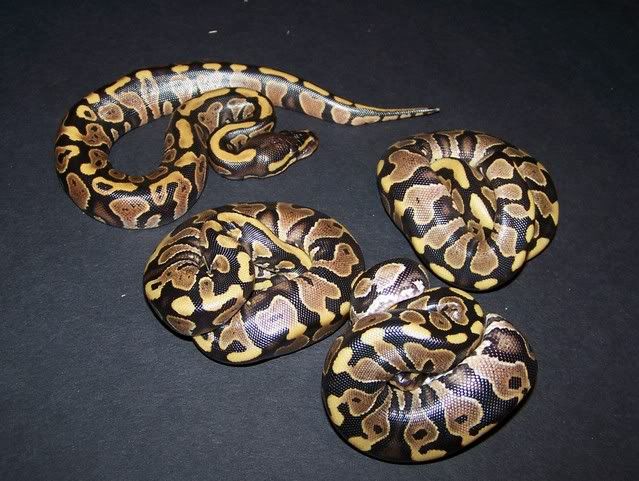
Heres some top veiws of some females that hatch out from one large gal 12 in all and Four females an 8 normal males. well I hope those 8 were normal males J/K they looked very normal.
">Link
-----
Hate when that happens.But you can tell these are not Normal. You can really shot them easy if you see enough normals and then see something that stands out allot more like a yellow bellie
Greg VanZweden
http://www.vanzwedenreptiles.com/
-----
Help, tips & resources quick links
Manage your user and advertising accounts
Advertising and services purchase quick links
