Reptile & Amphibian Forums

Welcome to kingsnake.com's message board system. Here you may share and discuss information with others about your favorite reptile and amphibian related topics such as care and feeding, caging requirements, permits and licenses, and more. Launched in 1997, the kingsnake.com message board system is one of the oldest and largest systems on the internet.

Click for 65% off Shipping with Reptiles 2 You
https://www.crepnw.com/
Click for 65% off Shipping with Reptiles 2 You

I'd like definitions of "power feeding"

HerpZillA Sep 18, 2007 11:35 AM

This term to me seems to be used a lot. But rarely do I hear a definition. I realize it is hard, as it applies to all snakes of different metabolisms and sizes. So sticking with corns and lets say 3 ages, #1 new born to 2 months and #2 2 months to 10 months, then #3 about a year+.

You really do not have to read this part, but it adds to why I ask.

I know I have done this "power feeding" well before it was a term. We line fed retics, more than they would probably eat on a usual feeding to get them big fast. But they never were over weight in the process, as I've seen chunky 6 month old hognose.
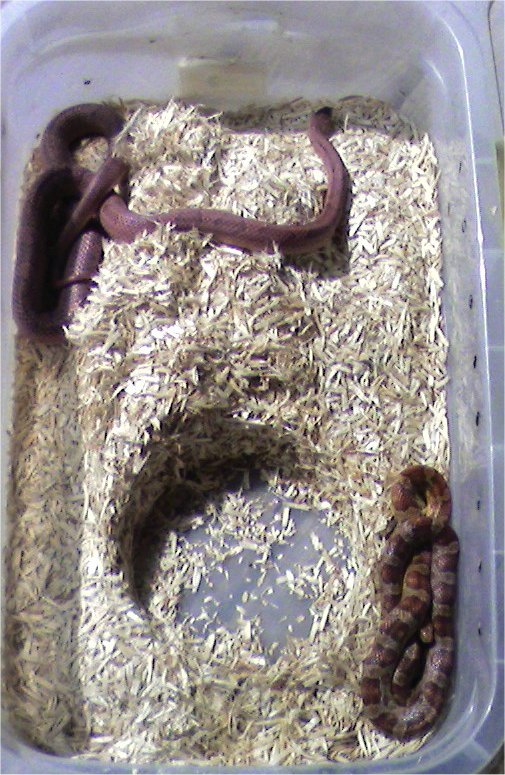
Also my male BR corn is heavier than I though he was. 2 mice a week, hardly power feeding. But! if I had him in a 120 gallon tank instead of a tub would he be heavy now? And is power feeding also related to the smaller enclosures we tend to use?

Logic tells me if, a snake was in a bigger cage and roamed a lot to burn off calories its diet could be larger than a sibling in a smaller tank. And the one in a smaller tank might be on the brink of "power feeding" why the other in a larger tank is not? True or False?

I have 2 baby BR corns. My plan was a pinky every 4-5 days, till they grow a bit. How many say this is power feeding?

Next every 3-4 days or a larger meal. Power feeding?

Sorry to post so much, or is it just slow in here these days?
Image
-----
Thanks for reading.
Big Tom

www.herpzilla.com

Replies (28)

Rob Lewis Sep 18, 2007 12:35 PM

I don't know that I could actually define power feeding because, as you said, it could be different not only from species to species but even between individuals of the same species. In my opinion, feeding regimens should be determined by growth rate and body condition. If an animal that is kept in a sweater box and fed two food items per week is becoming obese than that is obviously too much food. If on the other hand, the same animal was kept in a well designed, large exhibit and was maintaining good body condition on the same two food items per week than that is probably a good feeding regimen. I think most people throw around the term power feeding in terms of how a feeding regimen may negatively impact the snake later in life and, quite frankly, I am just not sure that we really know for sure what that is. Compared to wild specimens, all captive animals are power fed. I don't think anyone would consider one meal per week too much but how many wild snakes get 52 meals per year? Not too many.

Having said all of that, when I was raising corns I fed hatchlings through yearlings on Mondays and Thursdays (for the most part). Once they were about a year old they went to one feeding per week and after that I adjusted based on body condition. I don't know if that would be considered power feeding but it resulted in nice steady growth to breeding size and did not result in any premature deaths (that I know of for sure) and my animals produced clutches well within the reported ranges.

I have not kept corns for a while (I do primarily kenyan sand boas now and follow basically the same regimen) but will probably keep them again in the near future and will, most likely, follow that regimen as it has worked very well for me in the past.

I hope this is helpful and not just mindless rambling. Just my thoughts. Take care.

Rob

HerpZillA Sep 18, 2007 01:43 PM

I lost a few okeetees 2 years ago, as in they got loose. Bad tubs, and a tiny slot I did not see. I found one of them in my yard, unfortunately dead in the spring. He/she was near 3' and was far less than a year old. I actually think he made it through the winter too and a cat got him as he was at my front steps.

It would be very interesting to tag some baby corns so they could be relocated (talking about WC) Then check then at 6 months 1 year and 2 years.

If they are located where there are a lot of mice, I see no reason they could not eat at almost any time they want.

But I think the wild activity plays a huge role in the eating amounts.
-----
Thanks for reading.
Big Tom

www.herpzilla.com

FunkyRes Sep 18, 2007 08:31 PM

I have an Okeetee that is a year old (year and a month actually) and is just over 3 feet. They can attain that size in a year w/o power feeding. Depends upon the line - I think many Okeetee lines are bigger than some other lines. I know Miami and Key Corns are supposedly smaller localities and don't grow as fast.
-----
x.y L. getula californiae (Cal. King)
x.y L. getula nigrita (MBK)
x.y L. getula floridana (Brooksi)
x.y Pantherophis guttatus guttatus (Corn)
0.1 Pituophis catenifer catenifer (Pacific gopher)
0.1 Heterodon nasicus (W Hognose)
x.y.z Elgaria multicarinata multicarinata - (Cal. Alligator Lizard)

Shaky Sep 18, 2007 12:57 PM

There is no set definition, due to those variables. Power feeding is pretty much just feeding them as often as they will eat to increase size quickly. If they won't eat more often than once a week, then it would be really hard to powerfeed, but of course, most will.
Young snakes tend to grow rather than get fat.
-----
V.P.
Austin Herp. Soc.

HerpZillA Sep 18, 2007 01:52 PM

I agree. but will add temperatures play a huge role too.

This topic has a lot more to it than I first let on. At least to me.

Most breeders can not and do not place each corn in a 75 gallon tank. So, the size of the enclosures somewhat controls the feeding of the captive snakes. So are we slowing breeding down the size of corns in captivity? Granted most corns in the wild will be about the same size as CB, or maybe smaller. But as I posted on the other reply you may have a few corns near a nice endless supply of mice. Compare this to the almost uniform control in CB corns. Most breeders follow very similar guide lines. NOW I'm not saying to power feed a snake in a 200 gallon tank. lol I wanted to get to the idea of uniform cages and uniform feeding is or may be having an effect on the size of corns in captivity.
-----
Thanks for reading.
Big Tom

www.herpzilla.com

Shaky Sep 18, 2007 05:30 PM

Well, Tom, I'm not convinced size has anything to do with the size of the enclosure, but I guess it's possible. Are you planning to test it?
-Jack
-----
V.P.
Austin Herp. Soc.

HerpZillA Sep 18, 2007 06:43 PM

No, and not directly related. But since an animal in a small enclosure is less active (presumption), then it would need less calories, hence less food. A young active snake being very active would burn more calories, compared to a similar snake in a shoebox, therefore needing more food.

All this came to mind when my wife suggested I put my 2 corns in my 75 gallon tank. Then noticed my male has gotten plump on 2 mice a week. He's on a minor diet now. lol

But it made me think my psycho male would probably be all over the tank burning calories. And then my mind wandered to my 2 new baby blood reds. Would they, or any young snake, have a better chance to maximize their size "safely", by being more active and therefore needing more food in a bigger enclosure. Then it wandered to the mass breeding of corns in tubs, and realized no one seems to be sporting a record length corn from CB. Even though the number of corns being bred is HUGE..
Then my mind wandered to the cartoon channel!

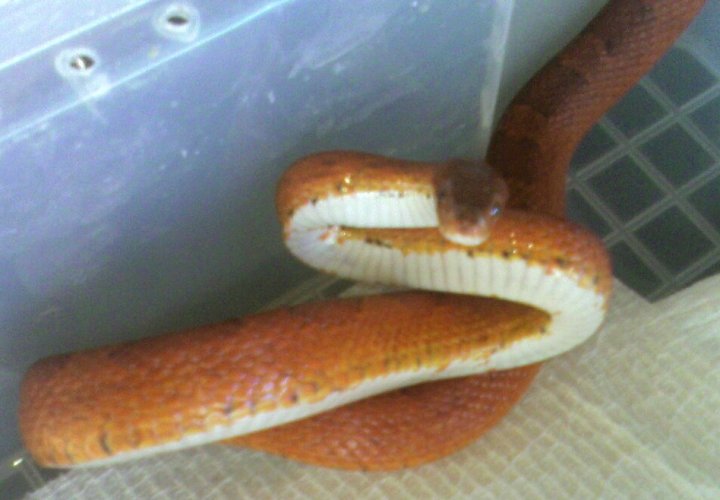
Oh yea, my male bloodred is truly insane. He strikes food like a blood python. He never stops rattling his tail once you open teh lid. And just forget about handling him without getting bit.
I love the little bugger!
Image
-----
Thanks for reading.
Big Tom

www.herpzilla.com

FunkyRes Sep 18, 2007 08:35 PM

A snake in a smaller enclosure also has less control over its own temperature and thus can not seek out cooler areas to intentionally slow its metabolism - thus requiring more food.

I don't add any heat to my 4 qt tubs in summer. Fall and Winter they have 80F in the daytime, slightly cooler at night. Larger setups I can make a warmer hot side because the snake can get to a cooler area when it doesn't want to be warm.

When the snake spends about equal amount of time on both sides, you probably have a good gradient for it.
-----
x.y L. getula californiae (Cal. King)
x.y L. getula nigrita (MBK)
x.y L. getula floridana (Brooksi)
x.y Pantherophis guttatus guttatus (Corn)
0.1 Pituophis catenifer catenifer (Pacific gopher)
0.1 Heterodon nasicus (W Hognose)
x.y.z Elgaria multicarinata multicarinata - (Cal. Alligator Lizard)

HerpZillA Sep 18, 2007 08:43 PM

You presume the bigger cage will have a cooler end. To test it one would need to keep everything equal including temps.

I'm surprized no one has toyed with this. I asked one large breeder of colubrids if he ever tried variable temps for incubation, and he did with slightly lower production, but he thought stronger babies. Seems logicical as it would not allow the weaker ones to make it.

If nothing else I got people to post. I'm a amazed at how slow it is.
-----
Thanks for reading.
Big Tom

www.herpzilla.com

FunkyRes Sep 18, 2007 11:07 PM

A bigger cage will have a cooler end if the heating pad is on the warm end. There will be a temperature gradient from artificially warm to the coolest side of the cool end. Bigger cages allow the cool end to be near room temperature, smaller cages don't.

It's thermodynamics - heat (random kinetic energy of individual molecules) flows from warm to cool. It will flow to the coolest part of the tank and warm it, continually adding heat to it until it is in balance (temperature flowing to it from warm side equal to temperature lost due to convection, black body radiation, and conduction with whatever the cage is sitting on). The larger the cage, the less thermal energy reaches the cool end and the lower the equilibrium temperature.
-----
x.y L. getula californiae (Cal. King)
x.y L. getula nigrita (MBK)
x.y L. getula floridana (Brooksi)
x.y Pantherophis guttatus guttatus (Corn)
0.1 Pituophis catenifer catenifer (Pacific gopher)
0.1 Heterodon nasicus (W Hognose)
x.y.z Elgaria multicarinata multicarinata - (Cal. Alligator Lizard)

HerpZillA Sep 19, 2007 08:09 AM

Or 2 heat sources. I also do not like UTH for tanks. They cause a belly burn. We have a 17" baby ball python in our care that a person drpped $300 at a vet for a 12" belly burn.

I know more about mechanics/electrical than snakes, so I know of a gradient heat pattern. And honestly an UTH does very litte to create one on an aquarium. As I stated a number of times here they function great in racks.

But bottom line a person can make a 8' long cage any temps they want in any area.
-----
Thanks for reading.
Big Tom

www.herpzilla.com

FunkyRes Sep 19, 2007 08:37 PM

UTH does not cause belly burn if used properly.
They should be controlled by a dimmer or proportional thermostat, and ideally there should be a small air gap between the heat source and the tank bottom.

A UTH should not be used with an on/off thermostat that send full current to the heat source unless the UTH has a built in current limiter to avoid too much heat (Bean Farm sells some that do).

The thermostat should be on the heat source, not in the tank/tub. A digital thermometer should be in the tank with the probe directly in the substrate of the warm side. You adjust the thermostat or dimmer switch until the digital thermometer in the tank maintains the target temperature.
-----
x.y L. getula californiae (Cal. King)
x.y L. getula nigrita (MBK)
x.y L. getula floridana (Brooksi)
x.y Pantherophis guttatus guttatus (Corn)
0.1 Pituophis catenifer catenifer (Pacific gopher)
0.1 Heterodon nasicus (W Hognose)
x.y.z Elgaria multicarinata multicarinata - (Cal. Alligator Lizard)

HerpZillA Sep 20, 2007 11:15 PM

There are UTH heaters taht stick on the bottom of tanks. And do not mention the use of a stat or dimmer. And if they should have them, then they should come with them.

It's an item that gets newbies in trouble.
-----
Thanks for reading.
Big Tom

www.herpzilla.com

FunkyRes Sep 21, 2007 02:46 AM

Lights also get noobs in trouble.
Ever seen ball pythons with blisters?

How to propery set up a UTH is well documented in numerous care books and websites. If a n00b doesn't read them, it is not the fault of the UTH - but the keeper.
-----
x.y L. getula californiae (Cal. King)
x.y L. getula nigrita (MBK)
x.y L. getula floridana (Brooksi)
x.y Pantherophis guttatus guttatus (Corn)
0.1 Pituophis catenifer catenifer (Pacific gopher)
0.1 Heterodon nasicus (W Hognose)
x.y.z Elgaria multicarinata multicarinata - (Cal. Alligator Lizard)

draybar Sep 18, 2007 07:41 PM

this is a corn forum so I will stick to corns.
Feeding corns three or four times what would generally be considered normal, just to get them to breeding size in half the time, is what I would call power feeding.
-----
Corn snakes and rat snakes..No one can have just one.
"Resistance is futile"
Jimmy Johnson
(Draybar)
Draybars Snakes

_____

HerpZillA Sep 18, 2007 08:28 PM

Nice cut to the chase.

I'm not one to power feed. In fact I generally (in my limited breeding) bred things at older ages.

I just wondered if activity would have a noticable facter in growth, since it has an impact of feed need. Although it may be minor.

All this started is over what to do with my tank. Fish or a corn snake setup?
-----
Thanks for reading.
Big Tom

www.herpzilla.com

wisema2297 Sep 19, 2007 08:28 AM

"I just wondered if activity would have a noticable facter in growth, since it has an impact of feed need. Although it may be minor."

Try asking Tom Stevens (Nokturnaltom) on the king snake forum. He and Frank Retes (FR) have been studying this for a while and have some very favorable results to support it. This of course is with kings and not corns. Basically what they have found is that if given larger caging that allows the snake to be as active as it wants then the snake will act more naturally. They then let the snake decide when to eat and when not to eat by offering food much more frequently than what is considered conventional. So far (I believe)they have had snakes grow at a fast rate, reporduce well and have no bad side effects associated with "power feeding" snakes that are kept in smaller bins/sweater boxes.

It's pretty interesting.

HerpZillA Sep 19, 2007 08:33 AM

But I'm about to go out to my 2 day trek to the Land of Cleve. But i will read up when I return. Thanks.

>>"I just wondered if activity would have a noticable facter in growth, since it has an impact of feed need. Although it may be minor."
>>
>>Try asking Tom Stevens (Nokturnaltom) on the king snake forum. He and Frank Retes (FR) have been studying this for a while and have some very favorable results to support it. This of course is with kings and not corns. Basically what they have found is that if given larger caging that allows the snake to be as active as it wants then the snake will act more naturally. They then let the snake decide when to eat and when not to eat by offering food much more frequently than what is considered conventional. So far (I believe)they have had snakes grow at a fast rate, reporduce well and have no bad side effects associated with "power feeding" snakes that are kept in smaller bins/sweater boxes.
>>
>>It's pretty interesting.
-----
Thanks for reading.
Big Tom

www.herpzilla.com

draybar Sep 19, 2007 06:53 PM

>>Nice cut to the chase.
>>
>>I'm not one to power feed. In fact I generally (in my limited breeding) bred things at older ages.
>>
>>I just wondered if activity would have a noticable facter in growth, since it has an impact of feed need. Although it may be minor.
>>
>>All this started is over what to do with my tank. Fish or a corn snake setup?
>>-----
>>

with my corns I'm a three year breeder.
If it was born in '01 it was bred for the first time in '04
born in '02 first breeding '05
etc etc etc
Some are larger then others but I figure at three years they should be sexually mature.
-----
Corn snakes and rat snakes..No one can have just one.
"Resistance is futile"
Jimmy Johnson
(Draybar)
Draybars Snakes

_____

HerpZillA Sep 20, 2007 11:25 PM

Jimmy, I've had a lot of things here and there. and seen tons with my friendship with a petshop. I'm not a very serious breeder.

I presume if I was raising a lot of snakes, i'd have guidelines like yours. It's just logical. I did it when I was a kid and bred a LOT of rats. Logs on rat production per cage, per feamle. ages, number per litter etc.

Again, I am NOT a breeder. I've bred a few things, very few really. But becuase I bred ball pythons 2 years does nto make me a ball python breeder. At least that is my opinion. I had a ton of stuff as a kit from 1973-1980, then was pretty much out of the herp loop. And slipped back in after I had to retire. And glad I did too.

But I will say, I have learned a lot fo stuff in here. Also from Tim S.

I wouldn't mind setting a few things up, but the house I built is only 1200' and not a lot of space.

So for now, I keep just a few things.
-----
Thanks for reading.
Big Tom

www.herpzilla.com

FunkyRes Sep 18, 2007 08:29 PM

Power feeding is feeding them more than they would want to eat on their own. This is usually accomplished by forcing additional food into their mouth when they have started to eat so they eat a bigger meal than they would decide to.

Feeding a baby corn every 4 or 5 days (about the time it takes for it to crap its previous meal) is not power feeding.

Increasing temperature beyond what is normal to intentionally speed up their metabolism also probably is a form of power feeding, a corn should have a range of temps and be able to hide at 70 degrees (room temperature) when it wants to, instead of being forced to increase metabolism in conditions that are warmer than it wants.

My baby abbotts for example - I offer her two pinkies every feeding. Currently she readily eats one, ignores the other. A power feeder would start the second one in her mouth as she is finished the first so that she has no choice but to eat the second. It does result in faster growth but also can result in regurgitation, and even death.
-----
x.y L. getula californiae (Cal. King)
x.y L. getula nigrita (MBK)
x.y L. getula floridana (Brooksi)
x.y Pantherophis guttatus guttatus (Corn)
0.1 Pituophis catenifer catenifer (Pacific gopher)
0.1 Heterodon nasicus (W Hognose)
x.y.z Elgaria multicarinata multicarinata - (Cal. Alligator Lizard)

HerpZillA Sep 18, 2007 08:59 PM

I'm very aware of the tricks. People also poke holes in pinkies. The thought is they digest faster.

I guess it is always going to be part judgement and experience. How much your snake is growing, sheding and crapping.

As I stated somewhere, I know we did it a lot more in the 60's and 70's with big species. There was a lot less known then.
-----
Thanks for reading.
Big Tom

www.herpzilla.com

FunkyRes Sep 18, 2007 11:08 PM

It probably still is done - just now, those who do it don't talk about it - they do it behind closed doors.
-----
x.y L. getula californiae (Cal. King)
x.y L. getula nigrita (MBK)
x.y L. getula floridana (Brooksi)
x.y Pantherophis guttatus guttatus (Corn)
0.1 Pituophis catenifer catenifer (Pacific gopher)
0.1 Heterodon nasicus (W Hognose)
x.y.z Elgaria multicarinata multicarinata - (Cal. Alligator Lizard)

HerpZillA Sep 19, 2007 08:29 AM

I totaly agree. When you have a $30k snake that will be $2k in 4 years you want to get there fast. I am NOT saying all those people do it. But it will tempt some to do it.

I personlly do not have a schedule. Maybe early on I use the once a week rule, but size of food, how fast my snake is growing, how does he look, how active all play a part. Someone said a few weeks ago people need to learn to read their snakes need more then a schedule. I totally agree with that.

Example, I have a good size bloodred male. I go in once a week to the shop I help at. I pick up 2 mice because I'm there. I thought 1 was clearly not enough. WRONG. He getting fat like me.
I don't look in on him as much as other snakes as he gets so stressed out. I usually let him stay in the aspen while I swap tubs. Anyways, 2 mice a week sounds ok, but was 2 much for him. IMO

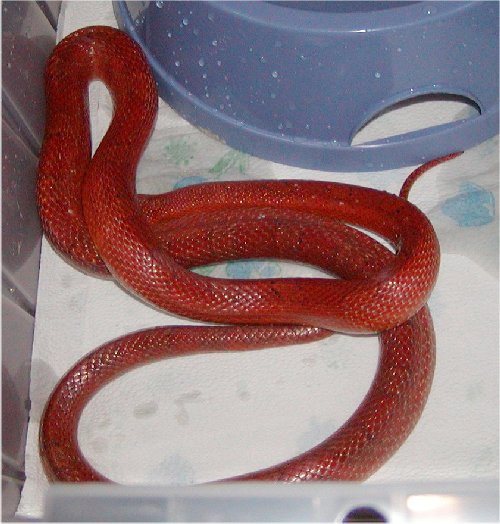
Hes in shed. Ugly feamle is an outcrossed that we bought back at the store. One of the poorest of the clutch, and clearly under sized at 3 years old, but I will see how she looks next spring. The outcrossed mom was one of the best I have seen. But no male at the time to breed her to. 2nd pic is the mom. Her only clutch was a very wide range of babies. I wish I had them all back. I figured if she looks good this spring we'll see if she carries many of moms genes.

Image
-----
Thanks for reading.
Big Tom

www.herpzilla.com

phiber_optikx Sep 20, 2007 12:29 AM

I fed all of my snakes 2x a week when they were young. I fed them smaller meals though. So something that should be on fuzzies would get 1 pink on monday and one on friday. They did seem to grow a bit faster but not what I would call "power feeding" Hope grew about 18" her first year but she is actually a smaller corn now She is just over 3 1/2 years old and about 3 1/2'-4'. I am pretty sure she is still growing slowly.

-----
-David Harrison-
.1 Snow Corn "Hope"
1. Striped Anery Corn "Vendetta"
1. Orange Albino Black Ratsnake "Chunk" (Goonies)
.1 Orange Albino Black Ratsnake "Peaches"
.1 Ball Python "Rocky Ballboa" (Didn't name her!)

"Have you ever tried simply turning off the T.V., sitting down with your kids... and hitting them?"

antr1 Sep 20, 2007 05:49 PM

I consider “power feeding” when you feed the next meal before or right after the snake defecates, leaving no break in the digestive process. (By the way I am guilty of this). Many people who are not fans of feeding big meals often claim that animals that are feed is this manner suffer from the constant digestive process. I would imagine in the wild a meal isn’t readily available as soon as the snake empties its bowels.

As far as forcing a second meal, I have never done that and think its nuts. The furthest I have gone to entice an animal to eat is offer live to a frozen/thawed eater, in hopes they go for it.

Also I have thought about what Funky said in regards to altering the temp, but am unsure which is better – a higher or lower temp. Raising the temp would increase the snaked metabolism and rush the meal through. Lowering the temp would slow it down and the meal would remain in the system longer, possibly allowing the snake to absorb more from the meal. So I think that’s a toss up.
-----
"The band is just fantastic, that is really what I think. Oh by the way, which ones pink?"

HerpZillA Sep 20, 2007 11:30 PM

I think most areas were covered at one point or another. I think it was a good thread. Got a lot of views. I like to hear things I never thought of. Try to think outside myself and maybe adjust my thinking.

Thanks everyone
-----
Thanks for reading.
Big Tom

www.herpzilla.com

FunkyRes Sep 21, 2007 11:03 PM

I agree - there are a lot of different definitions to the term. A very good thread.
-----
x.y L. getula californiae (Cal. King)
x.y L. getula nigrita (MBK)
x.y L. getula floridana (Brooksi)
x.y Pantherophis guttatus guttatus (Corn)
0.1 Pituophis catenifer catenifer (Pacific gopher)
0.1 Heterodon nasicus (W Hognose)
x.y.z Elgaria multicarinata multicarinata - (Cal. Alligator Lizard)

Site Tools