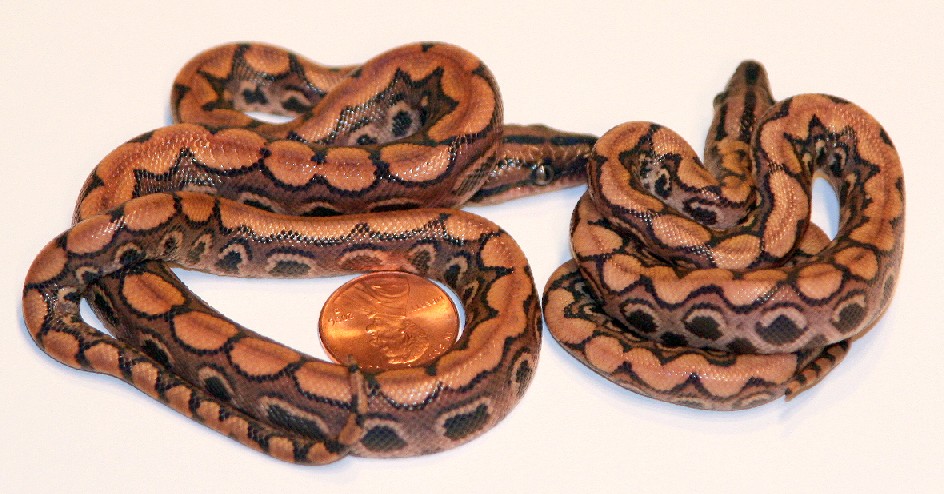
Jeff,
I agree for the most part. I don't think I'd want to see rampant cross breeding either, I was just thinking of about trying to introduce some "small size" genes into one generation. Normal
BRB's are beautiful as they are, wouldn't want to ugly them down. 
As far as one's outlook, that could be a discussion that
could go on forever (ie, taxonomy, location from which
the snake originated, aesthetics, profit motivation, etc.)
(On some other forums, this is a hot-button issue where, sadly, people get really nasty with each other.)
Oh, btw, I should be getting my Indigo on Friday!!!
Thanks,
Ed
>>Ed,
>>...It sort of depends on your outlook on things. I am happy that Rainbow Boa breeders have not done much intentional crossing.
>>Jeff
>>
>>
>>>>Jeff,
>>>>
>>>>I don't have a strong opinion either way, I like any/all snakes. But I am surprised it hasn't been tried, given
>>>>similar inter-breeding of subspecies within other species
>>>>like Boa Constrictors and Morelia.
>>>>
>>>>Thanks again for the pic of that asissi, what a great specimen.
>>>>
>>>>Ed
>>>>
>>>>>>Ed,
>>>>>>....There really has not been much effort put into crossing any of the subspecies. I suppose some combination might produce the ideal designer snake. I am in favor of keeping the lines pure. Crossing of subspecies will result in confusion about identifying snakes in the future. This has already happened, though unintentionally with Peruvian Rainbow Boas.
>>>>>>Jeff
>>>>>>
>>>>>>>>Ah, no wonder I could only find one picture of an asissi after
>>>>>>>>1/2 hour of web searching! Great picture, thanks for posting it. That's a gorgeous snake.
>>>>>>>>
>>>>>>>>Any thoughts on BRB/ARB crosses, or should I stop asking?
>>>>>>>>
>>>>>>>>Best of luck with the asissi, I hope you get a nice litter! I'd love to have one of those one day.
>>>>>>>>
>>>>>>>>Thanks,
>>>>>>>>Ed
>>>>>>>>
>>>>>>>>>>Ed,
>>>>>>>>>>
>>>>>>>>>>....This is one of my Campina Grande Rainbow Boas, Epicrates cenchria asissi laying babies in 2005. David Fabius had some asissi born at his facility in Uraguay in 2002. Scott Solar at Amazon Reptile Center imported 7 or 8 of them and I ended up with two pairs of them. They produced two small litters in 2005 which as far as I know is the only time this subspecies has been captive bred in the US. One of the females is lumpy now but I am not sure whether to expect good babies from her or not.
>>>>>>>>>>Jeff
>>>>>>>>>>
>>>>>>>>>>>>Hey Jeff,
>>>>>>>>>>>>
>>>>>>>>>>>>Interesting, I hadn't heard of the asissi subspecies before.
>>>>>>>>>>>>Do you have any pics, I'd love to see what it looks like.
>>>>>>>>>>>>Have you ever interbred either one of these subspecies with
>>>>>>>>>>>>a BRB? Maybe a first generation "mutt" from such a pairing could be bred to a pure but smaller size BRB to produce 75% BRB/25% asissi or alvarezi babies??? I don't have a clue if these
>>>>>>>>>>>>subspecies will mate with each other (or if anyone would even want to produce intergrades), but I'd like to hear your and other breeder's thoughts.
>>>>>>>>>>>>
>>>>>>>>>>>>
>>>>>>>>>>>>Thanks!
>>>>>>>>>>>>
>>>>>>>>>>>>>>Ed,
>>>>>>>>>>>>>>...I have two subspecies (alvarezi and asissi) that are lots smaller than Brazilians but they are not nearly as colorful. I too think a smaller line of BRBs would be in demand. Demographic changes over the next decade may result in many people living in much smaller living spaces and placing a premium on smaller pets. This is evident in Japan and some parts of Europe where they have much more experience with the smaller herps than we do here in the US.
>>>>>>>>>>>>>>Jeff
>>>>>>>>>>>>>>
>>>>>>>>>>>>>>>>You guys are probably correct regarding this twin,
>>>>>>>>>>>>>>>>but have you ever tried to selectively breed for smaller
>>>>>>>>>>>>>>>>size? Not sure if it would work, but if it did, I would
>>>>>>>>>>>>>>>>imagine a BRB that maxes out at 4 ft would open up more
>>>>>>>>>>>>>>>>sales opportunities.
>>>>>>>>>>>>>>>>
>>>>>>>>>>>>>>>>And then Dave can make a dwarf calico ghost BRB
>>>>>>>>>>>>>>>>
>>>>>>>>>>>>>>>>
>>>>>>>>>>>>>>>>>>I think Dave is right. They are small only because of having to share the calories from a single egg mass. My twin Jungle Carpets caught up to their siblings in size within three months. The half size BRB I have from my 9/3/07 litter has eaten once and may not catch up with the rest of the litter for a long time if ever.
>>>>>>>>>>>>>>>>>>Jeff
>>>>>>>>>>>>>>>>-----
>>>>>>>>>>>>>>>>------
>>>>>>>>>>>>>>>>Thanks,
>>>>>>>>>>>>>>>>Ed
>>>>>>>>>>>>-----
>>>>>>>>>>>>------
>>>>>>>>>>>>Thanks,
>>>>>>>>>>>>Ed
>>>>>>>>-----
>>>>>>>>------
>>>>>>>>Thanks,
>>>>>>>>Ed
>>>>-----
>>>>------
>>>>Thanks,
>>>>Ed
-----
------
Thanks,
Ed





 If only I could be manly enough to have multiple women at the same time and so manly that they know and don't even care. Lucky snake