Reptile & Amphibian Forums

Welcome to kingsnake.com's message board system. Here you may share and discuss information with others about your favorite reptile and amphibian related topics such as care and feeding, caging requirements, permits and licenses, and more. Launched in 1997, the kingsnake.com message board system is one of the oldest and largest systems on the internet.

https://www.crepnw.com/
jobi Oct 05, 2007 07:04 PM

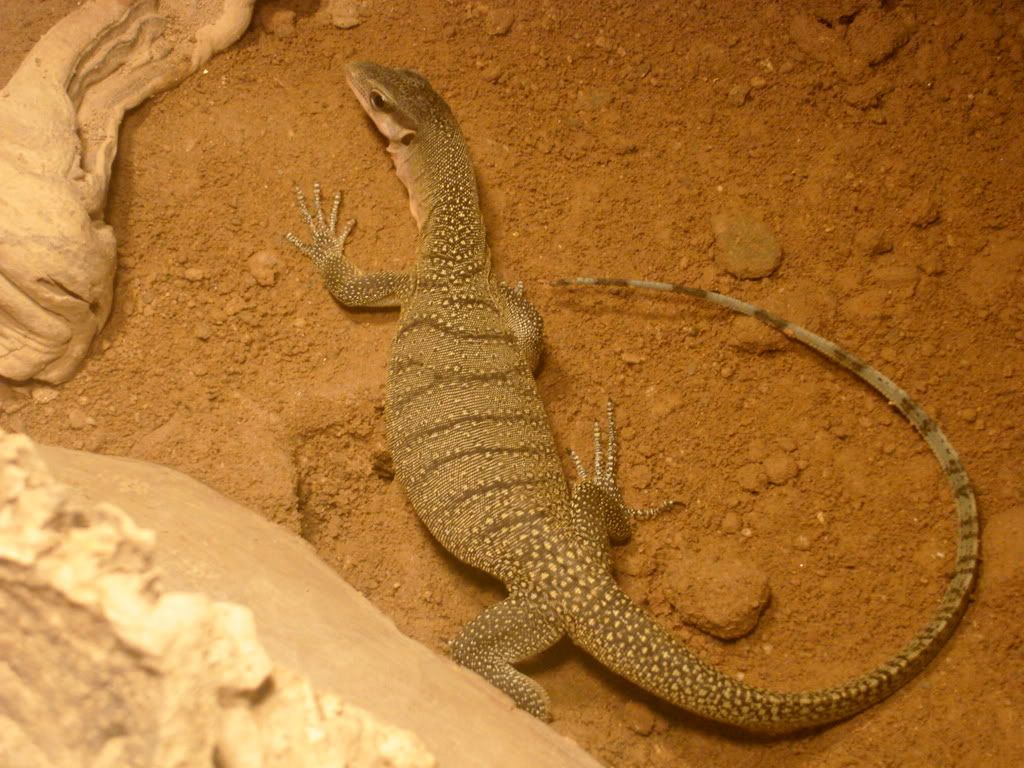
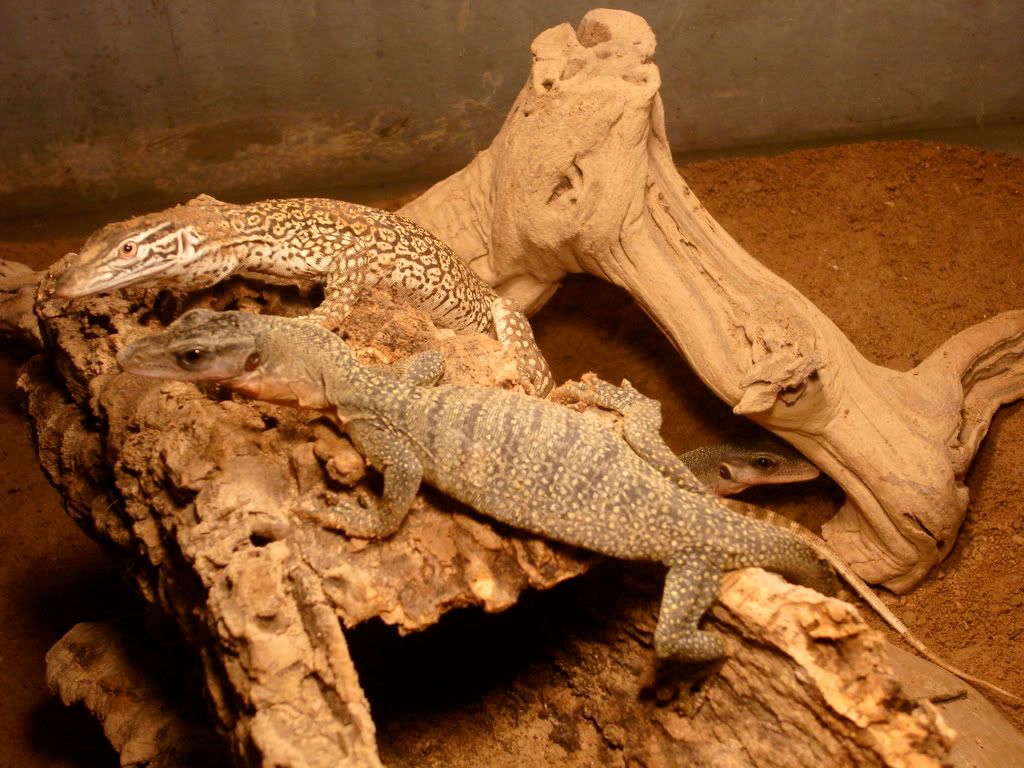
I first learned about this mountain morph a little more then a year ago, I only have data from about 30 sightings, apparently males don’t grow much larger then 3ft, hopefully this holds true? What’s most interesting is they are color dimorphic, males having a turquoise diamond on throat, they have this distinct marking even as very young, I don’t know of any other monitors to show such color dimorphism?

This is my female, she’s still young and don’t have her yellow head coloration yet, but nevertheless she’s the most beautiful jobiensis iv ever owned, this photo don’t do her justice, it’s the best I could do with a cheep camera, trust me to post better photos later.

Last September I was supposed to join a friend on a trip to PNG especially to collect these monitors, unfortunately I could not go, but still I was able to get this female, how lucky can a man be?

Trust me theirs no other monitor inn this world that id rather have, sure compensates for the drew backs.

Later cheers

Pleas tell me how you like here.

Replies (19)

holygouda Oct 05, 2007 07:14 PM

She's freakin beautiful! Thanks for posting the picture.

jobi Oct 06, 2007 12:38 PM

The pleasures on me, I simply couldn’t resist posting a photo of her

I am sure with a good camera and patience I will shoot her in her best colors, these monitors coloration are affected by mood, temperature and light, when stressed they turn dark almost as fast as a cud-fish.

Later cheers

HappyHillbilly Oct 05, 2007 08:45 PM

Nice, jobi!

She's impressive looking. I imagine the anticipation of the head yellowing helps to get you out of bed & every morning to see if it's started yet. Ha! It would me.

Glad to see you've still got the flame burning.

Take care!
HH
-----
Due to political correctness run amuck,
this ol' hillbilly is now referred to as an:
Appalachian American

jobi Oct 06, 2007 12:32 PM

Animals have always been inspiring, they are my drug!

I bet she will look awesome as she ages.

I have only one photo of an adult male, he’s totally incredible, unfortunately the owner asked that I don’t show it yet

If I ever get my hands on one, I will brag about it no dough.

They are imported once in a blue moon, but go unnoticed as they turn dull and dark from the stress of shipping.

Thanks!

varanuskeeper Oct 06, 2007 01:56 AM

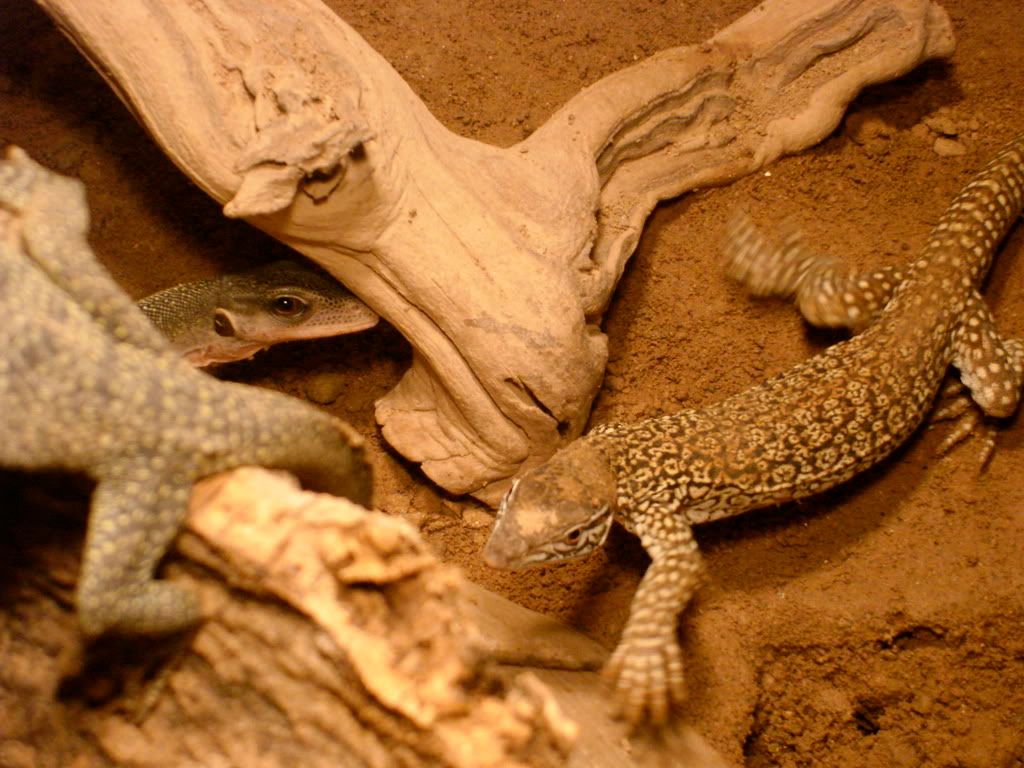
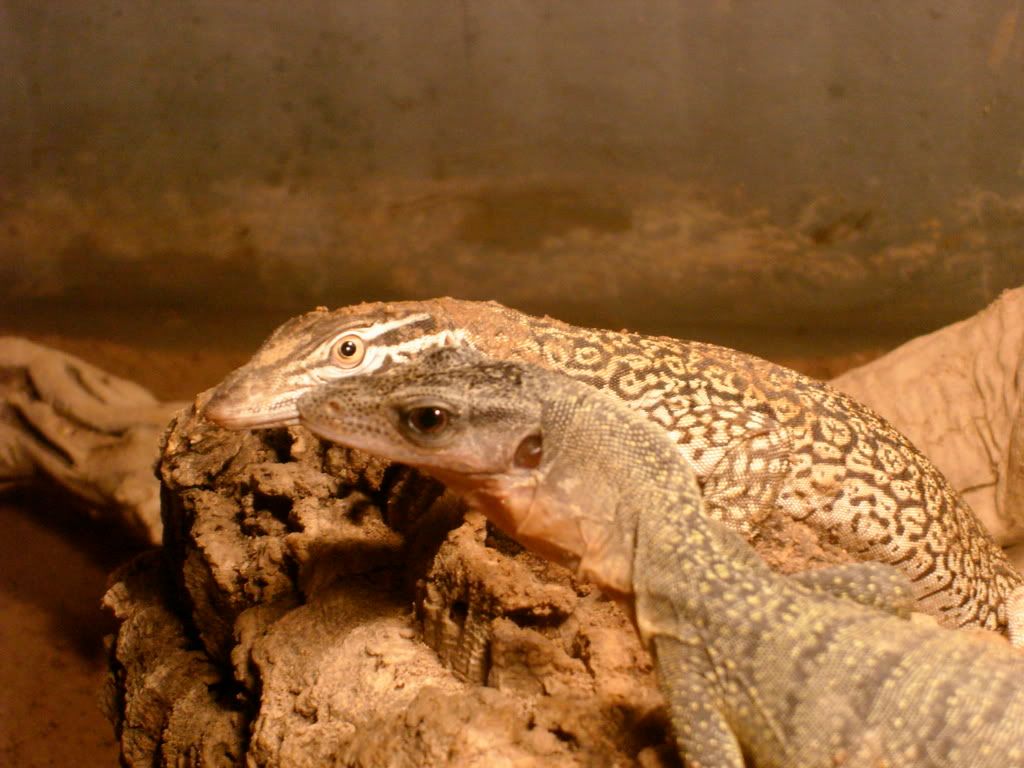
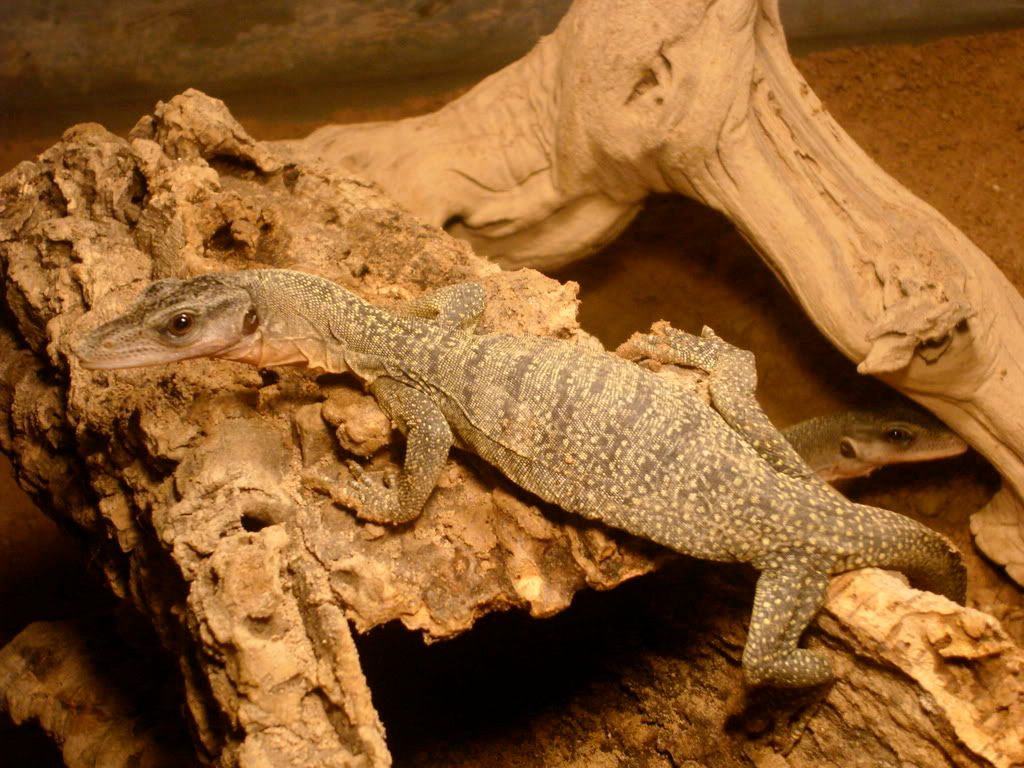
She is so cool. Do your still have your waigeos? They are so nice, Is there much of a difference between them and sorongs as far as behavior? I have a young gouldi cross in with my peachies at the moment. Here are some new pics. Thanks. Tyler.


jobi Oct 06, 2007 12:21 PM

Theirs not a big difference between waigeos and sorong behaviour wise, if one thing id say waigeo are a little more skittish, other then this they both have similar size and habits.
I sold my pair a few months ago, unfortunately the female was drowned a week after the new owner got them, this stuff happens sometimes with overzealous mating.

Hers a tip I gave to George Horn for his jobiensis, feed the feeders with high beta carotene foods (trifle, dandelions, Swiss chard, bock Choy, carrots, red peppers) and allow a significant temperature drop at night, if you don’t do this they will lose the nice rich coloration as they grow.

Yours have already started to pale, see Mike Stephanie’s pair from prior posts, they too have lost coloration, This is both preventable and reversible.

Wild Doreanus and jobiensis feed on preys witch for the most part feed on algae and other high beta-carotene foods, grass hoppers and crabs are loaded with them.

Many years ago a Japanese kio breeder explained to me how even the most colourful fishes lose color if fed the wrong diet, at the same time I was talking to FR about the possible food color relation with monitor lizards, funny because FR said to me, that if food had any significant play in the lizards coloration, his monitors would be white or grey from the mice and crickets he’s been feeding them, I ponder about this for a while, and started to believe that coloration is an inherited trait, so I stopped using the beta-carotene and chlorophyll diets, this resulted in very plain and dull colour Doreanus, jobiensis, dumerils in less then a year time.

So I phoned Denis King to see what he thought about this? He was working with Rosenberg’s at the time, he said that most species have something in common, they all show the best coloration as hatchlings, we concluded that embryo’s have the riches diet in regards to minerals and color pigmentation, this is passed on by the mothers liver, her organism process the best for her eggs, as they hatch and start to forage, they feed on what’s available, these preys are in turn dependent on the available greens, see where I am getting at?

I don’t really know why or how, but when I raise a monitor to adulthood and his colors keep improving with my above diet, I see no reasons to do otherwise, maybe some species do have inherited coloration? or maybe it’s the ingredients from the dog food or chicken mash one feeds the feeders that provides possible color pigments witch are in turn passed on to the monitors? Why knows?

The only thing I am sure is that beta carotene- chlorophyll and temperature affects color pigments, one of the first color stimuli happens at the embryo stage, when theirs a small temperature fluctuation cycle, the hypothalamus primer function is to stimulate color cells, from darker to lighter pigmentation, how simple is that.
We all understand and seen how a dark reptile turns lighter as it warms up.

Gee I must have missed posting, I could keep on and on about this.
But I think you got the idea.

cheers
ps. pleas resize your photos

FR Oct 06, 2007 02:59 PM

You have a normal coloration of a healthy monitor. If you are not achieving that with your normal diet, then your missing something. If it takes added stuff to your normal diet, then your normal diet is not sufficent. Change it.

We achieve great coloration with our monitors without adding anything. I guess I am lucky again. hahahahahahahahaha

Of course, you can add artifical color by adding different things, but I am not sure how healthy that is. I have heard Vitamin A overdose can occur(never seen it myself).

Of course, UNHEAlTHY monitors are drab. Healthy monitors show great color. My guess is, these area signs of where a keepers husbandry lies(at that time)

Old monitors lose their color, but is that the cart or the horse. Is it because they are old, or becoming unhealthy???? Is this normal or abnormal?

There is no question, hmmmmmm I have tested it many times, that you can take a beautiful colorful healthy monitor and treat it poorly and it WILL lose its color. On the exact same diet.

Does this occur in nature, my experience is yes, most sick or skinny monitors in nature are not colorful. In otherwords, a healthy monitor is vibrant and colorful(within its genetic ability) This is a captive goal.

The main point is, to make them colorful thru overdosing may not be a good idea. If it takes that, then why not just paint them?

Please understand, I am not saying Jobis were being overdosed or unhealthy, his monitors are not my concern. Its those keepers that may try to obtain color with the aid of vitamins and not normal health. Those keepers without needed experience.

With normal health there is no need for overdosing. Again, many vets WARN of beta-carotene overdose. Cheers

jobi Oct 06, 2007 03:57 PM

We both kept orange spot Doreanus in the past, yours became dull and ordinary looking, enough for you to part with them, mine kept improving colors, its when I sold them that they lost there shine!

Of course I am not talking about over dosing, simply to offer these foods to feeders and let nature do the thinking.

Speaking of nature, we both know and understand how monitors get to eat many toxins via preys or with them, these toxins may have a significant role in coloration or the immune system?

The point is we differ on this, I think coloration is related to habitat and the foods within it, you say its inherited from all the nice colourful monitors you’ve produced, who knows maybe we both are right?

FR Oct 06, 2007 04:20 PM

Actually, mine became males. Cheers

jobi Oct 08, 2007 03:23 PM

Yes your right, I remember now!
And you didn’t say they turned ugly, you said they turned out to look like regular Doreanus.

Well that’s exactly how mine turned out after I sold them.

I find the flamingo example pertinent, long term captives turn white, yet they are still healthy and vigorous, put them on the right diet and they turn pink in no time, over do it and they get red.
So I have to question are these animals (flamingos, fishes, butterflies, reptiles) affected by what they eat? Of course they are, WE are what we eat says the food guide.

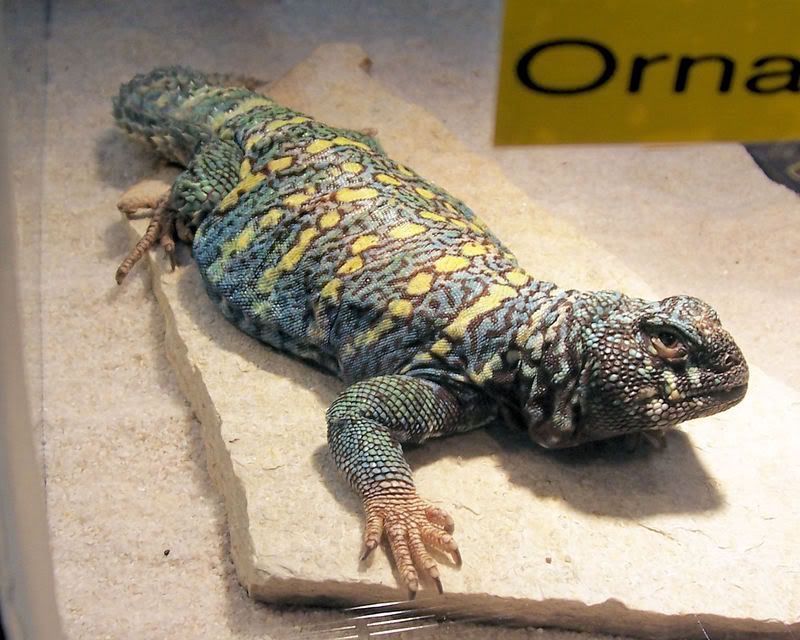
In PNG theirs a green lizard who’s blood turned green from the chemicals residue of the war, the same species at the opposite range has less intense colors and red blood, and what about ornate uromastyx? The plant they feed on have a peculiar defence mechanism, they secret high toxic sieve so that animals feeding on them stop doing so, yet ornate keep feeding on them, its how they get those awesome colors, cbb never get as nice and keeps losing intensity, why iv stop doing them.

Also look at Mike’s jobbies, they are in good enough condition yet have lost there rich coloration, this is not obligatory and the reason of my post.

Thanks for the compliment, I do post with the sole intent to start discussions, it really doesn’t matter to me if Joes peachies are blue, green or brown, mine have been awesome and will keep being so, id rather not keep a dull looking jobi, they appeal to me for there beauty, not what they might have looked like or could have looked like.

Cheers

Ps. Stop complaining about me not sharing enough, if you want to complain do it about all them selfish cowards who are afraid to post here cause they will be challenged or argued, you know them as well as I do (the use to bee’s) (the wanabes) (the all mighty beings that publish useless crap from Mertensiela to giant lizards) if you really want to complain, then do it with those peoples, get them to react and share a little with us the little peoples.
You may not care that they copy-cat you and claim to fame, but I do!
If your gonna feed the leaches, feed the best suckers.

FR Oct 08, 2007 05:10 PM

Hi Jobi, I hope your progressing well. As you know, my field partner and best friend, just lost his wife to cancer. It was an 11 month battle. I dearly wish you well.

That being said, There is but one way to make this not academic or theoretical, and that is to show it with a few animals. From start to finish. So if you want me to believe it, you going to have to show it. For others, you may not have too.

Also, there is so many apples to oranges. For instance, you say your orangespots turned normal after you got rid of them. How do you know they would not have done the same if you would have kept them???? Are you merely assuming that keeper was a poor keeper.

I am positive these animals are what they eat. And it appears mine have a decent enough diet to allow great coloration.

It could be many many things, like what were others rodents fed or how long were in frozen. I do not know any of this. But I do know about my feeders as I produce all our monitor food right here on site. So I know what I am feeding.

For all I know, my rodent food is full of all manner of TOIDS. I have no need to find out. My mice and crickets do well, and so do my monitors.

By the way, those orangespots did not turn out exactly like normal bluetails, just not enough different to make a hub-hub over it. I did not continue keeping that species as they were ABSOLUTELY NO FUN. That "normal" bluetail female I housed here for Jefe, was not only much prettier, but a truly great monitor. I really enjoyed that bluetail(I should have stole it from Jefe.

Buy the way, I would love for you to show more. As I love all the stuff you show with your agamids and such. Great stuff. I would love to see the same with varanids.

As you know, I do not care that you do not. You do not have too. That is your choice. And I respect that.

But somehow I do not see how any of this applies to most here. Again, if you all are trying to tell me I need to do that. Your wrong. If its clearly proved to me. I may consider it, if I am in the position of need.

I do agree with the one poster who said that adding TOIDS and suppliments does not make a unhealthy monitor, healthy. I still think folks should get them monitors healthy, then they may not have to worry about adding anything. You know, like my monitors.

In my experience, as long as I perform normal maintainence, I have no color problems. But as soon as I negleck a monitor or group, I can tell by their color. They become drab. If I return to normal attention, they return to normal color. I do not have to add anything new. GET WELL, Cheers

jobi Oct 09, 2007 02:31 PM

Sorry about your friends lost, I was hopping she makes it alright.
As for me I am ok, that’s until something else hits me?

Peoples are dropping like flies with this plague.

I do think your rodents diet serve you well, it may have everything needed in deed?

But lets focus on jobbies alone, they are thin skinned and have this peculiar throat with can rang from pale off white to the deepest red depending on mood, temperature and probably?- possibly? Food.

All the captives iv hade showed better coloration when I provided these foods, why? I think it’s the beta- carotenes, I am sure they react to it.

Why should I do all the work? Let others try it and give there opinions.

Rgds

FR Oct 09, 2007 04:34 PM

Hi Again, I am all for people trying it to see. But again, I wish people could keep them alive long enough to tell if it works. Sorry but true.

Yes, I know, there are a few doing ok with them. But so few and so many die. That's what bothers me.

I think we should work on keeping them alive before we worry about other stuff.

About color change. As far as I can tell, all monitors do that on a daily basis is allowed. For instance. In nature, monitors have a night and a day. In nature, they can pick the different conditions that allows. In doing so, it can and does effect their color. Outside, we see this all the time. Inside, its hard to get conditions with lots of range.

I hope we all know monitors perform best when givin a range to choose from.

Still to many keepers are dead(a pun) set on giving so distorted idea of a "IDEAL" temp or humidity. Ideal in reality is a range.

Cheers

jburokas Oct 08, 2007 07:23 PM

"what about ornate uromastyx? The plant they feed on have a peculiar defence mechanism, they secret high toxic sieve so that animals feeding on them stop doing so, yet ornate keep feeding on them, its how they get those awesome colors, cbb never get as nice and keeps losing intensity, why iv stop doing them."

Man oh man, Lindsey Pike's CBB Uromastyx that eat greens and seeds are just plain ugly.

jobi Oct 09, 2007 02:19 PM

Hey read my post and you will see that pik and Douglas feeds the same color foods I mentioned, pleas spare me your over views of animals you have no actual experience with. Iv talked to doug about this many times and pik is not the sharing type, if he knows something he aint telling.

jburokas Oct 09, 2007 06:13 PM

I've spoken to Mr. Pike on several occasions at reptile expos. He's been very forthcoming with information and tips. He, in fact, gave me a business card with his cellular # on it when I get eggs from my Maliensis pair next spring. He said incubation can be tricky and will give me some pointers. Really nice guy.

Sighthunter Oct 07, 2007 08:10 PM

I think the confusion is that Beta Carotene is very low on the totem pole of what makes color. If we use Beta Carotene as an example it stores in the skin but the body will synthesize vitamin A with it thus using the reserves in the skin.

A better example is someone in a hospital that is critically ill and the skin grows pale as it is using stored TOIDS in the flesh to synthesize vitamins.

Looking from the outside (my only choice right now) I have ten years of data with other reptiles that would back Jobi and his assumption and findings.

My only observation is that Frank has an inherent understanding of how it all works without knowing the mechanism.

Everyone is focused on COLOR but color is only a (possible) indicator of health. A healthy animal will store TOIDS in the flesh, skin and organs. Weather these TOIDS are derived from mice, crabs or Twinkies is irrelevant, stress the reptile past a point and they will tap their reserves and the skin (could) be an indicator of health. As Frank pointed out age could also be and is a cultrate also.

Sometimes the Devil is in the detail as when Jobi’s monitors were shipped to someone else the husbandry (stress level) could be the cultrate. Some TOIDS are stable and will stay in the host for years. Beta Carotene is actually one of the less color stable TOIDS while insects, crustations and bird chicks are high in natural TOIDS that can last for years.

Last comment is that there has to be a “gene” for the color. A flamingo has a pink gene but without Cantaxanthin from a type of krill, they are white this holds true with many, many bird species and I have demonstrated the same in nine reptile species now.

Disclaimer:
I AM NOT A MONITOR EXPERT AND POSTED THIS FOR FEED BACK TO IMPROVE MY OWN UNDERSTANDING OF MONITORS NOT TO SAY WHAT WORKS WITH THEM AS I HAVE NONE.
-----
"Life without risk is to merely exist."

jburokas Oct 07, 2007 08:45 PM

"(Whether) these TOIDS are derived from mice, crabs or Twinkies is irrelevant, stress the reptile past a point and they will tap their reserves and the skin (could) be an indicator of health. As Frank pointed out age could also be and is a cultrate (? culprit) also."

You're on to something here with this statement and the sickly/dusky appearance of dying people and stressed,caged animals. The vitamins are not going to make a stressed animal more healthy and vigorous - and that should be the goal at all times.

FR Oct 07, 2007 09:15 PM

This goes back to applied and academic knowledge. I drive monitors, I do not build them. I do not need to know how each little part functions. My task is to allow it to function. Thats my goal, to allow monitors to function as monitors.

Many academics, come here and try to explain how the parts work. They try to explain it to me. I would be interested if they had some idea how to actually keep monitors successfully, but when the fail at keeping monitors, it shows that knowledge is not important to the keeping. Or they would have highly successful monitors.

Don't get me wrong, if my charges failed in some way, I would indeed investigate how to prevent that failure. Maybe even have to learn and understand TOIDS and all such. But happily, thats not my job.

My job is to allow life events with monitors. From egg to egg and beyond. In that, this type of knowledge is not needed and at may possibly get in the way of things that really need to be learned.

As I have stated so many times. I am more of an ethlogist, as behavior is KEY to allowing life events. The actual biology is of casual interest, but I try not to let it get in the way.

Sadly, most allow biology to get in the way of actual success with varanids. Just check around.

Of course, these types of conversations would be great if we have a bunch of folks with longterm repeated success with monitor. But sadly, that is so rare.

So until success is widespread, I will beat the drum of simplicity. Keep it simple until the time basics are well understood. They I would love to get all indepth and complicated. I am not sure what good that would do, other then its fun.

Take you for example. You appear to be very successful. yet, I have seen hundreds of others like you. You know, be very good at other animals. Only to totally fail with varanids.

Its my humble opinion, that you will NEED TO LEARN THE BASICS. Just like so many here. You may want to leave the TOIDS for later. Cheers

Site Tools