


Reptile & Amphibian Forums

Welcome to kingsnake.com's message board system. Here you may share and discuss information with others about your favorite reptile and amphibian related topics such as care and feeding, caging requirements, permits and licenses, and more. Launched in 1997, the kingsnake.com message board system is one of the oldest and largest systems on the internet.

Click for 65% off Shipping with Reptiles 2 You
https://www.crepnw.com/
Click for 65% off Shipping with Reptiles 2 You

vivarium/paludarium project

harley297 Nov 08, 2007 12:50 PM

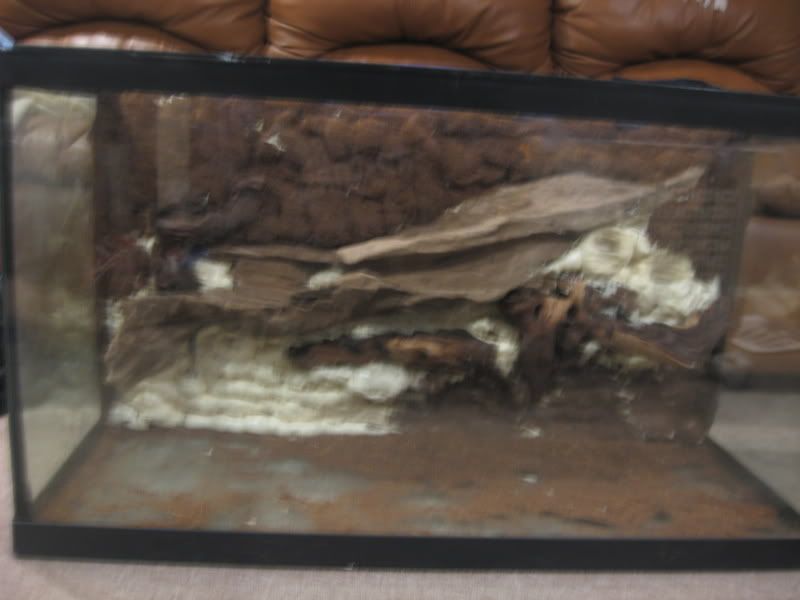
i recently inherited a project that my buddy gave up. he set driftwood in expanding foam and didn't have the coco bedding dry and ready so he decided to silicone glue it on. needless to say he lost patience and months later i took over. i saw someone once use epoxy instead of silicone glue, is that any easier and as safe? i'd like to try and make it my first paludarium but need some sugestions and help. here are some pictures of what im working with.

http://i34.photobucket.com/albums/d124/nuerotik/IMG_1009.jpg
http://i34.photobucket.com/albums/d124/nuerotik/IMG_1008.jpg
http://i34.photobucket.com/albums/d124/nuerotik/IMG_1007.jpg
http://i34.photobucket.com/albums/d124/nuerotik/IMG_1006.jpg
http://i34.photobucket.com/albums/d124/nuerotik/IMG_1004.jpg
Image

Replies (3)

Chris_Harper2 Nov 08, 2007 03:17 PM

Europeans mix the peat with acrylic bonding additives made for concrete. I gather they just make a slurry and slop it on with their hands (while wearing latex gloves, I assume). This would be safer and easier than epoxy, I believe. There are 100% epoxies with no solvents and low VOC's but these are sensitive to improper mixing. Not a huge problem but this is why I think the acrylic bonding agents would be easier. Do understand this is 100% speculation on my part as I have never made a peat background, only rock backgrounds. I have worked with both epoxies and acrylic bonding agents, however.

The only US available product that I know for sure has been used in this application is the concrete bonding additive available from Ace Hardware. Wish I had saved that link as I can't seem to find it anymore.
-----
Currently keeping a small collection of various Gonyosoma. Both G. janseni and G. oxycephala.

jgragg Nov 08, 2007 04:43 PM

I've used that Ace acrylic bonding agent. I first saw it discussed here, a couple years ago:

http://imageevent.com/audiomaster/40gallonhexagon

Scroll down to the bottom for an image of the packaging from back then. It's still the same, I just bought some more a couple weeks ago.

I'm presently working on a coco-fiber background like that guy made. My first, so I can't help w/ first-hand knowledge. There's tons of info online about that technique.

In the past I used the bonding agent in other backgrounds - to help make "fake rock". It works great. I mixed it with tile adhesive concrete (quickset?) and tinting agents; the bonding agent can replace some of the water in your mix. I smeared this goop over Great Stuff and polystyrene "rock".

I also make "fake lichen" with this bonding agent - mix it, dried parsley or whatever, tinting agents, and some white Drylok. Also very cool - I have it with some of my montane vipers (on their fake rock).

Caution - this Ace bonding agent comes out of the jug white but dries clear, so mix your tint and Drylok first, to your desired color, then add the bonding agent. The result will look too pale, but will dry back to what you had before adding the (fomerly white) bonding agent.

Overall, it enhances the water-resistance and probably overall durability of whatever you use it on. It dries sort of like Varathane...clear, hard, shiny if unmixed.

cheers,
Jimi

Chris_Harper2 Nov 08, 2007 09:30 PM

That's the exact link I was thinking of. If you google flevopol and terrarium using language tools there are all sorts of interesting links.

Thanks for posting and I hope you keep us up to date on your attempt at this method.
-----
Currently keeping a small collection of various Gonyosoma. Both G. janseni and G. oxycephala.

Site Tools
