Reptile & Amphibian Forums

Welcome to kingsnake.com's message board system. Here you may share and discuss information with others about your favorite reptile and amphibian related topics such as care and feeding, caging requirements, permits and licenses, and more. Launched in 1997, the kingsnake.com message board system is one of the oldest and largest systems on the internet.

Click here to visit Classifieds

Its cleaning day so I took some pics!

LoKii Nov 17, 2007 06:03 PM

It was cage cleaning day today, so I took a few pics of Sydney the black pine and of Aimers the Axanthic kingsnake. Enjoy


-----
"The difference between 'involvement' and 'commitment' is like an egg-and-ham breakfast: the chicken was 'involved' - the pig was 'committed'."

0.1 North American Black Pinesnake
0.1 Axanthic Brooks Kingsnake
1.0 Albino Argentina Horned "Pacman" Frog
1.0 P. Adspersus "Pxyie" Frog

Replies (51)

Jerry Nov 18, 2007 07:57 PM

Looking good! just wondering how ofter & how much are you feeding the Pine? I have been oferring mine 2 fuzzies two to three times a week except when in shed. I figure it is better to give it smaller meals more often. The female ate 2 pinkie rats @ one feeding. I raise my own rodents so feeding cost are low.

BTW, the male should shed tomarrow, he is a about a week behind the female. Now I think about it, I think my son was a little slower than my daughter too...LOL!

LoKii Nov 18, 2007 08:15 PM

I offer 2 f/t lrg hoppers at the moment. Last week she only ate one, this week she at 2. I feed about once a week, unless another snake rejects food then I may toss it in with her to see if she will eat it. I just started raising feeders about 2 months ago. I find it somewhat fun. I currently am only breeding mice, but I think I will move up to mice soon. My goal is to breed during the winter and stock up for the summer and etc, because when summer hits it will be to hot to keep the feeders in the garage out here in AZ! Can't waite to see pics of your male! Now if only I could find a male for my girl! If you happen to know anyone selling males let me know!

-----
"The difference between 'involvement' and 'commitment' is like an egg-and-ham breakfast: the chicken was 'involved' - the pig was 'committed'."

0.1 North American Black Pinesnake
0.1 Axanthic Brooks Kingsnake
1.0 Albino Argentina Horned "Pacman" Frog
1.0 P. Adspersus "Pxyie" Frog

LoKii Nov 18, 2007 08:16 PM

Sorry for the typo, meant to say move up to rats! lol!
-----
"The difference between 'involvement' and 'commitment' is like an egg-and-ham breakfast: the chicken was 'involved' - the pig was 'committed'."

0.1 North American Black Pinesnake
0.1 Axanthic Brooks Kingsnake
1.0 Albino Argentina Horned "Pacman" Frog
1.0 P. Adspersus "Pxyie" Frog

jsi11 Nov 19, 2007 09:49 AM

It's better to feed them once a week. Snakes are not grazing animals.
It's better for them to eat, digest the food, then have a few days of actively foraging for food before they eat again. In your situation your snake is constantly digest the small meals.

-----
1.2 Corallus Hortulanus
1.0 Morelia spilota cheynei
1.0 Python Regius
0.1 Pituophis melanoleucus lodingi
0.1 Lampropeltis alterna
1.0 Rhacodactylus ciliatus

Jerry Nov 19, 2007 10:28 AM

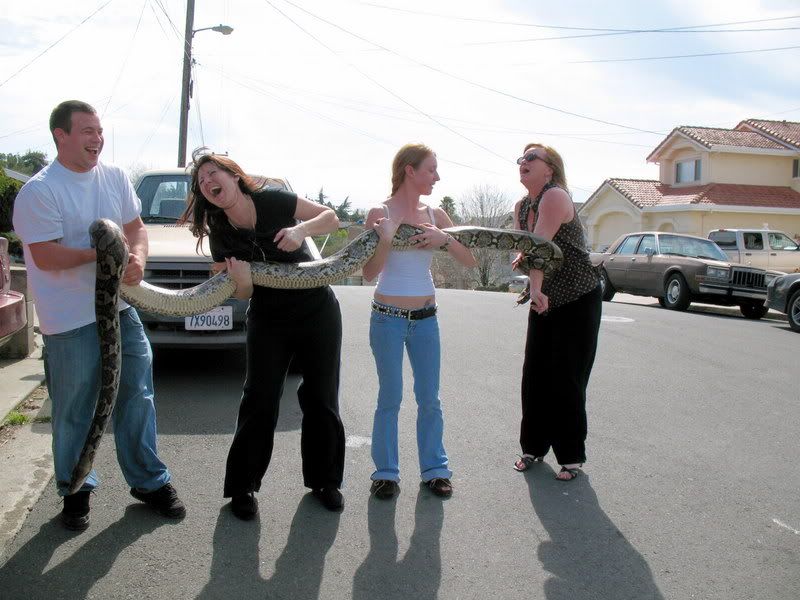
that is your opinion. There has been several debates over this on several forums & articles. Snakes are opportunist feeders & not always finding the idea size food item in the wild. I have been doing this with my snakes for over a decade now with no problem. As a matter of fact my snakes are very healthy. Alot of herpers agree to give the snake 2 small meals rather than 1 large meal now a days. If people feed the largest food item they can give it, the snake has to take time to digest the item, ussually not moving for several days. These snakes become "fat", especially with boas & pythons. Some snakes will regurgitate a meal if disturbed after it eats a large meal. I do not think it is a wrong or right issue @ this time. Until more studies are done it can only be debated

This retic has never eaten anything larger than a large rat. It is only 4 years old & in great health. I feed it 2 rats twice a week. I have over 60 snakes if you want more examples

LoKii Nov 19, 2007 12:41 PM

Awsome pic, The lady near the tail loos like she might pass out! Lol! Post some pics of your mail blk pine when you can!
-----
"The difference between 'involvement' and 'commitment' is like an egg-and-ham breakfast: the chicken was 'involved' - the pig was 'committed'."

0.1 North American Black Pinesnake
0.1 Axanthic Brooks Kingsnake
1.0 Albino Argentina Horned "Pacman" Frog
1.0 P. Adspersus "Pxyie" Frog

jsi11 Nov 19, 2007 02:09 PM

Just to clarify you're saying it is better and less "fattening" to feed an animal 6 fuzzies a week compared with one adult mouse...........I have to completely disagree with you on that.

You do what you want, I'm not trying to change your opinion on how to feed your animals but I've got more experience than you and have seen how many, many herpers grossly overfeed their animals.
-----
1.2 Corallus Hortulanus
1.0 Morelia spilota cheynei
1.0 Python Regius
0.1 Pituophis melanoleucus lodingi
0.1 Lampropeltis alterna
1.0 Rhacodactylus ciliatus

Jerry Nov 19, 2007 03:39 PM

Yes, smaller meals more ofter is less fattening. The snake has smaller meals will still move around the cage. A snake with a "lump" in it will curl up in the corner & wait for it to digest. Kind of like on Thanksgiving how people stuff their selves til they have to unbutton their pants...LOL! To each their own.

BTW, I really doubt that you have more experience than I do. LOL!

Phil Peak Nov 19, 2007 03:53 PM

This is one of those topics that I find particularly interesting. I have a very definite opinion on this but I would like to stress that this is only my opinion and nothing more.

I personally think that many keepers under feed their Pits through the first year. These keepers shun what they consider "power feeding". I believe the reality is these snakes power feed in nature. I have seen more than one baby Pit in the field stuffed to the gills with freshly eaten prey items. One thing many keepers fail to realize is that Pituophis has a much higher metabolism than do most other snakes. They are able to process large volumes of food in short order and this is quite simply a part of their natural biology. Therefore a different feeding regimen should be considered for Pits than what would normally be given for some other types of snakes. As further evidence I would point out that field studies have concluded that Pit's generally reach sexual maturity under natural conditions in their third year of life. This with a seasonal period of dormancy that can last for for more than half of each year. I have seen yearling Pits that were kept on what their keeper deemed an appropriate "maintenance diet" for fear of over feeding, and honestly these snakes were nothing more than runts. These are large and robust snakes and their food requirements reflect this. Over feeding can be a problem with adult non-reproductive females and with adult male snakes and I believe discretion should be used when feeding these animals. I personally feed my breeding females as much as they can handle. Reproduction takes a serious toll on these snakes and I don't like to skimp on the food. Breeder males fast during the winter cool down and then often again during the breeding season so obesity is rarely a problem.

On the topic of feeding, here is something else I think I should point out. My preferrence is for my Pits to never see a mouse. Some Pits become fixated on a solitary prey item and if this becomes mice you could have a problem on your hands when the snake is 7' long and refuses to eat rats! I start my snakes out on pink rats and move forward from there. Out of the egg I feed my hatchlings one pink rat twice a week for the first month or two. After that I maintain the same schedule but push it up to two pinks at each feeding. I maintain the frequency of feeding but increase the prey size in stages throughout the first year. By the time they are one year old my snakes are feeding on small adult rats. I also keep all hatchlings up through the first winter of life. On this feeding schedule the yearling snakes will be at or near 4' one year post hatching. During their second year I cool them down in the winter months. I cool all of my second year snakes through adult class animals down for 3 to 4 months each year at as near 55F as I can achieve.

No doubt there are more ways than one to successfully maintain these snakes but the system I descibed has worked very well for me. Under this regimen my snakes grow, reproduce and thrive. I think in the end this is what we all strive for.

Phil

pituophis.org

Jerry Nov 19, 2007 05:51 PM

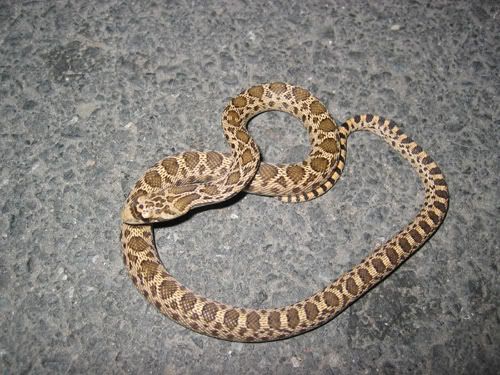
I must say that is very interesting. I must agree that other pits I have in the first 2 years have a great appitite. I have Pacific Gophersnakes, Pituophis catenifer catenifer, that in their first spring pound the mice down. Those snakes are alot smaller than their cosins when hatched, so rat pinks are not an option.
hatchling

one year later

Also, I have done alot of research on Northern Pacific Rattlesnake, Crotalus oreganus, in the areas in which ground squirrels are found, the rattlesnakesget to be larger in size & gurth. However, the areas that the ground squirrels have been irraticated finding a C. organus over 3 ft long are nonexistent.
yearling female

Phil Peak Nov 19, 2007 06:48 PM

That is a good point. I keep bulls and pines and this formula works well with those. I have heard that some of the western Pits (deppei for example) have a much more sensitive digestive system and are prone to regurgitation if fed too large a meal or kept too warm. Some of the catenifer can be smaller at hatchling size too.

The oreganus example is a good one. I find it interesting that P. ruthveni has has some of the largest babies in the North American snake world upon hatching and that this species is a dietary specialist upon the native pocket gopher of the region in which it occurs. It would stand to reason that in an evolutionary sense the hatchlings would be fully capable of devouring young pocket gophers.

Phil
pituophis.org

justinian2120 Nov 19, 2007 10:32 PM

hey phil.i was not in agreement with what you were saying re: pushing the food on young pits as a rule until you specified that this is done with pink rats,not mice-less hair(waste),more nutrients.personally,i find a good rule of thumb is to wait for the last meal to be passed before offerig the next.....about ruthveni in particular-no disputing they are known to be specialized in their diet of pocket gophers.however i don't know that this applies to these snakes at all stages of their life(i admit i've never seen a baby pocket gopher but am almost sure they dwarf a baby mouse)-think of any species of snake with a truly specialized diet-rainbow snakes come to mind(favor american eels);to a lesser extent,maybe edb's with their love of cottontail rabbits;same for regina or seminatrix(crayfish).but most if not all of these,in the first year or so of life,can't afford to be so choosy and are typically opportunistic feeders-and grow into their 'acquired tastes'.
-----
"with head raised regally,and gazing at me with lidless eyes,he seemed to question with flicks of his long forked tongue my right to trespass on his territory" Carl Kauffeld

Phil Peak Nov 19, 2007 10:54 PM

Yes, I agree entirely Justin. I mention this in my post below, "feed, digest and grow." Voiding waste enters into the equation and I should have mentioned this.

This is something that I believe every Pit keeper should watch for.

Phil

tokaysrnice Nov 20, 2007 02:10 AM

While I don't have as much experience as a lot of others on here I do think I can have my opinion, I feel like most all young pits can be fed twice weekly given what you feed. If larger prey items are offered give them one every 4 or 5 days if small prey items are given offering every 3 or 4 days works. I also believe when feeding more often larger cages with greater temp ranges are necessary as to provide proper exercise.

I think we as captive keepers can only begin to simulate our animals natural environments. What do pits do? Raid animal holes,nests? What do they do if they see the parents first? eat them and then go sit for a week to avoid predators. What do the do if they find young first? Eat them and be able to continue to move and look for more as they're much more maneuverable. I believe all animals are opportunistic in nature and will gorge given the opportunity.

I personally keep all my snakes in larger then needed cages and offer smaller meals more often, providing them plenty of room to exercise.

Heres a pic of a rather large meal for a P. Cantifer cantifer I belive it was a ground squirel as those are most prevalent where it was found.

Nate

tokaysrnice Nov 20, 2007 02:16 AM

It is true where theres ground squirels the Crotalus are huge for the amount of buttons, Where theres none they're much smaller.

Phil Peak Nov 20, 2007 09:41 AM

I also believe it is important to manage each snake on an individual basis since just like people, they are not all exactly the same. I didn't mention this in my original post but I do space the feedings more as the prey size increases. While I will feed twice a week when I am still offering pink rats I reduce the frequency of feeding to every four or even five days by the time they are feeding on rat pups, depending on the snake. By the time my snakes are yearlings I begin feeding solitary food items in the form of small adult rats. This will generally be spaced at one feeding every five days. Again, I believe it is important to watch the snakes and make sure they are digesting this meal before stuffing them with another. Some snakes process food a little faster than others so I tweak this accordingly. After a couple of months of this I begin feeding two small rats at each meal. By the time my snakes are two year olds they should be handling medium rats with no difficulty and at that point I again adjust the feeding regimen to the individual snake. For example, I will feed reproductive females heavier etc..

Again, there is more than one way to keep these snakes but this system has worked well for me.

Thanks for the comments.

Phil

DISCERN Nov 19, 2007 07:34 PM

Great input Phil!! I love hearing what you have to say. Here is my take on a few things that I would disagree in good consience though. By the way...can I have that pinesnake pictured in your last post? HA HA!

I happen to think that power feeding does not occur in nature because existing in nature and being in captivity are two totally different things. I believe that a snake in nature would eat as much as possible when it could because Lord knows when his next meal would occur. " Power Feeding " to myself and many others is the act of not being patient with an animal's growth rate and trying to get it to breeding size in the shortest time possible so they can produce babies in the shortest time possible. No matter what we do as keepers, we will never have the conditions to mimic nature 100% in our collections. They are completely confined to a cage, while being in nature, the animal has complete freedom to roam, travel, and thermoregulate.

Pits do have an incredibly high metabolism, and that is something I have learned in my keeping of pits. I have found out that in some of my snakes, I should have fed a little more often, or actually, more appropriately sized items. Others I have seen grow or gain weight at fast rates, and had to back off to prevent obesity. The key, to me, is balance.

As far as rats vs. mice with younger pits, I have had much better luck with mice!! Ha Ha!! I know..I was startled with the results as well. I actually now feed all my pits a mixture of rats and mice. The times I have fed ALL rats to my growing pits, I didn't see jack squat in growth rate. The mice I then received in orders and fed seemed to be better suited in size for good meals, as the rat sizes would either be on the extreme in either too big or too small, when I would get my orders in. So with mice, I have seen my growing pits reach between 3 and 4 feet in the first year. Also, I have purchased adult pits that were 5 foot and then with retired breeder mice as meals, I have seen them grow well over a foot to a foot and a half more, making them well over 6, I think. Now, is this me saying that rats suck for meals for pits. No way!! I advocate both rats and mice!! My point is finding the perfect size for your pits in terms of good meals may contribute to better growth as well. With mice, I was able to do just that, and then, in turn with giving what I was calling good sized prey once every 5-7 days, I have seen optimum growth. I do try to have pits reach adulthood in 3 years but sometimes, I have seen it take 4. Deppei and Jani I have seen grow slower, but bulls and pines seem to grow really fast. Since most of my growing pits were purchased within the last 4 years, I am still seeing my hypothesis at work and I am still learning as well, as you can never stop learning. Then, in the end, all of my biggest pits end up on small rats or retired breeder mice anyways.

Later Phil!!!

Image
-----
Genesis 1:1

Phil Peak Nov 19, 2007 08:23 PM

Billy,

You bring up some great points and I do not disagree with you entirely. I guess one thing that needs to be addressed is the very term power feeding. I do believe that this happens but my definition of it is may be different than that of some keepers.

I believe that a twice a week feeding regimen for hatchling to yearling class animals does not constitute power feeding. I feel that this is an appropriate feeding schedule given these snakes higher rate of metabolism. I have heard of keepers that feed their snakes on a daily basis or on every other day and I do feel this is excessive. I like to maintain appropriate temps for digestion, reduce stress levels and allow the snakes to reach their maximum potential. In other words, feed, digest and grow. I am never motivated by breeding animals as quickly as possible to cash in. I am much more interested in maintaining my animals in the best posible way and serving their best interest.There are plenty of folks in this hobby that are motivated by the almighty dollar but as most of you know I am not one of them. So I guess what I'm saying is the definition of power feeding varies from person to person. I honestly think that some of the maintenance feeder type keepers are really just cheap and are unwilling to give their snakes what they really require to be their best.

As to mice as a diet? I will be the first to admit that a mouse of equal size packs more nutrition than a rat of the same size. The bone density for one is exponentially higher. But, and this is a big but! If you have a Pit that decides it likes mice better than rats then you are creating problems for yourself. I once adopted a large northern plains bull that was brought up on mice. Each feeding required a dozen adult mice. A medium rat once a week would have been much less costly. When you maintain a large collection all these things need be considered! I have raised many a Pit from the egg to maturity without ever seeing a mouse.

It was good meeting you in Daytona. Maybe next year we can talk longer. Thanks for the feedback.

Phil

DISCERN Nov 19, 2007 10:36 PM

Phil,

Very good post, and we basically don't disagree much at all. Good thoughts bro, and I appreciate your response and your input!!!

It was so cool to meet you this year! Yeah, let's try to talk more next year!!!

Take care bro!!
Billy
Image
-----
Genesis 1:1

Phil Peak Nov 19, 2007 10:57 PM

Look forward to getting down there again next August. It'll be good to catch up and talk Pits, my favorite topic lol!

Phil

Br8knitOFF Nov 20, 2007 07:40 AM

Great thread guys, and thanks for all the insight!

LOVE the pits- the guys I go out field herping with are always trying to show me something new, so they're always asking me, 'what do you want to find today?'

My response is always the same- 'I'd be happy to find some pits!', to which I get, 'AGAIN?!?'! Haha!

This one MADE my weekend!

//Todd

Phil Peak Nov 20, 2007 09:42 AM

Nice! What locale?

hanks, Phil

Br8knitOFF Nov 20, 2007 03:30 PM

Good question- I know where we were, but don't remember the name of it.

Toddy- what was the name of the town/county we were in when we nabbed this guy?

Thanks,
//Todd

antelope Nov 20, 2007 09:44 PM

That would be Jim Wells County, my man! We're looking for mex milks and indigos and Todd says I'd love to see a bull,flips a bull under a small branch, the snake was bigger than the branch!!! I guess I better start flippin' those branches!!!

-----
Todd Hughes

Phil Peak Nov 21, 2007 06:11 PM

Good stuff. Sounds like fun!

Phil

Jerry Nov 20, 2007 09:47 AM

Great thread! good to hear others experiences in feeding & what they find in the field

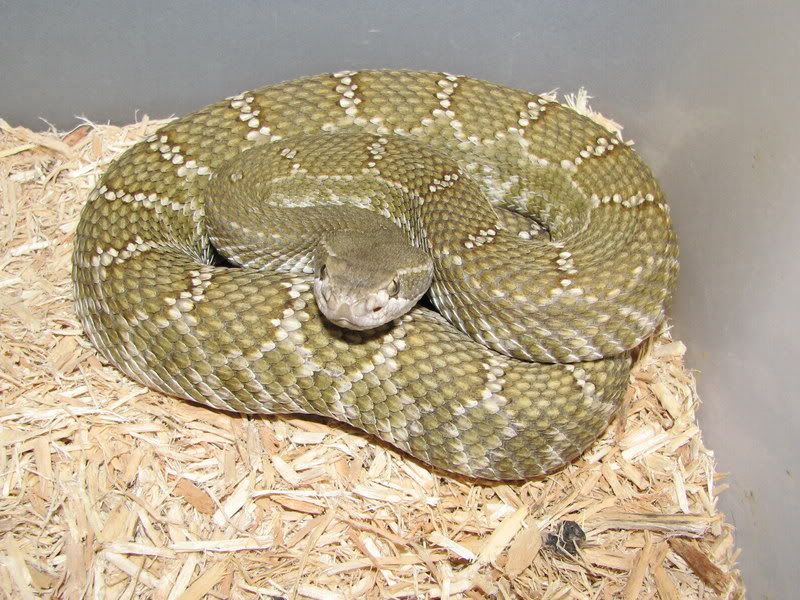
I must say that gophersnakes are usually what we find the most of when out herping. This last season though was weird though. Where we usually find mostly pacific gophersnakes road crusing, the glossys, kings & rattlers were more common on the roads.

Always cool to find Great Basin Gophersnakes in the Mojave high desert. The ones we find there are usually adults on the road, rarly do we see juveniles.
2 years ago near California City

this year Jawbone Canyon

BRhaco Nov 19, 2007 08:42 PM

Phil, I have to say that my own experience with Bulls and N. Pines is entirely consistent with your observations. Of course one should avoid obesity, but honestly, until sexual maturity is reached, I think one would have difficulty feeding a young pit enough to achieve it. These guys are growing machines! My juvies get large meals at least twice weekly, and after raising literally dozens this way, I've yet to see an "overweight" hatchling.

I do have to add the caveat that I have little experience with the Mexican species, which are reported by some to do poorly with heavy feeding.

-----
Brad Chambers

The Avalanche has already started-it is too late for the pebbles to vote....

Phil Peak Nov 19, 2007 10:59 PM

Thats great to hear Brad. I figured there were other keeps that have had similar experiences. Whats the story on the photo? Nice looking bullsnake btw.

Phil

BRhaco Nov 20, 2007 07:55 AM

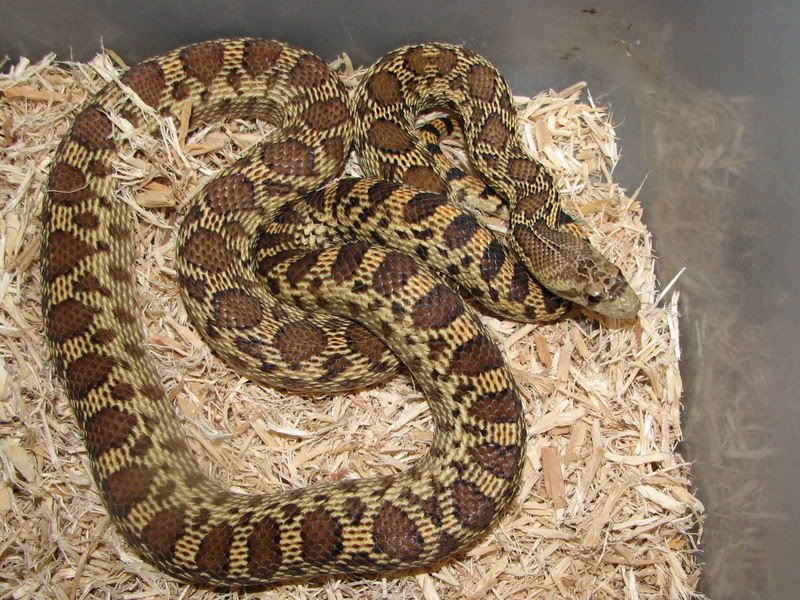
My theory is that young bulls are feeding mostly on nestling pocket gophers, cottontails and other rodents/lagomorphs. In their habitat these foods can be quite abundant, and when they come on a nest I can easily see them stuffing themselves with as much as they can hold!

The photo was taken last July in Presidio County, TX. This bull (actually a sonoran gopher/bull integrade) had just taken a large meal (a small cottontail or perhaps a pack rat or bannertail kangaroo rat). I took the shot and let him continue on his way.
-----
Brad Chambers

The Avalanche has already started-it is too late for the pebbles to vote....

Phil Peak Nov 20, 2007 09:07 AM

My observations have been similar. I have seen young bullsnakes at the Kankakee sand prairies that were absolutely gorged.

Neat photo!

Phil

antelope Nov 20, 2007 06:40 AM

Thanks for the info Phil and that is a GREAT lookin' pit!

-----
Todd Hughes

Phil Peak Nov 20, 2007 09:12 AM

Thanks Todd. That is our Cave Region northern pine snake. We are fairly sure its the only one from that population in captivity. Our number one goal is to find a mate for him and reproduce these.

That Sonoran is quite a looker! Is that a line you are working on?

Phil

antelope Nov 20, 2007 09:49 PM

Yeah, I am hoping to go for bullseye pattern, I have the male lined up for her, hope she sprouts a bit before next season, but I can wait! Thanks Phil, I appreciate all your and Wills' efforts on these and other snakes you are working with. Put me on the list for some jet black nigras when you get a chance!
-----
Todd Hughes

laredo7mm Nov 20, 2007 10:30 AM

Great thread you all have going here. I saw it mentioned a few time about the P.D. Deppei or Jani will be slower growers and might take smaller meals, so I thought I would share my limited experience.

Here are a couple pictures of my P.D. Deppei. He was hatched in 07/06 and I am feeding him mouse fuzzies every 6 or 7 days. The pictures below are right after he ate a 7 gram mouse fuzzy. The pictures are a bit dark, but you should still be able to see the lump that the mouse leaves.

Phil Peak Nov 20, 2007 11:14 AM

Thanks for the insights! They must start out quite small from the way it sounds.

Phil

laredo7mm Nov 20, 2007 03:19 PM

I think mine is small for his age. He came to me in great health and he has always eaten well with no regurgitation issues. I have had him for about 6 weeks. His first meal was a 4 gram large pink (peach fuzzy) and then a 5 gram fuzzy, and now he gets a 6 or 7 gram fuzzy at every feeding.

I recently started feeding him every 6 days as opposed to every 7. The breeder was feeding him a large pink (peach fuzzy) every ten days. I think the breeder's "maintenance feeding" is why he is smaller than he should be. But again, he is perfectly healthy, so I am not upset in any way.

His weight on 10/23/07 was 46 grams and he is 23 inches long (measured on 11/06/07). When I got him on 10/03/07 he was about 22 inches long. So he is growing. He just had his first meal in two weeks due to waiting for his shed cycle to complete, so I will get another length and weight measurement next month.

Steve G Nov 21, 2007 08:50 PM

Sounds lke your deppei has suffered from the typical "afraid to feed them" protocol. These snakes will grow to 40 inches their first year(no hibernation) if fed properly. While the size of the meal is important, the frequency is the key! Once started properly these guys will grow like weeds and are as easy to care for as corn snakes!

antelope Nov 22, 2007 01:22 AM

Steve, what's with the towel bar shots? Don't get me wrong the snakes always look great, but is there some meaning behind the towel bar or just an artsy shot, lol! I would like a signed print of the Bairdi on a Bar!
-----
Todd Hughes

laredo7mm Nov 22, 2007 10:43 AM

So will my guy recover from his slow start? I have read differing opinions on the internet, but I would like to hear yours (and others) as well. Is it possible to stunt the snakes growth by limited feeding while young?

BBBruno Nov 20, 2007 02:25 PM

Great post and interesting observations by all. For hatchling and yearling animals, I offer food every 72 to 96 hours, always waiting for the snake to void before offering the next meal(with Pituophis, one does not have to wait long, LOL). I've only used pinks for Gophers(good sized ones, not newborn pinks); for baby Pines and Bulls, I start them with fuzzies and hoppers, and graduate them to larger prey animals as they grow. I feed sub and young adults along the same lines. While I see Phil's point about these animals possibly becoming fixated on one given prey animal, I have used an effective (if not disgusting)method to remedy this situation: brains and urine! By squeezing a frozen-thawed food animal's head, brain matter will flow (if not squirt) from the mouth and nostrils. Rubbing a bit on the snout of the intended meal usually brings the desired response, until the snake feeds without the need for this scenting. Drawing a bead of urine from a food animal and rubbing it on the snout of the meal has also worked very well for me. In recent years,I've found that mouse excrement can work well in extreme cases. I found this out quite by accident with a hatchling Black Pine a few years ago. This animal refused to feed, unusual for any Pine, and even brains weren't getting it done. One day, I guided the snake's head toward a thawed hopper mouse's urinary tract area, hoping this would do it. She ignored this area too, but when her tongue brushed the mouse's anal opening, she seized it agressively and proceeded to inhale it. She continued to feed in this manner for the next year (though she now consumes her food head first, friends still refer to her as the "Butthole Pine Snake", an allusion to one of my favorite bands). Also, if you have an ample supply of them, adult Pines and Bulls, both wild caught and captive born/raised, go absolutely off the wall if you offer them gerbils. They rip them out of my hand so savagely that I am frequently left with the fur of the gerbil's tail still in my hand! Sometimes gerbils are the only thing that wild caught Pituophis will take. In year's past, I had upwards of 170 snakes, all Pituophis and most wild-caught. I learned to experiment and came up with these methods as a result. I'm sure I'm not the only one to try these approaches, I do know they've worked well for me. For adult snakes, I feed the females quite a bit both before and after breeding, at least twice a week, the reasons being obvious. The males usually want nothing to do with food until after breeding, after which I feed them at least twice a week also, large prey items. My animals are hibernated from November until early March. Hope these observations are of help to someone.

Bart

Phil Peak Nov 20, 2007 07:06 PM

Thats some great stuff Bart! I have scented a lot of prey items for reluctant feeding baby corns and kings but but never a rat with a mouse. I guess the same principle applies and you can't argue with success. That does sound like a messy business but if you achieve the desired result the mess doesn't mean much.

Phil

BBBruno Nov 21, 2007 08:41 AM

It is messy Phil, I've got mouse brains all over the walls of the herp room! I have to get the room painted. Just got engaged, and we'll be selling our homes soon so we can get one of our own. I'm sure that mouse brains on the wall might be a deterrant to a prospective buyer!(The snakes are elsewhere as we speak). Not sure what's worse Phil; scraping mouse brains off the wall, or watching the Bears play as poorly as they have this season! Experimenting is very much a pert of keeping herps, and these methods work well for me. Having as many wild caught animals as I did back in the 80's helped me in many regards, I learned so much of these animals as a result. Learning of their fondness for gerbils came directly from these experiences, especially with wild caught Alabama Northerns and South Dakota Bulls. Rodent-on rodent scenting worked well with Gophers from the Pacific Northwest, among other places. Learning is a good thing to do; when you stop learning, you stop living, you merely exist from that point forward.

Phil Peak Nov 22, 2007 07:49 AM

Congrats on your engagement Bart! I hope the bride to be is snake friendly or at least snake tolerant lol! You nailed it with your thoughts on learning new things. I can't remember the quote exactly so I paraphrase, but a wise man once said that the more a man learns the more he realizes how much more there is to learn. Okay, I butchered that one pretty bad, but it is a great truth!

Phil

BBBruno Nov 22, 2007 08:30 AM

Not only does she like snakes Phil, she helps me with the cleaning, and even has a snake of her own, an Oregon Cal I hatched two years ago. Because of my back problem, I've had a tough time with the large cages, and she's been handling the cleaning of them as of late. I have to find smaller, more manageable cage setup for the large animals. She already told me that once we find our new home, we have to build a room that is more ergonomically friendly than what I have now. She also wants to have a sink either in or just outside the new room, and a desk just outside for taking notes. Not easy to find a woman like that! She's also my personal roadie; my bass cab is at least 100 pounds, I just can't manage it alone any more. I'm indeed fortunate Phil. Happy Thanksgiving to everyone!

Bart

Phil Peak Nov 22, 2007 08:59 AM

Sounds as if you made a wise choice! I have had friends that were forced to choose between their woman and keeping snakes. Sadly some of these guys put a life long passion with snakes aside and caved in to their wives demands. This to me is completely unacceptable! A good woman will support her man in all of his endeavors IMO. I have been fortunate as well. My wife is not a snake person but she does support my efforts and understands how important snakes are to me. This includes spending countless days away from home each year doing field work. This she does not necessarily like, but her support makes all the difference in the world. Our time spent together is better as a result.

Happy Thanksgiving to you as well!

Phil

Jerry Nov 22, 2007 09:58 AM

Congrats! Phil is right that a good soul mate will be supportive in what you do. My wife helps me when I need help & enjoys going herping with me. She also keeps me "in check". Her wisdom keeps me from getting over my head. Without her, I may not have the enjoyment I have. Always good to have a partner.
Peace out

Phil Peak Nov 22, 2007 02:51 PM

Its good to hear that some of us are so fortunate!

Phil

antelope Nov 23, 2007 04:00 PM

Ditto on the soul mate! my wife admittedly doesn't find the snakes that interesting but has helped secure escapees and handles almost all without a qualm. She is in charge of the rodent colony, which is a blessing! She even herped with me once!
-----
Todd Hughes

antelope Nov 20, 2007 09:55 PM

ROFLMAO!!! Butthole pines, the new morph! And I can relate to the gerbile gone with the tuft left in your hand, I did the same with my large male suboc, coocoo for cocoagerbils! Man that is seriously funny stuff!

-----
Todd Hughes

Steve G Nov 21, 2007 09:00 PM

Interesting about the gerbil thing. I had a wild caught adult Trans-Pecos rat snake that was refusing the usual offerings...........even rat pups! Bougt a gerbil from the local pet shop.........he was all over it!......they must taste like k-rats to a suboc!

antelope Nov 22, 2007 01:25 AM

That was my take on it, the big boy turned his nose up at them eventually, but now he is going strong and will eat mice, rats, gerbils, and small annoying children!
-----
Todd Hughes

Site Tools