Questions:
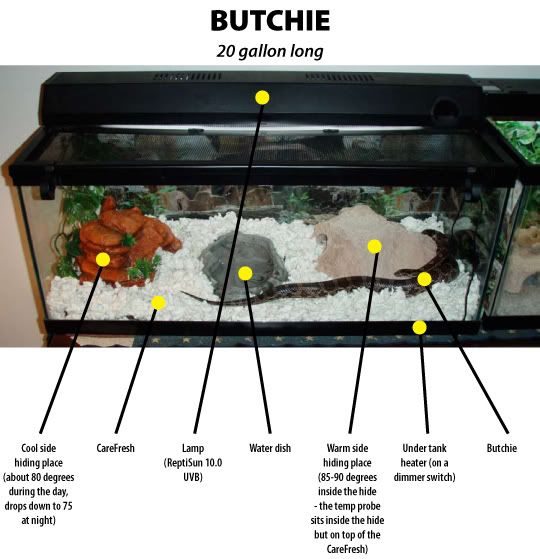
1. When you say it's 85-90F in the warm-side hide, were you measuring the temp atop the substrate INSIDE that hide?
2. Is there enough substrate so the snake does not sink to the bottom from movement, closer to the heat?
3. Does the snake spend over 75% of the daytime hours in the warm-side hide?
Observations:
1. 85-90F is too hot. If you get that down to 80-85F, it should spend more time in that hide and therefore breathe less unheated air.
2. If the snake is not properly buffered from the heat in the warm-side hide, it will be forced to move away from that hide. The more it does this, the more likely it is to pick up a respiratory infection. (SIDENOTE: The more it's not hidden, the more retinal damage it will suffer from UV radiation. Without eyelids, it can only shield its eyes from such harmful radiation by hiding from the light. It will NOT do this unless the hide offers ideal digesting temperatures.)
3. A rat snake's instinct to hide is usually greater than its instinct to utilize temperate zones conducive to health. Hence, if your snake is not spending at least 75% of the daytime hours IN the warm-side hide, it is in danger of retinal damage and/or URI (upper respiratory infection).
Advice:
If you do not have a thermostat or rheostat controlling the UT heater (these are not necessary), consider increasing the substrate depth by at least one inch OR lay something on the bottom glass - beneath the hide - over the UT heater that will buffer the heat more. If you achieve 80-85F IN the warm-side hide, you will notice the snake spending more time in it, thereby reducing the chances of contracting respiratory complications from breathing the cooler air. Not to mention, it will not go blind prematurely. Under proper captive conditions, long-lived rat snakes will eventually suffer blindness. That affliction will be premature if they are not able (or willing) to protect their eyes from UV radiation. Not being albino, it's more capable of retarding the harmful effects of this radiation, but it will still go blind from over exposure to UV radiation. It's not a matter of IF as much as WHEN. BTW, being blind for a snake is not so bad. Losing their tongue or Jacobson's organ would be the equivalent of being blind in this animal.
There is nothing inherently wrong with the substrate you're using, but your snake would be better served if you used aspen bedding. They're both absorbent and neutral in chemical nature, but the packing nature of aspen lends itself to being a better buffer between your snake and the UT heater. It's never wise to heat corns solely from OT (over tank) heat, and seldom is it necessary to use OT heating as a secondary source. Therefore, UT heating is often all you need. It appears to me that as your snake moves around the cage, it is tamping down the Carefresh bedding beneath the water bowl and hides. If the snake subsequently gets closer to the heat source as a result, it will retreat from that hide. That's when the problems begin.
PS. Do you trust your thermometer? Have a back up and make sure they agree with each other. Also, remember this. The temperature in the cage is only crucial in one place. INSIDE the warm-side hide. Since that's where the snake will spend most of its life, it really doesn't matter what temps are happening outside that hide. Therefore, the thermometer should be one you know to be accurate AND you should monitor the temperatures in the cage at the precise level and location of the snake. Never put the thermometer on one of the glass walls of vivaria. We don't care what temperature the glass is even one inch above ground level.
Good luck,
Don
South Mountain Reptiles