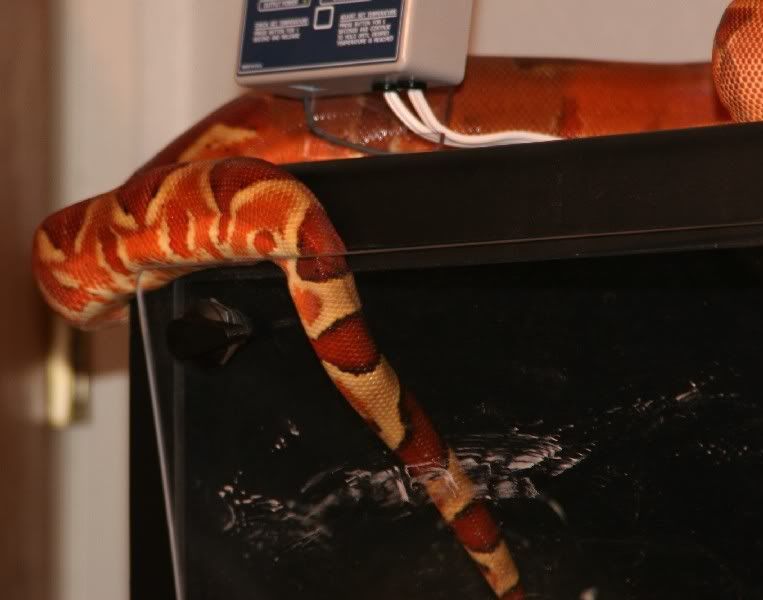
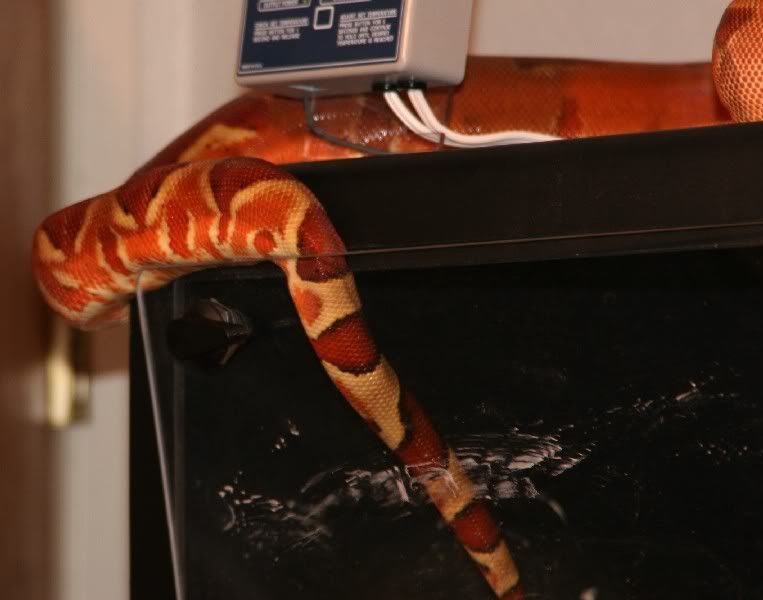
... can produce a greater possibility of weak genes combining more often.
This is why some isolated communities of people have a greater possibility of having extra fingers or toes...
But here's (more of) my opinion. Any snake purchased by a person was purchased because they liked the way it LOOKED. People are therefore more likely to purchase animals with prejudice to its physical appearance.
So, if someone buys two freshly imported but unrelated locality boas, more than likely they're going to buy ones THEY LIKE BEST. Of course when these two breed, their offspring will look different than most wildcaught specimens of the same locality, because you have two "attractive" looking snakes mating together.
If a male supermodel and a female supermodel have kids, more than likely their children will be "more attractive" than a random human population sample of the same ethnic background.
Does that mean they are weaker? No. Do certain physical traits come to the forefront? Yes, that is exactly the purpose of line breeding.
In my opinion, if someone breeds snakes together (be it morph or locality), and sees a genetic DEFECT occur in the offspring, that is when it becomes morally reprehensible to continue the same breeding project. Some albinos, when bred together, can produce babies with eye problems (can be born with lack of eyes, or bulbous swollen eyes). Responsible breeders do not repeat pairings that produce DEFECTS like this.
I like boa morphs. They are genetic anomalies that are attractive to us. Yes, they would have a tendency to not survive in the wild, but I bet you a Chihuahua wouldn't, either. Most people tend to like RARE things. That's why gold is valuable.
It's not like we're cloning human embryos here, only breeding together compatible species, which could do so naturally if they encountered one another in the wild.
Even the argument that "Yeah, but they WOULDN'T EVER encounter each other in the wild" has holes in it... animals have spread across the globe in unlikely ways, due to storms or various other natural disasters or phenomena.
Honesty in the breeding background of any given snake is of utmost importance, but I have to laugh at the "Do we have a right to...?" In my opinion, no one will ever be able to answer that.
People have bred things together for thousands of years (take mules - usually sterile products of matings between donkeys and horses, to produce animals with the strengths of both, and some of the weaknesses of both). Right? Wrong? Who knows. Mules serve a purpose, which is why they are still produced.
Morphs and crosses will still be produced, as long as there is a market or interest in them.
Responsibility of a breeder, to me, lies in proper documentation of history of the animals they acquire and produce, and in the avoidance of producing animals with physical deformities.
I shy away from any sort of "authority" on snake breeding - to me, breeding clubs can seem to be a scheme to make some animals more valuable, and produce fees for an organization to run on. I understand about breed standardization, and that works for dog breeds that have been around for decades or centuries, but I know that I would not register my animals with or count on any reptile breeding registry to take root in the community.
-----
Lauren Madar - OphidiaGems.com | CageMakers
1.1 Ball Python, 1.0 Hog Island Boa, 1.1 Hypo BCI, 1.1 Surinam BCC, 1.1 Saharan Sand Boa


 I see positives to both breeding plans, but think honest representation of history is paramount.