Reptile & Amphibian Forums

Welcome to kingsnake.com's message board system. Here you may share and discuss information with others about your favorite reptile and amphibian related topics such as care and feeding, caging requirements, permits and licenses, and more. Launched in 1997, the kingsnake.com message board system is one of the oldest and largest systems on the internet.

Click for ZooMed
Click for 65% off Shipping with Reptiles 2 You

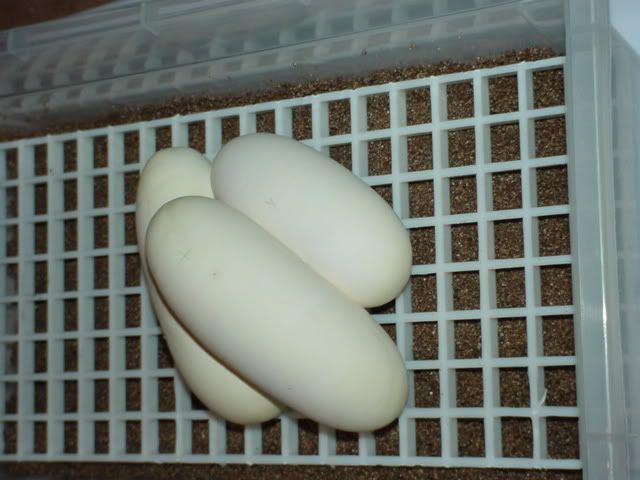
Incubation with water as substrate?

python2000 Jan 27, 2008 11:46 AM

I saw that some breeders are using a plastic box with no holes with an inch of water and a pladtic grate above where the eggs are placed without any other substrate. Anyone experienced this, is that safe just as using traditional vermiculite/perlite as substrate? Do you have any suggestions?

Thank you!

Flavio

Replies (4)

Wallbanger26 Jan 27, 2008 01:31 PM

I've never seen that? When in doubt, I use this saying, "If it ain't broke, don't fix it!!!" Stick with substrate.

primevalbeauty Jan 27, 2008 02:49 PM

I used a variation this past season, with 100% hatch out. Couldn't decide on a method to elevate the eggs above the water that satisfied me on short notice. But Over saturated vermiculite works well, no guess work just really wet subatrate and since the eggs aren't in direct contact with the vermiculite they dont absorb too much moisture. You do have to watch the condensation on the top of the container and make sure to remove it every few days to avoid drops on the eggs. But I will never go back to the old method.

-----
Primeval-Beauty
"Finding beauty where other's fear to tread"

AllStarMorphs Jan 27, 2008 03:11 PM

I, like many others, use the “no substrate” method you’re talking about. There are positive and negatives to this method.

Positive …
It’s easy to keep humidity perfect. You can see if the water is low and add if needed.

Less issues with mold or eggs getting too wet and rotting (on the bottom) in the substrate.

No set-up mixing or mess.

Negatives …
Eggs are not as protected against temperature changes. Therefore, incubator temperatures must be (and remain) consistent. I use a professional grade (Thelco) incubator that holds the temp perfect. It has a glass door, which I try to avoid opening.

Eggs are susceptible to rolling on the flat surface. I use a couple of strips of paper rapped around the eggs to prevent this.

I like the “no substrate” method… works for me.

-----
Larry Walker

WebSite

nickmetherd Jan 28, 2008 02:59 AM

This method I believe was developed with more of the carpet/tree python group in mind originally. One of the benefits is that you can place a large open tub of water in the bottom of the incubator and place the eggs in either open smaller tubs on racks or closed containers with many holes for ventilation. With this method vs. vermiculite, there is no need for daily or multiple times a day if you live in a dry climate checking for vermiculite saturation. Moisture is vital and some would a much bigger issue with chondro, carpet, and other high humidity animals over balls. In the last few days before pipping, I have seen it successful to move the eggs to a different incubator in the last few days (I would have to check my notes, but I believe last 10 days to a week before the eggs hatch when the temperature is lowered as the eggs start producing heat on their own) to a vermiculite substrate with a water tub in the bottom of the incubator to both act as a temperature stabilizer as well as keeping the humidity high so it is less likely that the vermiculite will dry out.

Hope this additional info helps.

Nick Metherd

Site Tools