Reptile & Amphibian Forums

Welcome to kingsnake.com's message board system. Here you may share and discuss information with others about your favorite reptile and amphibian related topics such as care and feeding, caging requirements, permits and licenses, and more. Launched in 1997, the kingsnake.com message board system is one of the oldest and largest systems on the internet.

Click here for Dragon Serpents
Southwestern Center for Herpetological Research
Click for 65% off Shipping with Reptiles 2 You

Newbie has some questions.

Freis Jan 28, 2008 09:38 AM

Hi guys, I've been lurking this form for a day or so, and everyone seems friendly enough so I thought I might ask a few questions.

I am interested in buying a milk snake, and I have my heart set on the red/black/white ringed colored ones. However I noticed there's more than one type of milk snake that comes in this color. So my first question is:

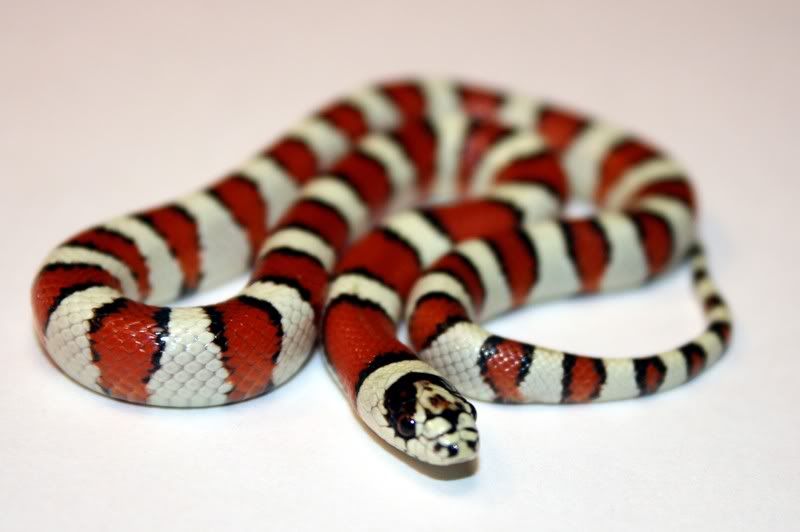
What's the difference between a black milksnake and a hypo pueblan? Also what dictates a price of one?

Thanks so much!

Replies (30)

DMong Jan 28, 2008 10:03 AM

Ah yessss, there is MUCH to learn "Grasshopper"..LOL!

There are 25 subspecies of milksnake to choose from, some much more common in the hobby than others. It's pretty hard to explain all the differences they have from one another in a quick post though. I would at LEAST do a bunch of "milksnake" google searches, and visit many of the websites to get an idea of some of the differences. A few good milksnake books would also benefit you greatly in this endeavor, many are very inexpensive, and they can be used for reference for years after.

best regards, ~Doug
Image
-----
"Better to be silent and thought a fool, than to open mouth and remove any doubt!"

jyohe Jan 28, 2008 04:17 PM

25 ???

THOUGHT IT WAS 26.......

WONDER IF I CAN REMEMBER THEM........

AMAURA
ANDESIANA ....damn cap lock button
ANULATA
ARCIFERA
blanchardi
campbelli
celaenops
conanti
dixoni
elapsoides
gaigeae
hondurensis
micropholis
multistrata
nelsoni
oligazona
polyzona
syspila
smithi
stuarti
sinaloae
taylori
temporalis
triangulum
.................hmmmmmmm.....missing 2...LOL.....

......abnorma......

and.......

I quit...you tell me......hahahahaaaaa

......I count temporalis ..as do you guys in here.....

milkheads I think you call yourselves....

LOL
-----
..............

..................
.

shannon brown Jan 28, 2008 04:38 PM

25 if you consider elapsoides and 26 if you consider ruthveni.

Shannon

jyohe Jan 28, 2008 05:47 PM

I considered ruthveni a separate subspecies all on it's own..../....that's what I was taught.......closest to mex and all......but not a milk.........????

elapsoides I thought was milk,........

....I still missed one.......

always thought 25 because Williams I think took the temporalis off the list.......I think it should be definatley on.....
Markel agreed with that /us , after seeing so many temps at the MARS show a long time ago....we were talking about it with him in the hall after his talk ......I learned only that his book has all info in it that he talked about, and I learned that he didn't want to hang out and chat with us......bubyeeee.....LOL....
Markel told us Williams took it off (one of the guys at least).....

......
-----
..............

..................
.

DMong Jan 29, 2008 06:44 PM

"ruthveni" is considered it's own species(Lampropeltis ruthveni) nevermind subspecies. And elapsoides DEFINITELY is a true milksnake no matter HOW you slice it. Like I stated before in the previous post, there are 25 true milksnake subspecies, and 26 if you consider the problematic lineage of temporalis. This snake is thought to be a triangulum x elapsoides intergrade as most know, that has kept perpetuating within it's own kind to make a unique lineage of animal. And again, they are certainly largely accepted as such by many as their own little race of milksnake. But as far as officially being accepted taxonomically as a definite subspecies, that will certainly be debated for some time to come.

Like I said earlier, they will always be temporalis to me too. So if they make milksnake number 26, then so be it, I certainly don't have a problem with it, and don't think the vast majority of breeders/hobbyists do either. Either way anyone cuts it, temporalis is DEFINITELY a unique animal in it's own right.

best regards, ~Doug
-----
"Better to be silent and thought a fool, than to open mouth and remove any doubt!"

jyohe Jan 29, 2008 06:55 PM

yea...temps are more distinguishable than some of the SA and CA milks....even anulatas, amaruras, gentilis and celaenops...pics in here look alike to me at times........

.......I have a set mindset as to what a certain sub-species "should" look like from seeing them in books all the time....and then when I see you guys in here posting like 10 pics of a certain SSP and maybe 2 will fit the "look" and 8 look different or even like a whole different ssp......it's like...ok.......and I have to think that the pic in the book is always a good looking animal and /or a wierd one.....

example is the conant's I think and the micropholis in the one book....Markel's or Williams ,,,I forget.....2 really good yet off the norm looking animals.....

..anyways......I used to want all 26 till I found out you cannot get all 26 and that 20 of them either get too big or crap all over you while biting and chewing you .......you can only take so much of that.....(I am sick of campbelli already and they are only 19 months old)......LOL

Thanxx.......

.
-----
..............

..................
.

DMong Jan 29, 2008 07:51 PM

LOL!,......yes, I agree on a lot of that too,....many milks at times can be a REAL headache to distinguish from one another, if at ALL, and when intergradation enters the equation,.....the words virtually impossible come to mind..LOL! I see animals in MANY books that are just ridiculous examples of the subspecies that's "supposed" to be represented. One thing I will say with certainty, the micropholis photographed by Glenn Slemmer that is represented in ~Systematics and Natural History of the American Milksnake~ by K.Williams is by FAR the best example I've ever seen to date. As a matter of fact, it is the ONLY pure example I've ever seen,... period. There are NO pure examples in this country at all to my knowledge as of yet. There are a few very nice andesiana x micropholis natural intergrades available in this country, but no "pure" ones from a very low elevation i.e. the Canal zone of Panama for example.

And yes,.....temporalis RULE!!!

~Doug

-----
"Better to be silent and thought a fool, than to open mouth and remove any doubt!"

kingsnake1 Feb 01, 2008 04:39 PM

Is Ron Markel still around and involved in the herp hobby?

jyohe Feb 01, 2008 06:03 PM

no idea about Ron

..
-----
..............
(I love how people have a company name and all , maybe even a website,BEFORE they know anything OR ever bred one snake clutch...!!LOL.makes me wonder when they ask questions that any paperback, piece of crap book would answer)......
just a thought.....
..................
.

Patton Jan 28, 2008 07:36 PM

Shannon,
One of these days I'm gonna get some of those Blanchardi from you. Those things are just nuts! I love the head on that one.
-Phil
-----
Work is the curse
of the drinking class!

QuickSand Jan 28, 2008 06:35 PM

i don't see gentilis on your list.

-Brad

DMong Jan 28, 2008 10:39 PM

Just to clarify what I stated about the 25 ssp., If you put "gentilis"(that you didn't include on the list) in place of "temporalis",...then you have all 25 milksnakes recognized by taxonomy today, "temporalis" is certainly thought of by ALL of us, and MANY other hobbyists, as well as other authorities to be note worthy, and strong efforts to keep locality animals pure to their specific area of locale, but the problematic lineage of the animal itself has excluded it from being an actual subspecies to much of the scientific community.

To me, to you, and countless other breeder/hobbyists, they will ALWAYS certainly be "valid" hobby-wise beyond any doubt,......and that is number 26, which is left optional, even in most literature(Systematics by Kenneth Williams included)

Heck,...I bred some sweet Calvert County temporalis years ago, and they will ALWAYS remain temporalis as far as I'm concerned, that is what they are to us.

best regards, ~Doug

-----
"Better to be silent and thought a fool, than to open mouth and remove any doubt!"


jyohe Jan 29, 2008 06:46 PM

gentilis......how could I forget that.....(I think from A to Z while writing them down.....LOL......easier......

......YES I include temporalis......and I say 26...

.Williams as I said was told to me to be one of the people that took temps OFF the list......Markel told me this..I told him to get it back on (like he has any pull???).is he still around even???

.......scientists say what sub-species are..breeders make them that way and or keep them that way (or not).....why don't they ask us???.....

....Thanks........you both saw Gentilis......

......JY

......
-----
..............

..................
.

JKruse Jan 28, 2008 11:00 AM

I would have to ask what kind of considerations are you having to make -- size, cost, demeanor (of the snake, not you LOL), the room you are afforded to have a snake/snakes, etc.
Milksnakes/tricolored kingsnakes come in many shapes, sizes, and nowadays vary tremendounsly in terms of outward appearance (color mutations). Once these considerations are made, then it would probably be easier to recommend something appropriate. For the record, black milksnakes eventually turn from beautiful tricolors into solid black (hence the name) monster milks easily reaching lengths of 6 feet or better. However, they possess a quality of calm as they mature and are very deliberate animals. Hatchling black milks typically cost around $100. Pueblans come in an assortment of color variations and and stay relatively smaller (3 feet for the majority, and an occasional 3.5 feet would be the deviant). There has always been a question of purity with the hypomelanistic Pueblans, however if this is not a concern for you then a Pueblan may be more manageable with regard to overall size. They can be quite a bit more jumpy and not quite the "lap-snake", lol. Prices can vary from as little as $100 upwards of around $200 depending on who the breeder is. Please do ask more questions as this is one of the benefits of the forum, and yes, most if not all the people on this forum are amazing.

Jerry Kruse

Joe_M Jan 28, 2008 11:27 AM

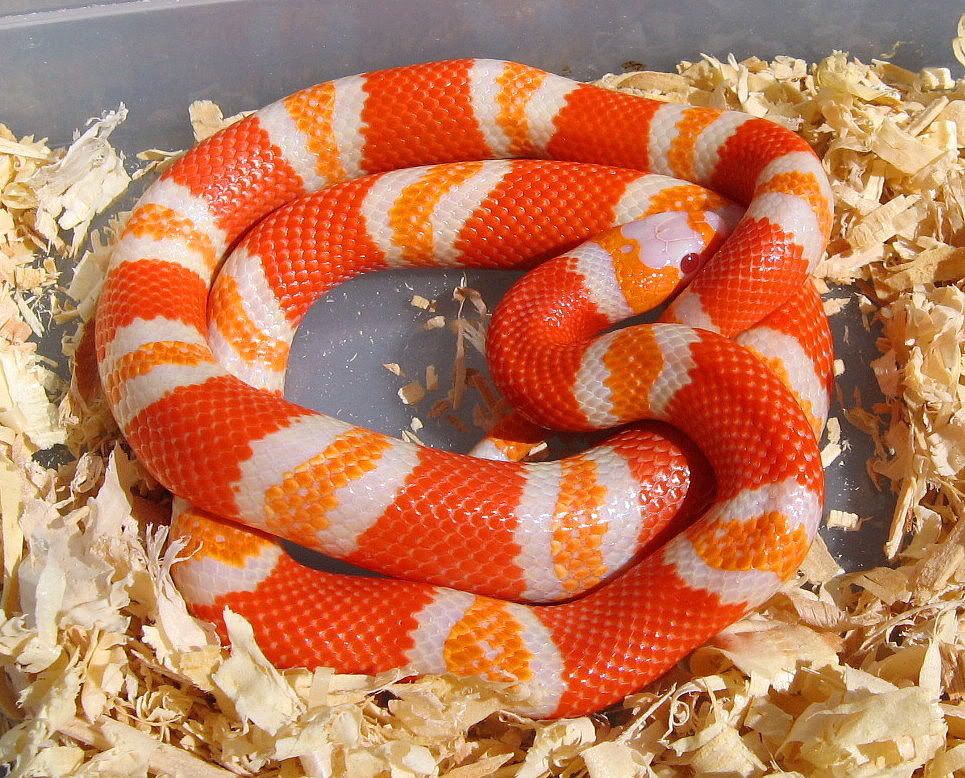
I too am fairly new to MILK snakes and learned a lot about them from the many great people on this site. From my experience, the hypo pueblans are beautiful animals

which lighten up with age. Wen they are young, as the one pictured, the do tend to be very flighty and must alot, I'd say I got this one down to about 50% of the times handled, but when we first got him it was about 100%.

As mentioned the Black milks do turn jet black as adults

and they are great "lap" animals. The pair I have are literally dog tame even though I do try to keep our golden retreiver away from them.

Both are great animals IMO.
-----
Joe

terryd Jan 28, 2008 09:52 PM

Joe,
That is a nice looking L.t.gaigeae. You need to show him off a little more.

-Dell

Joe_M Jan 28, 2008 11:20 PM

I'd rather show off some pictures of 20 lb peacock bass if you'd only take me, lol.
-----
Joe

terryd Jan 29, 2008 12:02 AM

Thanks Joe,
Not quite 20 pounds, but 18.
If you liked that here are a few more.

God, it was hot that day. Tarzan couldn't have taken the heat that day. Well, unless he saw a big Peacock to cast at.

Cherry county, NE.

Image

daneby Jan 29, 2008 12:20 AM

Dell,
Those are awesome, but what sounds even better are the boas I was just told about you finding while there. Any pics of them?

terryd Jan 29, 2008 10:33 AM

Dan,
I did find a number of Redtails and a nice big Rainbow boa. BUT, the Redtail photos came out horrible. And the Rainbow boa, a client had gone on a walk on one of our trails at the lodge just before dinner and just before dark. He comes back after 20 min. and tells me he saw a big snake that was orange and had circles all over it. I asked him at what point in the trail he saw it, and I went jogging off down the trail to the point he told me about. It was still there coiled up just off the side of the trail. I only had a few min. left of light, but I did get a good look at it.
It was as big around as my wrist and 4 to 5 feet long. I feel pretty lucky to have seen one.

-Dell

These are from two years ago. I had about a weeks worth of photos that came out blurry. Not sure why. Last year I never found boa, but I did have a better camera. Isn't that how it goes?


I've caught alot of these cats now and I don't remember, but I think we ate this one. Most of them we let go. One we put in the lodges fresh water pool. We had to drain the pool to catch it again. But we drain the pool every 4 days and put fresh water back into it, so no big deal.
Take care Dan, and take good care of that annulata, it's a gem.

Image

Freis Jan 28, 2008 11:06 PM

To be honest, prices of both snakes are very reasonable for me.

From the sounds of it I think I would like the demenor of the black milk snake more, however I would be sad to see his pretty colors go when he ages. (I know, that makes me sound really shallow. Hehe) Is there a breed that keeps it's colors, but has a personality similar to the black milksnake? Or am I asking for my cake and to eat it to.

Thanks so much for the help!

daneby Jan 29, 2008 12:14 AM

Mexican milks keep their bright colors, and are calm compared to alot of the others.

D.E.

nategodin Jan 29, 2008 06:11 PM

Hello,
The two species of milksnakes that are most similar to black milks in terms of size and personality, but stay as tricolors into adulthood, are L.t. stuarti (Stuart's/Costa Rican milks) and L.t. andenesia (Andean milks).

Nate

Freis Jan 28, 2008 11:10 PM

Oh yeah~

As for size of the snake, some thing as big as 6 feet would be reasonable for me to handle, but I'd have to say anything bigger would probably not be optimal.

Also~ What do you mean by "question of purity"?

antr1 Jan 29, 2008 08:52 AM

As far as purity- some people feel that the hypo gene was inroduced from the honduran milksnake. I AM NOT SAYING I AGREE OR DISAGREE.

Pueblan Milks in my experience remain a little jumpy as adults. Most Milksnakes can be jumpy and an adventure to handle as hatchlings, but grow out of that quickly. In my experience Sinaloans and Nelsons less so as babies, Hondurans more so as babies. All three are calm as adults. I have never kept Black milks so I have no insight to offer.

The Pueblans, Nelsons, Sinaloans, or Hypo Hondurans will keep their bright colors into adulthood. In about 20 years or snake keeping I have never been bit or defecated on by any of them that were a year or more old (maybe an over zealous feeder getting my hand not the mouse). Also all of them are reasonably priced. If you are concerned about handling them maybe consider a yearling, which should have out grown the "jumpiness".

-----
"The band is just fantastic, that is really what I think. Oh by the way, which ones pink?"

Freis Jan 29, 2008 09:23 AM

Thanks for the help! Now I certainly have a direction to research. I'll be sure to post any more questions I have. :D

I appreciate everyones help!!

JKruse Jan 29, 2008 02:48 PM

Since you are okay with the 6 ft size, but want something relatively colorful and calm in demeanor, why not check out an Andean milksnake? They develop alot of black tipping, but some can be brighter than others. I'd check with Nate Wells, Shannon Brown, Jeff Hardwick and Robert Seib (just a couple of chaps I can think of off the top o' my head) about some brighter specimens of L.t.andesiana. Just my two centas at this late juncture. Good luck...

Jerry Kruse

blupanther Jan 29, 2008 04:15 PM

If you like tricolors, I second Dan's suggestion of the mexican milk(annulata). They are calm, don't develop black tipping, and only get about 30in. long. You can have your cake and eat it too.
I am partial though, as I have two mexican milks. I think the pure black milks look awesome though too, and some would argue a bigger snake is more impressive. It's also hard to beat the vivid colors of a hypo honduran. If you want a crisp, bright tricolor who keeps his original colors as an adult, is calm, and stays on the smaller side, then a mexican milk is hard to beat. On the down side, they are also hard to find. You won't see 100 ads in the classifieds like you do with hondurans.

-----
-Jake

1.1 mexican milk
0.0.1 argentine black and white tegu
0.1 mexican double yellowheaded amazon parrot

antelope Jan 29, 2008 07:13 PM

The wild caught anulatta may have some black tipping as older adults.

-----
Todd Hughes

DMong Jan 29, 2008 08:44 PM

I remember many years when annulata were as common as rocks at Reptile shows, you JUST DON'T see them around in the numbers there once was,...exactly why this is, who knows. The trend in this hobby seems to fluctuate pretty drastically at times, and as history dictates, old things always seem to come back and be "fashionable again. I really like them for some of the reasons that you also mentioned.

best regards, ~Doug
-----
"Better to be silent and thought a fool, than to open mouth and remove any doubt!"
Site Tools