
Welcome to kingsnake.com's message board system. Here you may share and discuss information with others about your favorite reptile and amphibian related topics such as care and feeding, caging requirements, permits and licenses, and more. Launched in 1997, the kingsnake.com message board system is one of the oldest and largest systems on the internet.


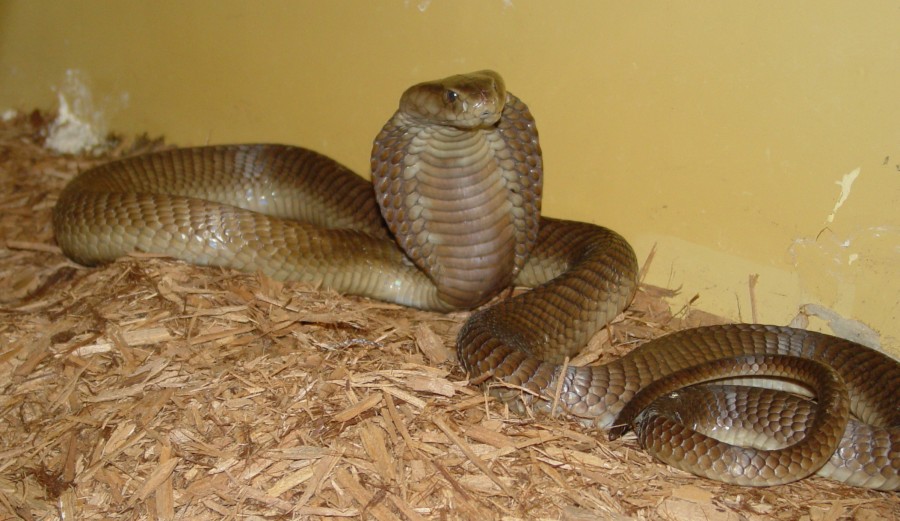
Nice specimen Bob. How big is it? If these are true ashei, I'm curious if they'll reach their famed sizes very quickly in captivity.
-----
Chance Duncan
www.rivervalleyexotics.com
Bobby has told me that he has to wear a raincoat while working these! LOL!
I suggested a Nasa Spacesuit!
Randal
Interesting
If these are from Tanzania, they are not probably not N.ashei, but rather an aberrant N.nigricollis
This was brought to my attention by Broadley.
Ashei, as it stand, only occurs in Kenya, and the brown spitters coming out of TZ are nigrocollis, confirmed with DNA
I saw the N.ashei that Theo Rosseveldt shot... freaking monster...
don
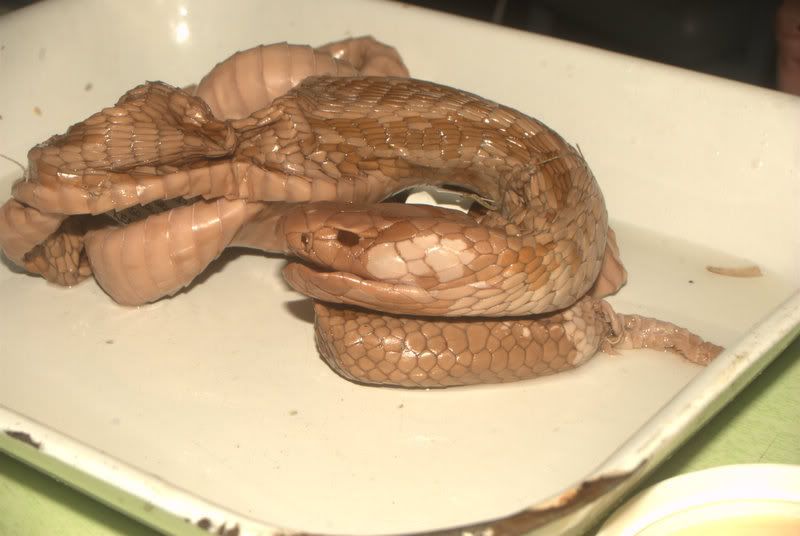
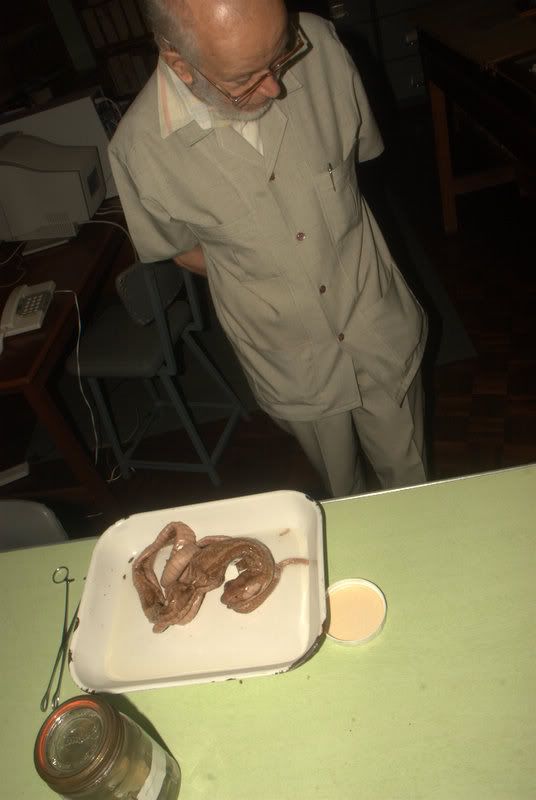
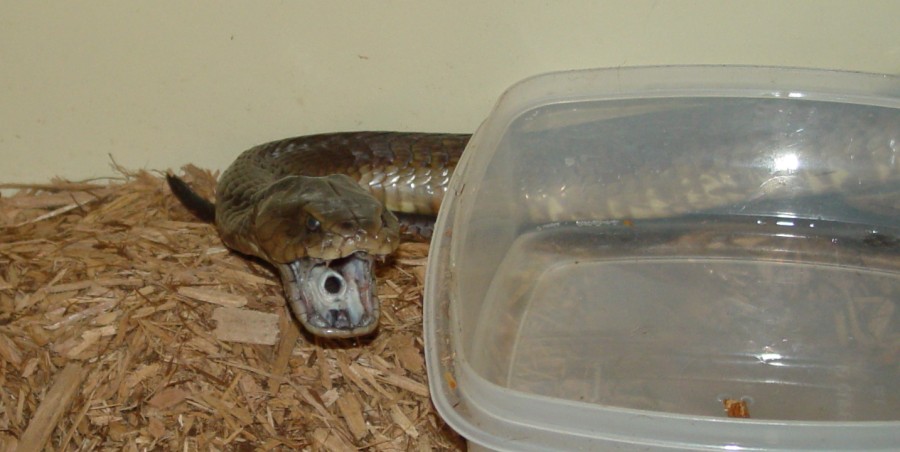
I'll try to get some more pics up sometime and do some more scale counts whenever they shed. However, these are notably behaviorally different than any other spitter that I've worked with. Also, the specimens I have have a reduced number of postocular scales which is often seen in Naja ashei. Whatever they are, they're great animals to work with and I'd like to find more photos and look at more variation in the spitters as a whole.
Something that I did not know, and now I do, is there is a subspecies of N.nigrocollis, call N.n.crawshawi
I dont know if this is in publication of if it is in a paper somewhere, but it is basically a nigrocollis that has a pale chin and occurs west into south west africa.
There is a lot happening with cobras.. Lots and lots. Boulengerina and Paranaja are no more, they have been swallowed into Naja.
Those nigrocollis that came in are stunners, as are all spitters.. thats why name is mfezi--- zulu for spitting cobra

Nigrocollis and I in Bagamoyo, Tanzania Dec 06
According to Broadley's paper, N. ashei, occur in Kenya, north into Southern Somalia and Southeastern Ethiopia.
They are more closely aligned with N. mossambica rather than N. nigricollis.
Average postocular scales is 2, as opposed to 3 on N nigricollis.
The "jury" is still out on this new "species" (my opinion)
Perhaps Donald or Wolfgang can weigh in here.
Randal Berry
dont think the jury is out.. .WW was able to find enough differences with out DNA to discern between nigricollis and ashei
and the correct spelling on that sub species in Naja nigricollis crawshayi
don
I disagree. I got this directly from Wuster/Broadley.
See http://www.mapress.com/zootaxa/2007f/zt01532p068.pdf
Randal Berry
I have read the paper, and I dont understand your point, are you deputing that ashei is a valid species?? sorry, I am feeling a bit lost
d
I guess I didn't explain myself, YES, I think it's a valid species and what I meant by the jury being out, I don't think we know the entire range yet. As you or someone mentioned earlier, that whole Naja complex is a mess, esp. the spitters. (not as messed up or confusing as say the Trimersurus complex!)
Agree?
Randal
A few comments on this:
1. The pics look like real N. ashei, not like brown aberrant N. nigricollis from Tanzania. Check the ventral coloration at midbody and further back - usually very dark in nigricollis.
2. Although N. ashei has not been recorded from Tanzania, it would not be too surprising to find it there, esp. along the northeastern border with Kenya.
3. Tanzanian brownish nigricollis don't really look like ashei, more like light-headed and necked nigricollis.
4. The status of crawshayi is open to question. We had a specimen from Zambia that (in terms of DNA) stood out from all other nigricollis, but brown-headed nigricollis from eastern Tanzania group with other black East African nigricollis.
5. However, to make things complicated, there are additional brown spitter populations (currently in nigricollis) from further West than ashei - western Uganda, SW Sudan, NE DRC. These normally have lower ventral scale counts than N. ashei - in the 180s rather than well over 190. A ventral scale count from a shed should clarify that. These guys were a major headache when it came to delimiting N. ashei...
Hope this helps.
Cheers,
WW
-----
WW Home
Thanks Wolfgang!
Randal Berry
Thanks WW... some mysteries cleared up
don
Help, tips & resources quick links
Manage your user and advertising accounts
Advertising and services purchase quick links
