Some things to consider:
1. Time To Adjust
A young, security-craving serpent may be reluctant to eat and need time.
2. Cage Size
Baby snakes fare best when kept in relatively small enclosures (e.g. a plastic shoebox).
3. Hide Box
A hide area is beneficial to a snake’s well-being.
4. Lighting
A baby corn snake is most likely to come out in the early evening or at night. For this reason, lighting its enclosure is not only unnecessary, but it may cause the animal stress.
5. Time of Feeding
Baby corns feed most readily in the evening.
6. Type of Food
Find out what the pet store or breeder was feeding the snake.
7. Handling and Other Disturbances
While few snakes are as tame as corns, their docile nature does not mean that they should be handled – at least not until they have adjusted to their new home.
8. Temperature
It is important to have a “hot spot” in the enclosure where the temperature reaches the mid-80’s.
9. Shed Cycle
Most snakes will not eat while going through a shed cycle. Sometimes it’s hard to tell when a snake is in a shed cycle – especially if it is at the beginning or end of the cycle.
10. Single Lifestyle
Corn snakes do best when housed separately.
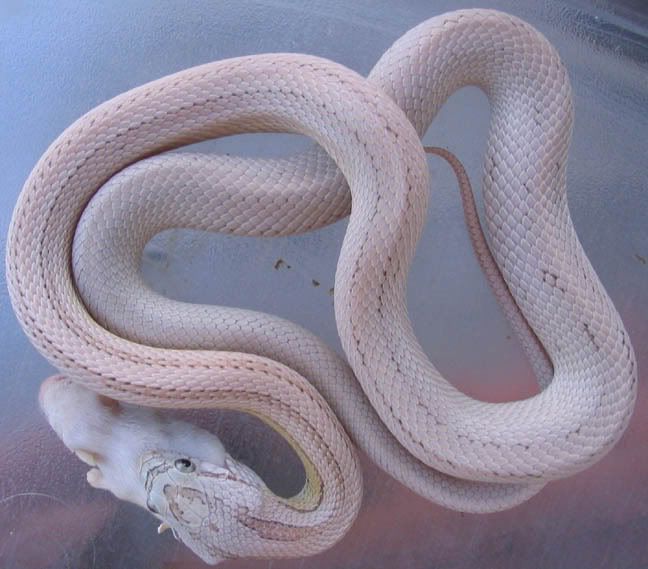
Third Eye


