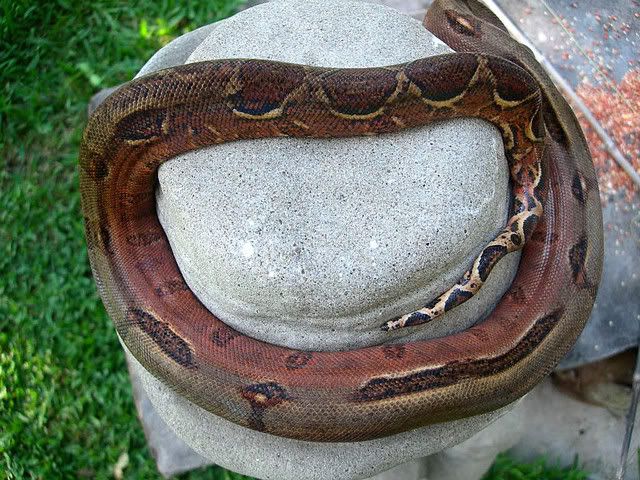
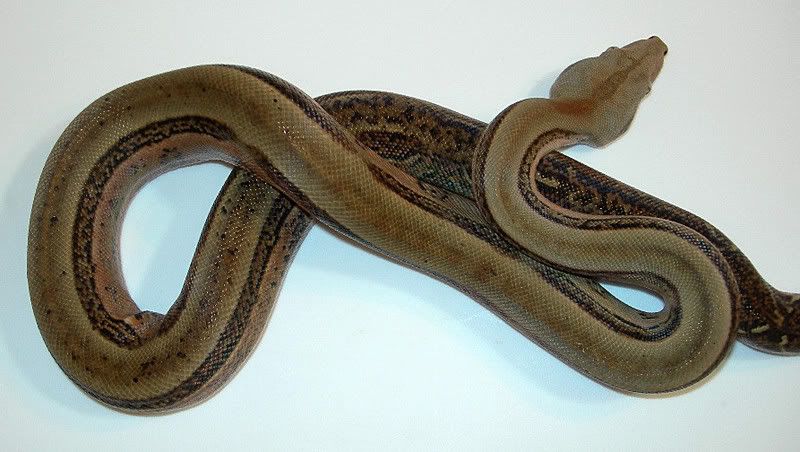
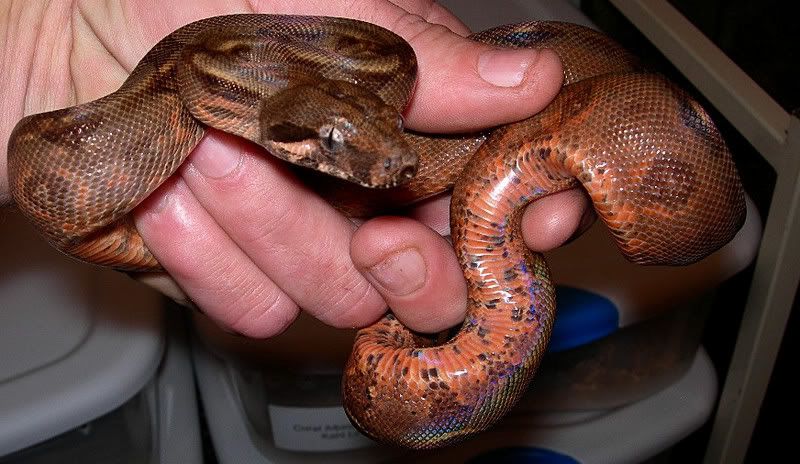
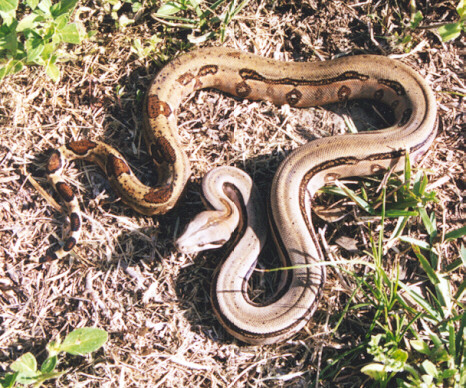
I believe you may have missed Jeff's point and actually reinforced it. EVERYTHING about how these animals look is genetic. The example of widows peaks falls under that category as well. Just because it is not narrowed down to a single gene does not mean it's not genetic, just that it's not driven by one single gene.
Jeff statement...
"Of course if we breed these two together successfully and they produce more babies like them, or maybe something even unexpected, that will prove it to be genetic. It will not, however, prove how it works genetically. To determine if what we see in these animals is simple recessive, dominant, co-dominant or polygenic will not be determined in one breeding. That will take additional breeding trials."
... IMO is 100% accurate. If more babies come out like the parents (siblings) then it is genetic, not a fluke or thermal driven anomolie. Does that mean it's a single gene morph - absolutely not, only further breeding trials would (might) work out the method of inheritance.
Of course if it is polygenic (multiple genes involved) it may never be worked out or even possible to recreate short of breeding two visuals together and getting some/all like the parents. The individual genes involved may not have a individual visual marker.
Andrews statement...
"In my opinion it takes multiple breeding's with many different animals over several years to prove if a color and/or pattern anomaly is genuinely genetic."
... is also correct but only applies to proving out a single gene morph (or multi gene with individual markers).
-----
Thanks,
Dave Colling

www.rainbows-r-us-reptiles.com
0.1 Wife (WC and still very fiesty)
0.2 kids (CBB, a big part of our selective breeding program)
LOL, to many snakes to list, last count:
26.49 BRB
20.21 BCI
And those are only the breeders 
lots.lots.lots feeder mice and rats