Reptile & Amphibian Forums

Welcome to kingsnake.com's message board system. Here you may share and discuss information with others about your favorite reptile and amphibian related topics such as care and feeding, caging requirements, permits and licenses, and more. Launched in 1997, the kingsnake.com message board system is one of the oldest and largest systems on the internet.

Click for 65% off Shipping with Reptiles 2 You

100, 150, or 250 watt heating bulb?

muuurph May 12, 2008 09:34 PM

i have a tank 30x12x18 and i need one side being 86 degrees and i knew a heating lamp would help, so being a mid size tank, what watt bulb should i get? im thinking the 150 i put my order in for 250 but im changing it...

also i heard about king snake tails rattleing at you? i wanted to hold mine for a few minute stonight but he kept slithering away and rattleing his tail bad at me...what should i do?

Replies (6)

colubridman May 12, 2008 10:33 PM

I would skip the light and go with a under the tank heater. They will often shy away from a light when they want to warm up and it's harder to get the temp you want on the ground below a light than it is with heat from below. If it were a arboreal snake it would be a different story but with a terrestrial (ground dweller) under the tank heat is the way to go. As far as your snake rattling it's tail just go ahead and pick it up and hold it. It will calm down with age and handling. Randy

DISCERN May 12, 2008 10:39 PM

1. Don't buy the heat lamp. Use a cheap heating pad or something similar.

2. Read all the replies in the thread below entitled "Zoomed heating pad reading 110 degrees " that you started.

3. He is rattling his tail because he is agitated, scared, etc.. Let him get used to his new surroundings. He is very scared and needs time to get used to you. Once he has time to settle, start holding him regularly, and he will get used to it.

4. Go with Randy's advice he just posted. He knows what he is talking about, and breeds some smoking snakes!!!
-----
Genesis 1:1

MikeRusso May 13, 2008 05:10 AM

I agree 100% - use an under tank heater (and remember you will need to use a dimmer to properly adjust the temp) and skip the bulb... Especially a 250w bulb!!! First, it would be way too hot, and second it would dry things out so much your snake will more than likely have shedding issues..

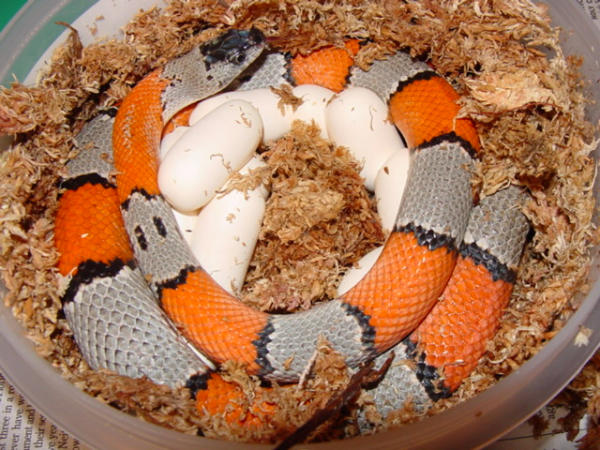
GREAT looking alterna (and clutch) by the way! good luck with your hatch!

~ Mike Russo

tspuckler May 13, 2008 10:00 AM

All those options feature watts that are way too high and will cook your snake. If I were using a light bulb, 60 watts would be the highest, but I'd test the temperatures with a thermometer. An under the tank heater is a far better option for a tank than a light bulb.

Tim
Third Eye
Third Eye

DMong May 13, 2008 10:21 AM

There's absolutely no need to be using up all that needless energy, wasted money, and have the place looking like a hydroponic marijuana "grow house"!...geeesh!

~Doug
-----
"Better to be silent and thought a fool, than to open mouth and remove any doubt!"

Tony D May 13, 2008 10:26 AM

Though I almost exclusively use under belly heat in my snake room I do like radiant heat either from a bulb or a heat panel. In my case space considerations just make underbelly more practical.

If you want to use a bulb the first rule is that there are no rules. There are just too many variables like size and dimensions of the cage, ambient room temperature and ventilation.

The second rule is get yourself a thermometer and do some experimenting BEFORE putting the snake in the tank. After awhile you'll get a feel for what works for your conditions.

As a general rule if using a bulb for heat I go for the red bulbs. Some say snakes can't see the red light. I don't know if this is true or not but mine seemed more relaxed when not subjected to blaring white light.

I would also suggest starting with the smallest wattage spotlight you can find. Place it on one side of the cage and start measuring what kind of gradients you are creating. Remember that you will have both vertical and horizontal gradients.

Another thing that I liked to do was to put something with some thermal mass directly below the lamp. By doing this the object can absorb heat when the light comes on and radiate it back into the cage when it goes off. Haven't really gauged the impact of this on the animals but the idea is to somewhat buffer the sudden spikes and drops as the lamp cycles on and off.


Site Tools