


Reptile & Amphibian Forums

Welcome to kingsnake.com's message board system. Here you may share and discuss information with others about your favorite reptile and amphibian related topics such as care and feeding, caging requirements, permits and licenses, and more. Launched in 1997, the kingsnake.com message board system is one of the oldest and largest systems on the internet.

Click here for Dragon Serpents
https://www.crepnw.com/
Click for 65% off Shipping with Reptiles 2 You

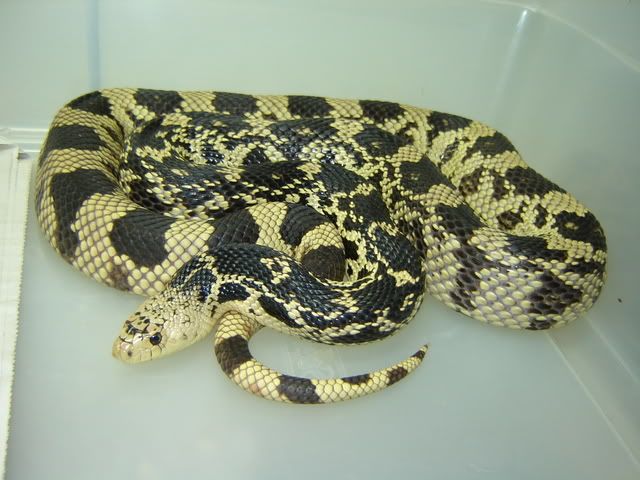
Comparitive photos - Ky N pine - La pine

Phil Peak Jul 07, 2008 11:26 PM


We have had a number of people note that they felt that the northern pine snakes from Kentucky were similar in many regards to Louisiana pines. I thought it would be interesting to post a few photo's for comparison purposes. The above snake is a CB female from Ky's Tennessee Valley population.
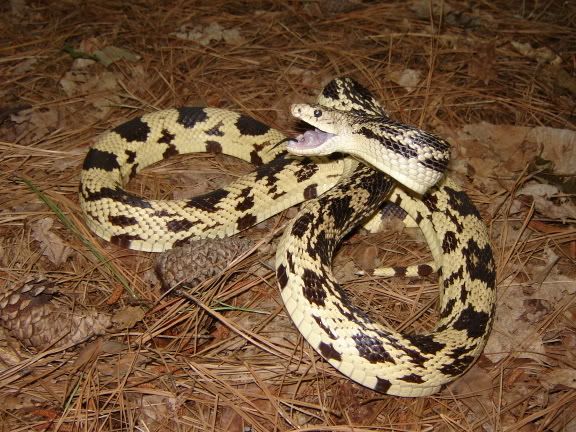
This is a photo of the above snakes mother from the field.
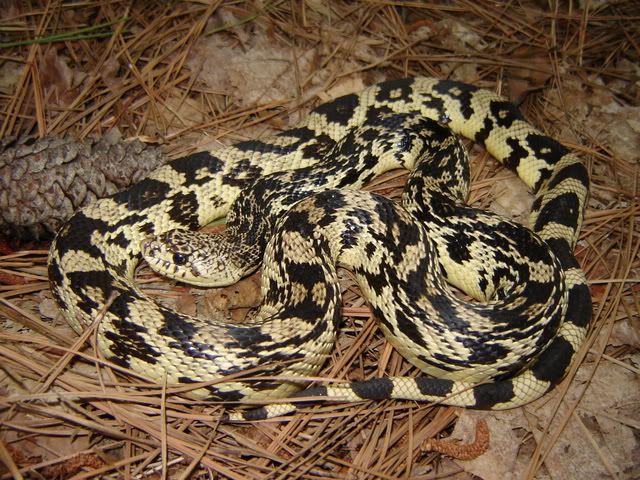
This is a field photo of a northern from Ky's Cave Region.
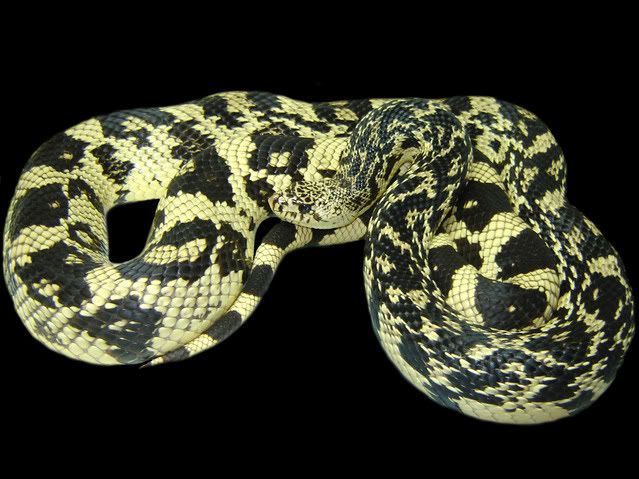
This is the same snake a year later with the background removed and a few more meals.
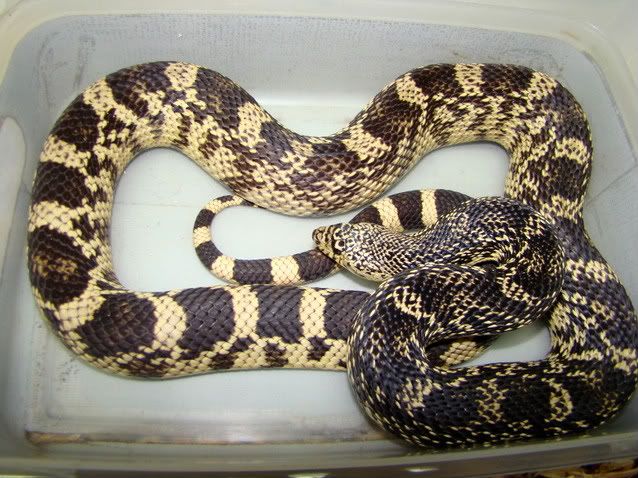
This is a Louisiana pine photographed in its hide. Not the best of photo's but it does show what the snake looks like.

I think that these are all some extraordinary animals and I have a great interest in the relationships within the snakes of the genus Pituophis.

Anyhow, thought some of you out there might find this interesting.

Phil

Replies (15)

BBBruno Jul 08, 2008 08:38 AM

Great photos Phil, and I must admit that the ruthveni pictured does bear a resemblance to the Northerns you posted. In my view however, that snake is the exception rather than the norm. I think the Kentucky animals you work with have more in common with Northerns I've seen and worked with from Alabama, Georgia, and certain locales in North Carolina. Many ruthveni that I've seen seem to have more in common with sayi in terms of appearance, and the "classic" ruthveni as described by Conant in his 1956 work strikes me as pretty much it own entity. My concern from the previous posts: it seems that any time someone posts a picture of a Northern that is any color other than white there is someone who suggests the possibility of intergradation or hybridization. Those of who have worked with and observed these animals for many years know differently; we know there are white phase Northerns in Kentucky and the yellow phase can and does occur in New Jersey. By far the most brilliant black and white animals I have EVER seen came not from the Jersey barrens, but from St. Clair County, Alabama. Like Kentucky, most Alabama animals tend to be the yellow phase, but some are indeed white; the same seems to be the case in Tennessee. White phase animals seem to be more prevalent in New Jersey and the Carolinas from what I've seen, but yellow aniimals do occur there as well. As far as the yellow= intergrade or hybrid mentality is concerned, we really should be past that by now, just my opinion of course.

Bart

Phil Peak Jul 08, 2008 09:05 AM

I agree with you Bart. I will admit that there are some similarities in coloration between ruthveni and some of the western populations of melanoleucus but there are other morphological characteristics that are quite different. In hand these differences are more readily apparent. It does make for some interesting discussion though since there are so many populations of eastern Pits that live as isolates.

Glad you enjoyed the photo's!

Phil

BBBruno Jul 10, 2008 09:14 AM

The words "in hand" is key here. It's important to examine a number of animals before making broad assessments, not to mention doing counts. The impression I have is that people who like to cry intergrade or hybrid know little of the Northern Pine and have seen very few specimens other than those available in the trade. Conant clearly spelled out the color phases of this animal that one might encounter in his field guide(by the way, has anyone ever seen the grey phase of the Northern Pine? I have, pretty snakes!). I truly believe that we know less of the Northern Pine than any other member of this genus, which makes them so fascinating to observe and study. For what it may be worth, I've performed scale counts on a number of specimens of different color phases and have found the counts to be consistant among Pines from New Jersey, Alabama, and Kentucky, with mid-body counts running higher in Carolina specimens. You and I have spent a number of years attempting to learn as much as possible about Northern Pines, Phil; here's hoping that many more will look beyond color phases and join us in our fascination of this spectacular animal!

Bart

DISCERN Jul 10, 2008 12:24 PM

Bart,

I wish I had your experience in the field with northerns, as they are my favorite snake of all time. Please share your knowledge on this forum when you can!!!

Image
-----
Genesis 1:1

Phil Peak Jul 10, 2008 06:49 PM

I'm with you Bart! I can't think of a more fascinatating pursuit my self. These snakes are as mysterious as they are magnificent. At this point we have investigated the majority of historical records for pine snakes in our state and this process has lead to adventure in and of itself. We have made friends with locals, been shot at by others, endured 1000's of tick bites, sunburns and the countless thorns of green briar and black berry. Through it all I can't think of anything that I would rather do than spend my off days trying to learn more about these snakes! In the end the snakes are what really matter and I feel absolutely honored to have been in their presense in the field. To even be in the habitat where these snakes live is something to be grateful for. I work my 10 hour shift at the power plant each day looking forward to Sunday's so I can go out and have a chance of seeing one of these snakes.I feel truly blessed!

Phil

DISCERN Jul 08, 2008 04:06 PM

Excellent post Bart!! I really like your thoughts on that subject!
-----
Genesis 1:1

Patton Jul 09, 2008 08:10 AM

It's not a very good photo of the Pine Snake,
but you can see it's color. It was definitely yellow.
This was a Pine seen in the Sandhills of Nc.
-Phil


-----
Work is the curse
of the drinking class!

Jeremy Pierce Jul 08, 2008 03:11 PM

I know I say it everytime Phil, but I'll say it again. Those Kentucky's are just lights out gorgeous. Thanks for the post.
-----
Jeremy Pierce
Shade Tree Exotics
shade-tree-exotics@att.net

Phil Peak Jul 08, 2008 06:12 PM

Thanks Jeremy! Glad you enjoyed the photo's.

Phil

DISCERN Jul 08, 2008 04:05 PM

Phil, will ya just stop posting pics!! I can't take it!!!
-----
Genesis 1:1

Phil Peak Jul 08, 2008 06:13 PM

Sorry about that Billy lol!

Phil

bakeaway Jul 09, 2008 10:56 AM

great,,,I just got back from my hometown in Kentucky...if I had known any of these guys were around I would have brought my hook and bag,,,,great looking snakes....

-----
Ball Python
Jungle Carpet Python
Eastern King
Mexican Black King
Sonoran Gopher
Aberrent Cal King
Anduran Milk
Hypo Brooks
Amel Motley Corn
White Sided Bull
Striped Pacific Gopher

I love the smell of aspen shavings in the morning...lol

"To serve man..it's...it's a cookbook!"

Phil Peak Jul 09, 2008 05:17 PM

Thanks! They are some fine looking Pits. If you want to find one of these though you better plan on moving back to your home town in Ky and spending 20 hours a week in the field as well as all of your vacation time for the next several years and then hope to get lucky. These are not easy snakes to find.

Phil

kfisher29 Jul 10, 2008 07:27 AM

The resemblance is definetely there between the two species in my opinion. If I visit my aunt in Kentucky I'll have to flip a few of those bad boys,lol. Just kidding,but I'll sure look! Kevin

Phil Peak Jul 10, 2008 06:32 PM

Hey, it never hurts having a look around! My guess is most of these snakes are found by hunters/ farmers that just happen to walk up on one in the course of their daily business.

Now if we could only be so fortunate!

Phil

Site Tools
