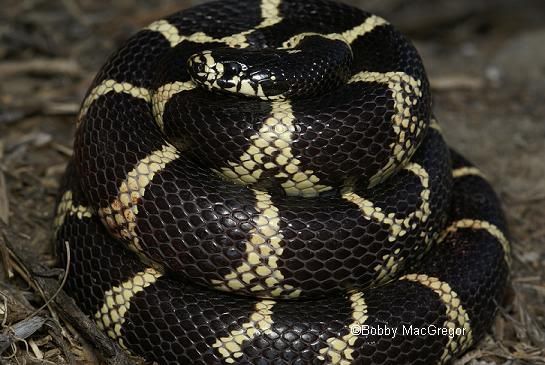
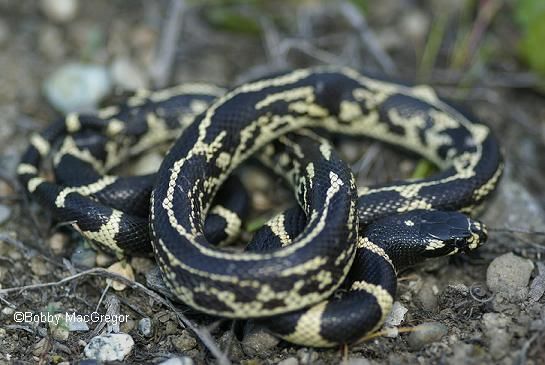
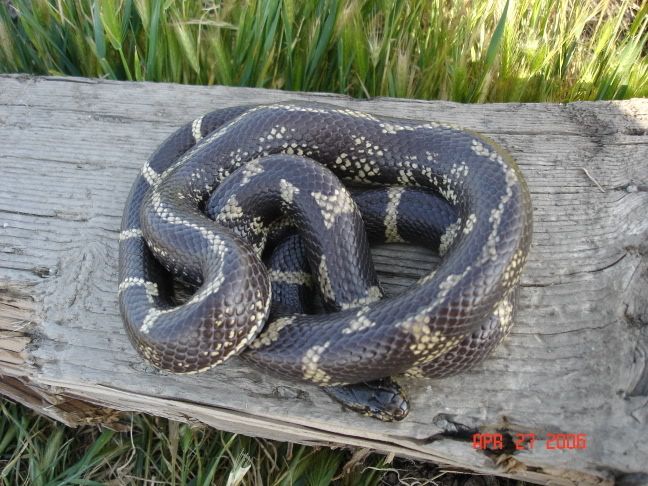
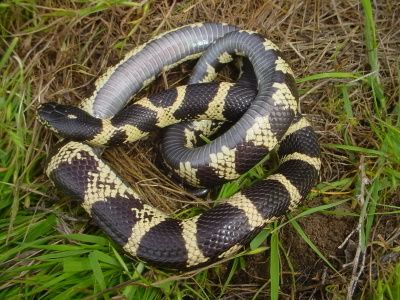
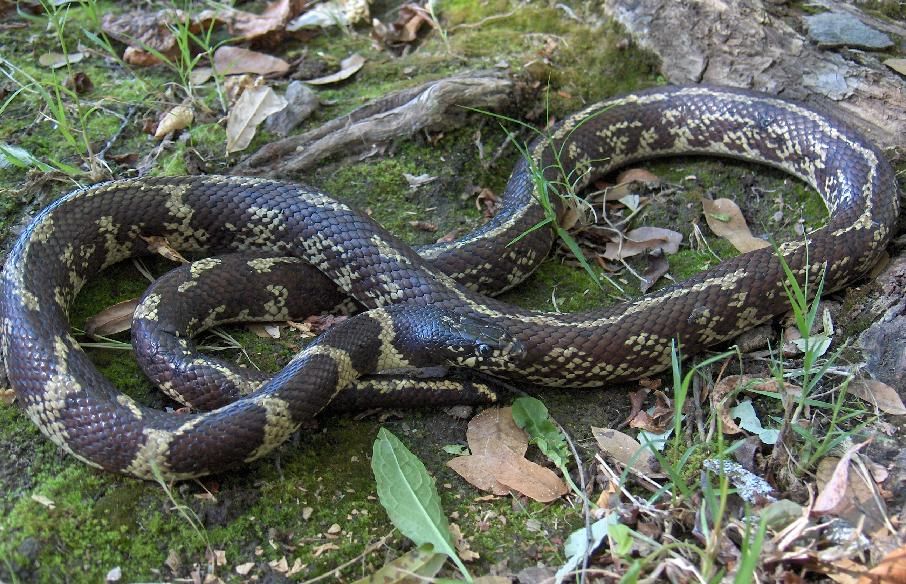
Here are pics of wild caught animals I have found or friends or mine have found.





Reptile & Amphibian Forums
Welcome to kingsnake.com's message board system. Here you may share and discuss information with others about your favorite reptile and amphibian related topics such as care and feeding, caging requirements, permits and licenses, and more. Launched in 1997, the kingsnake.com message board system is one of the oldest and largest systems on the internet.



Speaking of Black Bellies!!!
bmac
Aug 16, 2008 12:57 AM
Replies (11)
CKing
Aug 16, 2008 01:47 PM
>>Here are pics of wild caught animals I have found or friends or mine have found.
Lucky you. The only two black bellied morphs I have ever found were DOR. 
tricolorbrian
Aug 17, 2008 11:45 PM
That's because you don't know how to flip for them, or when to flip for them, or where to flip for them, C King. lol
CKing
Aug 18, 2008 12:36 AM
>>That's because you don't know how to flip for them, or when to flip for them, or where to flip for them, C King. lol>>
Where I found my DOR black bellies, there is nothing to flip. I found lots of kingsnakes at that locality but no live black bellies. I think the percentage of black bellies in a population is something like 20:1, i.e. for every twenty banded snake there may be one black belly.
CKing
Aug 18, 2008 01:52 AM
The 20:1 ratio only applies to localities where black bellied morph kingsnakes are known to occur. In a vast majority of the localities over its entire range, there is no black bellied morph kingsnakes to be found.
bmac
Aug 18, 2008 02:43 PM
How interesting… Obviously you or are not going to post publicly where we are finding BB, but I can tell you I am finding them in an area extending about half of their know rang. In your area it must be way different. In the areas where I find BB kings the ratio is around 1 in 3 snakes will be a BB, far greater than your 1 in 20. I can only assume you are finding them north of where I am finding them.
Thanks!!
Bobby MacGregor
davidtobler
Aug 19, 2008 08:29 PM
No...it's more like 1 in 20...
Shhhhhh....
CKing
Aug 20, 2008 02:32 PM
>>How interesting… Obviously you or are not going to post publicly where we are finding BB, but I can tell you I am finding them in an area extending about half of their know rang. In your area it must be way different. In the areas where I find BB kings the ratio is around 1 in 3 snakes will be a BB, far greater than your 1 in 20. I can only assume you are finding them north of where I am finding them.
>>Thanks!!
>>Bobby MacGregor
It really depends perhaps on how large an area one chooses to sample. The 1:20 ratio is not exact. I got this from memory (which is of course treacherous) of what I had read in an early edition of Stebbins' field guide. The most recent editions of the field guide fail to mention the black belly morph. So perhaps we "experienced" herpers are the only ones who even know that such a morph exists. 
Perhaps the black belly morph is more prevalent in one area vs. another within its known range. As a collector, there is perhaps a conscious and sometimes subconscious tendency to keep going back to the same spot over and over again if one had luck there before. So, we may be skewing the statistics a bit if we go to spots where black bellies are most common.
The ratio of black belly morphs to normal banded is also more than 1:20 in my locality but it does not come close to being 1:3.
davidtobler
Aug 20, 2008 09:35 PM
"Perhaps the black belly morph is more prevalent in one area vs. another within its known range. As a collector, there is perhaps a conscious and sometimes subconscious tendency to keep going back to the same spot over and over again if one had luck there before. So, we may be skewing the statistics a bit if we go to spots where black bellies are most common.
The ratio of black belly morphs to normal banded is also more than 1:20 in my locality but it does not come close to being 1:3."
I certainly know that Bobby didn't mean that black-bellies are 1:3 ratio over their entire range. He, I and others who frequently find them, know that to be false.
There's two things one could argue about your 1:20 ratio. One being the most obvious answer, is that you live in and around the northern more populations. The ratio of normal to aberrant kings jumps dramatically in the favor of normal banded kings.
Another could be that you're simply not looking for them during the right time of year.
I can attest to the fact that in certain parts of the black-bellied king range, in prime, untouched habitat the ratio is more like 1:3.
Stebbin does mention these and other aberrant forms...
"Intermediate forms between (banded) and (striped) are variously striped or crossbanded. In occasional individuals in cen. and s. coastal Calif., light crossbands do not extend to belly but stop on 1st scale row, leaving belly uniformly black. Sometimes a complete or partial middorsal stripe is present. This phase has been found in cen. Calif. at Gadwall, Firebaugh, Mendota, Los Banos, Friant, and Clovis and reported in s. Calif. at Palos Verdes." - Stebbins 3rd Edition
CKing
Aug 23, 2008 10:06 AM
>>I certainly know that Bobby didn't mean that black-bellies are 1:3 ratio over their entire range. He, I and others who frequently find them, know that to be false. There's two things one could argue about your 1:20 ratio.>>
To clarify, I don't have data to support a 1:20 ratio nor do I think it is necessarily the correct figure. Consider it a ball park figure I got from the literature.
>> One being the most obvious answer, is that you live in and around the northern more populations. The ratio of normal to aberrant kings jumps dramatically in the favor of normal banded kings. >>
In the second and third editions of Stebbins' field guide, there is no record of black-bellied morph found in the vicinity of where I did find mine. It is certainly possible that what I find is a local mutation or else it was a river waif.
>>Another could be that you're simply not looking for them during the right time of year.>>
If found one in May and another one in July. Are these the right times to look?
>>I can attest to the fact that in certain parts of the black-bellied king range, in prime, untouched habitat the ratio is more like 1:3. >>
That certainly is possible in some select localities.
>>Stebbin does mention these and other aberrant forms...
>>
>>
>> "Intermediate forms between (banded) and (striped) are variously striped or crossbanded. In occasional individuals in cen. and s. coastal Calif., light crossbands do not extend to belly but stop on 1st scale row, leaving belly uniformly black. Sometimes a complete or partial middorsal stripe is present. This phase has been found in cen. Calif. at Gadwall, Firebaugh, Mendota, Los Banos, Friant, and Clovis and reported in s. Calif. at Palos Verdes." - Stebbins 3rd Edition
In the first edition, he discussed the black bellied morph in greater detail. In the third edition, he treats it as an "intermediate" between the striped and banded morphs. I know there are also reports of the "black bellied morph" from Davis and vicinity, but these are very different in appearance from the black bellied morphs found in the Los Banos area and vicinity.
davidtobler
Aug 25, 2008 01:35 PM
"If found one in May and another one in July. Are these the right times to look? "
If you like road cruising....
reako45
Aug 18, 2008 10:07 PM
Those are awesome. Really beautiful snakes. Few things equal WC Cal Kings in my mind, and aberrants are an added bonus.
reako45
