Even if DNA was tested on some animals to try to distinguish individuals from other Latin subspecies, you would STILL need many prime examples of these snakes to begin with, as well as many, many subjects.
To begin this grand task, you would have to start out with individuals within their known range that had "ideal" meristical characteristics first to begin with, or you would just be testing a generic milksnake that could have come from anywhere, or have any amount of other genetic influence(s). This would have to be done with MANY snakes from MANY different ranges.
These differences from many ranges with many different specimens are things Kenneth Williams already did. He also explains variation, and goes on in great detail describing suspected intergrades, and with WHAT subspecies of snakes, as well as WHY they are believed to be intergrades with what subspecies.
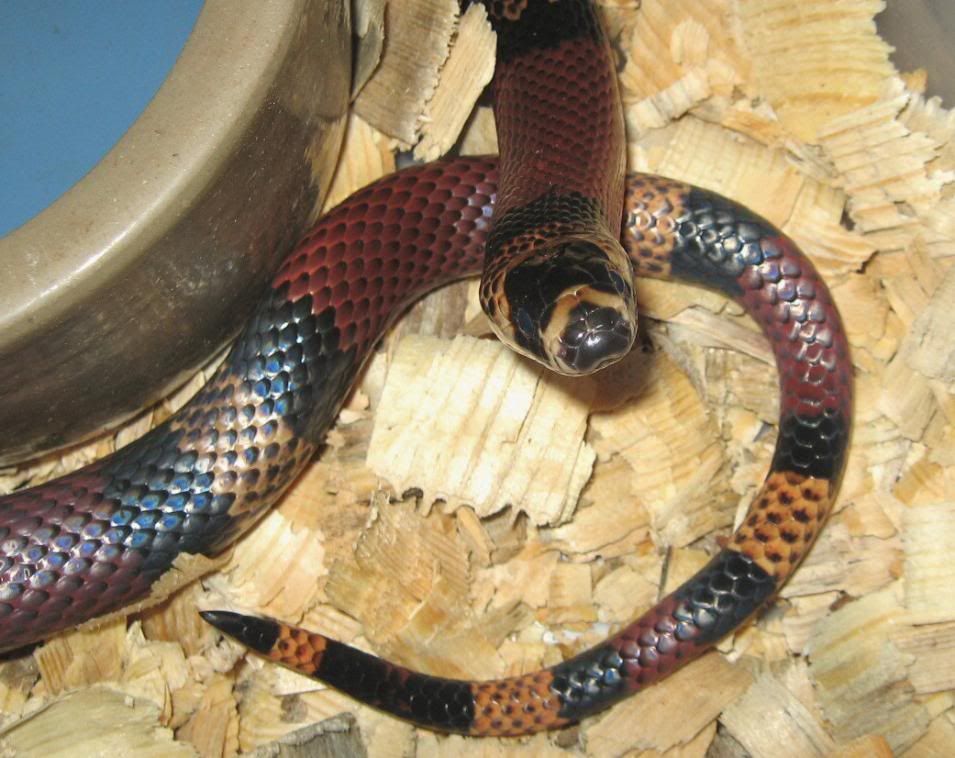
The main problem in the hobby is that not many people at all know what excellent examples of many of these different subspecies even look like, so when they have been mixed at different points over the course of many years by coutless people that couldn't tell a Sinaloan from an Andean Milksnake, it then becomes impossible to nail down with any certainty at all. For example, a tropical milksnake with 31 RBR(red body rings) that has extensive, heavily tipped scales and has a very broad, strait across snout band, that has heavily encroaching outer black rings(cross-overs) is NOT a hondurensis. Of course with all the morphs, much of this about the scale "tipping" wouldn't apply due to so many having greatly reduced, or no melanin at all.
One thing is certain,...all snakes with three colors and triads are not the same, nor are they all hondurensis. And when they're constantly mixed, they will tend to look somewhat similar as a whole, although some will certainly contain more or less of a percentage of any of these, and some will certainly look more "textbook" than others too and have extremely variable RBR counts, and any number of looks to their snout bands,.....does this make them ALL honurensis?......certainly it does not.
Please don't get me wrong, I love these snakes a great deal. and have owned and bred many of them, but for me to say they are absolutely 100% hondurensis would be a very far stretch knowing what I know about them.
best regards, ~Doug
-----
"Better to be silent and thought a fool, than to open mouth and remove any doubt!"




 !
!


