Reptile & Amphibian Forums

Welcome to kingsnake.com's message board system. Here you may share and discuss information with others about your favorite reptile and amphibian related topics such as care and feeding, caging requirements, permits and licenses, and more. Launched in 1997, the kingsnake.com message board system is one of the oldest and largest systems on the internet.

Click for 65% off Shipping with Reptiles 2 You

Help with Bitis nasicornis

basinboa Oct 27, 2008 07:22 AM

Hi everyone,

I never post here, as I keep amazon basin emerald tree boas, but Im also a big fan of hot snakes. Latelly Im wondering about getting a Rhinoceros Viper. There are some questions I´d like to know:

-How big do they actually get??

-Is there any significant adult size difference between males and females??

- I have seen some amazingly colored babies from Uganda, but I wonder if they maintain that color for all their lifes.

- Is there any difficulty in keeping them healthy??

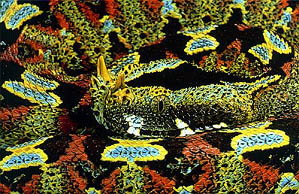
- Can someone post a picture or link to what could be called an average colored ugandan adult?

Thanks a lot!

PS: Here´s one of my snakes:

Replies (20)

azatrox Oct 27, 2008 02:48 PM

Yes, these are amazing animals. I will caution that if you don't have experience with venomous, Bitis is NOT the genus to break in with. These animals may appear sluggish and lazy, but they are LIGHTNING quick and inject ALOT of venom....

My advice would be to get experience with less lethal species first....

-Kris

Carmichael Oct 28, 2008 09:37 AM

First, that's a beautiful ETB....one of my favorites of the boids (particularly the amazon basins...we just acquired a beautiful adult female and now looking for a mate). Those who keep arboreal boas tend to be good candidates for keeping hots because these are, for the most part, look but don't handle animials. If you can get an ETB or GTP off a branch w/out stress to the animal, or, getting bit, that takes a certain degree of skill. But, I do agree with Kris in that this genus isn't the best first venomous experience. With that being said, here's a few helpful hint in keeping rhino vipers:

1) STRESS Management: these are high stress animals and must be kept in a quiet, secluded setting/area.

2) Set Up: I'm a big fan of naturalistic or semi naturalistic set ups for both the physiological and psychological needs of the snake....particularly rhinos. Sure, they can be kept on newspaper with a water bowl but that sure takes away from the experience in observing them. We keep our's in 5' x 3' exhibits with a layer of top soil, a tiny bit of sand, forest leaf litter, and a few other things along with a deep layer of leaves, potted live plants and several large logs to allow the snakes to hunker next to. We keep the lighting subdued with just a full spectrum fluorescent. Heat is provided by a pro product radiant heat panel attached to a Spyder Robotics thermostat so that the cool end is 70-72 deg F during the day and the warmer end is approximately 85 deg F in a small area....you have to guard againsts too much heat! Night temps drop to 70-78 deg F...thermal gradient.

We also provide a large, shallow water bowl. We've never had to soak our rhinos - that's a big misnomer in Bitis care (gaboons and rhinos). No need to do that if you maintain proper hydration and humidity levels. We hand mist our exhibits rather than using misting systems. This keeps the animals used to daily human interaction but we do it in a manner that is 1005 safe. Our adults have maintained their nice coloration.

Hope that helps.

Rob Carmichael, Curator
The Wildlife Discovery Center

>>Yes, these are amazing animals. I will caution that if you don't have experience with venomous, Bitis is NOT the genus to break in with. These animals may appear sluggish and lazy, but they are LIGHTNING quick and inject ALOT of venom....
>>
>>My advice would be to get experience with less lethal species first....
>>
>>-Kris
-----
Rob Carmichael, Curator
The Wildlife Discovery Center at Elawa Farm
Lake Forest, IL

DanW Oct 29, 2008 05:25 AM

That sounds like a fantastic setup. How do you clean the setup? Do you ever dismantle the cage and give it a cleaning top to bottom or is this necessary? What and how often do you feed the adult rhinos?

Thanks,
Dan

Carmichael Oct 30, 2008 09:18 PM

Cleaning is very easy. With this type of substrate, the microbes in the soil breaks everything down if I aerate the soil on a regular basis. I only do complete cleanings/breakdowns once a year at most. We spot clean with long scoops as needed and clean/disinfect water bowls regularly. Our rhino feeds on small to medium sized rats and gets fed every 3-4 weeks.

>>That sounds like a fantastic setup. How do you clean the setup? Do you ever dismantle the cage and give it a cleaning top to bottom or is this necessary? What and how often do you feed the adult rhinos?
>>
>>Thanks,
>>Dan
-----
Rob Carmichael, Curator
The Wildlife Discovery Center at Elawa Farm
Lake Forest, IL

kachunga Oct 28, 2008 09:36 AM

Rhinos are relatively small, 2' to 4' and females are larger than males. I have kept them on two separate occasions. They were wild caught specimens and were very temperamental. I think the biggest problem I had with them was keeping the humidity right.
The ones I have had and seen in other collections maintained their color into adulthood.
I would categorize it as a medium level snake. Not a entry level snake. Envenomations are rare but a man in Ohio died 5 years ago from a reaction.

RCampbell Oct 28, 2008 03:35 PM

Bitis as a group are not entry level hots, period.
The man who died in Ohio had a name, it was Micheal Peterman and he was an experienced snake keeper and hot keeper. The death was not a result from a "reaction" but due to intravenous envenomation. I am glad he was brought up becuase it illustrates the issue with Bitis perfectly.

These snakes are heavy bodied and that leads to thoughts of them being slow, and it leads to complacency with keepers...he reached in putting a water bowl back with his hand...a mistake made by many people who have kept these animals. All too often it is assumed that if their head is at the other end it is "safe"...these people eventually experience the "levitating gaboon" trick and realize the insane speed and mobility of these heavy bodied, powerfully built, highly venoums long fanged machines.

Beautiful, cheaply available and better left to experienced keepers.

-Riley

bthacker Oct 28, 2008 05:02 PM

I see posts all the time stating some animals aren't a good choice for entry level keeping not due to their environment requirments but due to their temperment.

I understand this to some degree but I think keeping hots is quite simple. Do folks make it seem harder than it really is? Isn't it about keeping them in a secure enclosure, keeping them in a locked room without access to other people and most importantly keeping their mouth away from your body parts?

I seriously don't understand how people get bit by venomous indoors. I have seen quite alot of folks being bitten lately and one death recently.

I believe it's quite simple.......common sense, no complacency/laziness and treat your animal like a loaded gun pointed at your face or a nuclear bomb. Using the proper tools and never allowing the animal near any body part.....quite simple, huh?

As for the gentleman that passed in Ohio, that is sad but when you say "experienced".... how does that do you any good if you make a careless and fateful mistake??

I know this is a simple post and there are many scenarios including folks that work with alot of venomous snakes, i.e. venom research or handling them for entertainment(which I don't really approve), etc.......but......

I don't see the harm in keeping a nasicornis as a starter animal especially if the keeper is experienced with basins. This is like saying what's a good starter gun??? There isn't one even a BB gun can kill! If you can handle the husbandry....then why not start with something you want to keep?

I would suggest buying B.W. Smith's book Venomous Snakes in Captivity Safety and Husbandry, buying some tools and if possible train with someone for sometime and think about all the risks involved.

I have only been keeping venomous for about 4 years and have kept quite alot of different types of species of animals including Cribos, Boas, Pythons and various other colubrids/boids, lizards, etc. I am by no means an expert and have only kept Crotalus and horridum but I have no problem saying I will never be bit by one of my venomous animals that I personally keep......unless my wife ties me up and throws one on my lap.

basinboa Oct 28, 2008 05:29 PM

Thanks for all the replies!

There are somethings I forgot to say.

I have kept reptiles for around 15 years now. Im also a veterinarian (I graduated in 2005, but Im not working in this area, but I do keep my snakes). I have kept quite a few lizard and snake species.

For the last 6-7 years I decided taking it more seriously and started to specialize in Emerald Tree Boas. I prefer many animals (I have like 25 ETBs or so), but only 2 or 3 species (I also have 3 rainbow boas, 1 amazon tree boa), and keep them healthy and breed them, rather than a large collection with 1 or 2 snakes of each species.

I have had some experience with venomous, in internships at zoos and institutions. And I have also kept myself for a very short time, some Bothrops species (alternatus, jararaca, jararacussu) and Crotalus durissus terrificus. I do have some experience with them, I know more or less how the routine has to be done. But Im not even close to what could be called "experienced" venomous keeper.

I always liked Bitis, and if I get this Rhino it will be the only venomous snake in my collection. I dont plan to breed or anything like that. I just want to have a snake that I find very interesting and beautiful.
For that reason I also plan to make a very nice naturalistic terrarium, really one of those that look like a piece of jungle. My other snakes are kept in very simple cages, as it is easier to deal with, keep clean, etc. Would be very hard to keep a breeding colony in naturalistic cages, but would be very nice anyways.

Because of my experience with ETBs, I dont think it will be an issue to be used with a non handeable snake. And it will also not be a problem to keep the high humidity and that kind of thing.

I would appreciate if someone could post a pic or link to an adult nasicornis. Most of the ones I see around (also in kingsnake´s pic gallery) get very dull. I dont know if this is genetics, locality, age... I wanted to have an adult with those beautiful red lines, blues, yellows.. As I see in many baby pictures..

Thanks

lepidus Oct 29, 2008 09:04 AM

Matt Crews from Victory Reptiles has outstanding rhinos. Great cutomer service as well.

basinboa Oct 28, 2008 06:16 PM

Sorry guys..

I really have to post some pictures of what Im talking about.

A nice one:

http://en.wikipedia.org/wiki/Image:Bitis-nasicornis-1.jpg


http://gallery.pethobbyist.com/data/80983NASICORNIS_06ks-med.jpg


http://digilander.libero.it/peribsen/snakes/tn_RhinoViper-Juv2.jpg

"regular" Rhino Vipers:


http://gallery.pethobbyist.com/data/144247DSCN1121-med.JPG


http://www.drpez.org/albums/albuw26/aaa.jpg

That´s what Im talking about... I want to one that keeps that bright color.
Is it normal or are those just juveniles??

Mysticalan Oct 29, 2008 04:23 AM

Hi There,
Pictures 2 and 3 are Eastern/ Ugandan nasicornis, all the others are western specimins.
The first is particuarly bright as it is a youngster and it may loose colour as it ages.
Easterns hold their colour into adulthood if the husbandry is correct , westerns can hold their colour but most will dull with age. I have had Westerns that have maintained colour, I feel Husbandry has quite a bit to do with this and i'm studying nasicornis to find out more.

As has already been said here , the correct environment is essential for keeping nasicornis alive. If you have your set-up spot on they're relatively simple to keep, but one missing ingredient and you'll loose your snake.
Bare in mind that nasicornis ,like gabonica can take months or a few years to show that things aren't right. Many people keep nasicornis for a few years assuming all is well only to find that it has rolled one morning for no apparent reason.
I personaly feel that nasicornis is not a display animal, it should be kept with the minimum of interaction away from heavy traffic areas. Even getting the snake out for a photo session can upset them greatly and it may take a while for the snake to resettle.
The diet should be watched as many keepers overfeed large bitis. Juveniles will feed weekly on small undersized prey ,but once they pass the 2-3 foot length they should be fed alot less.

All the best,
Al

Mysticalan Oct 29, 2008 04:47 AM

Forgot to mention, pic 2 looks like it comes from the Ituri Forest

Cheers,
Al

basinboa Oct 29, 2008 07:35 AM

Thanks for the reply, but what do you mean??

What would make them keep their strinking color more efficiently??

UVB??

I thought about using it, and since they inhabit dense forest soil, I was thinking about a 2.0 or 5.0 maximum.

Mysticalan Oct 29, 2008 12:29 PM

Hi There,
It's not proven yet, i'm still working with my animals. At present I have 4.5 nasicornis kept under varying conditions. To some small degree colour may be representative of health. Or it may just be inborn that some specimins from the west maintain colour while others do not.
I've used UV without any results.

Do keep us informed and let us know if you do buy nasicornis

All the best,
Al

basinboa Oct 29, 2008 08:14 PM

Thanks Al,

The thing is.. Im in South America, and those arent exactly "legal"..

I know someone who can bring from up there.. Im gonna trade it for some stuff I have here. It might take like 2 months to happen..

But Im surelly posting here as soon as I have it!

Mysticalan Oct 30, 2008 04:35 AM

You're welcome :¬) I hope you mange to find one. You probably already know this but, avoid WC adults , they're loaded with parasites , often has digestive diseases and even if they survive they make very very delicate captives. Go for cb or wf babies .
Here's an example of what I mean by colouration .
out of 9 babies 7 look identical in colouration to the snake on the left. Two that are kept differently look like the one on the right. Remember, these are all siblings and surely it cannot be coincidence that the two kept differently have different colouration.
I have my thoughts as to why but cannot be sure just yet. Not anything to do with the substrate by the way , the one on the left was put into a tub containing that substrate for the photo

All the best,
Al

basinboa Oct 30, 2008 06:07 AM

Thanks Al

If I get one, will be a CBB baby. I dont want adults, its also impossible to bring big ones. They have to be as small as possible.

Carmichael Nov 05, 2008 03:33 PM

If keeping a rhino viper is illegal in your area why are you keeping one? Just curious. We do have one rhino viper on exhibit and that's not an easy thing because they do indeed stress very easily. We provide a lot of "denseness" in their cage such as old rotted logs to hide next to along with deep layers of dead leaves and live plants whose leaves overhang onto the floor of the cage. All of these allow the snake to feel it is completely hidden. Temps and humidity also play a very key role.

>>Thanks Al
>>
>>If I get one, will be a CBB baby. I dont want adults, its also impossible to bring big ones. They have to be as small as possible.
-----
Rob Carmichael, Curator
The Wildlife Discovery Center at Elawa Farm
Lake Forest, IL

basinboa Nov 06, 2008 07:10 PM

Well.. What can I say??
I like snakes. I have kept them ilegally for years.

On the onther hand:

People in the USA and Europe buy and keep so many species they actually know were taken ilegally from the wild in their countries of origin.

By buying these animals legally people support illegal collecting in poor countries. Despite the fact that most of the animals actually die.

So I think laws arent our biggest concern.

jhnscrg Nov 01, 2008 10:30 AM

Definitely one of the most beautiful snakes, hot or not!
While I'd not keep one ( I won't keep anything where a bite is a SERIOUS survival risk, but that is just my cautious self) I definitely see the attraction.

Matthew

Site Tools