How does one tell difference in an albino Sinaloan and an albino Nelson milksnake?
Reptile & Amphibian Forums
Welcome to kingsnake.com's message board system. Here you may share and discuss information with others about your favorite reptile and amphibian related topics such as care and feeding, caging requirements, permits and licenses, and more. Launched in 1997, the kingsnake.com message board system is one of the oldest and largest systems on the internet.


? Difference in Alb. Sinaloan&Nelson's
9Catszz
Oct 30, 2008 02:32 PM
Replies (20)
tspuckler
Oct 30, 2008 02:37 PM
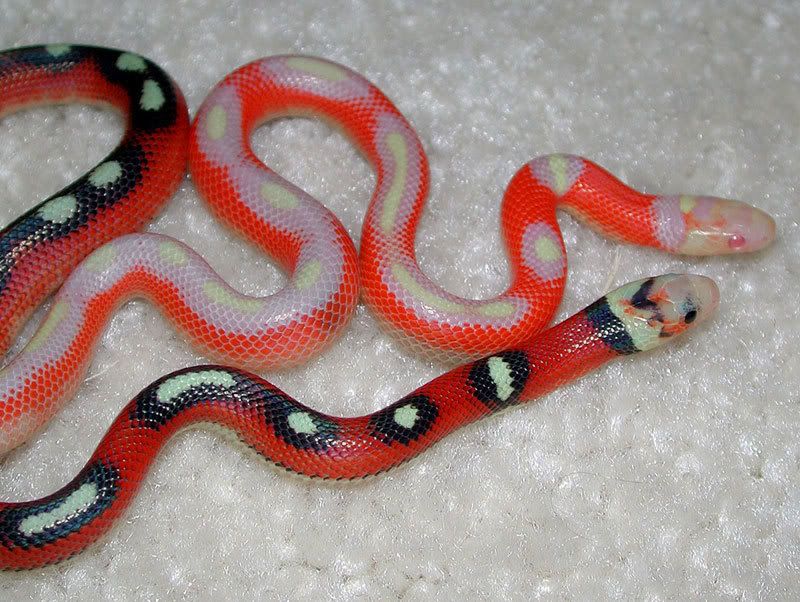
There's no such thing as an albino Sinaloan. People have crossed Sinaloans with Nelson's milks, so what you're most likely looking at is an albino Nelson's or an albino Nelson's x Sinaloan.
Tim

Third Eye
Nathan Wells
Oct 30, 2008 05:21 PM
that no true albino sinaloans exist; only albino nelson's and albino nelson's X sinaloan crosses. As the story goes, a single L.t. nelsoni was collected in Colima, Mexico in the early 80's that was most likely the founder of the albino gene leading to the first 2 albinos being produced in 1991. A gentleman by the name of Doug Moody produced these first albinos from the pairing of two normal looking adults which themselves derived from that single wild-caught animal. The first mating of these adults produced normal looking offspring, which unknowingly happened to be 2/3 chance heterozygous for albino, but were accidently sold off as normal nelsoni. The breeding of the same adults produced the first pair of albino nelsoni the following year. It didn't take long for albino nelsoni to be one of the most beautiful and desirable snakes on the market.
Due to the rarity of pure locality nelsoni in the states and the value of the first albino nelson's, many breeders soon started cross-breeding sinaloans into the mix to produce more albinos and hets, since the sinaloans were more attainable. Although much of the information and history is hard to track down on when they were first produced, these "albino sinaloans" (although not 100% pure) are indeed seen in the market today.
There is more on the topic on Vinny Lynch's website, Natural Selection Reptiles, http://www.naturalselectionreptiles.com/Sinaloans/Morphs.html
Nathan Wells

Sunherp
Oct 30, 2008 05:51 PM
I agree with what you and Tim have stated. What's the story with the splotched/striped animals? The pieds?
-Cole
9Catszz
Oct 30, 2008 07:31 PM
You have been a great help, thanks very much.
Natural Selection Reptiles' site is a very nice site. Thanks for the link.
But I still have more questions. Please bear with me.
If there are no "pure" albino Sinaloans, then how can there be albino striped and albino splotched Sinaloans?
And.... since the albino gene originated from Nelson's then how many generations of outcrossing the albino gene to pure Sinaloans will it be before an albino is considered a pure Sinaloan?
I have a pied splotched Sinaloan male that is a sibling to an albino striped Sinaloan. Both parents look normal but are het. stripe/splotched and apparently het. albino too. Does that mean my splotched male is not pure Sinaloan since there is no pure albino Sinaloan?
tspuckler
Oct 30, 2008 08:43 PM
I'll answer one of your questions and leave the other questions to those who can better answer them:
"how many generations of outcrossing the albino gene to pure Sinaloans will it be before an albino is considered a pure Sinaloan"
Never. You cannot breed the Nelson genes out of a snake, it will always be considered a cross, even if it has only a tiny fraction of Nelson's in it.
Tim
Nathan Wells
Oct 30, 2008 09:04 PM
No problem on the help, you will find that most everyone on this forum has quite a bit of knowledge followed by years of experience.
In regards to your questions, the albino gene that is derived from L.t. nelsoni is the same gene that was originally introduced in producing the albino splotched and albino hypoerythrstic sinaloans. All of these animals seen today were produced by the breeding of double hets (albino X hypoerythristic) and (albino X splotched).
A few years ago, someone had asked a very similar question. Shannon Brown remarked and shed some good light on the subject...
"First you have to toss out the whole idea that in our hobby there are no pure nelsoni or pure sinaloans anymore with a few exceptions.
You may be able to get your hands on a pure pair of sinaloans that are locale specific still but forget the idea of getting and nelsoni thats for sure. So, when it comes to morphs there is no way to keep anything pure sinaloan or pure nelsoni "per say".
It wouldn't really matter anyway cause the albinos that are out there aren't pure one or the other anyways. The original ones were from adults that were collected from a intergrade zone to begin with.
So whats pure? Pure is a animal thats from the wild correct? Yes, they are pure as can be but they are pure intergrade sinaloan/nelsoni and thats why in todays hobby it doesn't matter what you want to call them cause there is no way to really classify them anyway.
All the thousands of albinos and spotted and striped and etc..that are out there are all mixed and matched of the two and it will never change so call it sinaloan or call it nelsoni it is what it is. It is a dbl-het and it is pure cause it is from two snakes that are pure and hasn't had anything else bred into it."
Even if you selectively bred several generations of sinaloans outcrossing the albino gene for many years, at no time would a "pure" albino sinaloan surface. You still would have some of the original nelsoni blood present. Most likely you would even continue to see characteristics from both sinaloae and nelsoni in your offspring because they are still in reality, crosses. Even breeding the albinos into some of the Mexican locality animals available today would still result in very nice looking sinaloans with a bit of nelsoni in them.
On your last question, it looks as if your "pied" splotched sinaloan came from parents that were double hets (splotched X albino). True, the Applegate/ Fitzgerald splotched sinaloans are from animals wildcaught from Mazatlan, Sinaloa, Mexico but again, the albino gene was introduced to produce the splotched albinos.
So, your splotched male,(which is 66% possible het albino) is not entirely "pure". But then again, neither are any of the other ones that involve the albino gene.
Nathan Wells
vjl4
Oct 31, 2008 08:49 AM
Hi All, I agree with everything that Nathan said (of course). But just wanted to add my 2cents anyway. Given that Nelsons are so closely related to Sinaloans even if you found a wildcaught albino sinaloan how would you ever know the albino gene did not make its way into the sinaloan from the nelsons via the integrade zone?
If your like me you dont really recognize the distinction between L.t. nelsoni and L.t. sinaloa other than they are geographically semi-isolated localities that may be on their their way to becoming subspecies but haven't go there yet. Take away the pattern and most people (present company excluded) would be hard pressed to tell them apart (maybe the head shape?).
Am I crazy?
Vinny
-----
“There is a grandeur in this view of life, with its several powers, having been originally breathed into a few forms or into one; and that whilst this planet has gone on cycling according to the fixed laws of gravity, from so simple a beginning endless forms most beautiful and most wonderful have been, and are being, evolved.” -C. Darwin, 1859
Nathan Wells
Oct 31, 2008 09:06 AM
the bottle man...LOL. No, seriously, good points added. Glad you chimed in.
Must be getting cold up there 'bout now??
Nathan
Sunherp
Oct 31, 2008 09:23 AM
A little crazy, but right... LOL I agree with everything you've said.
-Cole
Nathan Wells
Oct 31, 2008 10:13 AM
perfectly well with the comment "If your like me you dont really recognize the distinction between L.t. nelsoni and L.t. sinaloa other than they are geographically semi-isolated localities that may be on their their way to becoming subspecies but haven't go there yet. Take away the pattern and most people (present company excluded) would be hard pressed to tell them apart (maybe the head shape?)"
Vinny is such a scholar....
vjl4
Oct 31, 2008 02:28 PM
Its what happens when the dogs need to be walked, but its getting cold so you drink lots and lots of coffee. Then when you get to work, you cant focus cause of all that coffee, so you just go with it and hit up DD one more time 

-----
“There is a grandeur in this view of life, with its several powers, having been originally breathed into a few forms or into one; and that whilst this planet has gone on cycling according to the fixed laws of gravity, from so simple a beginning endless forms most beautiful and most wonderful have been, and are being, evolved.” -C. Darwin, 1859
Tony D
Oct 31, 2008 12:49 PM
I like how crazy people think! Good post.
-----
Darwin Rocks!
markg
Oct 31, 2008 03:13 PM
At opposite ends of their ranges, the snakes appear different. Where their ranges meet, it is impossible to tell. Even quite a ways from where their ranges meet it can be unclear.
So you have sinaloa in the north, morphing if you will to nelsoni in the south, then nelsoni going east. One big gradual change from sinaloa to nelsoni, or what some people call sinaloa and nelsoni. Got to call them something; got to distinguish them somehow, even if it means a huge gray area inbetween.
If you have a known locality, you can consider "purity" - pure for that locale. Aside from that, you really don't know exactly what you have other than a certain look - i.e. "looks" sinaloan, "looks" nelsoni. Certainly the early exports of these snakes from Mexico often did not take into account what they were.
Per your question, the answer is that no matter what people say, the possibility of breeding a morph of one type into the other is just too big a temptation to overcome by some folks, probably more than you would believe. Don't think there is this hard line or something. People have knowingly or unknowingly mixed the two together unless they have a specific locale they are working with.
Look at albino Honduran morphs. They are a mix of what are presently called different subspecies. (These different subspecies may soon be lumped together anyway into one Central American milksnake or something to that effect.) Hasn't stopped all the Honduran breeders from breeding and marketing their colorful snakes. Most didn't even know they had mixes. Some are die-hard "purists" and they unknowingly have mixes, or they don't want to know.
-----
Mark
Nathan Wells
Oct 31, 2008 03:17 PM
thanks for your input.
Nathan
Nathan Wells
Oct 30, 2008 11:05 PM
Hey Cole,
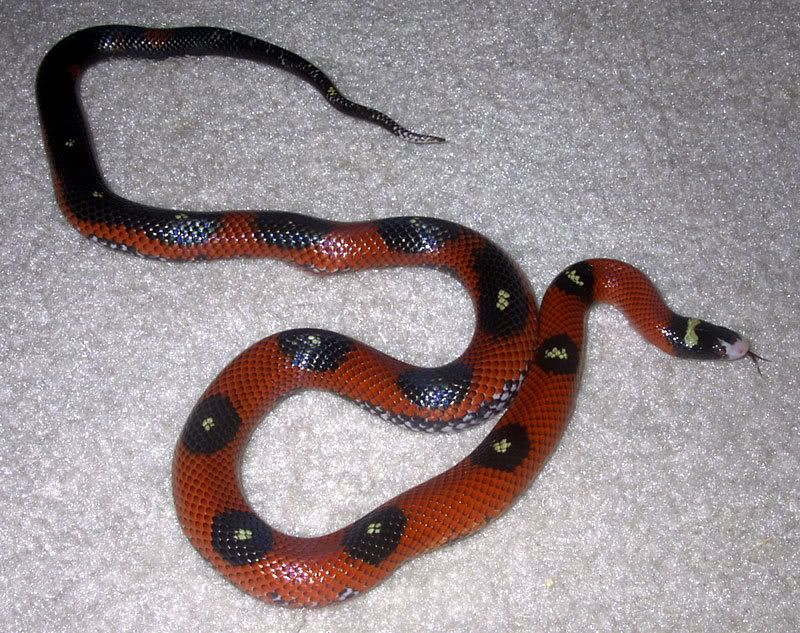
Here is a small write up on them from Applegate him self.
"Many years ago (in the 1970's and 1980's) several animals were collected east of Mazatlan, Sinaloa, Mexico and imported into the U.S. They were called "Sinaloan Milksnakes" and sold as such. Some unrelated captive hatched offspring were sold to a friend of mine. My friend bred these and produced very normal "sinaloan" looking babies. Some of these were sold to a person in Nevada. He raised and bred these, and some of the babies produced were very abnormal looking. Some reptile experts examined these and determined there were L. t. nelsoni. As luck would have it, I owned a pair of the siblings to the parents of these odd looking animals, out on breeding loan with another friend. I called him and asked him to be sure to breed the two siblings from this group together. He did so and this is one of the results. Some of the siblings to this one look very "sinaloan" in appearance. Makes you wonder if you take away the pattern, is there really any difference between L. t. sinaloae and L. t. nelsoni, doesn't it?"
Now in regards to the "pied" animals that are in the hobby, it seems that over the last few years there has been a real increase in individuals with quite a bit of pied markings present. Seems as if the first pied animals showed only a small amount on their bodies, mainly by spots on their heads and at the tip of their tails. With more people breeding the splotched and what some are calling "aberrant nelsoni", many more animals with much more areas of pied are being seen.
I have splotched animals in my personal collection that have almost two inches of pied areas present at the tip of their tails. I have also produced babies that exhibit pied areas over their entire heads. The trait is even seen in my splotched albinos. I can't say for sure that the trait is genetic, however, I have produced entire clutches of splotched in which every baby had varying amounts of pied on their heads.
Hope this helped.
Nathan
Dniles
Oct 31, 2008 12:52 AM
Man Nathan that animal is sweet. How many other stunners do you have that you haven't shown us yet?
Dave
DNS Reptiles
Sunherp
Oct 31, 2008 09:17 AM
I'd read that info. before, but thought you may have more insight into it. It's the same gene working in both "subspecies", then? I, for one, don't really buy into nelsoni and sinaloae representing different subspecies, but that's a whole another topic... LOL
-Cole
Nathan Wells
Oct 31, 2008 09:53 AM
Hey Cole,
Looks like it just may be the same gene present in both of the subspecies. The splotched will eventually find its way into everything (sinaloan/ nelson's) just like the albino has. I hear you on the other man...maybe it's time for some of us to take a field trip down south....
Nathan
Sunherp
Oct 31, 2008 09:55 AM
A field trip, huh? Cool! I'm all about clinal variation in triangulum.
-Cole
Nathan Wells
Oct 31, 2008 10:04 AM
Would be fun...Applegate can go with us to show us how to smuggle and pick up Mexican chicks...LOL.
Nate
