Reptile & Amphibian Forums

Welcome to kingsnake.com's message board system. Here you may share and discuss information with others about your favorite reptile and amphibian related topics such as care and feeding, caging requirements, permits and licenses, and more. Launched in 1997, the kingsnake.com message board system is one of the oldest and largest systems on the internet.

Click for 65% off Shipping with Reptiles 2 You
https://www.crepnw.com/
Click for 65% off Shipping with Reptiles 2 You

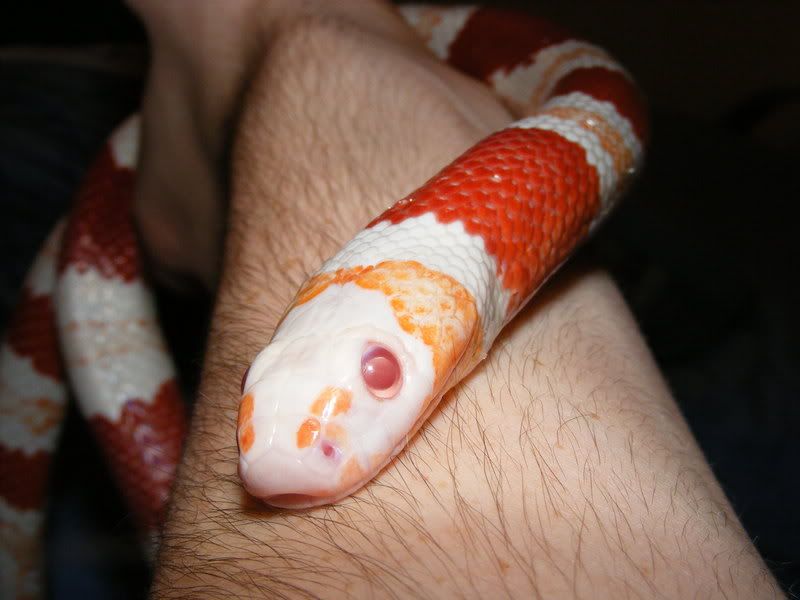
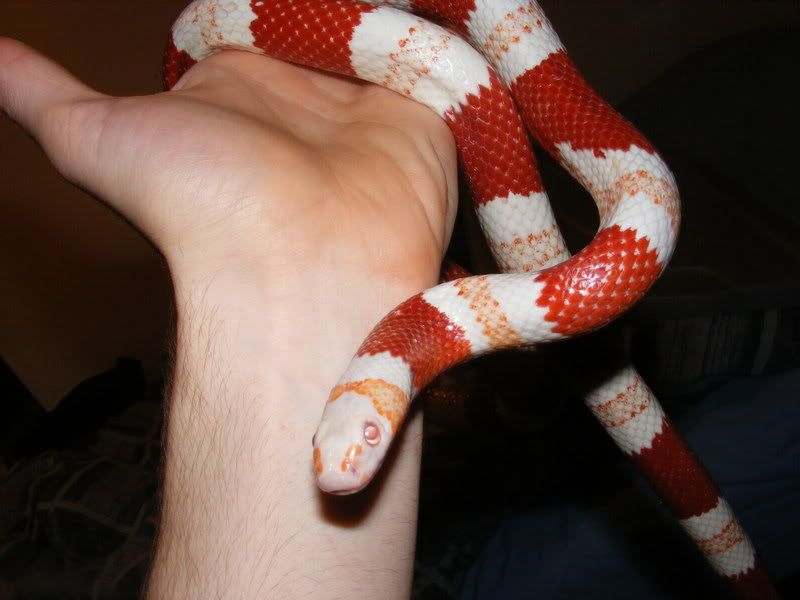
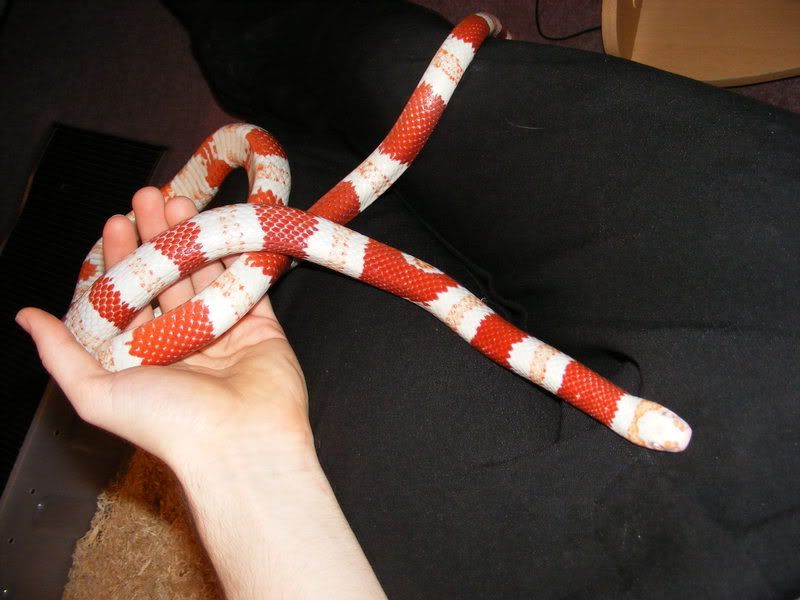
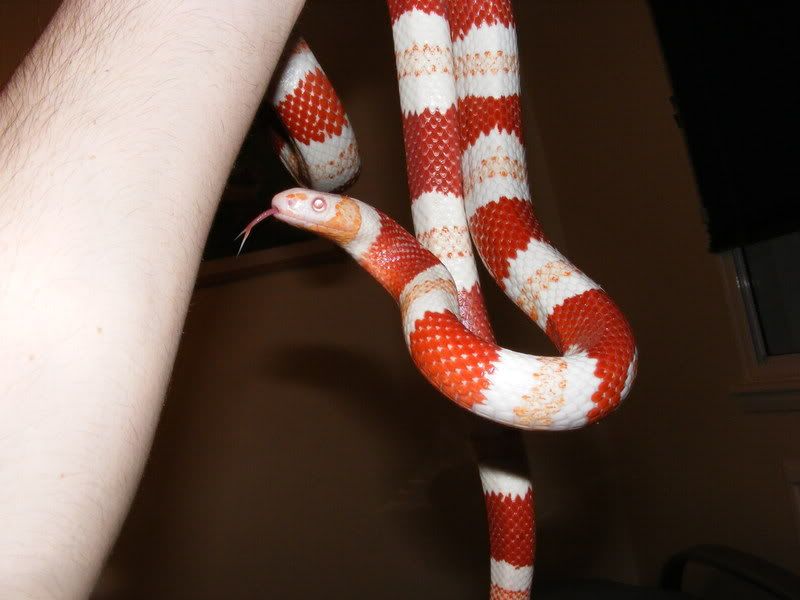
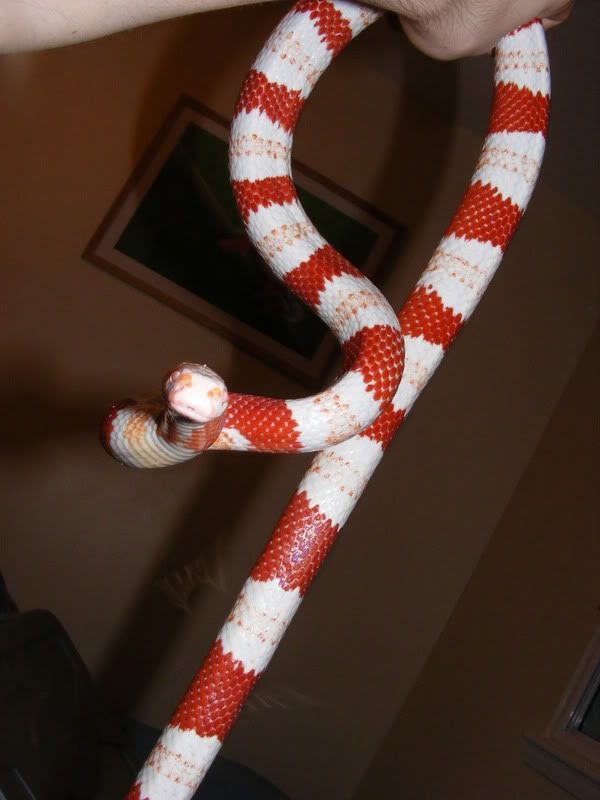
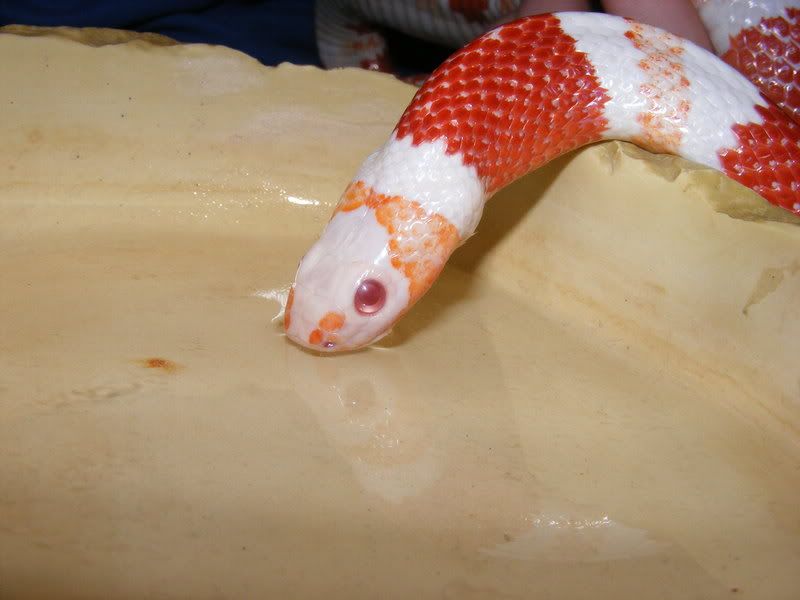
ID Please? I Beleive Albino Tri?

Sinaloan Nov 02, 2008 03:47 PM

Finally the big lad has shed, And it was a horrible one at that. After about 30 minutes his body was perfect. Bright red's showing. However his eye caps did not shed again, So i went to work on them, After a further 30 minutes both were free of any retained caps. The left eye was caked with atleast 5 layers, Was horrible removing as It was that thick the layer, I thought the hole eyeball was peeling. Not a nice feeling or sight! Anyway, Enjoy!


Scott

Replies (7)

MikeFedzen Nov 03, 2008 06:09 PM

Looks like an albino tri color to me.
-----
Mike
KingPin Reptiles Inc.
www.kingpinreptiles.com

markg Nov 04, 2008 05:18 PM

Yes, albino tricolor that is somewhat dehydrated. You can help that though.

Drinking water won't do it. Increased humidity will. Either a humid substrate like EcoEarth (my favorite substrate because where I live Spring and Winter have low humidity much of the time) or else a nice box filled with a humid substrate. Milksnakes love that. You can let it dry out over the course of a week before moistening.

I have a rescued young nelsoni that was kept in a screen-top aquarium with aspen shavings. Again, where I live the humidity gets low, so screen tops are just the worst for keeping just about any snake except rosyboas. Poor little guy was dehydrated to the point of where his skin was dull, and he had retained eyecaps. After a few weeks of being kept on a warm humid substrate that he could burrow into, his appetite and overall appearance transformed. Makes a huge difference.

In the wild they spend 99% of the time underground where humidity is at a reasonable level where they do not lose moisture. The color of these snakes when properly hydrated is much more vibrant too. Try it and see what your snake looks like.
-----
Mark

54podge Nov 04, 2008 10:50 PM

all my snakes are in aquariums with screen lids, and I am also concerned with humidity. I have guages in all of them and I try to keep humidity at least in the mid "normal' range by misting with a spray bottle and keeping a water source over the UTH (as well as cool drinking water away from the heat). Is this sufficient? You mentioned a box with damp substrate? Is this a box with access to the snake, or one with holes punched in it to allow the humidity to seep out? If the snake has access, what substrate do you use and how does one know if it's moist enough or too moist?
-----
1.0 C/B Brooks
0.1 C/B Pueblan
0.0.1 W/C Scarlet King
0.0.1 W/C Eastern Milk
0.0.1 W/C Yellow Rat
0.0.1 W/C Western Garter
1.0 C/B Black Lab
1.0 C/B Min. PoodleXAmer. Eskimo hybrid
1.0 C/B Goofy Cat
1.2 C/B Children
0.1 W/C wife

rtdunham Nov 05, 2008 02:47 PM

>>... You mentioned a box with damp substrate? Is this a box with access to the snake, or one with holes punched in it to allow the humidity to seep out? If the snake has access, what substrate do you use and how does one know if it's moist enough or too moist?

You asked a good question. We throw out answers sometimes and assume they'll be interpreted correctly! What they're referring to is a box the snake can enter, just as it would search out a suitable hiding / resting spot in the wild where there are so many different conditions it can choose from.

ANY way that achieves an environment that's humid and that the snake utilizes is fine. If you want one simple suggestion, here it is: buy sphagnum moss, the long-threaded or linear kind; soak it either under a faucet or immerse it in a bucket; then take the moss in both hands and wring it out thoroughly (I know, "not to dry and not too moist" still leaves room for interpretation. So you get to experiment!). Put that in a plastic shoe box with a hole twice the diameter of the snake's body cut into the lid, attach the lid, and see what happens.

markg Nov 05, 2008 07:59 PM

Great questions. Terry answered about the humidity box. I use EcoEarth, and sphagnum works too as mentioned. Even potting soil works, I'm just afraid of what chemicals may be in potting soil.

How do you know when it is too moist? You may not, but the snake is no dummy. When given choices, they choose what they need. When the humidity here is 40%, my milks will hide all day in damp substrate, either over the heat (after feeding or when in a shed) or away from the heat. When humidity is moderate here, like 60-70%, the snakes can be found anywhere in the cage wet or dry. I also try to moisten some areas more than others. The area over the heat pad dries quickly, so it isn't always wet 100% of the time.

By doing the above, I never have seen those blisters that caresheets speak of, ever. I have raised baby prairie kings and milks that spent so much time buried in the substrate that I hardly saw them (except at night). They grew up healthy and fat.

Alot of folks use racks with little ventilation, and that can produce a nice moderate humidity without the need for humidity boxes. Depends on your ambient conditions of course.

Remember, these snakes live in the earth most of the time and gain their desired temps from the heated earth (heat mass). The above ground temps can be hot or cold, and depending on sun exposure they can still find desired temps in the soil, in burrows, under debris, etc.
-----
Mark


54podge Nov 05, 2008 09:27 PM

Thanks guys.

One last Q: do you place the moisture hide on top of, next to or away from the UTH?
-----
1.0 C/B Brooks
0.1 C/B Pueblan
0.0.1 W/C Scarlet King
0.0.1 W/C Eastern Milk
0.0.1 W/C Yellow Rat
0.0.1 W/C Western Garter
1.0 C/B Black Lab
1.0 C/B Min. PoodleXAmer. Eskimo hybrid
1.0 C/B Goofy Cat
1.2 C/B Children
0.1 W/C wife

markg Nov 06, 2008 01:59 PM

I do all of the above, meaning the humidity box sits on the heat pad and extends away from it too, so the snake can choose temps within the humid chamber. You'll see the snake choose different temps for different activities. I see mine access heat when close to shedding and of course after feeding. I see them avoid heat many times when just going into a shed cycle.
-----
Mark

Site Tools