Reptile & Amphibian Forums

Welcome to kingsnake.com's message board system. Here you may share and discuss information with others about your favorite reptile and amphibian related topics such as care and feeding, caging requirements, permits and licenses, and more. Launched in 1997, the kingsnake.com message board system is one of the oldest and largest systems on the internet.

Click for 65% off Shipping with Reptiles 2 You
Click for ZooMed
Click for 65% off Shipping with Reptiles 2 You

I'm interested in hearing your opinion

John Q Jan 10, 2009 11:04 AM

I'm interested in hearing your opinion on Hypos.
By definition, a hypomelanistic snake has reduced melanin.
Look at corns, kings, milks, and pits and you will a variety of examples. Reduced amount of melanin and reduced intensity of melanin or in some cases, both. If you look at the belly of a hypo corn you will see belly checks that are grayish colored and fused with color. A very noticeable lack of the amount of melanin but a more obvious less intense / less pure black. If you look at one of the extreme hypo vanishing patterned hondurans you will see a very light grayish color but the amount of pattern is also reduced. Next, consider a T Positive / lavender albino cal king. The pattern that would normally be black is not reduced in size or amount but the color is a very distinct purple / lavender.
So why is it when breeders talk about Hypo Hogs that they look for lavender and if the snake does not have a lavender belly they say it is not a hypo? That seems contradictory to the same guidelines/characteristics we look for when viewing hypo corns, kings, and milks. It also seems contradictory when comparing to a lavender cal king which I have only seen referred to as Lavender Albino and never as a Hypo.
I tend to disagree with the lavender belly = hypo, no lavender, not a Hypo. My theory on this is that this started when Casey first introduced his hogs that had a lavender belly. He did state on his site that these may be another form of albino. The very best ones, of which there were only a few, were intense red with a lavender belly. There were many more that did not develop the red but did have the lavender belly. At least as I have been told and from what I have seen in the classifieds.
So, what is your opinion?
A hypo must have a lavender belly?
If you were offered a hog as a hypo and the dorsal was bright and obviously missing melanin and the belly had a reduced amount of melanin and it was muddy, brownish colored, and obviously not a pure rich black, would you accept it as a hypo?

Please do not turn this into something it is not. This is not directed at any breeder, specific line of hogs, or politically motivated to discredit any breeder or their work.
I think this is an interesting topic and would like to hear your opinion.
Thanks
John Q

Replies (19)

Jon R Jan 10, 2009 01:40 PM

Allot of snakes have been mis-labeled as hypos, when in fact they are t positive albino. This first I can think of was the Honduran milk. Those are as T positive as it gets, yet people still call them hypos.

To me, the definition of hypo is a reduction of the amount of black pigment, not a reduction in the intensity of the black pigment. Thats why the hybino Honduran didnt look like the classic sunglow people were expecting. The amount of dark areas stayed the same, so when the albino gene was added, it just turned that area white like it would have in any normal albino. In order to get that true sunglow look, you need to get rid of the white, so the reds, oranges and yellows can blend together without the contrast of white.

The Boa guys have it figured out. Take a look at the hypo and t positive boas.

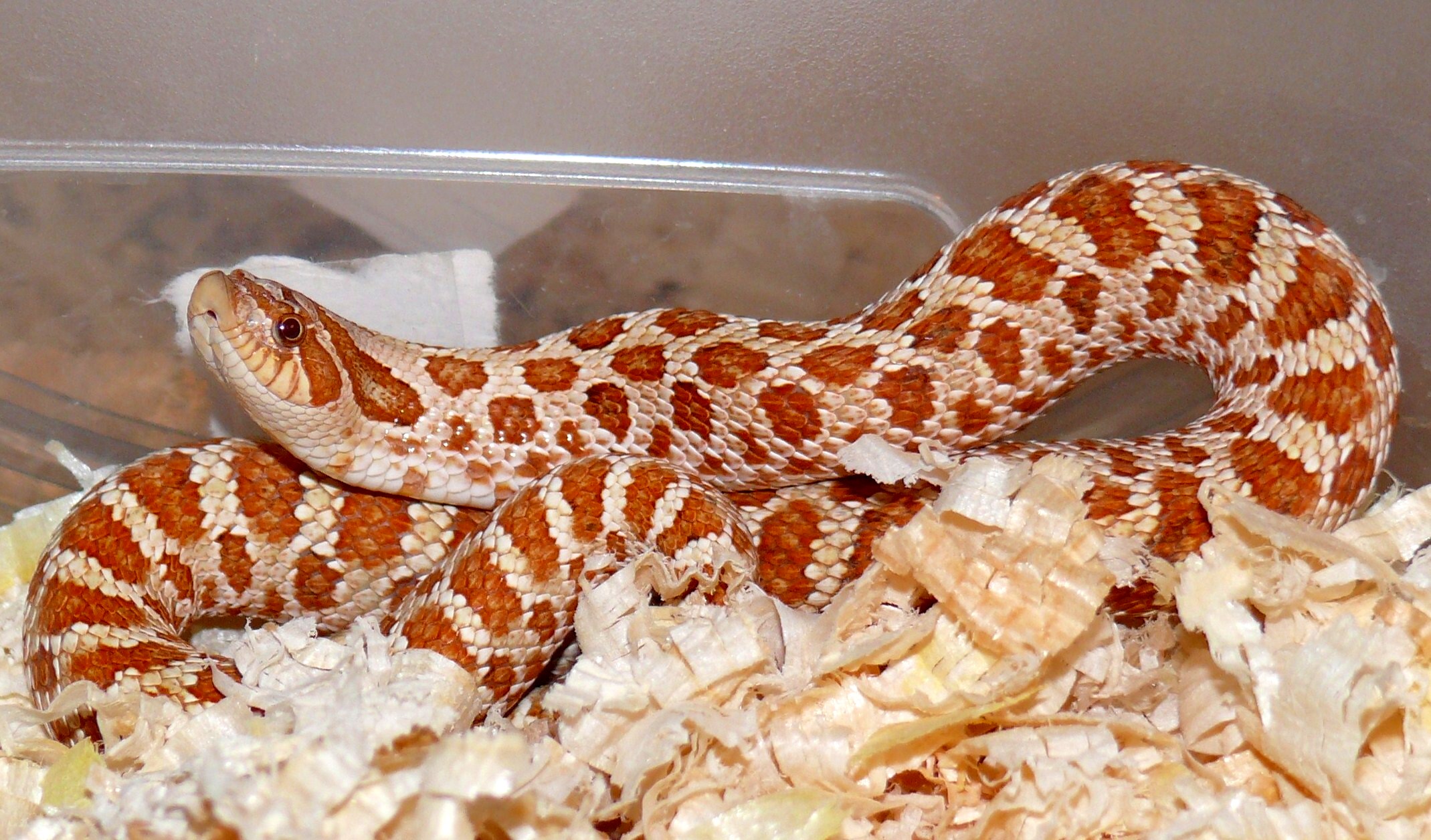
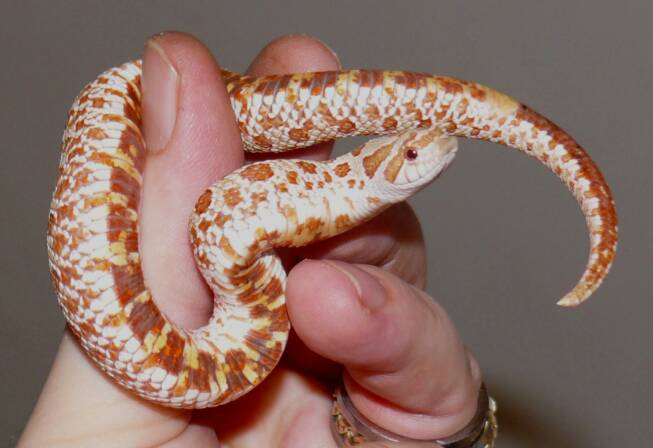
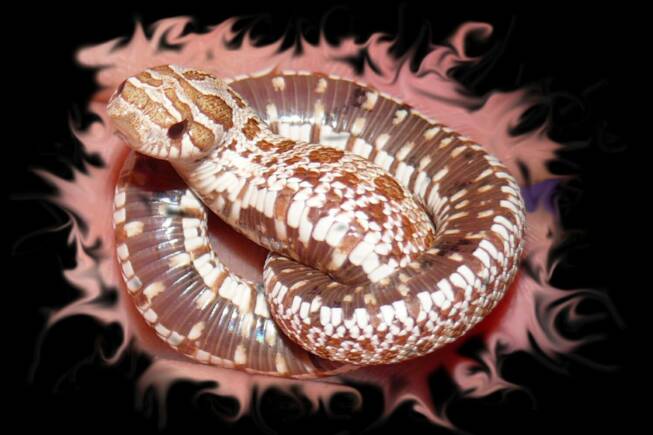
As far as the hognose go, IMHO the animals that are being labeled as hypos are acctually t positive albino. This would include the lazik, caramel and toffee belly. All of these "hypos" have a deep red pupil and the black is replaced with some shade of purple or brown, which is consistent with t positive albino, not hypo.

To me, wild type hognose are already kind of hypo. none of them have much black to speak of. I don't ever see much white in albino hogs. They are mostly yellow and orange.

My $0.02

krhodes Jan 13, 2009 03:46 PM

Jon,
Do you think that either snake could have been labeled as a true hypos due to the reduction in amount of black rather than the reduction of intensity of the black color?

thanks

Jon R Jan 14, 2009 12:45 AM

Well, just going off the belly shots I would say possibly.. But There is allot more that goes into coming up with an idea of a snakes genetics than just looking at the belly. If said snakes have an overall reduction in black pigment as seen in the belly shots and it has been proven genetic, then yes,, I would label that a true hypo. I have however, seen plenty of western hognose that have very reduced black belly's and very average dorsal coloration. I have also seen animals with extremely black belly's that don't show any melanistic traits in the dorsal areas.

-Jon

JustinMitcham Jan 10, 2009 01:52 PM

Great post John..
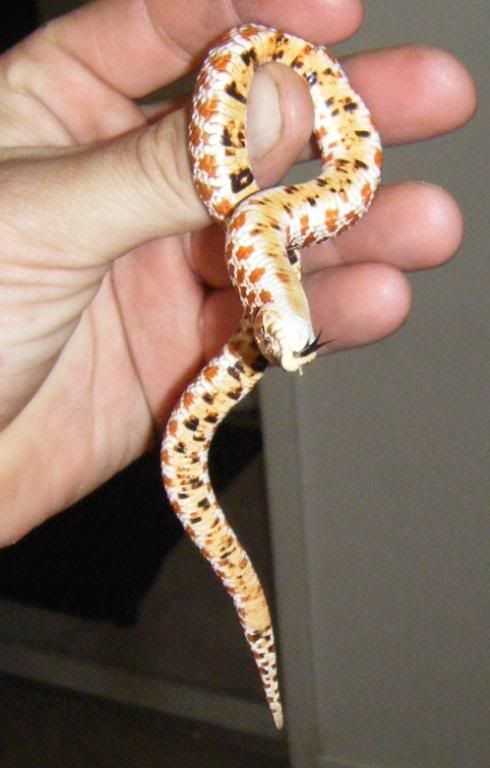
You are exactly right, hypomelanism is the reduction of melanin, not the absence. If the melanin is absent then by definition has to be a sort of albino. I believe the Lazik line of hypo is actually a type of T albino, same with the "Toffeebellies" etc.. Now the "Tofee's" are a bit different, I believe them to be Paradox T Albino's, as mine grow they are developing more and more random black flecking, especially my high red male.


-----
Justin Mitcham
ExtremeHogs.com

Rextiles Jan 14, 2009 08:14 PM

By definition, Hypomelanistic is the reduction of, but not lack of black pigmentation whereas Albino is the complete reduction of black pigmentation.

What has been selling as Hypo hogs, Lazik line, shows no black pigmentation at all. So, I could agree that these indeed could be considered T Albinos instead of Hypo.

However, if the Toffeebelly's show black speckling that you state seems to increase with age/shedding, this obviously is a showing of melanin in the system. To me, it would seem more logical that these might possibly be considered true Hypos instead of any form of Albino let alone a paradox of some sort. And how would one be able to prove or isolate the paradox gene? Would you be able to isolate it by breeding one normal albino to a toffeebelly and produce all homo albinos that would be het for the paradox gene if it were recessive? Or if it were a co-dom trait, then half possibly might exhibit this paradox trait?

I believe I've read that there are a slight few species that exhibit inheritable paradox genetics such as Kenyan Sand Boas but it's my understanding that it's yet to be proven as an inheritable trait for Ball Pythons (as well as many other species) where several albinos have been obviously shown as unquestionable true paradox animals.

Not that I'm challenging anybody per se, I'm just trying to understand why it might be justified so far as to try and term these toffeebelly's as T Albino Paradox's without them having been actually proven as thus. In other words, has it actually been proven that this is exactly what they are and if not, is anybody working on breeding projects to try and isolate this purported paradox gene?
-----
Troy Rexroth
Rextiles

JustinMitcham Jan 14, 2009 09:36 PM

The paradox trait is present in most if not all the "toffee's".Which obviously proves it's genetic to that extent. A true hypo in my opinion would be hognose with very reduced black..but it would still be there in the pattern. The Toffee's are completely Tpos albino's with random patches of black speckling, there is no patterning. A hypo may have light colored eyes and a reduced amount of melanin ..but I doubt it would have a lavender belly, lavender eyes and tounge.
Sometimes it's hard to get the correct feel of a morph from pictures..easier if you actually own some and can look at it with your own two eyes etc.. I own several and in my opinion there T positive paradox albino's.
How many hypo's have you seen that look like this..for instance, none of the hypo's in corns look this way, bullsnakes, kingsnakes etc..
Image
-----
Justin Mitcham
ExtremeHogs.com

Rextiles Jan 18, 2009 01:55 AM

I do agree, the Toffee's are a beautiful and unique snake.

However, the phenotype doesn't always accurately describe the genotype, sometimes it does, but not always. To describe a snake as a definitive genotype without any scientific backing let alone line breeding seems like quite a stretch. I believe that in order to accurately describe a snake as a specific genotype, one needs to do a lot more research instead of just doling out a name based loosely on it's phenotype.

Can these actually be a T Albino Paradox, sure. Does it mean that they are just because of how they look? Not at all. Right now, there's apparently no backing to root any of these terms in reality, it all seems to be based on conjecture at this point.

I'm just saying that it would be far more prudent to have something to back a statement such as calling these Paradox T Albino's. So far there isn't anything really concrete about this term other than basing an opinion solely on the animals phenotype if I'm not mistaken. Calling it a Toffeebelly or whatever is fine because it is a generalized non-scientific term to describe this obviously unique phenotype/genotype. Whereas, calling something a T Albino, which is a specific genotype, or even a looser term such as Paradox should have something more to back it up on.

What if you breed these Toffees to another albino, will you get Hets because the two are completely different genotypes? How about if you breed Toffees with what is currently called a Hypo, what do you get there? Is the so-called Paradox trait inheritable outside of the Toffee line or is it part of it's genotype along with it's form of albinism? I really do hope that these are what they are, because if they were, then that would give us a much more interesting gene pool to play with. But these are questions that seriously need to be investigated and answered before any specific terms should be applied to this lineage, otherwise, like I said, it's just conjecture. That's all I'm saying.
-----
Troy Rexroth
Rextiles

MOTORHEAD Jan 18, 2009 11:24 AM

Troy

I don't think i could have said it better,good job

-----
Brent Bumgardner
bwbumgardner@aol.com
703.431.1776
Superconda Website

JustinMitcham Jan 19, 2009 10:32 AM

me either..LOL
-----
Justin Mitcham
ExtremeHogs.com

JustinMitcham Jan 19, 2009 10:28 AM

genotype environment random-variation phenotype

"Genotypes often have great flexibility in the modification and expression of phenotypes"

This is where booksmarts and real world experience and results seperate!!! (going back to my 1st post hinting at how many morphs have you seen display these traits and not turn out to be a TPos."

AGAIN The animals have been proven to produce these traits and is simple recessive so we don't need to argue that point. We breed two Toffee's together and we get the same results with some random variation.

If the gene is modified through breeding, behavior, enviroment or other factors it does not mean it is not a Tpos Albino...(i.e. phenotypic plasticity)
With the billions of lines of DNA I really doubt all morphs will behave within our current definitions especially when we add genes to the mix.
So if an albino hatches...I will call it an albino. If it is non-inheritable it is still an albino by definition.....weather it can be reproduced or not via recessive ,co-dom etc.. that is another matter.
If the observed results change through breeding then we modify the definition to fit the observed results after the fact..

so lets say it is a type of hypo!!!
hypomelanism is considered to be a type of albinism by many geneticist( or at least very closely related)..so loosly by definition the random black patches could still be called "paradox"(which is not a true genetic term but instead more of a description of the observed characteristics a type of albinoism). The form present is definetly TPos.. so Tpos Pardox is what I feel best describes the trait..

Keep in mind not all the "morph definitions" behave the same way in different species.

Conjecture or not lets see what happens..LOL!!
-----
Justin Mitcham
ExtremeHogs.com

JustinMitcham Jan 19, 2009 10:31 AM

The top line should read..

genotype plus enviroment plus random variation equals phenotype

it is so annoying that we can't use plus signs in our post!!
-----
Justin Mitcham
ExtremeHogs.com

John Q Jan 13, 2009 09:25 AM

Come on!!! Some of you other regulars and well known breeders must have an opinion on this topic.
So far the replies have been interesting. I'm sure I'm not the only breeder or regular on this forum that would like to hear your two cents on this topic.

josephschmidt Jan 13, 2009 10:48 AM

wish i had something to say my friend its just that jon and justin pretty much nailed this topic at least from my point of view they did. anything i really say would just be a repeat.
but to give my 2 cents i will write this if i was offered a "hypo" that didn't have the so to say standard lavender belly i would except it as a hypo knowing it might in fact be a t plus or some sort of albinism as long as it had a reduction of melanin and was obviously a proven genetic. personally i dont think that the color of the belly makes the deciding factor in wether it is in fact a hypomelanistic specimen. i have lots of normals that have way way different looking belly's and if there were genetics plugged into them im sure they would have crazy different colors even if i used the same line. look at the pic on kevins web site of the "orange belly red" that thing has one of the crazy coolest bellys ive ever seen. what color would that belly be if it was bred to a evans line hypo or a "toffee" would there be any lavender or toffee coloring since the amount of black is so little?? i think no.
i do think this is a very interesting topic and would love to see a long thread filled with opinions and knowledge its just kinda hard jumping in with any knowledge after those two guys pretty much killed it. excellent post guys!!


daneby Jan 13, 2009 11:45 AM

Ah, there she is. Just below I asked for you to show a pic of that red hypo looking girl, I should have checked out your reply 1st.
Nice hogs!

Dan

josephschmidt Jan 13, 2009 12:14 PM

great minds think alike thank you sr.

daneby Jan 13, 2009 10:49 AM

When I think of a true hypo looking hog two come to mind, one being the honey hypo, the other being a little red female I sent to Joe last year (post a pic Joe if you get a chance), that had hardly any black on it at all (Im not saying it is a hypo, but looks to be). To me the hogs being called hypos are really albinos (T's). I have hypo Nics, Colombians, & have had many other hypo snake species, none of thier black was replaced with lavendure.

Dan Eby

leehafley Jan 14, 2009 11:09 AM

im in no way a expert but think it will be hard to say, hogs are like crested geckos in a way as they come in so many normal colors.just look at the eastern hog phases.i think we will be seeing alot of hypo types popping up every year.i've seen only a few hogs, and i've seen from top to bottom as far as colors and pattern in "normal" w. hogs.i personly look at every belly i see but if it was a realy killer animal belly color would not hold me back.
my honey hypos was thought of as yellow phase till i saw the babys.i was thinking of them as you would a green phase/hypo that was line breed.i've seen green/gray,peach,orangeish,and desert tan hypo types with a solid black bellys.i look for anything that differs from a normal with the color spots to the side of the belly that never touch.i like the corn snake type bellys with the color touching(reduced pattern to me).
i think all we can do is name a line and see what the sunglows and ghost will look like.as they all say PROVE IT.
-----
ball pythons
garter snake morphs easterns/checkereds/floridas/redsides
western hognose
1.1 super kids Memfis Lance and Linda May(co-dom)

John Q Jan 17, 2009 08:26 AM

Thanks to all that replied. Good to hear that we agree on what is a hypo and what is a T Positive.

ameratsnake Jan 29, 2009 06:32 AM

or raises more questions but, the toffee gene has shown up in another species..........BLACK RATSNAKES, Brindles!

Site Tools