Would like to see some pics of your anery and hypo gray bands. Thanks.
Take care,
Jeff Port
Welcome to kingsnake.com's message board system. Here you may share and discuss information with others about your favorite reptile and amphibian related topics such as care and feeding, caging requirements, permits and licenses, and more. Launched in 1997, the kingsnake.com message board system is one of the oldest and largest systems on the internet.



Would like to see some pics of your anery and hypo gray bands. Thanks.
Take care,
Jeff Port
Hypo..
~ Mike Russo

Very nice Mike, can you give me the link to your website please.
Anery...
~ Mike Russo

Another Anery..
~ Mike Russo

>>Would like to see some pics of your anery and hypo gray bands. Thanks.
>>
>>Take care,
>>Jeff Port
Here's an anery 277 produced in 1999.

-----
Steve W.
>>Would like to see some pics of your anery and hypo gray bands. Thanks.
>>
>>Take care,
>>Jeff Port
277 Anery #2 hatched 2006 with siblings.

-----
Steve W.
Here you go.
Anery Black Gap

Hypo Black Gap

Het anery 9 mile cut North of Sanderson. Still has a bit of orange.. Paradox???

Another 9 mile north Sanderson. Small amount of faded orange. Whats up with this line?? These animals will produce offspring like Dusty's. We will figure out the genetics,, but I am thinking either paradox, or possibly dominant genetics. The very clean, no orange animals like Dusty's could be the super.. Some selective breeding this year should answer these questions for us.

Nice Stuff Jon!!
~ Mike Russo
Thanks!! You have some great animals too!!!
Hi Jon,
Interesting topic you brought up. And awesome-looking snakes you have. IMO, I believe that this would be a simple recessive morph for a couple of reasons. First, Ric got all of his Anerys from breeding Hets to Hets. This would make both mine and your generic (non-anery) snakes from that line only 66% possible Hets.
The other reason why I think these are caused by homozygosity for a simple recessive allele is because loss-of-function mutations are usually recessive. In other words, amorphic mutations like amelanistic, anerythristic, axanthic, etc. are typically recessive, whereas just the opposite -- gain-of-function mutations -- like melanistic, erythristic, xanthic, or some new funky over-expressed pattern are often dominant.
I agree that there could be some sort of 'paradox-type' linkage (or should I say 'leakage'?), and that happens all the time with recessive morphs too. I'm a bit more inclined to think they're just normals with very little orange.
This poss. Het anery male below, like yours, looks a lot like the Het male that sired all the anerys.

Dusty
Suboc.com
My 277's are from wc parents collected a year apart and a few miles from each other. Both are alterna morphs. Dad is light and mom is dark with a silvery colored head.
-----
Steve W.
Everything I said is just speculation at this point, but something in my gut is telling me there's more going on than simple recessive genetics.. In talking to Ric and looking at his breeder stock, it seems the only animals that are producing offspring like yours are visually different looking like mine.
I am working on this project with Jason Nelson and Shaun Vaught. combined, we have over 40 years working with reptile genetics. We will figure the genetics out and hopefully even have some answers as soon as this year.
Are you going to be breeding yours this season?? If so, I would be interested in seeing your results. No matter what the genetics, these are killer looking alterna and are going to be a great project for anyone working with them.
I've been to Ric's and saw the adults that sired them, and I've handled and looked at all the babies he had. The male parent looked almost exactly like this animal, which is why I picked this male:
By all accounts -- though unique and pretty -- a very normal alterna phase.
The female Het parent looked normal too, by all accounts. Other-than-recessive (e.g. dominant, codominant) mutations usually have a visual heterozygote.
Some of the alterna phase, like yours, had reduced amounts of orange but it was still present. There was a positive distinction between those and the anerys. (Ric, could you post a pic of one of your Anery alterna phase?)
I know of no true-breeding Anerys or Axanthics of any herp species that is anything other than simple recessive. Again, any genetics textbook tells you that lack-of-function alleles are hardly ever anything but recessive. It only takes one functional allele to synthesize the xanthophores and 'erythrophores'. We've haven't seen any 'partial Anery' Blair's phase yet out of this...just one or the other.
Dusty
Those aren't "normal" looking alterna phase at all. They have faded out blotches, which is not consistent with that Sanderson locale. Search for pics of others from that cut and you will see. I have a alterna phase male from this line that looks nothing like these faded animals. It has very bright uniform orange which is more consistent with the wild type animals. I have seen plenty of other litter mates that were the same. My question is why is if it is simple recessive, why are there 3 variations?? Completely normal, faded animals like I posted, and full blown anery's.. I think something else is going on..
But as I said before, this is just speculation. I could be completely wrong. But at this point, there has not been enough breeding to tell one way or another. You seem pretty sure though. Have you reproduced these animals and found for yourself that they are in fact simple recessive?? If you were to sell some today, what would you market them as??
Perhaps we define "normal" differently. I look at it as in that they do have orange in them, however faded. And so, in my mind, I classify them as normal or not anery. I mean, why would the gene work all the way in some clutchmates (like in the anery Blairs) and only partially with other clutchmates? If alterna are phylogenetically allied with the mexicana types, then by nature, there is a relatively wide degree of variability, even from the same cut.
I guess I'm trying to define something as "normal" if its synthesis of the right materials is not blocked by a mutated allele.
My question is, if these faded-out individuals are possibly "partial anerys", then why have none of the Blair's phase from this line also have faded out orange?
You may be right too. I'm no alterna "loremaster" LOL, and I don't claim to know this locale forwards and backwards. I have not bred these snakes yet. I'm not 100% sure...I just like to discuss these things. And I'm only discussing this from a genetics theoretical point of view. That it's very uncommon for anerythrism or any other loss-of-function allele to be something OTHER than recessive. Not unheard of, but VERY uncommon.
Can you think of any true-breeding, genetically heritable anerys of any herp species that are not recessive? I sure can't.
As many have seen with the ball pythons, there is nothing typical about reptile genetics. There are things happening with snakes, that seem to go against genetics as most know it. up until a few years ago, there was no known dominant albino, but a dominant t positive albino ball python is well established now.. From what I have witnessed, reptiles can really throw a wrench into genetics. There are lots of traits out there that are not typical and don't follow the typical genetic rule book. Just because there hasn't been a proven dominant anery, doesn't mean one cant or wont pop up.
As far as the partial anery blairs, that's a good question. maybe it's due to the fact that the majority of this lines offspring have been alterna, or intermediate phase and its just odds at work. But I wouldn't call the first pic of mine an alterna phase. It's more of an intermediate. There would be plenty of orange on it if it wasn't washed out. I would consider our other one an alterna phase though.
Jon,
I have collected several animals from that cut and have captive produced quite a few. I have several photos on the alterna page showing some of the ones that I have collected with reduced orange. I think that this is a pretty common trait from this local. I produced some babies that I had people tell me that they thought that they might be anerythristic but I just felt as though they just lacked orange, not that they were unable to produce it. I am interested in your findings, and if you need some different blood from that locality, let me know. Interesting topic that I have wondered about often.
Bryan Box
Perhaps you have stumbled on to the same gene we are working with. They all came from the same cut, so it's very possible you collected some too. And your breeding results would follow in line with what I have noticed. Do you still have this project and could you post some of your more faded/anery looking animals??
We will post all of our findings here in the forum for sure. It's a cool project and I can't wait to dig into it a little deeper!!
>>I have several photos on the alterna page showing some of the ones that I have collected with reduced orange. I think that this is a pretty common trait from this local. I produced some babies that I had people tell me that they thought that they might be anerythristic but I just felt as though they just lacked orange, not that they were unable to produce it. Bryan Box
Bryan, is this one of the animals from that cut you found?
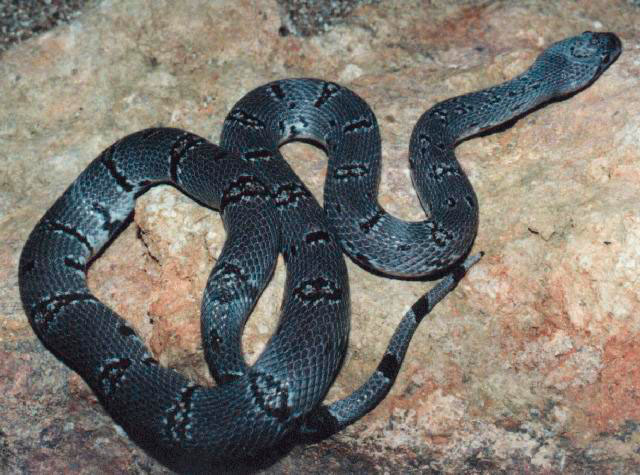
Looks very similar to some of Ric's animals from there. I agree with what you said above about it just being a geographic variation -- and not that they're unable to produce Orange.
Thanks.
That is actually a captive born snake from two snakes that I collected on that cut on the same night.
If we are sharing pic's of het's i have a bunch of them as well.. This Black Gap animal was produced by Dan Johnson and is 100% het Anery and poss het hypo..
~ Mike Russo

Nice snake!! But just to be clear, we are not discussing the genetics of the Black Gap animals. I know those were proven recessive by Dan years ago..
The genetics in discussion are of the 9 mile North of Sanderson animals..
>>The genetics in discussion are of the 9 mile North of Sanderson animals..
Wasn't it brought up on here a few months ago that the anery gene possibly came from the Gaps? http://forums.kingsnake.com/view.php?id=1530447,1531106
I don't believe that for a second, do you??
It's a totally different look. And since the Gap anery and hypo genes are so intertwined, don't you think a hypo Sanderson would have popped up by now if the Gaps were used to produce the anery Sanderson's?? If you go check Dan's records, I don't think you will find an anery Gap that's not at least poss. het for hypo. The chance that hypo would have been introduced is greater than not in this case..
But is there is any question still remaining about the authenticity of the Sanderson line, it would be a good thing if it turned out to be something more than simple recessive. That would bust the Gap myth for sure.
>>I don't believe that for a second, do you??
No, I don't believe it either. Very different look.
>>But is there is any question still remaining about the authenticity of the Sanderson line, it would be a good thing if it turned out to be something more than simple recessive. That would bust the Gap myth for sure.
Yeah, I'd definitely have to agree there. It sure would be a bizarre thing if it were something more.
There's one particular breeder who mixed Black Gap with nine mile north x nine mile east. Whether or not the anery gene came along with that snafu who knows, but anery is known in at least 4 different localities now.
-----
Herp Conservation Unlimited
Mexicana Group Directory
Photography by Joseph E. Forks
Sadly, i do not have any anery sanderson animals.. so, i will stay out of the discussion.
~ Mike
No need to stay out, I was just making sure you were aware of the line we were talking about. I just didn't want any confusion.. 
Sure you wouldn't produce "local" animals, but somebody needs to breed aners from these two locals together this year. That one cross would tell us if the aner genes in each local is the same gene, if it is, we would know that it is simple recessive and would know that there is much more to the "look" of the het aner animals from Sanderson.
If anyone has the means I would recommend breeding an aner from each local to each other, as well as a het from one local to a known homo from the other local, and vice-versa.
-----
South Texas Herps
GOOD IDEA!! Dusty stop whatever it is your doing and send me your Anery Sanderson Female this minute!
~ Mike Russo
That would tell us allot for sure, but I don't know if anyone has both. I have an anery Gap male, but only the faded/het anery Sanderson females. I don't think Dusty has Gaps and Mike Doesn't have Sandersons.. I live in the same city as Dusty, so we could easily plug my anery Gap into his Sanderson female, but I doubt he would go for it.
I was considering breeding my male faded/het anery Sanderson to a generic big blotched blairs. If around half the clutch shows the faded out partial anery that I am talking about, it would be a good sign that we are dealing with co-dom genetics and not simple recessive. We would then have to breed some of the faded animals together to see if we get the full blown anery's, but it would be a good start.
If, as Bryan Box says, that the faded-orange appearance is naturally-occurring and common from the Gap, then it reconfirms my suspicions that it's just one of the "normal" looks from that area.
An appearance that has evolved in a geographic location is usually a whole cocktail of genes interacting to create one basic, familiar outcome. If someone were to breed those faded animals to non-faded and still get some F1s with the faded pattern, it's more likely that it's due to polygenic inheritance (also known as additive gene action).
For whatever evolutionary reason, co-dominant mutation is not a mode of inheritance that we see a lot of with colubrids, though inbreeding boids has aided in the discovery of many co-dominant alleles for that group.
There are countless examples of polygenic inheritance in colubrids and other herps, however. Some commonly known ones are Okeetee Corns, Miami Phase Corns, Blue Chondros, Orange phase subocs, Grey phase subocs, Yellow subocs -- typically (but not always) just about any geographic variation is due to multiple genes interacting together. That is why there's no such thing as a "Het" for Okeetee or "Het" for Miami phase. You can get some Okeetee-looking Corns by breeding an Okeetee to a classic, generic-looking Cornsnake, perhaps not as striking as the Okeetee parent, but somewhere in between the two. That's why it's not as simple as co-dom. Another non-herp example of polygenic inheritance is skin color in humans.
As for snakes being genetically exceptional, I don't think that's the case. They're no different than any other organism in that respect...they're not breaking any common rules of genetics. If you compare them to other herps, it's only because few herps are as readily bred and inbred in captivity as are snakes that we can mistakenly assume that their genetics defies textbook theory. Very few lizard species are as readily bred (and inbred) and survive as long as the many snakes now commonly bred, but the two that come to mind as having been inbred most (Beardies and Leopard Geckos) have had numerous mutations pop up.
The generation time for breeding turtles and crocodilians is far too long for most people to experiment with their genetics.
As is expected, we've seen many more extremes in genetics phenomena for the species that have been most studied: humans, mice, and fruit flies. There are, for example, no known lethal alleles for snakes, but there are several known for those three species.
Dusty
Suboc.com
At this point, I am just glad to be able to work with some killer animals and I am happy to let the genetics get sorted out through breeding.
This is the way I see it. I have plenty of the Sanderson anery stock, so I should have a very nice breeding colony of the anery gene regardless of there genetics.. So I win either way.
Interesting direction this post turned though.. We need more in depth threads like this to keep us busy. Funny how the thread starter never even replied. He must of got the pics he needed, then jammed.. 
I am still here. Glad I started this post and happy to see the direction it has turned. Keep those photos and comments coming please. Thanks.
Take care,
Jeff Port
This vanishing pattern female was produced by a friend of mine, from some otherwise normal adults. The black seems to be vanishing with age.

Help, tips & resources quick links
Manage your user and advertising accounts
Advertising and services purchase quick links


