Reptile & Amphibian Forums

Welcome to kingsnake.com's message board system. Here you may share and discuss information with others about your favorite reptile and amphibian related topics such as care and feeding, caging requirements, permits and licenses, and more. Launched in 1997, the kingsnake.com message board system is one of the oldest and largest systems on the internet.

Click for 65% off Shipping with Reptiles 2 You
Southwestern Center for Herpetological Research
Click here to visit Classifieds

A POLL; Who heats..

gaboonx Feb 24, 2009 06:20 AM

The entire snake room, just the cages or both?

In my old house I would heat the entire room and always thought that is was a waste and had to be another better way.

So in our new old house I decided to go with in cage heating and I think that this was a huge mistake.

Right now I am just heating the room to 60-65 and letting the cage heat do the rest. I realized that some of my home built cages/racks would need to be upgraded in order to withstand the cooler temps an worthwhile expense simply because of the ease of use.

Comes down to its not working the flexwatt, heat cord and UTH just don't cut it and its time to find a decent portable heater.

Any other methods?
-----
Jason A.
"Long time Herper, first year Breeder `07."
My 2008 Care Sheet & The BRB Stats. Username: brb@kingsnake.com

Replies (21)

dodgedakota09 Feb 24, 2009 06:38 AM

I personally just heat the room (70-75), its alot easier than fumblin' with cords or heat lamps. I haven't had a problem yet. I've seen/heard of guys on here using the radiant heat panels. I know nothing about them, but it is just one more option for you.

gaboonx Feb 24, 2009 06:59 AM

>>I personally just heat the room (70-75), its alot easier than fumblin' with cords or heat lamps. I haven't had a problem yet. I've seen/heard of guys on here using the radiant heat panels. I know nothing about them, but it is just one more option for you.
>>
>>

I do use RHP in all my cages and this works well but my racks cant use RHP as an option.

I have always heated my reptile room been doing it this way for almost 15 years but it has some major drawbacks costs and electric being two of them. I love to learn and this was a learning experience, my new coarse of action is to find the most cost effective electric room heating solution that fits in my budget and keep the room at 72-75 degrees. This way Flexwatt can keep up with the temps and I can expand my collection even further.

**What else does everyone use?
-----
Jason A.
"Long time Herper, first year Breeder `07."
My 2008 Care Sheet & The BRB Stats. Username: brb@kingsnake.com

resims Feb 25, 2009 12:26 AM

ya i got the same problem with living up in Northern IL.Running my heat all day just to keep it about 70 degrees 24/7 which sucks cause of my electric bill and the heat dries up the air big time for my igs. so i gotta run a humidifier 24/7 as well.

Bighurt Feb 24, 2009 07:27 AM

I'm a huge fan of supplemental cage heat. Meaning I heat the entire room to 70°F then each cage to the appropriate levels.

I do the same with humidity.

If I kept a larger facility with muiltiple rooms, I would heat the facility then supplement the rooms and the cages.

Cheers
-----
Jeremy Payne
JB Reptile
Specializing in Boa Morph's

1.0 Snow "Kahl"
0.2 Triple Het Moonglow "Kahl"
0.1 Orange Tail Hypo Het Leopard
0.1 Double Het "Sharp" Snow
1.0 Ghost
0.1 Possible Super Hypo
0.1 DH Ghost
1.1 "Kahl" Albino
1.0 Hypomelenistic
1.3 Pastel Hypo
0.1 Suriname/Columbian cross
0.1 Anerthrystic

rottenweiler9 Feb 24, 2009 12:12 PM

you use for heating a room?
-----
0.2 Rotts
1.0 Super Tiger (Dash)
1.0 Amel Retic (Mahola)
0.1 Ball Python (Cyeanne)
0.1 Red Tail (Memphis)
1.0 Coral Sun Glow Boa (Rodman)
0.1 Blood Python (Danica)
1.0 Green Ananconda (Prefontain)
1.0 Emerald Tree Boa (Bing Bong)

Bighurt Feb 24, 2009 12:26 PM

>>you use for heating a room?

If you are trying to ask what I use to heat the room. I have a dual setup...sorta. My facility (home) has central heat/air, in the winter months the vent are open in the summer they are closed. With the thermostat set at 70°F it works.

In addition I have a oil filled radient floor heater, which I currently adjust with the on board rheostat. I home to change that out with a Ranco in the near future. The floor heater ensures keeps the temp between 70° and 80° depending on time of day.

Finally each cage is fitted with either heat tape or heat rope, however my new enclosures will mostlikly feature RHP's, or some combination of the above.
-----
Jeremy Payne
JB Reptile
Specializing in Boa Morph's

1.0 Snow "Kahl"
0.2 Triple Het Moonglow "Kahl"
0.1 Orange Tail Hypo Het Leopard
0.1 Double Het "Sharp" Snow
1.0 Ghost
0.1 Possible Super Hypo
0.1 DH Ghost
1.1 "Kahl" Albino
1.0 Hypomelenistic
1.3 Pastel Hypo
0.1 Suriname/Columbian cross
0.1 Anerthrystic

gaboonx Feb 24, 2009 12:38 PM

>>you use for heating a room?
>>-----
>>0.2 Rotts
>>1.0 Super Tiger (Dash)
>>1.0 Amel Retic (Mahola)
>>0.1 Ball Python (Cyeanne)
>>0.1 Red Tail (Memphis)
>>1.0 Coral Sun Glow Boa (Rodman)
>>0.1 Blood Python (Danica)
>>1.0 Green Ananconda (Prefontain)
>>1.0 Emerald Tree Boa (Bing Bong)

In the past I have used oil, convention and Infrared heaters, all electric. So far I like convention the best but it dries out the air bad.
-----
Jason A.
"Long time Herper, first year Breeder `07."
My 2008 Care Sheet & The BRB Stats. Username: brb@kingsnake.com

Randall_Turner Feb 24, 2009 01:57 PM

I heat my herp room similarly to Bighurt. I use the central heat during winter, but I also run an oil filled heater in the herp room to bump the ambient in that room to the upper 70s. I also use flexwatt and heat cable for individual enclosures and racks to provide temp gradients in the enclosures.
-----
Randall L Turner Jr.
Boas make the world go round.

Chris_Harper2 Feb 24, 2009 03:10 PM

I primarily rely on room heat. Any cage heat I use is only supplemental for that particular species.

For room heat I use overhead radiant cove heaters. They run on 240V and I have foil-faced insulation in my walls and floor so it is very efficient. I just have a basic line voltage thermostat currently. I do plan to replace it with a high end model that will allow me to drop temperatures at night.

I can heat my 17' x 9' snake room to 85* with surprisingly little power. I have 1500 watts of heaters running on 240 volts which I think pulls about the same amps as seven 100 watt light bulbs (Jeremy, Mark, 1500/240 = 6.25, that's my amperage draw at full power, right?)
-----
Currently keeping:

6.10 Gonyosoma oxycephalum (Javan, mixed colors)

0.0.4 Rhynchophis boulengeri

1.1 Philodryas baroni

1.1 Lampropeltis triangulum multistriata

0.0.1 Rhamphiophis rubropunctatus

0.0.2 Morelia viridis (Aru & Merauke locale types)

1.0 Rhodesian Ridgeback

Bighurt Feb 24, 2009 03:24 PM

>>(Jeremy, Mark, 1500/240 = 6.25, that's my amperage draw at full power, right?)

Yeah but I doubt your drawing 240...with line drop you are probably less, but that's close enough.

I'd say your amp drawn is closer to 6.8.
-----
Jeremy Payne
JB Reptile
Specializing in Boa Morph's

1.0 Snow "Kahl"
0.2 Triple Het Moonglow "Kahl"
0.1 Orange Tail Hypo Het Leopard
0.1 Double Het "Sharp" Snow
1.0 Ghost
0.1 Possible Super Hypo
0.1 DH Ghost
1.1 "Kahl" Albino
1.0 Hypomelenistic
1.3 Pastel Hypo
0.1 Suriname/Columbian cross
0.1 Anerthrystic

Chris_Harper2 Feb 24, 2009 03:28 PM

Thanks. I remember when we discussed this years ago we rounded up the amperage draw to about 7. Could not remember why.
-----
Currently keeping:

6.10 Gonyosoma oxycephalum (Javan, mixed colors)

0.0.4 Rhynchophis boulengeri

1.1 Philodryas baroni

1.1 Lampropeltis triangulum multistriata

0.0.1 Rhamphiophis rubropunctatus

0.0.2 Morelia viridis (Aru & Merauke locale types)

1.0 Rhodesian Ridgeback

Bighurt Feb 24, 2009 03:52 PM

>>Thanks. I remember when we discussed this years ago we rounded up the amperage draw to about 7. Could not remember why.

Aren't we moving those anyways...LOL
-----
Jeremy Payne
JB Reptile
Specializing in Boa Morph's

1.0 Snow "Kahl"
0.2 Triple Het Moonglow "Kahl"
0.1 Orange Tail Hypo Het Leopard
0.1 Double Het "Sharp" Snow
1.0 Ghost
0.1 Possible Super Hypo
0.1 DH Ghost
1.1 "Kahl" Albino
1.0 Hypomelenistic
1.3 Pastel Hypo
0.1 Suriname/Columbian cross
0.1 Anerthrystic

Chris_Harper2 Feb 25, 2009 10:01 AM

Well that would be the ultimate solution, but buying new heaters right now is not the smartest idea, especially since my collection is not large enough at the moment to even make me worry about clearance issues.
-----
Currently keeping:

6.10 Gonyosoma oxycephalum (Javan, mixed colors)

0.0.4 Rhynchophis boulengeri

1.1 Philodryas baroni

1.1 Lampropeltis triangulum multistriata

0.0.1 Rhamphiophis rubropunctatus

0.0.2 Morelia viridis (Aru & Merauke locale types)

1.0 Rhodesian Ridgeback

rainbowsrus Feb 26, 2009 03:34 PM

First and foremost cost reducer is insulation. I am fortunate that the house I bought has one downstairs bedroom designed as a inlaws or guest quarters. The original buyer opted for the "privacy" option which was to add insulation to the interior walls to deaden any noise. Great for me as that added insulation holds the heat in better. That bedroom houses my rainbow boa collection. I do not heat that room since all the individual cage heaters warm the room to a nice 70 - 75 degrees. The adult BRB enclosures need a hot end of 82 max so works perfectly as is.

I built a second room in my garage to house my BCI collection. Insulated it very well based on my experience with the BRB room. Of course BCI need a higher temp so I ended up using a oil filled electric heater to maintain room temps so the individual cages were not working so hard.

IMO the room ambient temps should be 5 - 10 degrees lower than the cool end of the cages. This seems to work great for me and allows for a good thermal gradient in the cage.

Of course each individual collection and house will have different requirements but a dedicated herp room is great for your animals. Allows us to provide a environment closer to optimal. One problem I can see is having a large variety of species with very different needs in the same room. The room itself needs to be controlled to the lowest temp and lowest humidity species (not necessarily the same one) with caging that can make up for species with higher requirements.
-----
Thanks,

Dave Colling

www.rainbows-r-us-reptiles.com

0.1 Wife (WC and still very fiesty)
0.2 kids (CBB, a big part of our selective breeding program)

LOL, to many snakes to list, last count:
26.49 BRB
20.21 BCI
And those are only the breeders

lots.lots.lots feeder mice and rats

gaboonx Feb 26, 2009 05:35 PM

>>First and foremost cost reducer is insulation. I am fortunate that the house I bought has one downstairs bedroom designed as a inlaws or guest quarters. The original buyer opted for the "privacy" option which was to add insulation to the interior walls to deaden any noise. Great for me as that added insulation holds the heat in better. That bedroom houses my rainbow boa collection. I do not heat that room since all the individual cage heaters warm the room to a nice 70 - 75 degrees. The adult BRB enclosures need a hot end of 82 max so works perfectly as is.
>>
>>
>>I built a second room in my garage to house my BCI collection. Insulated it very well based on my experience with the BRB room. Of course BCI need a higher temp so I ended up using a oil filled electric heater to maintain room temps so the individual cages were not working so hard.
>>
>>
>>IMO the room ambient temps should be 5 - 10 degrees lower than the cool end of the cages. This seems to work great for me and allows for a good thermal gradient in the cage.
>>
>>
>>Of course each individual collection and house will have different requirements but a dedicated herp room is great for your animals. Allows us to provide a environment closer to optimal. One problem I can see is having a large variety of species with very different needs in the same room. The room itself needs to be controlled to the lowest temp and lowest humidity species (not necessarily the same one) with caging that can make up for species with higher requirements.
>>-----
>>Thanks,
>>
>>
>>Dave Colling
>>
>>www.rainbows-r-us-reptiles.com
>>
>>
>>
>>0.1 Wife (WC and still very fiesty)
>>0.2 kids (CBB, a big part of our selective breeding program)
>>
>>LOL, to many snakes to list, last count:
>>26.49 BRB
>>20.21 BCI
>>And those are only the breeders
>>
>>lots.lots.lots feeder mice and rats

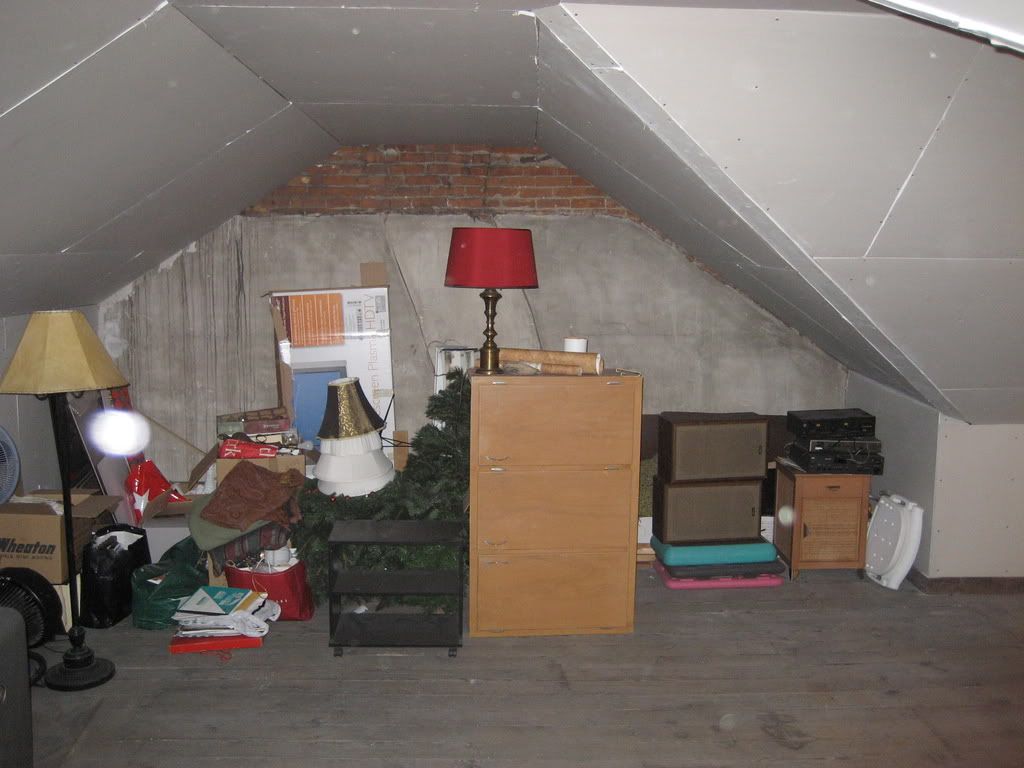
Yes insulation is definitely key and hopefully money whiling I will be able to create the perfect environment. It will house 7 different species with temp and humidity requirements from the low 70s to the high 80s. That makes it fairly easy as I will heat the room to about 70 degrees.

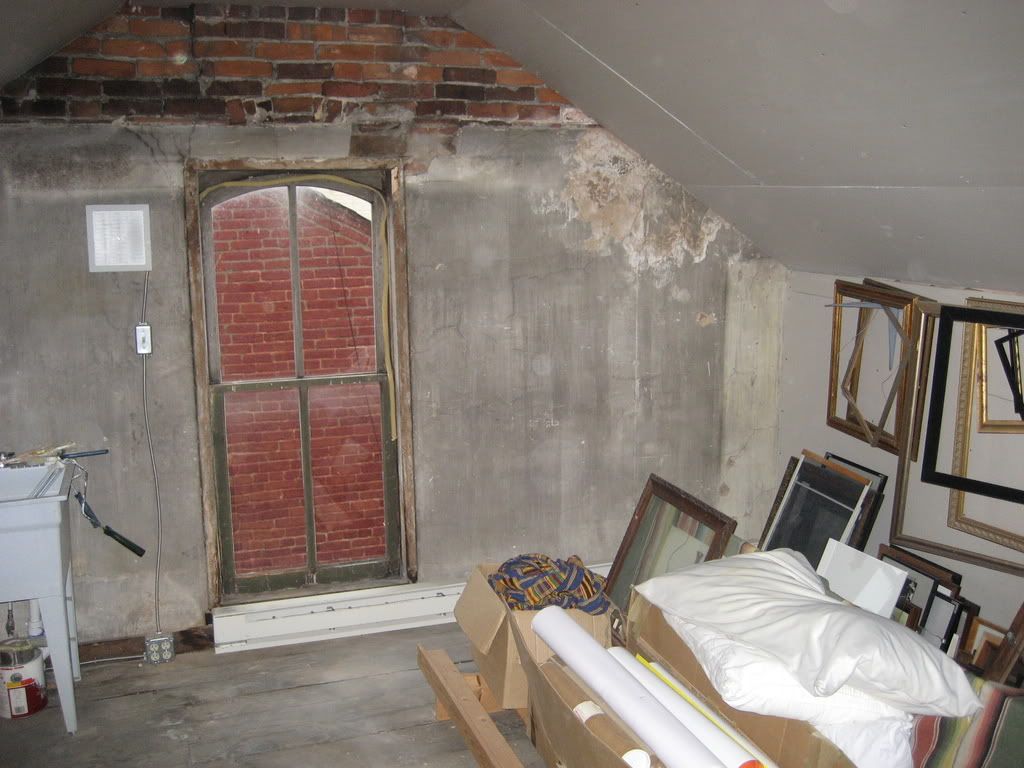
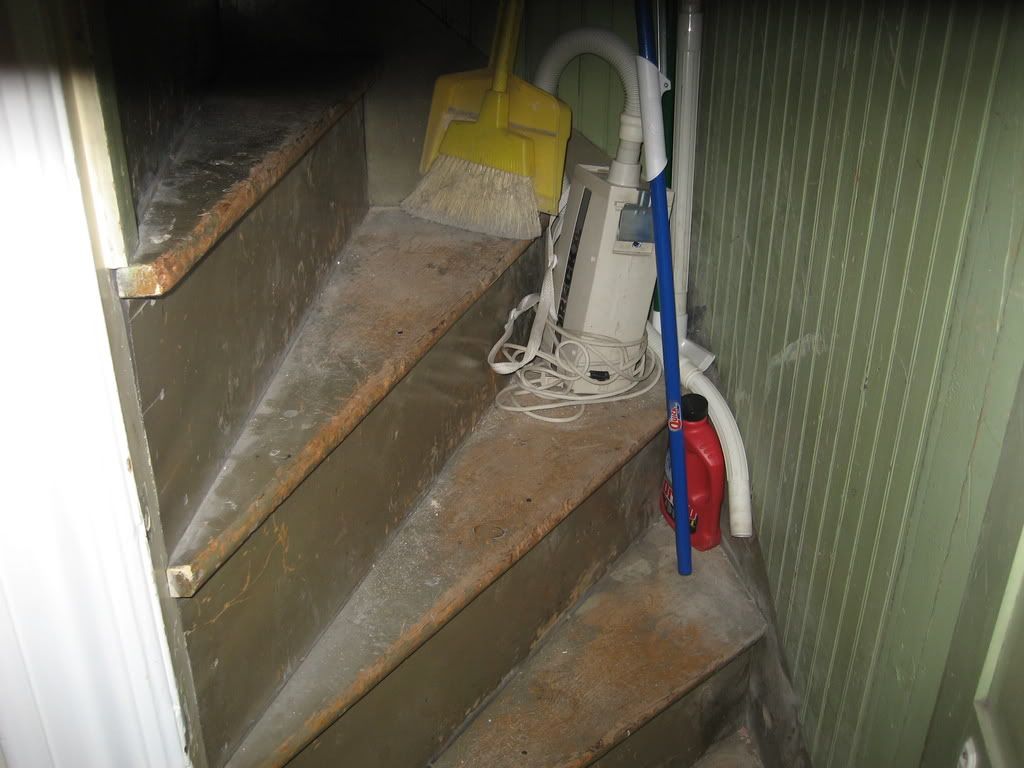
As you can see from the pictures I will need to rip up the flooring to see what lies beneath. Put a layer of double sided bubble foil, a layer of whatever else I can get in there and maybe some particle board instead of the planks. Its a perfect room but has some major draw backs one being the stairs are literally 2" wide and turn into 8" wide steps very hard for my 18"s to get up and down. So this would need to be fixed, temps the baseboard heater doesn't work. Heating and cooling, electric and lighting would all be issues. But its a large room 19'x12' plenty of room to expand.

-----
Jason A.
"Long time Herper, first year Breeder `07."
My 2008 Care Sheet & The BRB Stats. Username: brb@kingsnake.com

jpk4 Feb 26, 2009 05:55 PM

Just a little thing to remember...depending on where the vapour barrier is in your walls and what kind of construction your house is made of, you can't always just toss more insulation on your walls. And of course this note is for exterior walls and it's definitely an issue in colder climates. I know the National Building Code of Canada lays out some rules so that your house doesn't become mold infested, I dont know about American Codes at all.

Just thought I'd put my two cents in so maybe someone wont have huge issues down the road.

gaboonx Feb 26, 2009 07:22 PM

>>Just a little thing to remember...depending on where the vapour barrier is in your walls and what kind of construction your house is made of, you can't always just toss more insulation on your walls. And of course this note is for exterior walls and it's definitely an issue in colder climates. I know the National Building Code of Canada lays out some rules so that your house doesn't become mold infested, I dont know about American Codes at all.
>>
>>Just thought I'd put my two cents in so maybe someone wont have huge issues down the road.

Thanks for the input but since this house is so old built in 1882 I will never be able to seal up everything completely.
Also I am not certain what I will do with the exposed walls but I can tell you where the drywall is in place on exposed walls is simply just screwed/liquid nails to horse hair plaster. It will be a learning experience and one that I plan to take slowly.

Basically I have a guess of what is under the attic floor and it certainly wont be a modern setup. With this in mind I plan to lay down the bubble wrap as best I can with Rxx on top but the beams will provide plenty of "space" so that moisture can escape.
-----
Jason A.
"Long time Herper, first year Breeder `07."
My 2008 Care Sheet & The BRB Stats. Username: brb@kingsnake.com

jpk4 Feb 26, 2009 08:28 PM

Ya I was thinking about trying to give you some specific advice, but that far wall (the brick one) made me think it was an old house. I wasn't thinking 1882 like you said, but yeah, not gonna lie, I wouldn't know where to start with such an old building.

gaboonx Feb 27, 2009 06:27 AM

>>Ya I was thinking about trying to give you some specific advice, but that far wall (the brick one) made me think it was an old house. I wasn't thinking 1882 like you said, but yeah, not gonna lie, I wouldn't know where to start with such an old building.

LOL me either, however a fellow co-worker owns a house that was built in the 1850s and has pretty much gutted each room in his house so if anyone can try to help it would be him. But really I would appreciate any ideas that you would have as well, thanks for taking the time to respond that goes out to all as well!
-----
Jason A.
"Long time Herper, first year Breeder `07."
My 2008 Care Sheet & The BRB Stats. Username: brb@kingsnake.com

Bighurt Feb 27, 2009 08:36 AM

My home was built in 52' thats 1952...and I am in the process of gutting each room as well. So I can imagine what your going through.

IMO going from old to fully replacing everything is the same step no matter the starting point. Just in your case its obvious everything needs replacing. In my case, some stuff can stay, main stack etc. But in either case Insulation and Electricity are the two most important factors.

I imagine you like I did will find quirks that the origional manufacture got away with that is no longer legal. Like for example nailing pieces of 2x4's together to make a full stud....

...for a load bearing wall!!! :O

Good Luck!
-----
Jeremy Payne
JB Reptile
Specializing in Boa Morph's

1.0 Snow "Kahl"
0.2 Triple Het Moonglow "Kahl"
0.1 Orange Tail Hypo Het Leopard
0.1 Double Het "Sharp" Snow
1.0 Ghost
0.1 Possible Super Hypo
0.1 DH Ghost
1.1 "Kahl" Albino
1.0 Hypomelenistic
1.3 Pastel Hypo
0.1 Suriname/Columbian cross
0.1 Anerthrystic

kingsnake1 Feb 27, 2009 03:59 PM

I live in deep southeast Texas. Heating is not a problem. For the winter, I move my racks to my screened in back porch and set the thermostat at 60 for brumation. Then, when it's time to start feeding, I move them inside and turn the thermostat up to a suitable temp. I am in the process of adding a snake room in my 3-car garage and have a window a/c for that room. I am so ready to finish it off and move in. I have a little sheetrock left to hang and trimwork to do, and done!
-----
Greg Jackson

Site Tools