Well almost. GC has set up a protected preserve for the iguanas! here is the press release.
Also ,IRCF will have an article about this preserve in the NEW FULL COLOR issue. If you keep cyclura, the IRCF is a must for the latest info on these animals and anything reptilian really.
enjoy,
jf
PRESS RELEASE
31st March, 2009
New Nature Reserve for Critically Endangered Blue Iguana
The Cayman Islands Government has taken decisive action to help save the world’s most endangered iguana. Almost 200 acres of government-owned prime dry shrubland habitat in the east interior of the Grand Cayman is being protected, to provide area for restoration of the Grand Cayman Blue Iguana, Cyclura lewisi.
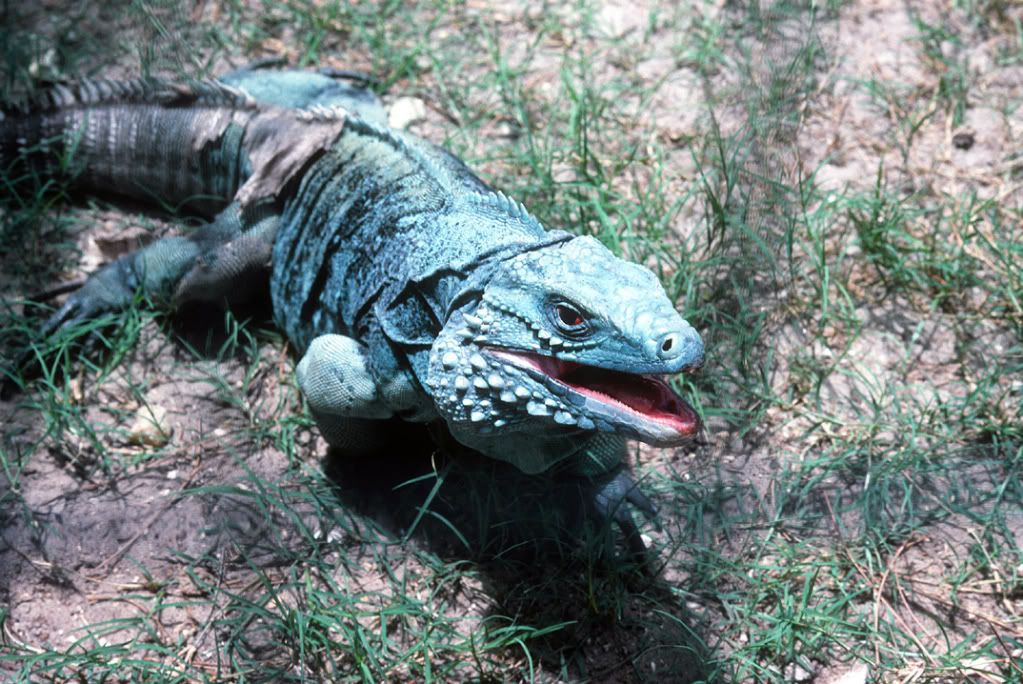
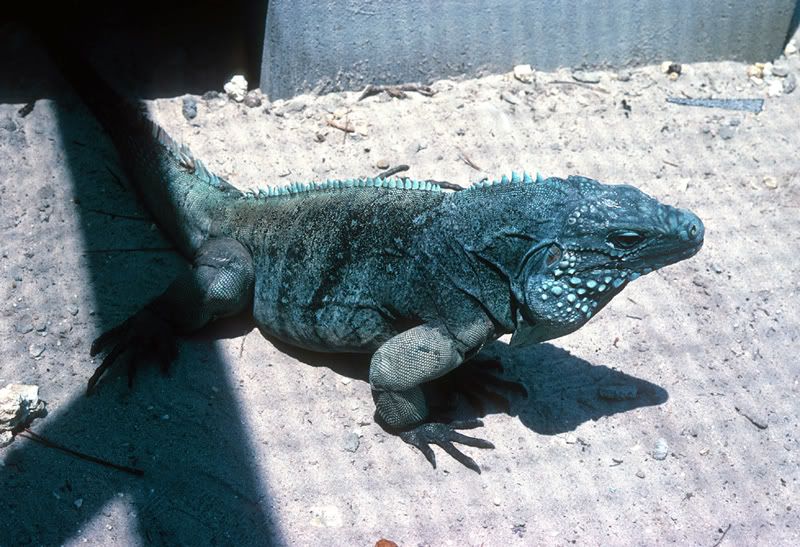
The Grand Cayman Blue Iguana is a sky-blue, herbivorous, giant lizard. Growing to five feet in length, these iguanas have a life span comparable to humans. They are entirely unique to the island of Grand Cayman, Cayman Islands, in the north-west Caribbean.
A vegetarian giant with red eyes, this was once Grand Cayman’s largest land animal, but Blue Iguanas have suffered a catastrophic decline as humans settled the land. Predation by introduced dogs and cats has been compounded by accelerating habitat loss, and now road kill. By 2002 less than twenty-five wild individuals remained.
In 2002 the Blue Iguana Recovery Programme (BIRP) was launched, expanding from early captive breeding efforts by the National Trust for the Cayman Islands which started in 1990. Still operating under the aegis of the National Trust, but partnering with the local Department of Environment and the QE II Botanic Park, the BIRP has achieved remarkable progress over the last seven years, bringing the wild population of Blue Iguanas from functional extinction in 2002, to some two hundred and fifty in the wild by 2009.
Supported also by the Durrell Wildlife Conservation Trust and the International Reptile Conservation Foundation, the BIRP first completed a pilot restoration of wild Blue Iguanas in the QE II Botanic Park on Grand Cayman, developing and testing techniques for successful releases. Then the Programme embarked on large-scale population restoration in the Salina Reserve, a 625-acre National Trust protected area in north-eastern Grand Cayman.
Unfortunately less than 14% of the Reserve area is suitable Blue Iguana habitat, which severely limits the extent to which a self-sustaining wild population of Blue Iguanas can be restored there. By 2008 the BIRP was in danger of losing momentum, with the Salina Reserve habitat approaching carrying capacity. Without more protected land becoming available, population restoration for the Blue Iguanas was about to stall.
But at the same time, a European Union grant proposal, shared with the Turks & Caicos Islands and the British Virgin Islands, came together in 2008. In the Cayman Islands, the project promises funds to build a visitor centre for a nature reserve featuring the dry shrubland ecosystem, and the Grand Cayman Blue Iguana. The Cayman Islands Government decision has now supported and enabled that project, by contributing government land to establish the nature reserve itself.
Especially if the Cayman Islands are successful in adding some adjacent land to the new protected area, there may soon be enough Blue Iguana habitat available to raise the wild Blue Iguana population to a level that can be self-sustained in the long term. A tantalizing prospect is in sight, where a captive breeding programme may no longer be needed, where Blue Iguanas of all ages and sizes are roaming free and protected, breeding and sustaining their numbers without the need for constant human intervention.
From a scenario of little hope in 2002, the BIRP and its partners are now in sight of the kind of success that is all too rare in the world today. The Grand Cayman Blue Iguana can be saved from extinction, and in a few more years the Cayman Islands may be able to boast that they have achieved just that.