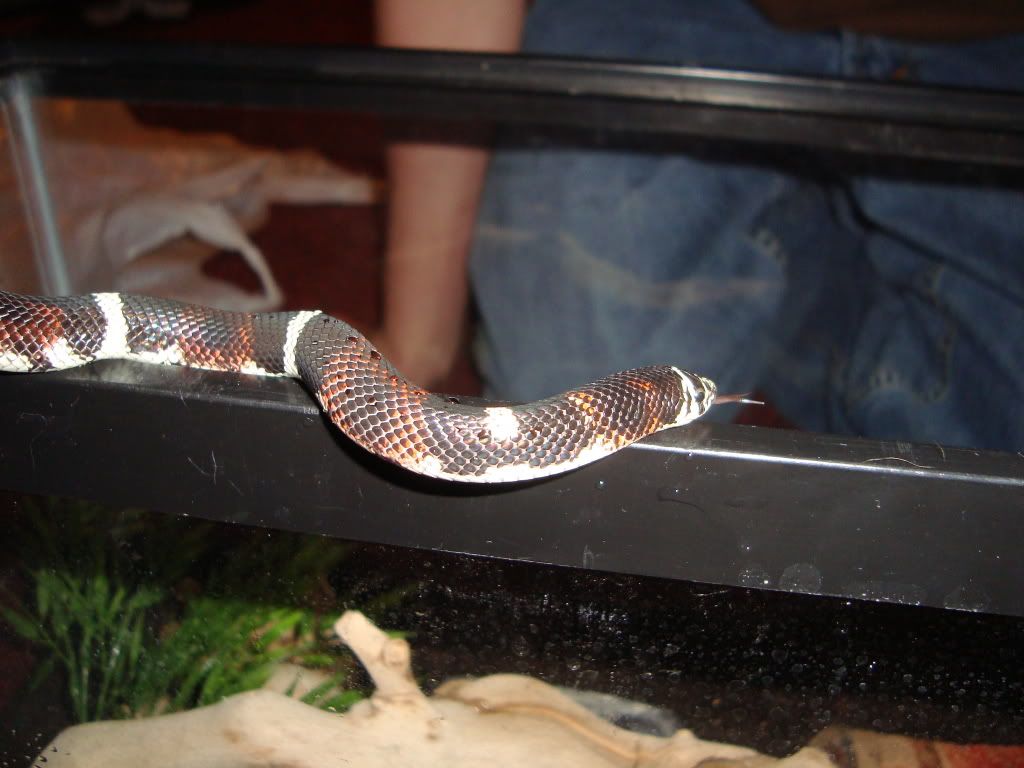
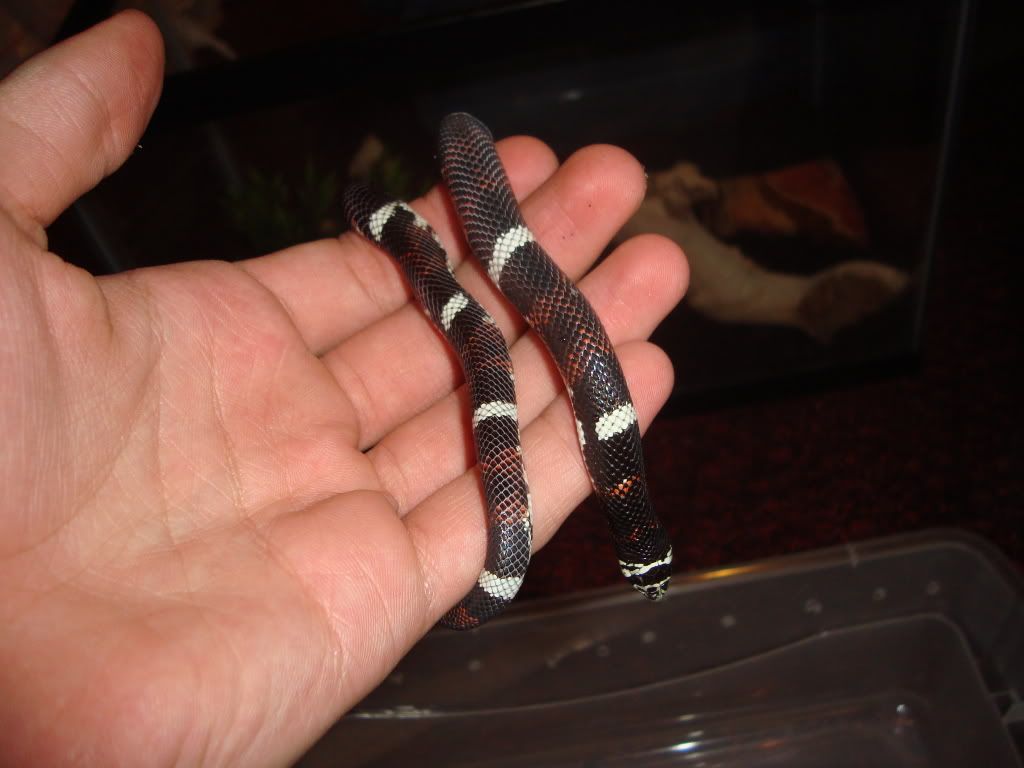
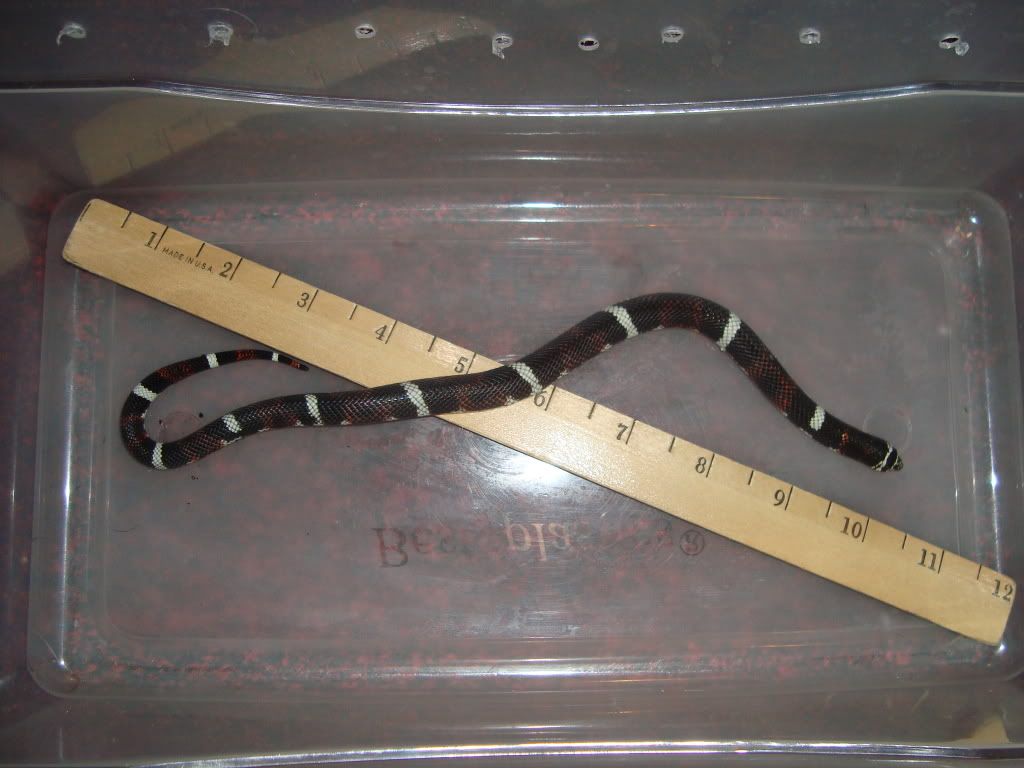
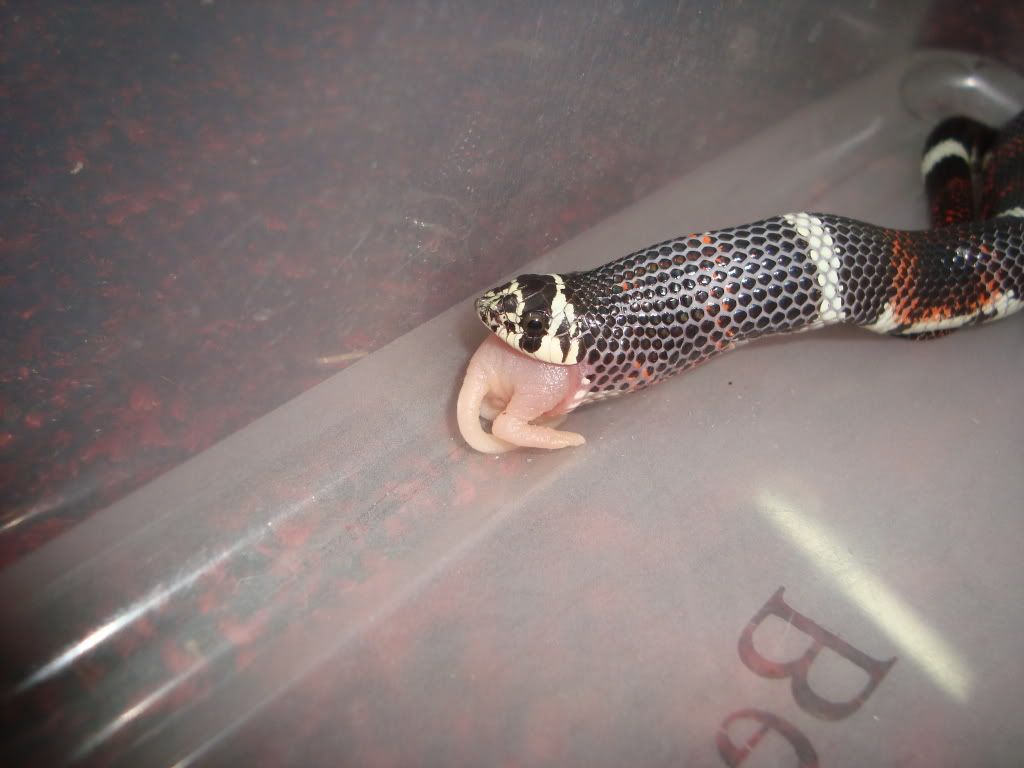
This is my brother's new male tri-color hog. I'm not sure on which species but I believe it is L. pulcher due to looking at pictures, any help there would be nice. He is 13inches and not sure on weight yet, haven't weighed him. This is our first time working with this species of snake and I want to make sure we are doing everything right. We have him a 5 gallon viv with eco earth and just one hide as I've read they would rather bury themselves then use a hide(this also seem to be proven true already due to his behavior. The warm side is about 85 and the cool is 70. He ate for us already so I'm not to worried about feeding anymore. The last thing I'm concerned about is the humidity. Everything I've read says they need a lot of humidity but have never given a %. I'm experienced with the more common colubrids such as corns, garters, milks, and kings so this 9along with a ball python I've picked up also) is a new experinece for me. Thanks for your time.

Reptile & Amphibian Forums
Welcome to kingsnake.com's message board system. Here you may share and discuss information with others about your favorite reptile and amphibian related topics such as care and feeding, caging requirements, permits and licenses, and more. Launched in 1997, the kingsnake.com message board system is one of the oldest and largest systems on the internet.


New Tri-Color
Replies (7)
The best way to handle humidity with tricolors is to provide them with a "humidity box"-a small, closed plastic container filled with damp sphagnum moss. Cut a small entrance hole in one side and place it in the cage. Now your little guy can seek out a high humidity area whenever he feels the need!
-----
Brad Chambers
WWW.HCU-TX.ORG
The Avalanche has already started-it is too late for the pebbles to vote....
85 is to hot, especially if it is only a 5 gal enclosure.
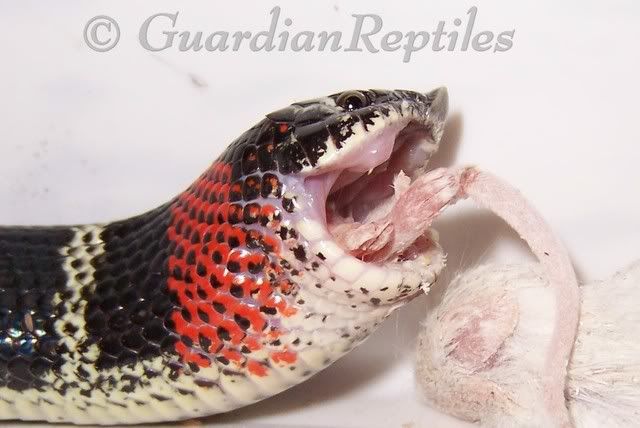
Here is a basic care sheet I wrote. Only consistant issues I have had with the tris are RI's due to to much humidity. If you keep them around 78, with water available for them to soak in, then you really do not need extra humidity. To much heat though, and they do not do to well.
Tricolor Hognose
By Jenea Wood of Guardian Reptiles
Species: Lystrophis pulcher - named after Latin “pulcher” meaning beautiful, handsome, fine, fair.
Distribution: SW Brazil, East Bolivia, South Paraguay, Argentina
Size: adults vary from 18-24 inches, with females being the larger. There have been a few females over 30”.
Caging: These beautiful little Neotropical snakes are terrestrial and love to burrow. A ten gallon aquarium with a secure lid works fine for these guys, but a 20 gallon long is preferred. Aspen is recommended as a substrate, although some report using newspaper and paper towels. The Tricolor hognose requires a bit more humidity than their North American counterparts, so I provide a humid hide when they are in shed and water dish at all times. For a humid hide, I simply take an appropriately sized Glad ware container, and cut a hole in the lid (take care to keep the edges smooth). I fill this 2/3 full with Sphagnum Moss which I find in the Garden Section of my local store. I mist the moss so that it is damp, and re-mist about every 3 to 4 days. I also like to stick brand new bags of moss the freezer for 24 hours to kill possible bugs. I have never found any, but it just helps my peace of mind. With any humid hide, you need to check for mold on a regular basis. Mold can quickly cause a respiratory infection.
Heating: Ambient temperatures should range between 78° and 84° F. I do not provide hot spots for mine and they do quite well, as long as the ambient are consistent. These little snakes do not thrive in hot, dry conditions. They are nocturnal, and are not use to high heat.
Feeding: This is one species with an absolutely wonderful "personality". Mild mannered and fairly tame, they rarely try to strike or bite. They also have a healthy appetite. Not even being in shed effects the female appetite. You should offer neonates day old frozen thawed pinky mice after their first shed (approx. 10 days after hatch). Neonates have tiny mouths and can be difficult feeders to start with. It is most important to find small day old pinky mice.
Scenting with tree frogs, anoles, or tuna water might be required for the more stubborn feeders, but offer unscented a minimum of two times before resorting to such measures. I always leave my neonates in a deli cup overnight with their food. Adults are fed frozen thawed adult mice every 4-5 days. Always wash hands after handling food items, these guys WILL chew on anything that smells like their food. I have had them chew on their food container where the mouse had been laying! I have also heard of a bite after eating a hamburger and not washing hands before handling. They truly live up to their name … hognose.
Breeding: Note: these animals are note related to the native hognose found in North America. Sexual maturity is reached anywhere from 13 to 24 months. Females can and are capable of producing multiple clutches a year. To date, I have heard of a female producing 8 clutches in a single year. Five is the max I will let mine lay in a year, so that my females do not burn out. Females should be fed more frequently while gravid, and should be given calcium / vitamin supplements. Although females can lay multiple clutches in a year, care should be taken to not exhaust their system. Females will normally lay eggs 6 - 10 days after their pre egg laying shed. A nice deep laying box filled with damp peat moss should be provided. It is recommended that you check for eggs twice a day, as these girls are notorious for depositing their eggs anywhere but the egg box!
Incubation: Eggs should be incubated on moist vermiculite at 78° F for approximately 78 - 90 days. Hopefully, this will allow the neonates to be a little bigger, and easier to feed. Hatchlings average 4 to 7 inches.
-----
Jenea
Guardian Reptiles
"When your memories are bigger than your dreams, you're headed for the grave" Author unknown
Thank You Very Much! That is the best care sheet I've seen on them so far! all the infomation I've read on them so far has be conflicting. thank you very much, I will be making the changes ASAP!
Excellent care sheet, Jenea!
Only one mistake-Though in a different genus, Lystrophis actually ARE related to our North American hognose-both are classified in the subfamily Xenodontinae.....
-----
Brad Chambers
WWW.HCU-TX.ORG
The Avalanche has already started-it is too late for the pebbles to vote....
Thanks Brad, you are correct! I will fix that pronto....didn't look far enough up the family tree!
-----
Jenea
Guardian Reptiles
"When your memories are bigger than your dreams, you're headed for the grave" Author unknown
"Breeding: Note: these animals are very distant cousins to the native hognose found in North America, and are not the same species."
I really put that in there because I had so many people wanting to breed them or co habitat them with westerns or easterns...they just did not seem to get that they are two totally different species.
-----
Jenea
Guardian Reptiles
"When your memories are bigger than your dreams, you're headed for the grave" Author unknown
no post
-----
Brad Chambers
WWW.HCU-TX.ORG
The Avalanche has already started-it is too late for the pebbles to vote....
