Reptile & Amphibian Forums

Welcome to kingsnake.com's message board system. Here you may share and discuss information with others about your favorite reptile and amphibian related topics such as care and feeding, caging requirements, permits and licenses, and more. Launched in 1997, the kingsnake.com message board system is one of the oldest and largest systems on the internet.

Click for ZooMed
Click for 65% off Shipping with Reptiles 2 You

Looking good on the '09 zonata front . .

JKruse May 05, 2009 11:54 PM

Aside from wishing all a prosperous breeding season, I'm glad to report that the z's in the Kruse residence have been....well.....(insert British accent)....."getting jiggy with it".

Providing the stars align just right and fertility is good, we're expecting (utilizing the formerly-recognized nomenclature of spp breakdown until I'm beaten down and told not to...):

Laguna PULCHRA

Santa Ana PULCHRA

San Jacinto PARVIRUBRA
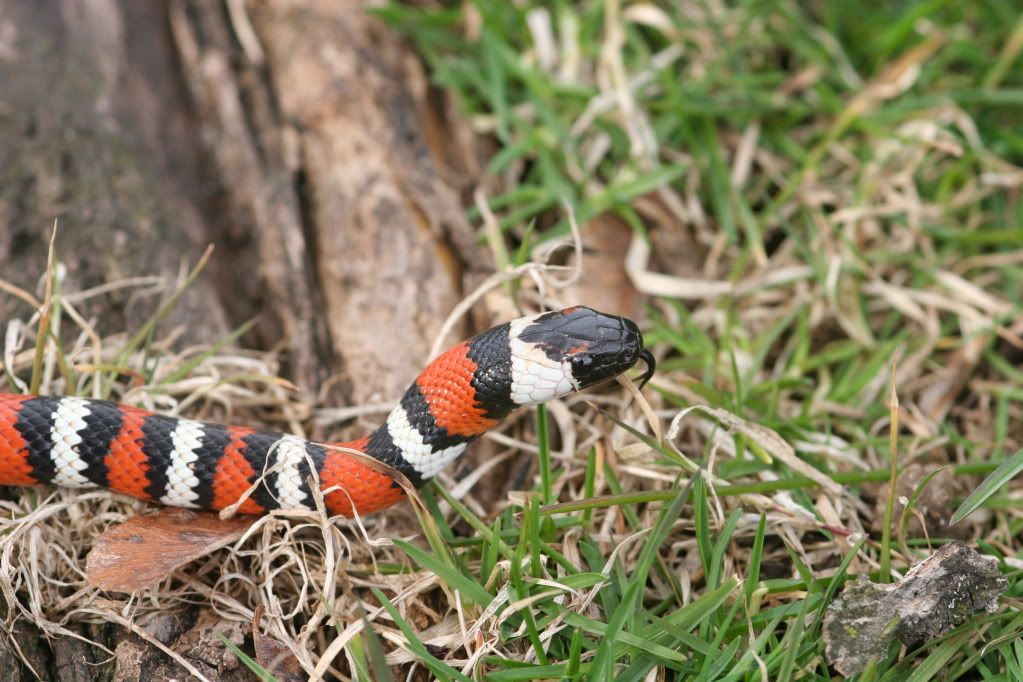
High-black MULTICINCTA
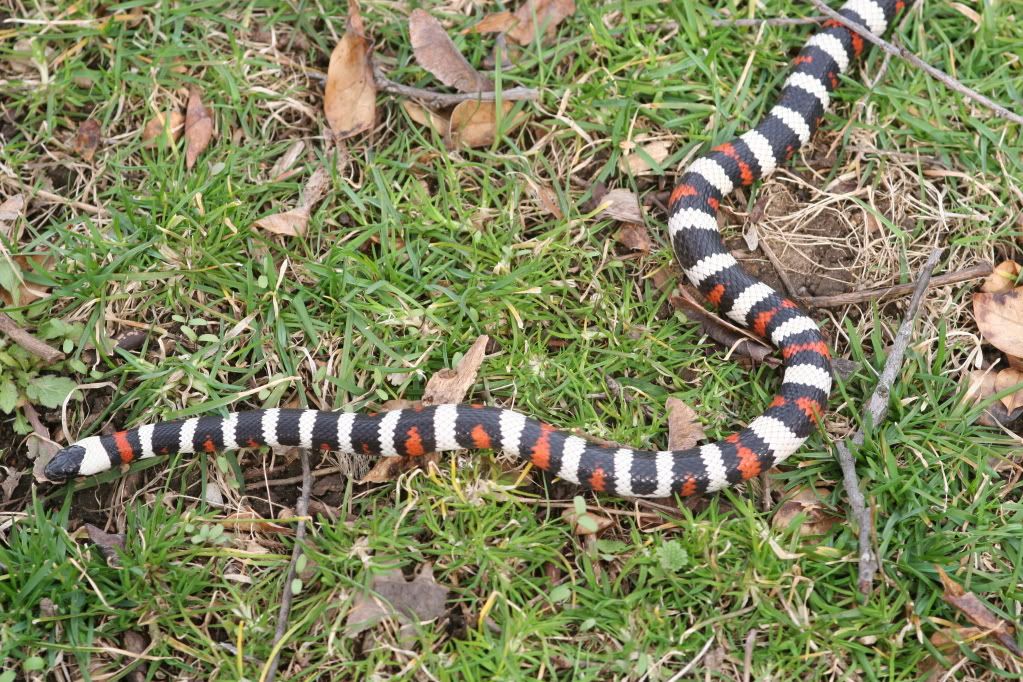
Bass Lake (screamer) MULTICINCTA
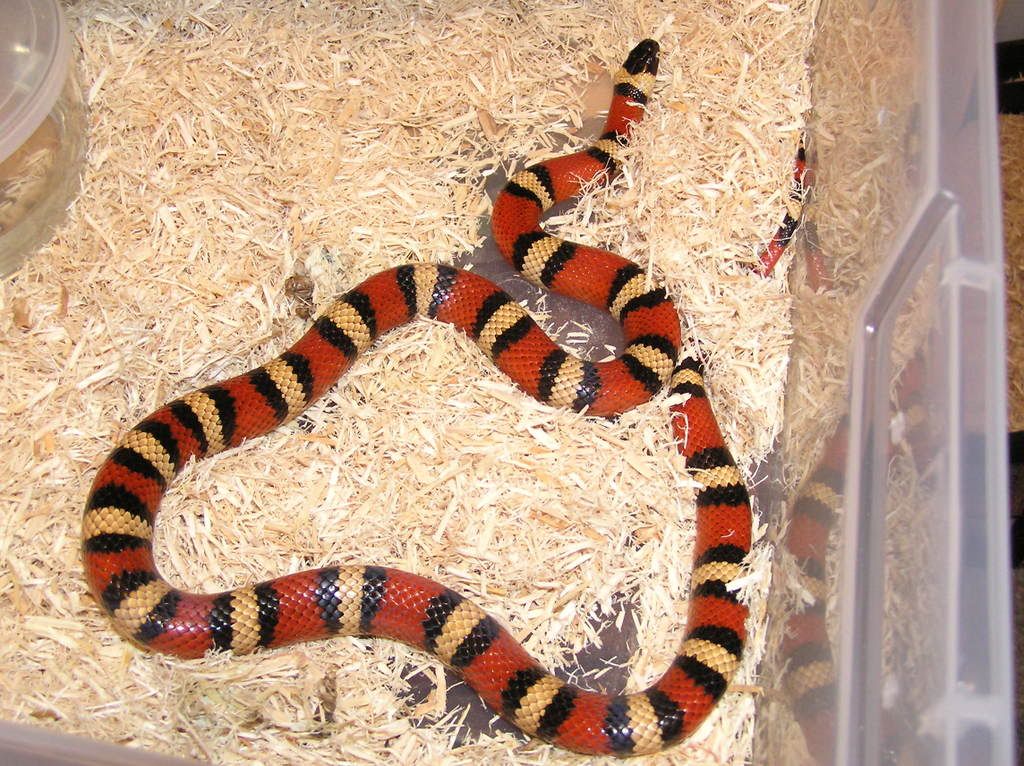
Greenhorn MULTICINCTA

A very slim chance but possible Napa County St. Helena
ZONATA ZONATA
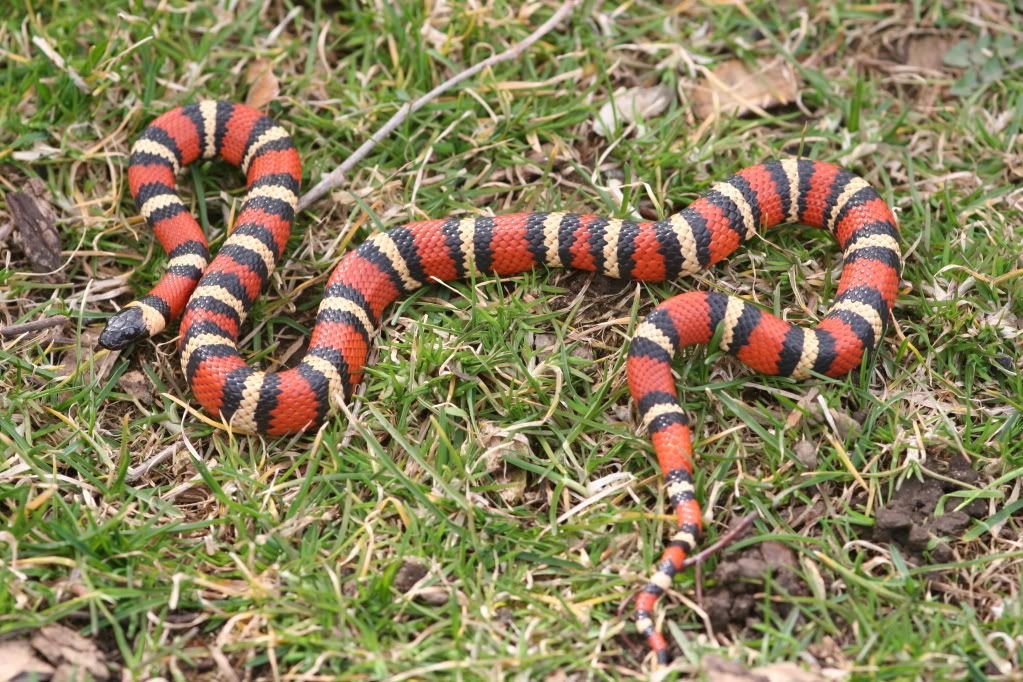
Sierra Juarez AGALMA
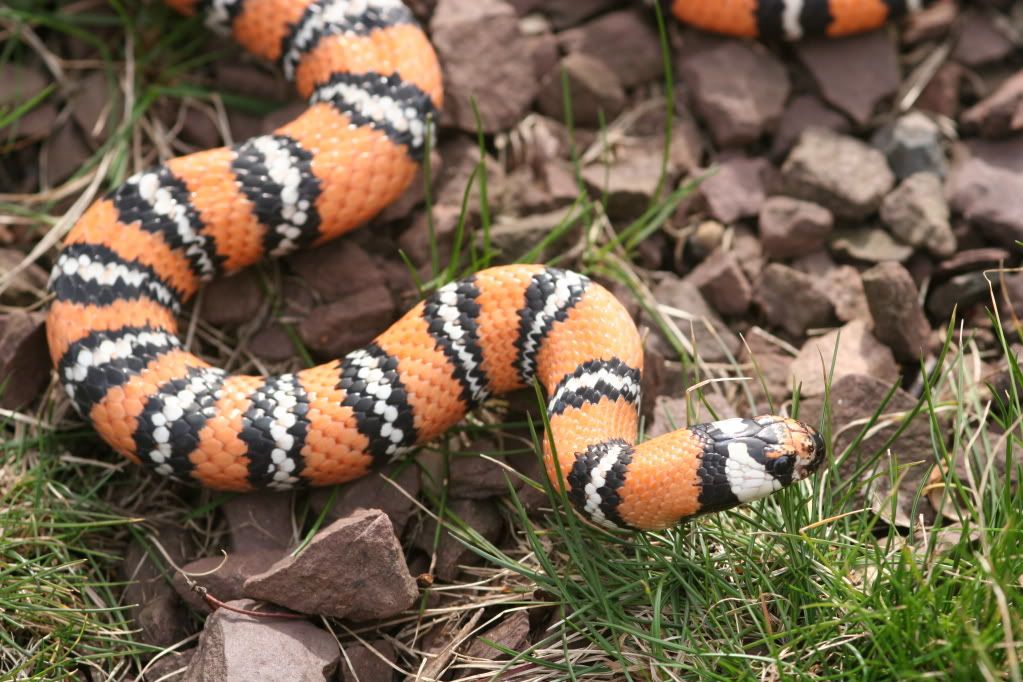
Pink Hypo-erythristic Sierra Juarez AGALMA

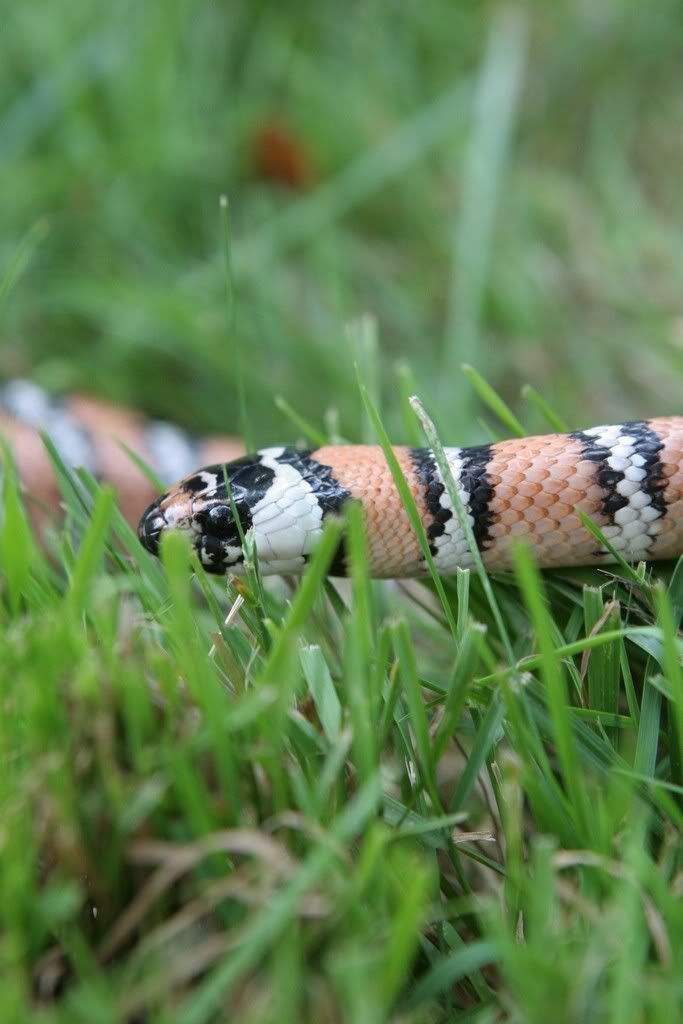
And it's a really anticipated 2010 with:

Black and White locality MULTICINCTA

Upcoming lines of Sierra Juarez AGALMA, first up being from Casa de Bartlett with more to follow...

....as well as additional localities and surprises in the works. Hope you enjoyed . . . .
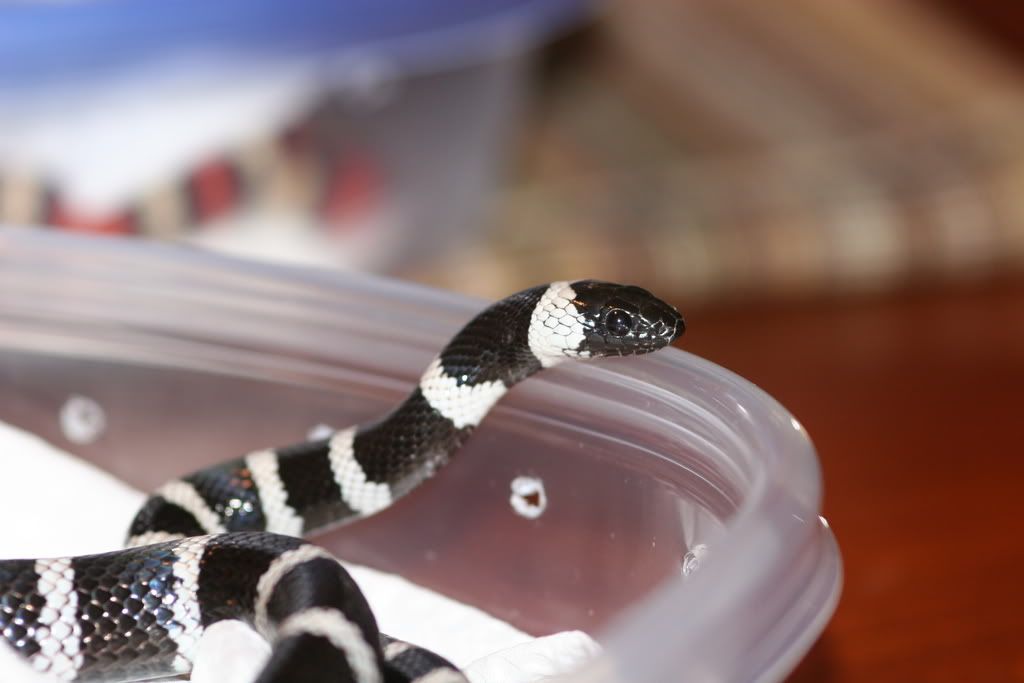
Image" alt="Image">
-----
Jerry Kruse

And God said, "Let there be zonata subspecies for all to ponder..."

Replies (42)

mckenzieriverrep May 06, 2009 12:00 AM

Simply awesome!

Bluerosy May 06, 2009 12:22 AM

I don't get this statement:

Black and White locality MULTICINCTA
What does this mean? Are you saying it is locality but you won't tell us which locale?
-----
Signature edited

JKruse May 06, 2009 07:10 AM

Rainier, if I had to speak in brooksi terms, it's a "LICORICE" mountain kingsnake. Sometimes it's just nice to enjoy the view. Hope your Cinco de Mayo was breathtaking.
-----
Jerry Kruse

And God said, "Let there be zonata subspecies for all to ponder..."

Bluerosy May 06, 2009 09:30 AM

Sometimes it's just nice to enjoy the view.

AHH,, so it is from Halfdome...or the base of El Capitan? E:
-----
Signature edited

Tony D May 06, 2009 06:39 AM

Very nice indeed Jerry
-----
“Nothing is at last sacred but the integrity of your own mind.” Emmerson

JKruse May 06, 2009 07:11 AM

Thank you much. See you soon. Hope that pool is coming along nicely. My trunks are ready.
-----
Jerry Kruse

And God said, "Let there be zonata subspecies for all to ponder..."

Tony D May 06, 2009 06:57 PM

keeping my fingers crossed!
-----
“Nothing is at last sacred but the integrity of your own mind.” Emmerson

MikeRusso May 06, 2009 08:04 AM

GREAT STUFF!! Although Jerry's photo's are very nice.. I have seen all of these animals live and can say that the pictures do NOT do them justice!

See you soon bud!

~ Mike Russo

paulbuck May 06, 2009 08:11 AM

Jerry,
Thanks for sharing these. I was excited to see these pics especially because yesterday I found and released my first Zonata (first mountain king of any sort) just North of Nevada City at about 4000'. It looked very similar to your high black Multicincta. My co-workers had trouble understanding my extreme excitement.
Paul

JKruse May 06, 2009 05:12 PM

I can just imagine your excitement. Even with alotta to black I think they're awesome. But I go beyond aesthetics and truly appreciate zonata for what they are w/in the realm of evolution, adaptation, and habitat. Not many other creatures like 'em. Wish you a pic of your find!
-----
Jerry Kruse

And God said, "Let there be zonata subspecies for all to ponder..."

paulbuck May 06, 2009 08:07 PM

My co-worker had the camera and I made her take lots of pics. Tomorrow I'm in the office and should be able to access them and will post it. This specimen had just eaten I suspect a frog (many seen after the recent rains) so I handled gently and briefly so as not to cause a regurge. I'm still excited by it.
Of course now I want one.......
Paul

antelope May 06, 2009 08:32 AM

Wow, Jerry, absolutely fantastic!
-----
Todd Hughes

Dobry May 06, 2009 11:12 AM

Very, very nice collection! This animal was sold to me as a zonata, but I don't know if it is. What do you think?

-----
"Relax, Don't Worry, Have a Homebrew!" Charlie Papazian

JKruse May 06, 2009 04:47 PM

Tough to tease that one out with the "iffy" photography. Can we get a better pic? Particularly of the head. At first glance I thought "annulata", but it's so blurry.


Image" alt="Image">
-----
Jerry Kruse

And God said, "Let there be zonata subspecies for all to ponder..."

Dobry May 06, 2009 08:06 PM

Yeah, those are old pics. I will get you a better pic, though it could take a couple days, I forgot my camera on my buddies boat and he lives a few hundred miles from me. It's suppose to be in the mail.
-----
"Relax, Don't Worry, Have a Homebrew!" Charlie Papazian

tspuckler May 06, 2009 02:35 PM

That's a sweet collection of kings you've get there, Jerry.
I look forward to seeing some baby pics this Summer.

Tim

DISCERN May 06, 2009 06:19 PM

Jerry, that Sierra Juarez Agalma is just sick!!! Awesome snakes!!
-----
Genesis 1:1

JKruse May 06, 2009 07:48 PM

Thank you brother.....much appreciated.
-----
Jerry Kruse

And God said, "Let there be zonata subspecies for all to ponder..."

JYohe May 06, 2009 06:29 PM

Hello...call me stupid or outdated...I don't read on the zonatas I guess.....

nomenclature.....what are they now?...I still know the 7 ssp of zonata of old.....???

the black and white....gaaaawd nice snake...make alot of them....please....LOL

....agalma...from red to pinks...cool....

..multicincta...some are nice, some are too milky looking...weird....first pic is coo of them........

thanxx...good luck...babies galore for you...!!!!

..
-----
......4
......25 / 2
...........................

.

JKruse May 06, 2009 08:08 PM

Thank you brother. So here's the scoop in a nutshell:

The research finding from Rodriguez-Robles, DeNardo, and Staub suggested that the sub-specific nomenclature given by herpetologist Richard Zweifel (circa 1952) was too vague given that he only had several specimens of most of the zonata at that time, and that nuances that were used to separate them (i.e.: triad counts) were not sufficient enough in completely defining them. An additional publication done by Crother, Campbell, et al. in 2003 further supported these findings and thus stating that they "no longer recognize the seven ssp".

So they are lumped together (sadly) as such:

What used to be -- Cascades (natural intergrades of multicincta and zonata zonata), Sierras (multicincta), Coastals (multifasciata), and Diablos (natural intergrades of multifasciata and zonata zonata) are currently grouped as THE NORTHERN CLADE of what are broadly called Lampropeltis zonata.

What used to be -- San Bernardinos (parvirubra), Sand Diegos (pulchra), and Baja California (agalma) are currently grouped as the SOUTHERN CLADE of what are broadly called Lampropeltis zonata.

The southern form of agalma, from the Sierra de San Pedro Martir, have been found through mtDNA testing to be more closely related to the Todos Santos zonata ("herrerae" and may eventually be elevated to their own sub-specific or even species status some day.

The Todos Santos Island zonata are the only ones not included in this due to their sheer geographic isolation for eons, and are currently under their own species status, Lampropeltis herrerae.

WOW........I know........I know.........

You'd be surprised to see how many revisions zonata has undergone since they were first described. If you'd like a breakdown, just ask and I'd be happy to provide Jeff.


Image" alt="Image">
-----
Jerry Kruse

And God said, "Let there be zonata subspecies for all to ponder..."

JYohe May 06, 2009 08:35 PM

Hmmmmm....so basically Nothern Clade and Southern Clade and Todos Santos Is......OK........

as they always say...some want to segregate and some want to lump......

.I still think of the 7 ssp.......

I also say Elaphe yet for ratsnakes.....even NA ones....I kinda got the name Pantherophis (I think spelled right?)LOL...in my head...and I think they changed it again or want to...

they change everything...mushrooms they do the same thing...change name, change genuses for species listings...change alot ...bugs I bet also....

...as for us...we are culturalists...we create herps....they just talk about them.....!!!!!!........

THANK YOU....I will try and read up on it all sooner or later....I don't read much....not nuch to read?...or I am lost finding it...online I can look around...books and mags just suck usually so I don't bother....why buy a book to learn nothing?....
last good book I got was actually ON Mountain Kings...maybe there's stuff in there I missed ...read only parts quicky...

thanxx again.breed well, breed alot....I still have yet to buy or try ANY zonatas....and witht he luck I am having with Pyro ssp....ouch.....(knobs...last yr one laid all dud 1 no nuttin, this year 1 laid 1 good 1 dud..what is 2 eggs????don't count as a clutch to me...and the other laid 9 and 7 were duds...I think I have to go down lower winter temps/....???....)

,,,good luck
-----
......4
......25 / 2
...........................

.

mckenzieriverrep May 06, 2009 10:31 PM

Hey what temp did you drop yours to? I went down to 50 most of the the time and then hit 45 for awhile. Way better results than staying at 55 the entire time, which is what I did last year. How long does everybody brumate for? I went about 4 months.

Later and happy breeding. haha
Luc

Rick Staub May 07, 2009 02:13 PM

Couple things. First the Rodriguez-Robles et al paper did not propose any taxonomy changes. There was confounding data, though certainly you could say that pulchra and parvs are indistinguishable by any measure as are z.zonta and multicincta. Past that it gets confusing. Crother et al proposed no new data and basically interpreted Rodriguez-Robles et al to say that no subspecies should be recognized. IMO they overlooked other morphological characters such as coloration on snout and position of the first white ring. These characters were not evaluated in Rodriguez-Robles et al.

If I could wave a wand, I would synonymize multicincta with z zonata, pulchra with parv, split out herrerae and leave the rest the same. The 2 agalma pops will probably get split eventually but more data is needed.
-----
Rick Staub

viborero May 06, 2009 11:21 PM

Jerry Kruse you're my hero.
-----
Diego

SWCHR

markg May 07, 2009 03:58 PM

I live in California. I can legally have one zonata, and not any of those Laguna, Santa Ana or Santa Monica mtn localities you so cheerfully feature here.

I pay taxes in Calif, and I can't have a pulchra. You don't pay taxes in Calif, and you display pulchra in boxes all day long. Not fair! lol

I am glad folks work with these interesting animals. Good luck to you Jerry, produce many. For herpers, they are the jewels of our local mtn ranges here. CB animals should be available to all. I must admit I am saddened by the practice of the uninformed and unscrupulous collectors who in their zeal disrupt the habitat these animals use seasonally. The uninformed can be taught. As for the unscrupulous, well, lets just hope they pick a new hobby. Like collecting Hot Wheels. No rocks to damage with that hobby. They can hang out at Target all day waiting for the next Hot Wheel shipment... (no offense to you Hot Wheel collectors, I actually have about 5 old classic Hot Wheels myself, but no pulchra
-----
Mark

FR May 07, 2009 06:08 PM

Hi Mark, a couple things. First, kings do not live in rocks, they use them for a short period. If the rocks are messed up, it does not hurt the snakes. It does hurt those of us that want to see these beautiful snakes behaving naturally. No worries thought, as soon as the next big fire goes through, the rocks will be rebuilt, extreme heat creates new fissures and cracks OVERNIGHT.

Also, how about writing your game and fish, or are they backwards where you live, fish and game? Talk to them about your concerns. You know, enforce the laws in the field where its important and stop fooling with innocent people. These departments tend to mess with keepers because keepers are easy. Yet, its not the keepers who poach. They should work IN THE FIELD, afterall thats where its IMPORTANT. Cheers

markg May 07, 2009 09:23 PM

Thanks for that clarification. I guess I should have figured. That explains why in one of the most easily-accessed and ravaged areas here where every suitable rock was left ary and every log shredded, one seasoned herper still found snakes there, though later in the season at dusk, and not under rocks.
-----
Mark

viborero May 07, 2009 09:58 PM

You make it sound like AZ regs are so progressive. At least CA residents can breed and sell CB offspring of SOME of their animals. No such luck in AZ. And don't even get me started on legislation regarding Heloderma, klauberi, and others.... >(
-----
Diego

SWCHR

FR May 08, 2009 01:09 PM

I don't remember even mentioning our Fish and game. Not in the least. That must have been echos in your head, hahahahahahahaha.

The only thing our fish and game did was, it was the first to protect a venomous reptile. First in the world. After that, its been all down hill. Heck, they even protected a snake that did not exsist, hahahahahahahahahahaha. Oh well.

The problem in most cases is the hen house is protected by the foxes.

Oh yea, don't even mention Az game and fish, they just had a hand in murdering a Male Jaguar. Let me think, snare trapping mountain lions to STUDY THEM, Then setting a snare trap in the area the Jag was seen and baiting it with female Jag dung. Hmmmmmmmmmm Somebody needs some jail time and this time its someone from game and fish. Cheers

viborero May 08, 2009 01:30 PM

"Also, how about writing your game and fish, or are they backwards where you live, fish and game?"

I'm just saying they're pretty backwards where you (and I) live too.

Yes, that Macho B situation was handled very, very poorly. Then again, what did AZG&F expect to gain by taking the animal to the Phoenix Zoo for medical care, of all places...
-----
Diego

SWCHR

JKruse May 09, 2009 12:34 AM

So zonata do NOT live in rock outcrops/formations? REALLY. Are you suggesting they disperse into open fields for lengthy periods??

I know that some populations of zonata which have greater access to riparian habitats may utilize fallen logs/tree stumps within primarily Transition-Life Zones and down into lowland riparian corridors, but wouldnt your comment be somewhat of a "blanket statement"?

I believe, with the exception largely that of multicincta and somewhat with parvirubra, most z populations inhabit rock formations most of the time. Moreover, zonata observations outside of rock formations are largely synonymous with the presence of excess moisture (rain)....otherwise, zonata tend to retreat deeper into such formations to gain access to moisture avoiding dryer, harsher conditions.

I predict you will volley back somehow and tell me I'm wrong and that I havent spent enoguh time in the field... yada yada, but I don't think you're entirely correct by stating that "zonata only use rocks for a brief period of time".

How are the varanids coming along?
-----
Jerry Kruse

And God said, "Let there be zonata subspecies for all to ponder..."

JKruse May 09, 2009 01:54 AM

Hence "fallen logs"...had a good chuckle there. I meant LOGS, just logs and not specifying the action the tree underwent to create such a condition. Yes, logs don't fall. Got it. Ha.
-----
Jerry Kruse

And God said, "Let there be zonata subspecies for all to ponder..."

FR May 10, 2009 09:12 AM

What I will say is, you seem to want to argue and not read. We are talking about SURFACE ROCKS THAT GET FLIPPED AND LEFT. If you have half the experience that you say you do, then you should know that once the seal is broken(humidity seal) surface rocks are not used, or very rarely used.

These animals much like other tricolors live in the ground and use material, IN THE GROUND, rarely using whats on the ground. With Zonatas as well as pyros and milksnakes, they ALSO exsist and florish in areas with NO SURFACE rocks. As in, surface rocks are not required, but can be used on a temporary basis(a small tool in their exsistance and a large tool for collectors).

An example is, we often take Degreed herpers(professors) to our montane rattlesnake study site. They across the board think montane rattlesnakes live in talus slopes. You know, something they read in books. Our site does not contain talus slopes. So they say, we are not going to find any rattlesnakes. Then WE explain, over 99% of montane rattlesnake habitat does not contain talus slopes. These snakes are not specific to talus slopes. Talus slopes are used and are easy to identify by humans. And yes, montane rattlesnakes are common on this talus devoid site.

Why folks get all envolved on EASY methods of collection is beyond me. You all seem to want to understand the animals, but only want to understand them on you level. YOu know, how you collect them, not how they actually live.

Do you also think snakes only live in AC? as thats how the vast majority of snakes are hunted.

Zonatas and pyros, occur in areas where they do not use rocks, that sir is the VAST MAJORITY(vast majority= 99% plus) of their habitat. Cheers

Rick Staub May 11, 2009 10:20 AM

I know of no inland population of zonata that is not near or in rocky outcrops. I doubt there are pyros near Prescott that are not integrally tied to a rocky outcrop. In the coastal ranges in California, zonata are much less reliant on rocks and can be found in open areas with no cover. They are a very different snake on the coast. I know of no studies where anyone has examined what zonata from inland pops do after they leave or if they leave their hibernaculums. Unlike many pyro pops, very few zonata from inland pops are observed out cruising or moving around in open areas with no rock. Very few are observed out moving even in rocky areas.
-----
Rick Staub

FR May 11, 2009 10:18 PM

Without getting to specifics, both zonatas and pyros, use certain places at elevation, and are more generalized at lower elevations. But both without question use areas without surface outcrops. Which means what is important is whats under the ground.

Also both zonata and pyro, occur in many many many places where observing them is difficult because of the lack of areas we know how to collect(i mean observe)

The reality is, they occur in many areas, but we are prejudiced as to what we are successful at finding them commonly.

And yes, both zonata and pyro spend the vast majority of their lifes underground/cover and not out crawling.

The problem with this type of discussion is, its based on what we as collectors are successful at, not necessarily what they actually do.

An example is, we do find pyros in the grasslands between mountain ranges. But if you asked me to find one, I would have to get lucky. But if you asked me to go find five gravid females by tomorrow, I would have them for you tomorrow night, just not in the grasslands.

Again, there are pyros and zonatas in many many ranges, that we do not collect or observe. But both are commonly observed doing certain things in a FEW places.

By definition, pyros occur in oak woodlawn and oak grassland. Not specifically particular rock outcrops. What you are talking about more about method of collection, not defining where they live. Cheers

Rick Staub May 12, 2009 02:05 AM

I do not doubt that pyros utilize areas without surface rocks and my limited experience with them indicates that they wander a lot and utilize many different habitat types. But zonata are not pyros. I would like to hear what evidence you have, anecdotal or controlled, that inland zonata pops utilize areas without surface rocks. I have spent countless hours in the field observing zonata under many different conditions and rarely see them on the surface. When I have, it has been exclusively on the rocks. This is not just a bias for searching rocks as I have spent much time between piles without ever seeing a zonata. And while I agree they spend much of there lives subsurface, the frequency of finding them on the surface should be equal for areas away from rocks if they are using them equally. It is not even close. So it is difficult to just believe you because you know pyros.
-----
Rick Staub

rogue_reptiles May 12, 2009 07:59 AM

When FR talks about southwestern herps I listen. When Rick Staub talks about zonata I listen. I'm going with Rick on this one.

Greg
Image

Rick Staub May 12, 2009 11:30 AM

Thanks Greg, though this is about what the info and observations support. If Frank can support his hypotheses then perhaps it will provide insight into these secretive snakes.
-----
Rick Staub

JKruse May 12, 2009 09:58 PM

Yeahhhhhh.......I think I'd go with the PhD on this one too. Rick is an authority and has spent considerable time in the field. And it's not a$$ smooching either....it's factual. Thanks Rick for any clarifications that you have made as a direct result of studying specifically zonata in the field.


Image" alt="Image">
-----
Jerry Kruse

And God said, "Let there be zonata subspecies for all to ponder..."

JKruse May 12, 2009 11:09 PM

I don't claim, unlike yourself, to know everything. Much like you claim to ask questions, SO DO I and I have every right to. But you seem to ask questions and ridicule time and time again.......and when I ask questions you say I'm arguing? HAHAHAHA. You've gotta be kidding me Frank. No I have not spent eons in the field, but rather have spent time many years in academia studying people. *Bites tongue at this juncture*

So I will ask another question.....how much time have you spent studying zonata in the field? Just for the record. And although you may think I am "arguing" again, I'd like to know how you can make such blanket statements about these secretive snakes without anyone even so much as questioning you?! And please, don't refer to me as sir. I'd like to think this is a place of learning, but not an end-all-be-all lesson based upon your experiences. They are YOUR experiences, and although they may have some value, they are by no means absolute.
-----
Jerry Kruse

And God said, "Let there be zonata subspecies for all to ponder..."

Rick Staub May 07, 2009 08:40 PM

You can have 30 zonata in Calif with the Captive Propagation Permit with only one being wild caught. Breeding loans are allowed and every family member can have one wc zonata also. Not so restrictive.
-----
Rick Staub

markg May 07, 2009 08:50 PM

I had no idea that the Captive Propogation Permit allowed possession of multiple zonata. Thanks for the info.

>>You can have 30 zonata in Calif with the Captive Propagation Permit with only one being wild caught. Breeding loans are allowed and every family member can have one wc zonata also. Not so restrictive.
>>-----
>>Rick Staub
-----
Mark

Site Tools