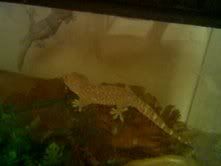
Has it been proven that a set of monitors fed a insect based diet will live longer then a set of monitors fed on a rodent based diet? Also would the rodent based diet set of monitors get bigger then the insect based diet set? Do we know for example how long a typical monitor lizard should live under ideal conditions? Not wild conditions, ideal conditions.
Reptile & Amphibian Forums
Welcome to kingsnake.com's message board system. Here you may share and discuss information with others about your favorite reptile and amphibian related topics such as care and feeding, caging requirements, permits and licenses, and more. Launched in 1997, the kingsnake.com message board system is one of the oldest and largest systems on the internet.



Diet?
elidogs
May 09, 2009 12:50 AM
Replies (15)
FR
May 10, 2009 09:29 PM
Not much has been proven other then its other factors that have limited varanids.
With the only exception being, whole prey items have been VERY successful.
The point being, you can use a single diet, and obtain many different results by using different conditions. Such it is with reptiles.
ALso longevity records have been silly in the past, as they did not included life events. In most cases, they did not include females. They have always been males.
For instance, I had a lacie that lived to aprox 23 years, and sired many many offspring. If an individual did nothing, but sit in a cage, who cares how long it lived. Cheers
elidogs
May 11, 2009 12:12 AM
"Not much has been proven other then its other factors that have limited varanids.
With the only exception being, whole prey items have been VERY successful.
The point being, you can use a single diet, and obtain many different results by using different conditions. Such it is with reptiles.
ALso longevity records have been silly in the past, as they did not included life events. In most cases, they did not include females. They have always been males.
For instance, I had a lacie that lived to aprox 23 years, and sired many many offspring. If an individual did nothing, but sit in a cage, who cares how long it lived. Cheers"
You can get more enjoyment out of a specimen if it lives longer, and you can get a sense of accomplishment that you gave the monitor the best condition possible to keep it healthy. To me it seems worth it to pursue the best diet. Vet bills are not cheap.
Like for example savs live to about 10 years.... is that because they are fed so many mice? Or is that just how long that particular monitor lives...if its lucky. In the wild they eat insects almost 100% apparently. In captivity its the opposite. How long do the insect eating specimens live?
bishopm1
May 11, 2009 12:36 AM
I have been wondering how wild insectivorous monitors live since no body dusts their food with calcium.
elidogs
May 11, 2009 02:14 AM
"I have been wondering how wild insectivorous monitors live since no body dusts their food with calcium."
Maybe they would live longer if somebody did. Nature doesn't do whats ideal but I think pet owners can if they have access to correct info.
nate83
May 11, 2009 05:28 AM
"You can get more enjoyment out of a specimen if it lives longer, and you can get a sense of accomplishment that you gave the monitor the best condition possible to keep it healthy. To me it seems worth it to pursue the best diet. Vet bills are not cheap."
-REALLY??? Like Really Really? You obviously didn't read his post like REALLY read his post. Franks point was that an empty number with a solo animal (esp. Male) is meaningless. What is important is how diet affects the longevity of animals achieving life events. Who gives a damn about solo animals. They aren't "Living" they are exisiting and could probably live forever on a diet that couldn't sustain a life event achieving animal. Stick me in a cage by myself with no goal in life and I'd hope you fed me the crappiest stuff on earth so I'd die a quick and painless death. Longevity for the sake of individual longevity is no measure of enjoyment in my book. I'd personally would get much more enjoyment from an animal achieving life events over and over and maybe live 15 yrs than sit useless in a cage for 30 years.
"Like for example savs live to about 10 years.... is that because they are fed so many mice? Or is that just how long that particular monitor lives...if its lucky. In the wild they eat insects almost 100% apparently. In captivity its the opposite. How long do the insect eating specimens live?"
-A comment like this just makes me think you are trying to stir the pot on the ol mice are bad debate. Which is hilarious. I'm sure ol George's species doesn't live on white mice in the wild but he lived to the ripe ol age of 23 with a whole harem of B****es. How many keepers can say that? People who claim mouse diets are the demise of their animals obviously are using that as a scapegoat.
Now my question on diet is how come I have mouse fed ackies that are only 20" but there are insect eating 36" plus ba***rds in Oz?
nate83
May 11, 2009 05:44 AM
"Nature doesn't do whats ideal but I think pet owners can if they have access to correct info."
WRONG!!!
Nature does better than YOU!!! or ME!!! or FRANK, or ROBYN or anybody so far.
Nature does what it's intended to do, select those most fit to reproduce. It does an amazing job at it I might say. The picture many paint of wild animals being on the brink of death at all times just isn't true not for the majority of them anyhow. That picture is burned into our minds so we send money to conservation groups hahahahah joking...kinda...not really....
Now you take some good healthy animals and put them in the hands of sentimental people and we ruin them. We purposefuly allow the weakest and crappiest to continue to reproduce. We go to all ends to allow things that should have died to live. Now believe me that's great...it's what makes us human. But that is off topic.
nevermind
May 11, 2009 08:20 AM
i would have to guess insectivores eat a fair amount of small vertebrates - small frogs, lizards, birds, etc.....
FR
May 11, 2009 08:53 AM
First your stuck in a simple food item diet. Like only mice or only insects. Who does that??? Why not feed them both and more?????
ALso mice have not shown any poor effects at all, in fact very much the opposite. That is, when a monitor is given proper support, like a suitable temperature range and deep substrate, and the ability to move and dig and climb.
You also keep referring back to nature, yet I do not think you understand what they do in nature, in fact, I am not sure any of us have a clue.
As Nate says, wild monitors appear to be a thousand times stronger then the vast majority of captives. For example, they get parasites with every meal and yet, they grow and reproduce and live long lifes unless something eats them.
In nature they recover from massive injuries without the help of antibiotics or vets. Yet in captivity, so many die from nothing.
Also in nature, they feed on what they feed on, they do not draw a line between rodents and insects. They will find and consume as much as they can. They will utilize what is available seasonally, at times that means eggs of birds and reptiles, blooms of insects, raiding bat roosts, invading chicken farms, croc eggs, etc etc.
As far as savs, so little is known, no one as followed any number of savs around and studied what they ate for a year muchless their lifes. There have been very shortterm observations of a few animals. As far as I know, nothing has been done with adult reproductive animals. Which is the important area of diet we should learn about.
The absolute truth is, great success is being had in captivity with many many species of monitors. We have achieved the raising and reproduction of over 20 species, and we have achieved many amazing reproductive records, and growth records as well. And it turns out that rodents and insects are VERY good at supporting that. But it also appears it was other conditions that are far more important then the discussion of which diet is better, insects or rodents.
The key is, whole prey diets are superior to prepared diets.
So go on with your bad self and work on better cage conditions. Cheers
elidogs
May 11, 2009 01:13 PM
---this is just a discussion about monitor diet you don't have to take it personally.
First your stuck in a simple food item diet. Like only mice or only insects. Who does that??? Why not feed them both and more?????
---You can feed both and more but I feed less mice for sure. You know FR, that obese humans and animals don't generally live as long. You also know that insects don't contribute to as much obsesity in monitors as say rodents. You also know that obese creatures can still reproduce even though they aren't as healthy as they could be.
ALso mice have not shown any poor effects at all,
----I think overfeeding has shown poor effects.
in fact very much the opposite. That is, when a monitor is given proper support, like a suitable temperature range and deep substrate, and the ability to move and dig and climb.
You also keep referring back to nature, yet I do not think you understand what they do in nature, in fact, I am not sure any of us have a clue.
As Nate says, wild monitors appear to be a thousand times stronger then the vast majority of captives. For example, they get parasites with every meal and yet, they grow and reproduce and live long lifes unless something eats them.
----- I don't know about "every meal" but yeah they survive some nasty crap.
In nature they recover from massive injuries without the help of antibiotics or vets. Yet in captivity, so many die from nothing.
Also in nature, they feed on what they feed on, they do not draw a line between rodents and insects. They will find and consume as much as they can. They will utilize what is available seasonally, at times that means eggs of birds and reptiles, blooms of insects, raiding bat roosts, invading chicken farms, croc eggs, etc etc.
---------yeah they get tons more exercise and they are hungry they probably will eat almost anything. Most wild creatures will.
As far as savs, so little is known, no one as followed any number of savs around and studied what they ate for a year muchless their lifes. There have been very shortterm observations of a few animals. As far as I know, nothing has been done with adult reproductive animals. Which is the important area of diet we should learn about.
The absolute truth is, great success is being had in captivity with many many species of monitors. We have achieved the raising and reproduction of over 20 species, and we have achieved many amazing reproductive records, and growth records as well. And it turns out that rodents and insects are VERY good at supporting that. But it also appears it was other conditions that are far more important then the discussion of which diet is better, insects or rodents.
------Yeah I'm sure their are other important topics but that wasn't this thread.
The key is, whole prey diets are superior to prepared diets.
So go on with your bad self and work on better cage conditions. Cheers
---I don't have a problem with my caging.
FR
May 11, 2009 04:32 PM
First we are not talking about your caging. You apparently are taking it personal. We are talking about the effects of diet.
The point is, in order to determine the effects of diet, you must have a already established SUCCESSFUL set of captive conditions.
As an example. We have taken many species thru many generations. Having conditions support that, we can then test different diets and see it each diet will produce the same results. We have done that.
The reality is, the conditions are more important then the diet. At least the diets were are talking about(whole prey items)
In fact, with our mid-sized to larger varanids, rodents perform far better then insects. The main reason is mass. You would have to feed the same weight in insects to achieve the same results as with rodents. How many crickets or superworms or roaches does it take to make up an adult rat??????? Then will you feed that many????
So if your going to have an adult Sav male, or a adult albig, dude, you better have a TON of insects. Or you better come up with a rat sized insect. hahahahahahahahahahahahaha.
The point was, any animal consuming a high performance diet, needs to operate in a full range of metabolisms. Reptiles do not have a set metabolism like mammals. With such things as Savs, Folks keep them at low temps then feed them a lot, that will make any reptile fat. Yes, that will kill off monitors. But so will just keeping them at low temps. Again, its not about the diet. Consider, 99% of all imported Savs are dead within a year.
Consider, I have an 18 year old ackie. how cool is that? Its those dang mice and crickets I feed her. Oh yea, its a female and she still lays eggs. And I had my old bag(11/12 year old argus cross) lay her sixtyfourth clutch. hahahahahahahaha all on mice.
No I am not taking it personal, but I do have personal experience. When you ask a question sir, you should understand, someone will offer personal experience and not something they read out of some book or heard it on the grapevine. Cheers
elidogs
May 14, 2009 02:55 PM
So basically what you are saying FR is that rodents are a necessary part of monitor diet because they have a higher calorie density then say roaches. For example a oz of rodent flesh has more calories then a oz of roaches...blactica dubias or whatever.
I feed rodents too I just don't feed as many....I think they don't need nearly as many rodents as most feed when talking savs. You can overfeed much quicker on rodents then say roaches. Which is why when you do a google search for sav monitors the vast majority of them are butterball fat. Obesity has to be a factor in some of the early deaths we see in monitors. If your temps are correct and your lizard is still fat hey why not feed more insects.

bishopm1
May 11, 2009 11:13 PM
Maybe our captive prey diets and caging have something to do with this. Wild rodents are not fat and do not live on "rodent blocks". Wild insects feed on many things in their environment containing calcium not on "cricket diet". Wild monitors are not overcome by parasites and infections, for one, we don't see the ones that died, two, wild monitors do not live on the same parasite and bacteria infested few square feet our captive monitors live on.
elidogs
May 14, 2009 02:42 PM
"Maybe our captive prey diets and caging have something to do with this. Wild rodents are not fat and do not live on "rodent blocks". Wild insects feed on many things in their environment containing calcium not on "cricket diet". Wild monitors are not overcome by parasites and infections, for one, we don't see the ones that died, two, wild monitors do not live on the same parasite and bacteria infested few square feet our captive monitors live on."
Also when talking about nature wild monitors etc... another factor is the vast majority of creatures that have ever existed in the wild are extinct. Meaning there is a limit to how great nature is at caring of its animals. I think there is a high death rate in most wild animals and reptiles... the ones that survive are pretty tough. I think its fine to use nature as a guide like what do these animals typically eat in the wild and what temps do they like etc. In fact I think its a necessity to be aware of this info if you want to keep them alive in capitivity.
FR
May 15, 2009 07:42 PM
Heres how it works. I really hope your theories work out for you. Mine are working for me.
I am not trying to be a smart arse, but it is that simple. Good luck with your animals. Cheers
elidogs
May 17, 2009 12:25 AM
I do ok with my pets..... most of the time knock on wood. Nothing spectacular in my collection I just try to keep what I enjoy.