How can you tell Nelson's milks from Sinaloans? This might be a stupid question for some, so forgive me. I have not ever owned either of these milks.
snake adventures
Reptile & Amphibian Forums
Welcome to kingsnake.com's message board system. Here you may share and discuss information with others about your favorite reptile and amphibian related topics such as care and feeding, caging requirements, permits and licenses, and more. Launched in 1997, the kingsnake.com message board system is one of the oldest and largest systems on the internet.


Nelsons from Sinaloans?
snakeadventures
May 26, 2009 05:44 PM
Replies (3)
Nathan Wells
May 26, 2009 06:28 PM
You may want to search the archives under similar questions. This subject has been touched on in detail many times before.
Nathan Wells
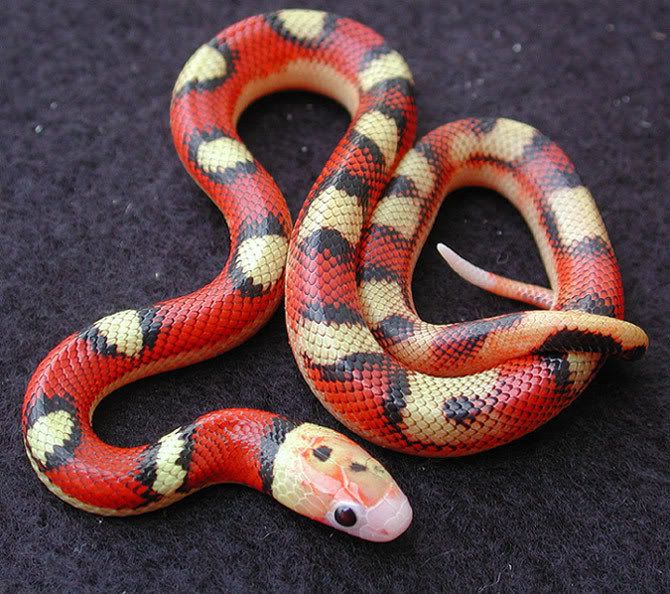
vjl4
May 28, 2009 01:44 PM
Ouch Nathan! That one sure is hot!
Vinny
-----
“There is a grandeur in this view of life, with its several powers, having been originally breathed into a few forms or into one; and that whilst this planet has gone on cycling according to the fixed laws of gravity, from so simple a beginning endless forms most beautiful and most wonderful have been, and are being, evolved.” -C. Darwin, 1859
markg
May 26, 2009 07:21 PM
Man that is a stupid question. Geez. lol
In the North part of Sinaloan range, it is easy. Nice wide red bands, thin black. In the South and South-east part of nelsoni range it is easy, possibly a few more triads and wide black bands.
The idea of subspecies is fairly subjective. In the case of sinaloae and nelsoni, I'm not sure what characteristics warrant the difference, other than pattern. I think there may be some scale count differences, but I also think these differences are hit and miss in many areas of Sinaloan and nelsoni range, except at the far ends. Maybe in 20,000 years they will differ more. For now, not much difference.
-----
Mark
