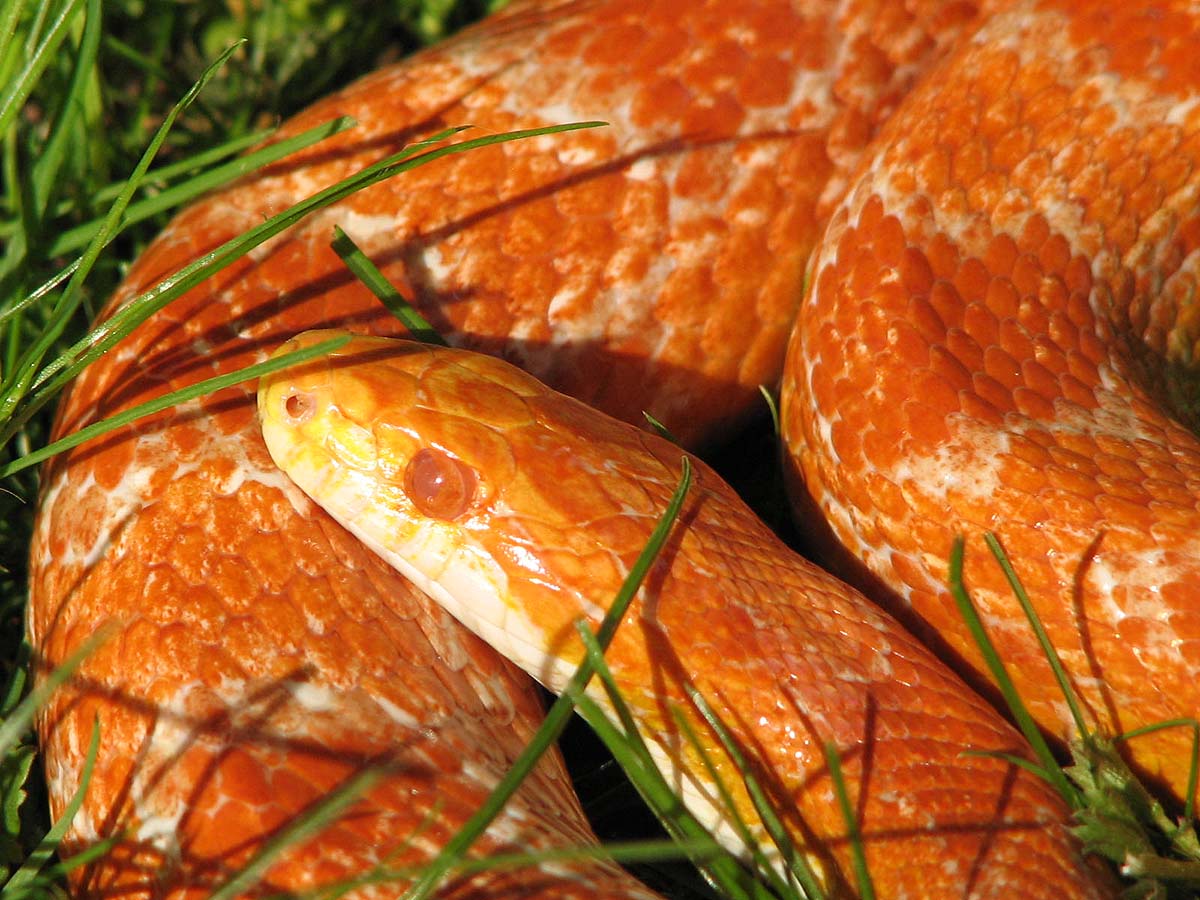
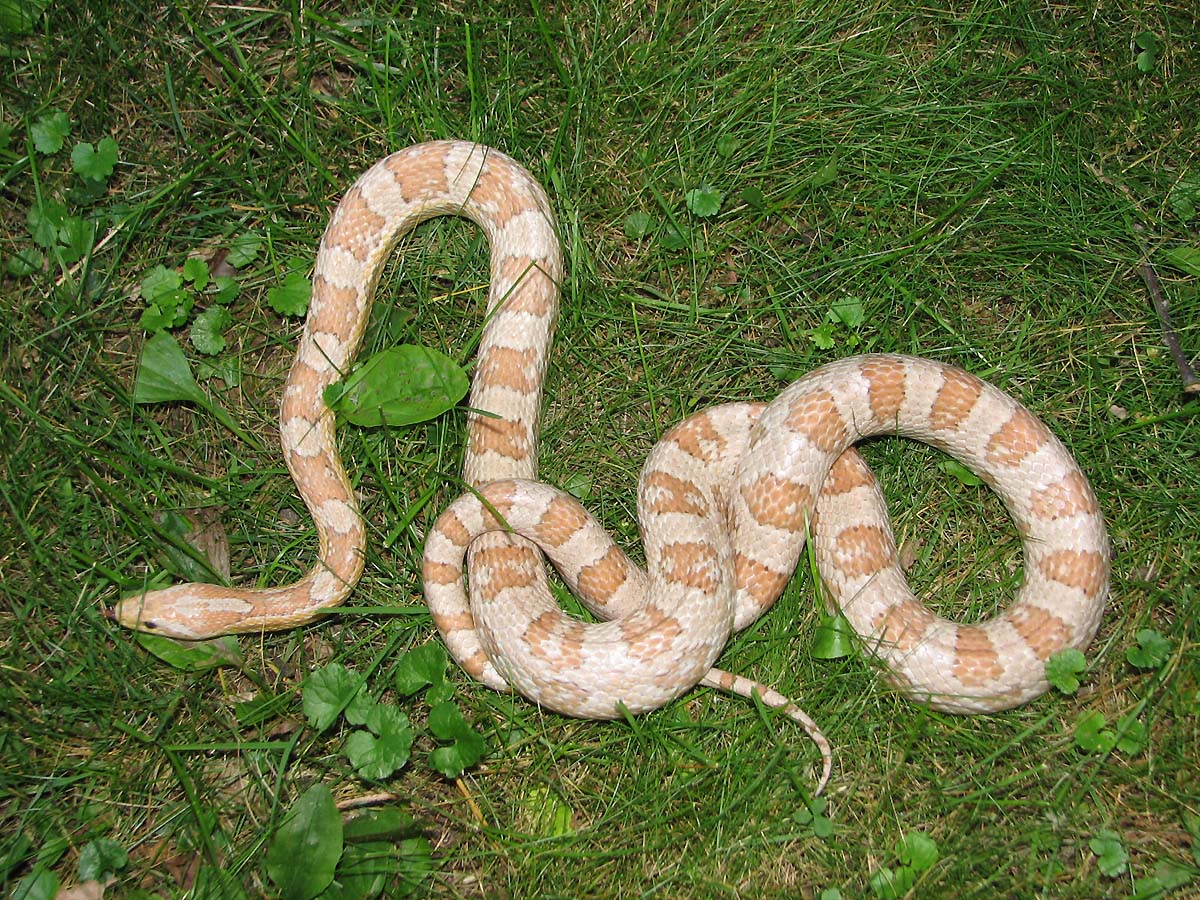
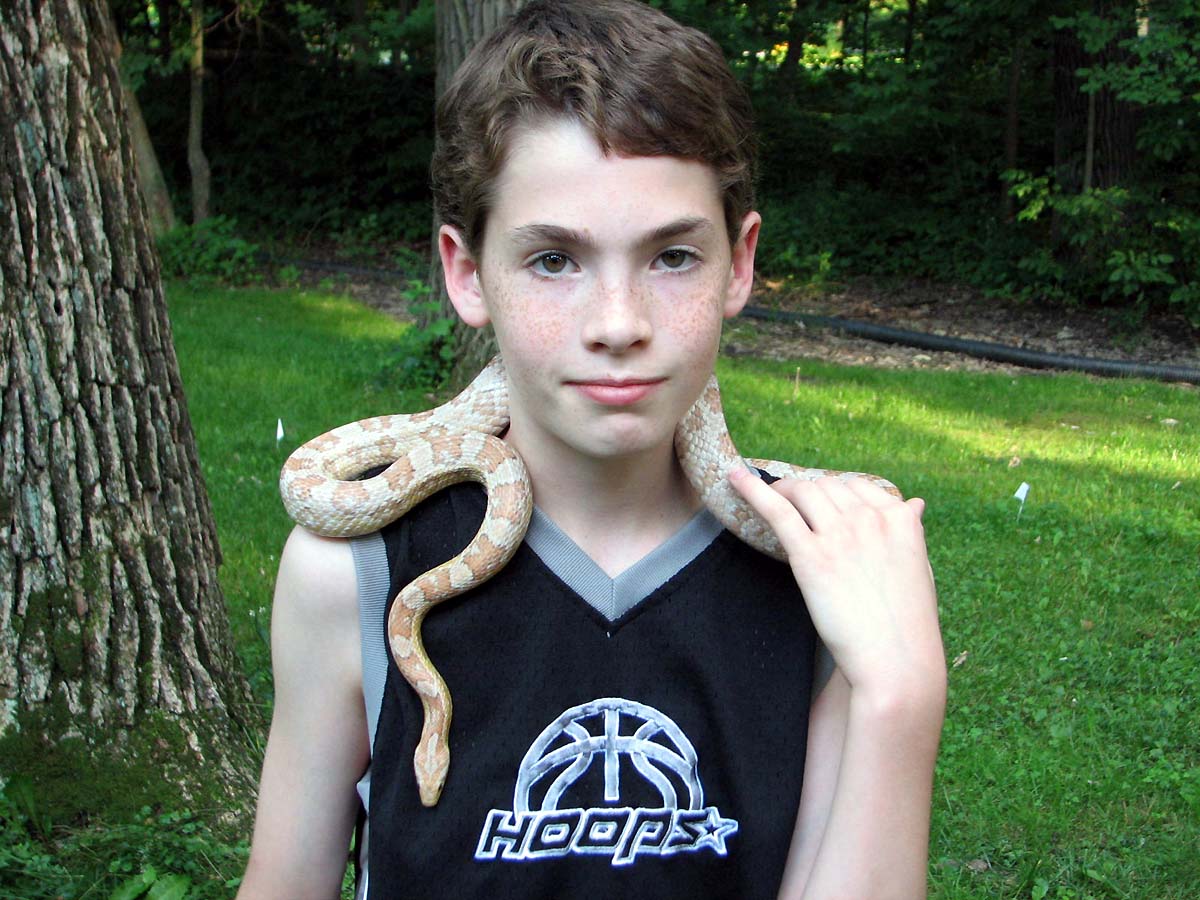
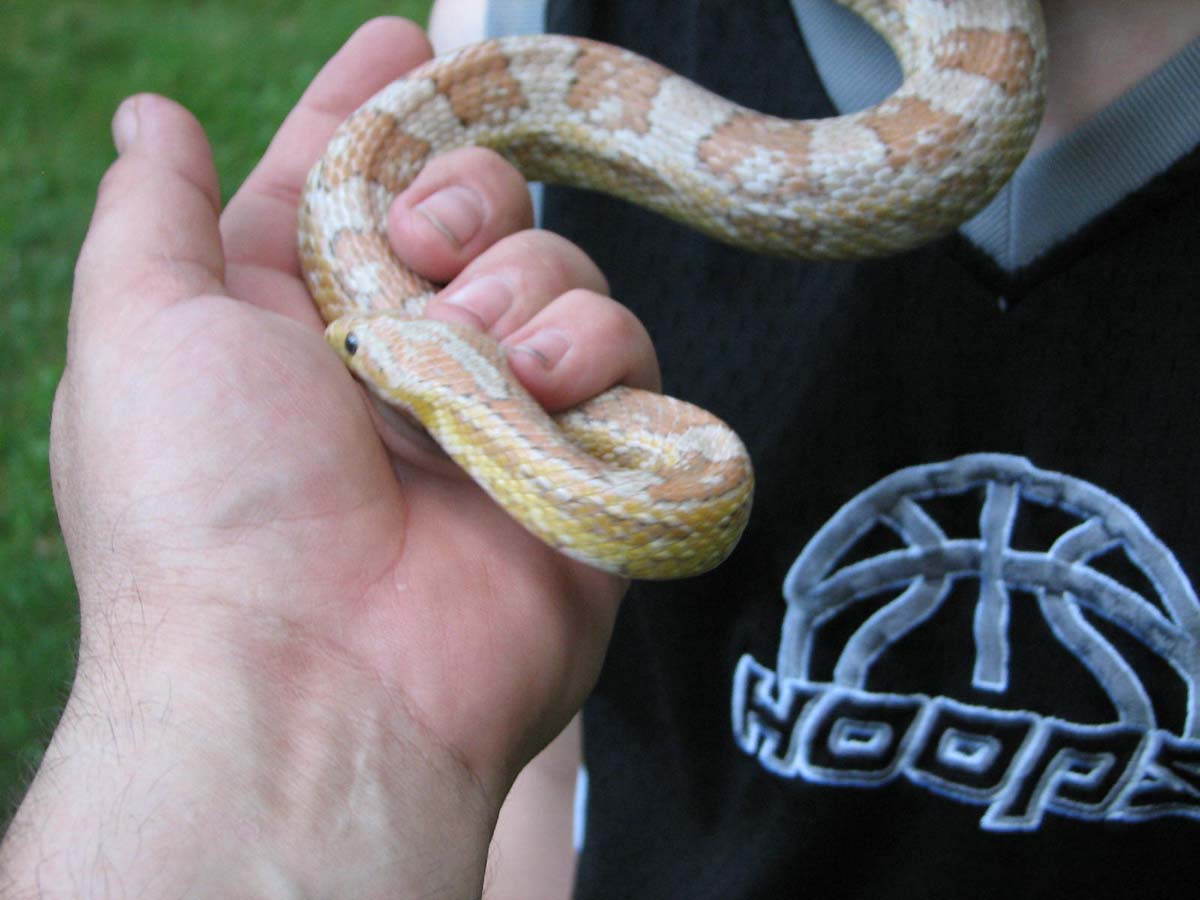
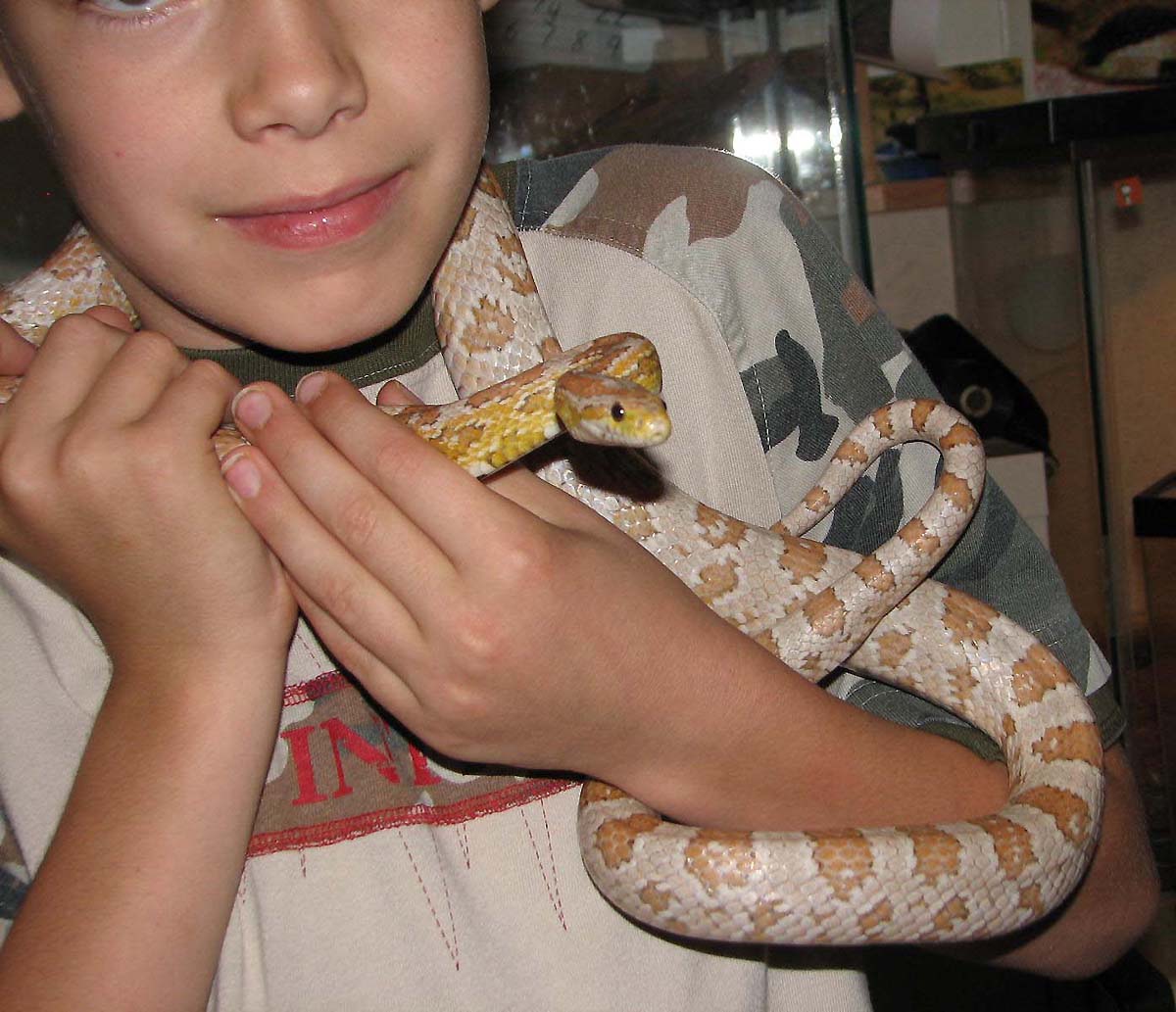
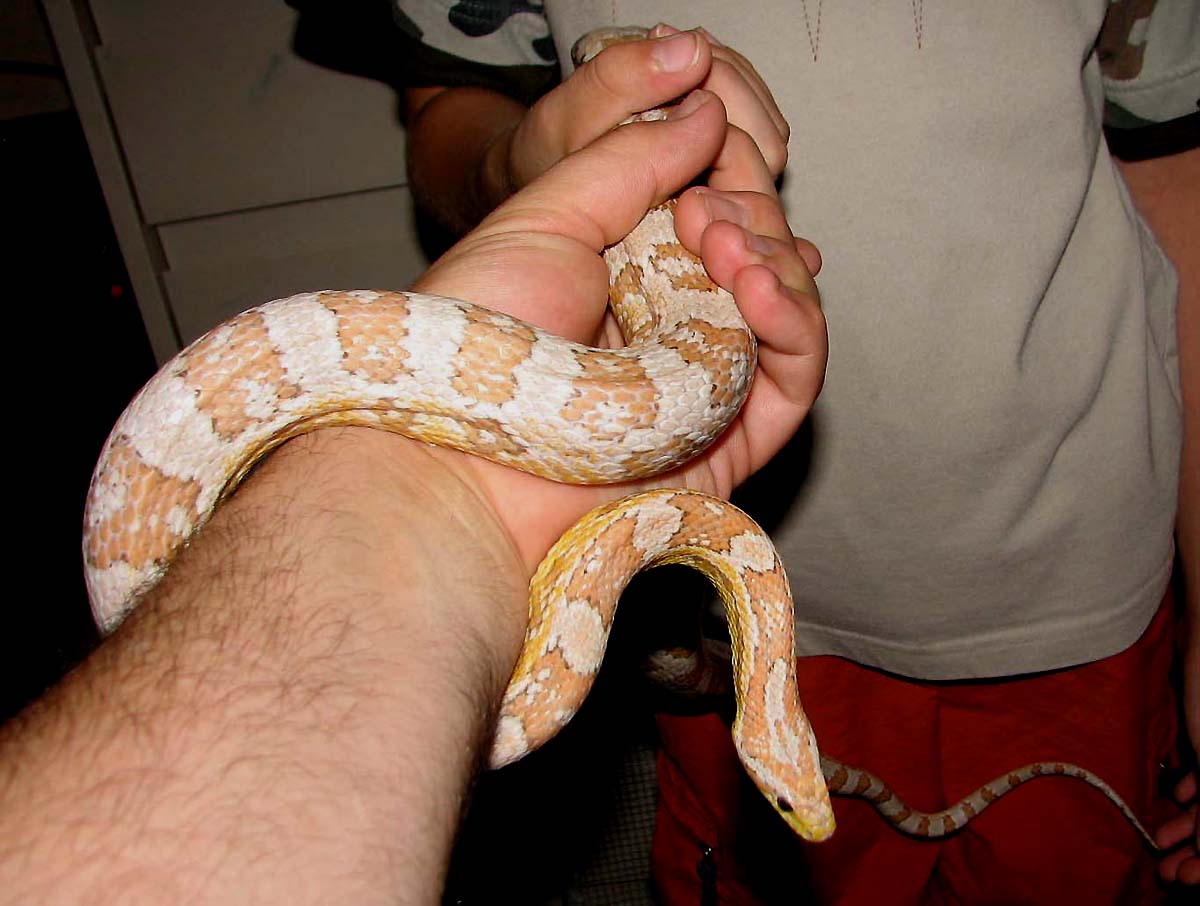
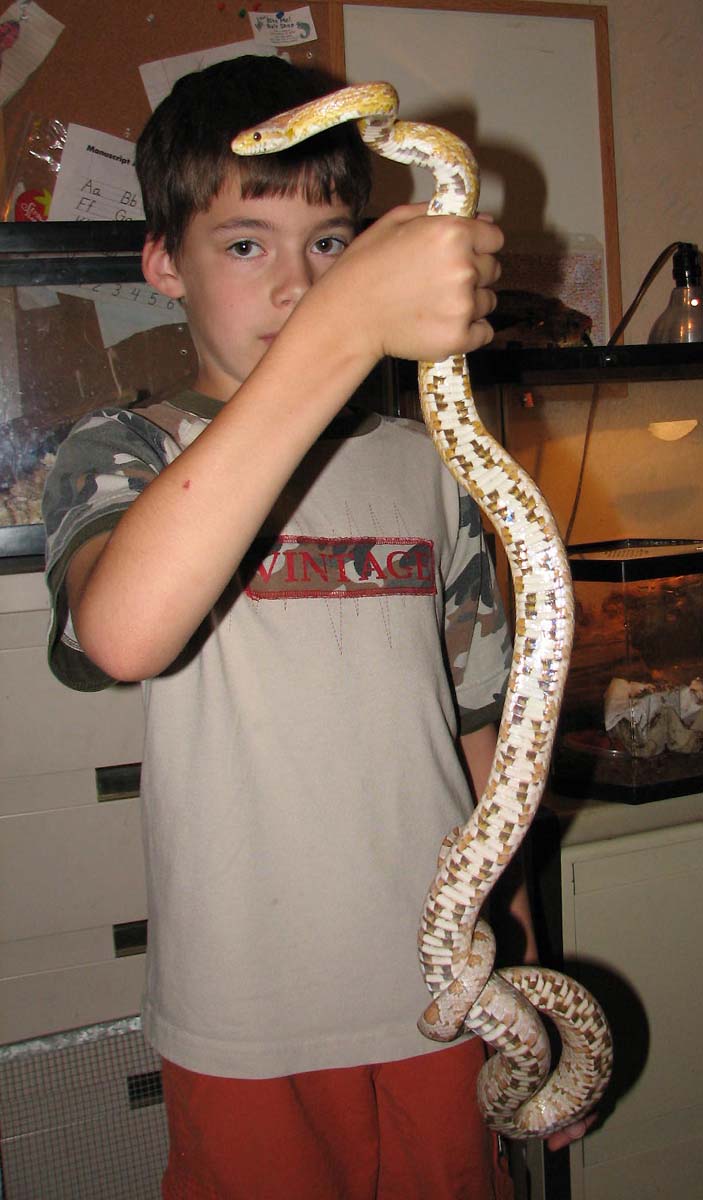
How genetics work is the same for all animals.. recessive traits require two 'genes' of that trait for the animal to show it visually. There are also dominant and co-dominant traits that only require a single gene with that trait...but in the co-dominant state, if both genes (or alleles actually) are the same, then the resulting animal appears far different than it does with just one alleles of that co-dominant trait and the wild type (what you expect the majority of the animal to look like in the wild (or called normal).
Corn snakes only have one or two co-dominant traits that I know of..one being the 'ultra' but I can't remember if there is a second... Ball pythons on the other hand, have all kinds of co-dominant traits. I don't know enough about boa constrictor genetics to know if they have alot of co-dominant traits...I think they do...but don't know what they are.
The site below explains genetics, especially regarding corns far better than I...though it goes in far better depth than I did.
www.vmsherp.com/LCGenetics101.htm
Oh and one thing about corn snakes... the pigment yellow tends to develop later in life, usually 6-9 months after birth.
One thing to keep in mind too is many pet store corn snakes could come from breeders getting rid of their excess..and some may carry recessive traits in their genetics if the full history of each snake isn't known. Or breeders may sell 'het' snakes either unknowingly or they could be from breedings that produce possible hets which can't normally be identified visually (the snake looks exactly like a non het animal would look like, in regards to recessive traits. If you bred your albino female to a perfectly normal male, the babies will all look normal but be 'het' for albino. Breed a baby back to its mother and the offspring from that pairing will produce albinos and hets.
Motleys snakes are a pattern mutation (albinos is a color mutation, as it only affects the color of the animal, not its natural pattern). So you would get all hets from that pairing too. If your female was het for motley then some of her young when paired with a moltley would appear motley.
Hidden/unknown hets can result in nice surprises in the clutch of babies. I bred my two normal corn snakes who I had no idea what sort of hets they have...and it turned out both were het anery. One or the other could be het for something else but I won't know what it is unless I do line breeding with the offspring and see what happens. I don't plan to do this...as I rather work with unrelated animals whenever possible. That and I would like to produce a line of snow corns that get bigger than 4'. All the snow corns i have seen personally were under that length. I know corn snakes can range from 3'-5' normally, but small size in snows seems common. (at least around here). Both of my normal looking adult corns are at or very near the 5' mark. (they may be over it too, hard to get an accurate measurement when they won't stay still long enough to 'string' measure them).
-----
PHLdyPayne