John,
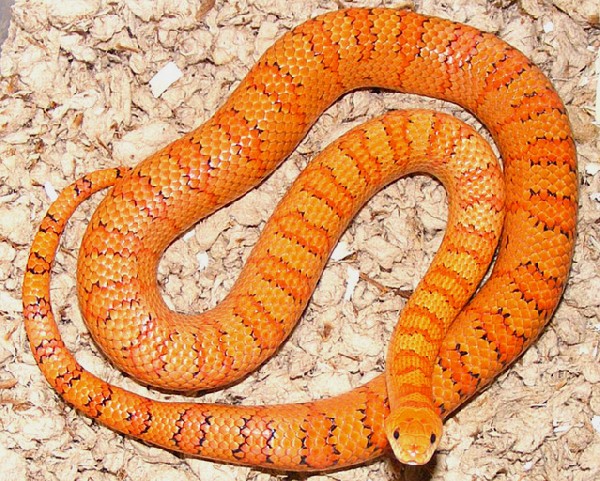
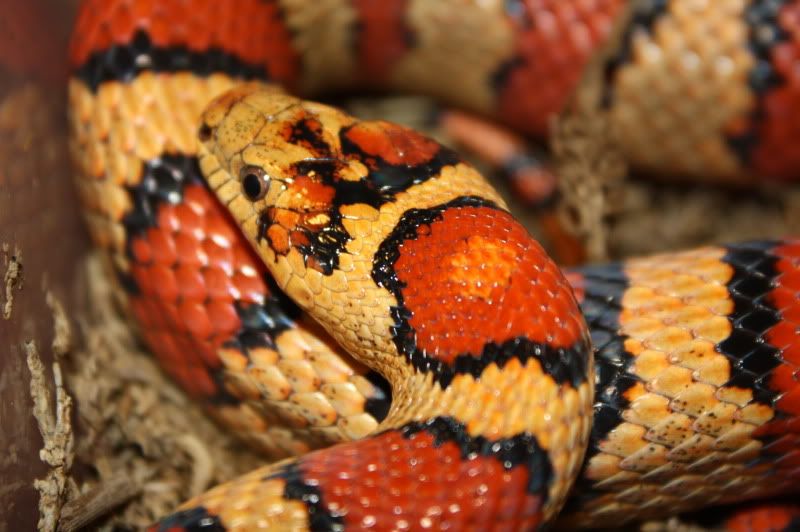
>>With my first collection of thayeri I hatched out a few clutches from 1999 to 2005.....Some of the '00 and '01 offspring were somewhat similar to their parents, but when these babies had babies some of them were the spitting image of their grandparents.....
With the “box-of-thayeri” progeny, I’ve seen the same thing…Basically 1 or 2 resemble the parents and several resemble the grandparents and I’m certain that the other preceding generations are neonate demonstrated phenotypes as well (untested theory)…Theory = due to previous attempts to produce the next “you-name-it-phenotype” for what ever the reason (fame, fortune, etc) or because the actual locale was unknown, pairings were paired together in disregard for genetic preservation…The fact that since they were first described, well the scientific community is still debating that one…Also, I know from reading published literature, that zoos actually produced "hybrid/intergrade" specimens!
I am beginning to form the opinion that what we arre working with today in captivity is far fewer than we think as the original specimens when compared to the original genetics from other genus/species...Just an opinion.
So, what were their phenotypes in the beginning (from the descriptions and preserved museum specimen photos) of those first collected in situ? This is my starting point…Much more work to do here and I’m just starting this work…
>>A lot of recessive genes going on with them especially when breeding siblings.....
You described it exactly, going recessive = the next what-ever-you-call-it phenotype for what ever reason or simply because it is unknown…Just my opinion-we’ve debated this before.
As we’ve discussed before – and as we’ve both discovered over many years – the provenance issue is extremely difficult if not impossible (but there are some “pioneers” out there that did not go the "box-of-thayeri-eggs" direction, and therefore, year after year, maintain original phenotype genetics (as much as possible)…
Also, as we’ve both seen (and many others that post here), with each generation, regardless of breeding philosophy, some of the original phenotypes still occur (although in fewer quantity) with each passing generation. Possible theory = original genetics exist in captivity in “relic” genes and the “you-name-it" or unknown stuff is becoming more prevalent. Now, throw in the “hybrid” issue and we may only “see” original specimens in photos over time.
I haven’t seen everything but, I know more than I knew last year, etc…And I’m seeing more “evidence” from others as well…Enough to begin to formulate a theory…To test it and see what happens…Time will tell.
>>I enjoy the "box-of-chocolates" a lot, but I do have some nice Ruthveni & Melanistic Thayeri projects that come straight from the motherland....Untainted with any other locale or strain....
Based on provenance? Before I saw the neonates from this clutch, I’d only seen the “box-of-thayeri-eggs” myself…As we both know, it will take generations of breeding on our own to “verify” the provenance…Also, based on the literature available, we only have “general” locales as the original collecting sites and this is for at least three reasons…
1. No GPS (used terrain analysis – map spot)
2. Road collected at night (there are some reasonably accurate descriptions out there)
3. Vicinity locales listed to preserve future collection sites
>>Tell me what you think of an almost solid black ventral pattern. I have two females showing this trait.....
My opinion on this is that it is a genetic “variation” of the double-lined pattern (or vice-versa)…The other two “typical” ventral patterns are the “blotched” and “mottled” (with some combinations thereof) – not counting the MSP pattern (reflection of the dorsal pattern)…
In other words, the ventral pattern MAY be more of a reflection of the source of the original genetics than the dorsal pattern (or ground color, head pattern, etc)…I’ve got to SEE more original collected specimens as this is just a theory and a preliminary one at that…I’m not an expert on this stuff…Ha! Ha!
Later,
Jim.
-----
CSRAJim