Reptile & Amphibian Forums

Welcome to kingsnake.com's message board system. Here you may share and discuss information with others about your favorite reptile and amphibian related topics such as care and feeding, caging requirements, permits and licenses, and more. Launched in 1997, the kingsnake.com message board system is one of the oldest and largest systems on the internet.

Click for 65% off Shipping with Reptiles 2 You
Click for ZooMed
Click here to visit Classifieds

Shipping--something to think about. . .

althea Nov 11, 2009 05:36 PM

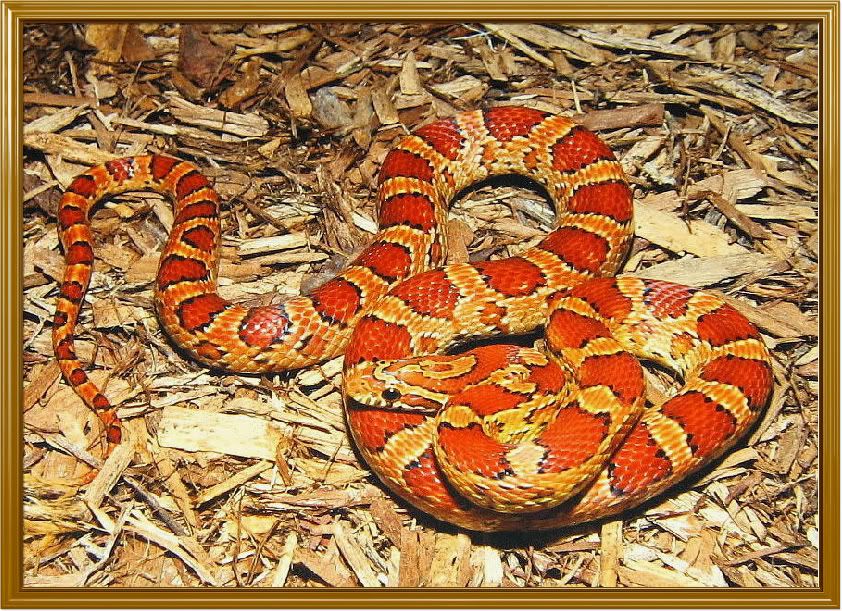
Today I picked up a prescription for one of my cats at the vet. Imagine my surprise when I was invited to choose among a dozen or so corn snake hatchlings! It seems that someone had shipped the snakes without going through proper procedures. The shipper turned the parcel over to my vet, who has an exotics practice. Any and all clients who keep snakes were welcome to add to their collections free of charge.

Not every confiscated shipment has a happy ending. Not all of the animals in this shipment survived. Both the person who shipped the snakes and the addressee have opened themselves to sanctions by the shipper. Loss of revenue. Loss of shipping privileges. Hmmmm....

I came away with four very nice looking babies--one has already snarfed a small pink. I hope they survive and thrive. After a shaky start bagged in a cardboard box full of newspaper, only time will tell.
Replies (8)

DMong Nov 11, 2009 09:55 PM

Yes, I would also agree about it working out better than some other shipping incidents do.

I would say making sure they are properly hydrated is of utmost importance right now for starters, since it's hard to say how long they were going through this ordeal, and how they were treated when they were confiscated.

Then it is important to make sure they get fed VERY small pinks at first too. Sometimes tiny hatchlings that are just starting out, and have been a bit emmaciated will have trouble digesting larger pinkies. And as you might already know, regurges are extremely important to avoid, especially with them being so tiny, that can be big trouble.

Good luck with your new acquisitions, and let us know how they are doing from time to time.

You did well, it's hard to beat several free snakes!

best regards, ~Doug

-----
"a snake in the grass is a GOOD thing"

althea Nov 12, 2009 12:04 AM

I let the ones who did not eat settle in this afternoon. This evening I made certain that all had good long drinks of fresh water. I observed the one who ate, drinking from its water container. I'll repeat this process in the morning, etc.

What I found odd is that there were crickets in the shipping bag with them. Was this supposed to be a food source? As soon as my hatchlings go through their first shed, I offer them xsmall f/t brained pinks. Those who won't take them eventually get live pinks. Never considered feeding crickets?!?!

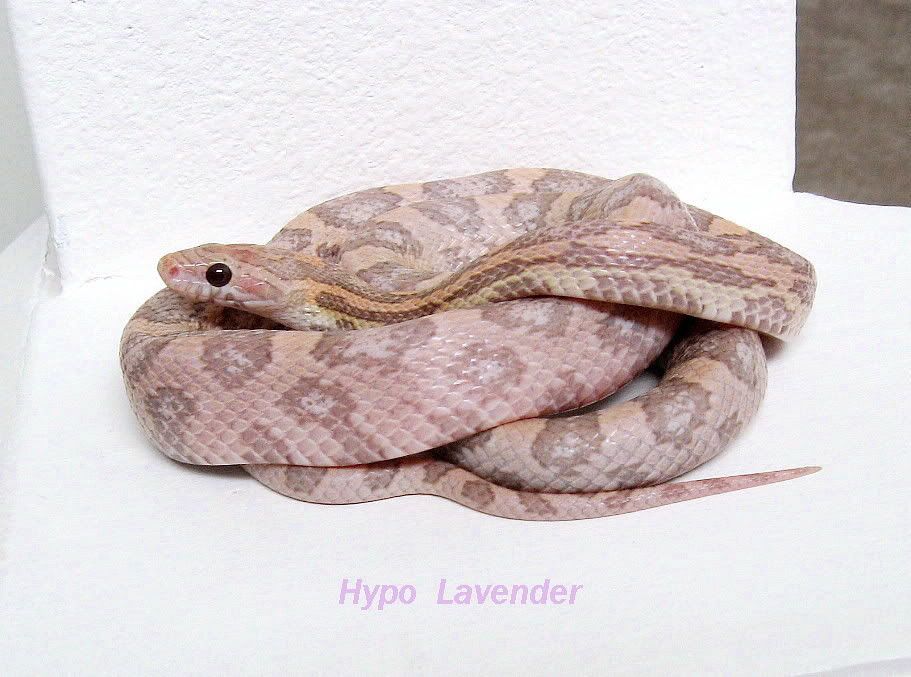
I suspect that at least two of them have yet to go through first shed. The smallest is jet black with perfect silver/white markings. Not a hint of red nor yellow on it. Next largest looks like a nice lavender--time will tell. Third largest is a normal/classic with an aberrant zig-zag the entire length of it's body (nice, sharp, classic colors). The largest has rich warm brown saddles (some rosy undertones coming through). The ground color at this stage appears to be an interesting yellow with a greenish tint.

If they all are thrivers, it should be a nice looking group. I have a 10 year old amel female who produced many clutches with her sun glow mate. Lost him to a tumor two years ago, but she is still a very pretty retired lady. I'm sure that the new babies have fancy names to define them, but to me they are just pretty babies with the potential to grow into nice looking snakes.

Have you any info about feeding crickets to corn snakes?

rgds,
althea

DMong Nov 12, 2009 12:40 AM

Ya know, it's funny,...I have seen crickets in cages before that had very small cornsnake hatchlings in them at pet stores, but I really don't know if they will actually eat them, or if the people just don't know any better, and just "think" they will..LOL!

I do know however that many new hatchlings tend to eat totally different prey when they are very young, as opposed to their adult counterparts, lizards, frogs, etc...,but to be quite honest, I just don't know if they actually will accept crickets. I do think it could be a possibility, as weird as it may sound, but I have never actually heard of them being eaten by any of my snake friends, nor have I ever witnessed it myself either in my 42 years of snake keeping,....but bizarre things do happen when it comes to animals and nature, this is certain, I mean who would ever think that certain non-feeders would accept pinkies dunked in tuna water, or washed with un-scented Ivory soap, etc...LOL!

I would try to focus on getting them eating what the preferred future prey will be though, which is rodents. Now if all other attempts fail, washing, live, dead, brained, lizard scent, etc...and you exhaust all other avenues, by all means, give the crickets a try, after all, the most important thing is to initially keep them alive, by whatever means this may take, you can always get them switched over later on if need be.

Sounds like you have a cool assortment too!

Good luck with them.

~Doug


-----
"a snake in the grass is a GOOD thing"

mfoux Nov 12, 2009 11:33 AM

Hey Doug,

Your reply got me to thinking...
I'd like to put together a list of every known way to get problem feeders to eat. I know several tricks myself, maybe more. But I'm working on an article for an educational reptile blog about problem feeders.

Here are the tricks I can think of off the top of my head:

-scent with lizard/fish/other known prey
-scent with pinky blood (this works very well for some of my hondos)
-de-scent pinky with soap
-switch from mice to pinky rats or vice versa
-scent mice with pinky rats
-split brain
-dip in chicken broth/tuna water
-put snake and food in paper bag or other small, opaque container and leave over night
-put prey just outside of hide box
-wiggle prey with hemostats
-try live prey
-try live prey followed by f/t
-bait and switch
-offer wild type prey (ei., lizards, non-lab mice)
-change substrate type (I've found that some snakes eat better with aspen than newspaper and vice versa)

I think I've used every one of these methods at least once.
Am I missing anything?
-----
---
http://www.mikefoux.com
http://snakerack.blogspot.com

1.2.0 Hondurans Het Amel
1.1.0 Hondurans Anery, Het Hypo
0.1.0 Honduran Hypo
0.1.0 Honduran Hypo, Het Anery
0.2.0 Pueblans
1.0.0 Pueblan Hypo
0.1.0 Corn Bloodred
0.0.1 GBK Blair's Phase
1.0.0 California King
0.1.0 California King Blue-eyed Blond
0.0.1 Speckled King WC
1.1.0 Brooksi Hypo
0.0.1 Jungle Carpet
0.1.0 Ball, Normal
0.0.1 Sulcata
1.2.1 Leopard Geckos, various morphs
0.1.0 Wife, Caucasius Mexicana

DMong Nov 12, 2009 11:52 AM

Mike,...I think you just about covered most all the tricks, for most types of snakes, but of course this all depends on what you're trying to feed.

For instance, a getula hatchling might need some scenting with another type of snake, or only a ground skink, or a shed skin of another snake draped around it like a "raincoat", etc..., or a Scarlet Snake(Cemophora coccinea) might need to be tricked with egg smeared on the prey.

For snakes such as corns, and many others though, you hit upon most everything I know of, with the possible exception of frog scent, which young corns are also known to be fond of. And try feeding at night when it is pitch black instead of daylight.

Good job!, that sounds pretty darn complete to me. If none of those things work with corns and most others, then you really DO have problems..LOL!

~Doug
-----
"a snake in the grass is a GOOD thing"

althea Nov 12, 2009 03:41 PM

Um. . . for small hatchlings, try a rodent tail initially, washed, dipped, etc.--slips down easier.

DMong Nov 12, 2009 05:14 PM

Yes, that's another deal that can be done. Many of my "milk-head" friends have to do that with their very tiny hatchling North American triangulum.

~Doug
-----
"a snake in the grass is a GOOD thing"

chrish Nov 14, 2009 06:59 AM

Here's a couple of others I have used succesfully

"pile of pinkies" - I have found that some stubbon snakes will eat when presented with a nest of pinkies rather than with just an individual. I used to use this with stubborn male Rough-scaled Sandboas. You put a litter of pinkies and some of the shavings from the mouse cage together into the snake's cage to make a little mouse nest. Sometimes an individual who has refused single pinks will come in and eat their fill at the buffet, so to speak.

shed skins - This is probably a subcategory of scenting, but I used to have a "pet" Short-lined Skink that I brought home to photograph and ended up keeping for 6 years. When it shed (in pieces) I used to pick up the pieces and keep them. I found these small pieces of skink shed could be wet and stuck to the head of a pinkie. Scarlet Kingsnakes that refused other pinkies would readily eat these pinkies with their skink berets.
-----
Chris Harrison
San Antonio, Texas

Site Tools