Dave,
...It is time for a repost of your caresheet. We have not seen it for quite awhile.
TIA,
Jeff
Reptile & Amphibian Forums
Welcome to kingsnake.com's message board system. Here you may share and discuss information with others about your favorite reptile and amphibian related topics such as care and feeding, caging requirements, permits and licenses, and more. Launched in 1997, the kingsnake.com message board system is one of the oldest and largest systems on the internet.


Dave, Request repost of BRB care 101.
Jeff Clark
Dec 18, 2009 05:04 PM
Replies (7)
rainbowsrus
Dec 18, 2009 05:45 PM
Seems the right time of the year for a refresher course on my breeding process....... And I have since updated it fromm 101 to 102 

BRB breeding 102, This is the basic process I use to breed mine.
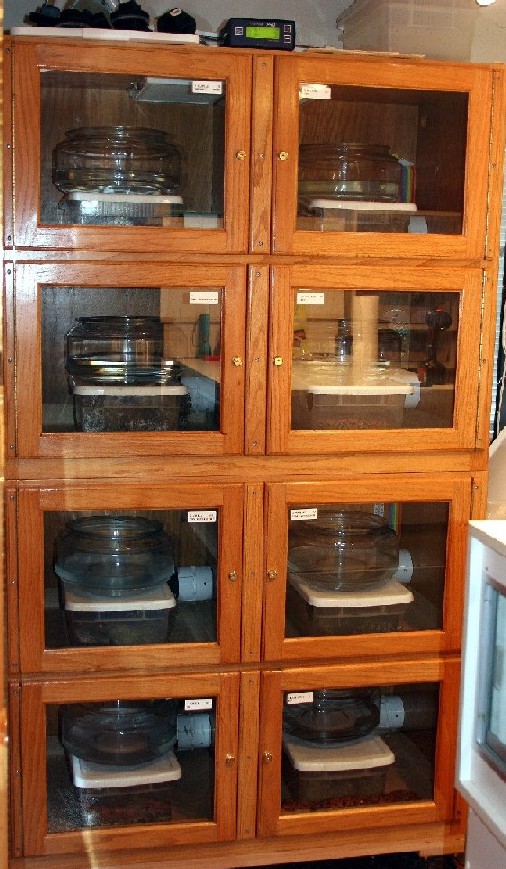
My breeding cages:
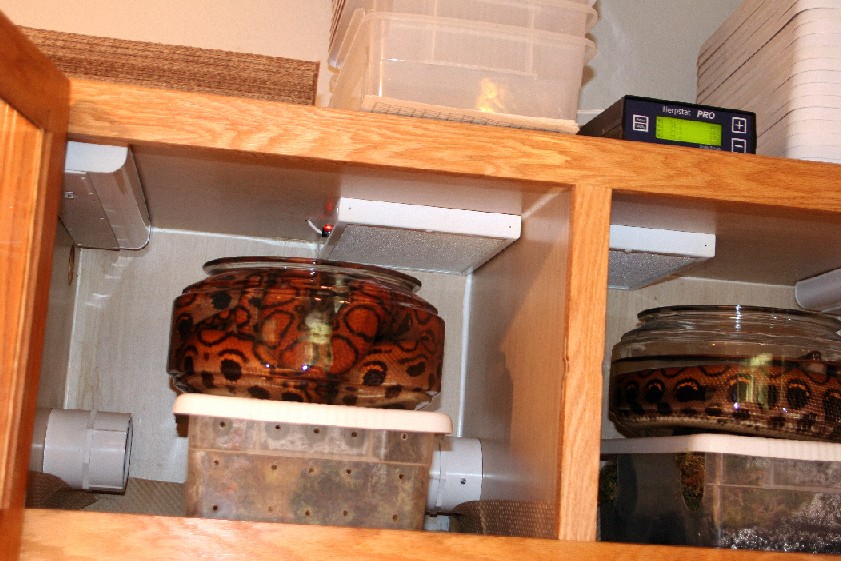
I made two of these cages to be expandable. They each have 8 roughly 2' x 2' x18" sections. Currently there are 4” PVC pipes on the outside connecting vertical pairs and a pass through between the two cages at each level. All these pipes have threaded ends and can be closed off as required. With these cage connections I have a lot of variability in how I connect cages together. Either two vertical cages, two horizontal cages or even three to four cages in a cluster. Typically each cage is blocked off and housing one female. The males are in a nearby tub rack.

Substrate/water/hides:
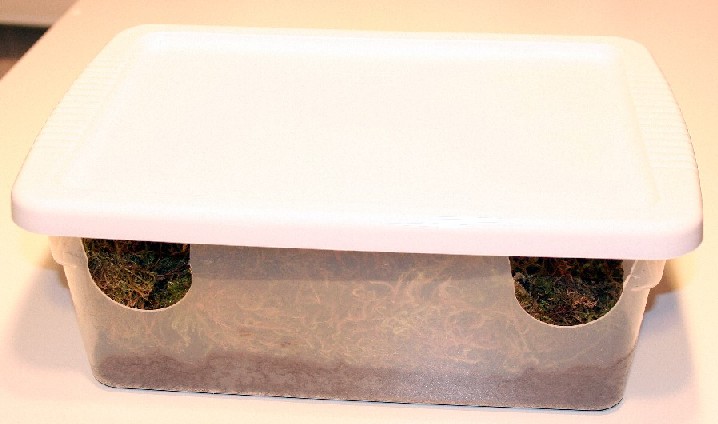
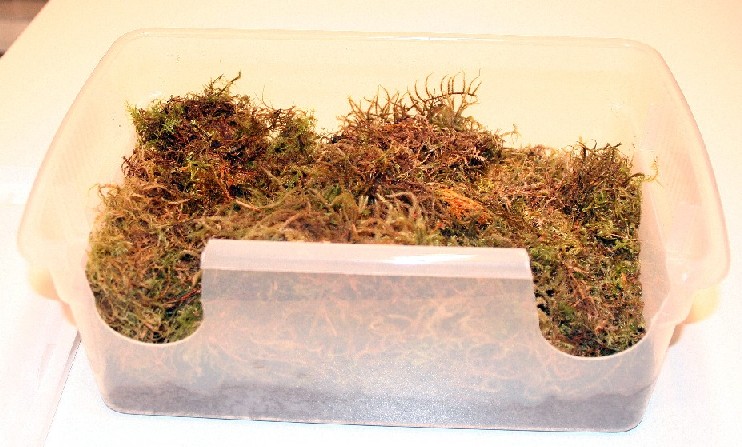
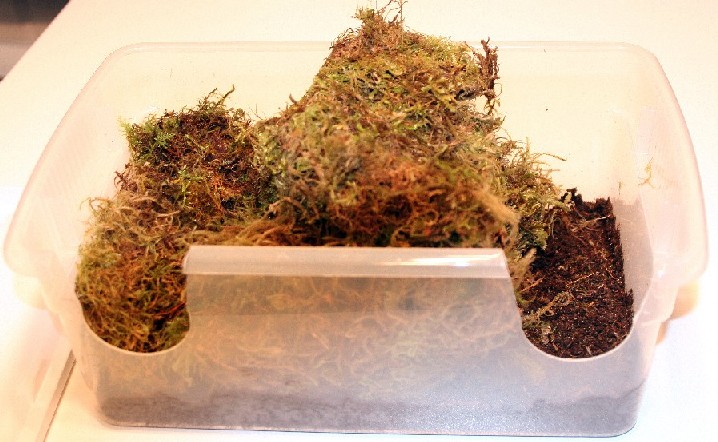
I lay down two layers of newspaper followed by one layer of indented craft paper on top. Each cage gets a sweater box for hide/moss. The box gets about an inch of peat moss well dampened and another inch of green moss also nice and damp. There is also a two gallon squat water bowl with about 1 to 2 inches of water I place on top of the hide.
Heating:
I am using Radiant Heat Panels (RHP) to heat these cages. One RHP per section. Each level is controlled by one channel of a Herpstat Pro thermostat. Yeah, I could probably control it all with one thermostat but I want to closely control each level and not have the upper cages warmer than the lower ones. The individual channels are set to 82 degrees and with all the cages and tub racks, the whole room ends up around 75. I do use the night drop feature but only a couple of degrees. My downstairs room they occupy was built as a guest bedroom and has full insulation so the room itself retains heat very well.
Feeding/Cleaning.
I usually feed on a two week, give or take, schedule. I feed F/K as I raise my own feeders. Also sometimes feast/famine as I raise my own feeders. I usually check the cages daily and clean as necessary. More so during "eating" season. The hide boxes get checked/changed frequently as they like to poop in the moss maybe feels more natural?
Breeding cycle:
Early October I start dropping my daytime temps over a few week span from 82 to 75. Still keeping all snakes separate. (BTW, I am in San Jose CA, does not get real cold here so I have to use the middle of the winter as my cooling time) During this cooling period I also decide who is getting bred to who and arrange the females so they are in adjacent cages. I still continue feeding cleaning etc. During the entire cooling cycle.
On January first, I open the connections between cages and add in that specific male to create all my 1.2 colonies. I also start raising the temps a degree at a time over the next two - three weeks back up to 82 degrees.
Over the next several months, I block the tubes and separate the individual snakes monthly for feeding. Many females will stop eating once they are gravid but I still offer food. Two or three days after feeding, I open the tubes back up and add the male back in.
During breeding season I observe them frequently and take note of anything I notice that could be related to successful breeding:
Hemipenal sheds
Tails wrapped
Visual Copulation
Swelling in the females (possible ovulations)
Sheddings (do that year round any ways)
Laying on side or back - gravid females will do that
In May (give or take) after all breeding activity has stopped and I believe the girls are all gravid, I block off the tubes and put the males and females all back to their respective cages and tubs. This can be variable for individual 1.2 breeding trios. If both females are clearly gravid, then I can separate sooner. I feel it’s better to leave them together longer than necessary then to separate them too soon!!
Due dates:
By tracking all the females sheds, I can come up with possible due dates. Add to that all my recorded breeding info and I can usually tell which shed was the POS. Typically within a month following last noted breeding activity. And typically in the March - April time frame (sometimes as late as June). I keep a spreadsheet file with formulas where I can enter in shed dates for each female and it calculates a corresponding due date. It has room for four shed dates per female so I can see alternate due dates all at the same time. I use POS plus 117 days to estimate their due dates. Once I have the necessary info and identify which shed I believe was the POS, I highlight those cells in my spreadsheet and mark my calendar!! I also put a post-it on the individual cages with that females due date.
Feeding while gravid:
Many females will not feed at all, others will sporadically and a select few will eat regularly. I figure out which ones don’t typically eat and offer them food first, then keep moving the food item until it’s eaten. Last time food is offered is one month prior to due date.
Birthing:
As soon as I find/notice babies I remove them from the mothers cage. Their next care depends on the state of the litter...
Babies all out cruising the cage none still attached to yolk or umbilical. I put these babies directly into shoe boxes with damp paper towels and water bowl..
Babies found shortly after (or even during) birth. Full term with minimal or no yolks and still in the egg sacks. I let the babies work them selves free of the egg sacks and umbilical then place each baby in it's shoe box with damp paper towels and water bowl.
Babies found still in sack but with yolks - best to observe and leave them alone giving them time to absorb the yolk. Once they break free, then off to their shoe box with damp towels and water bowl.
On occasion, I have transferred baby with yolk, still in sack to the shoebox. Need to keep that very clean, damp always and keep an eye on it/them. Yolk babies need to be kept extra warm (not hot) to allow them to digest that yolk and not let it harden.
Vacation:
Thought I'd mention that when I'm planning on being gone, I stop feeding two weeks prior to leaving and don't feed again until I return. This helps keep the mess to a minimum while I'm not there to clean it up. And increases the likelihood of having clean water the entire time I’m gone.
-----
Thanks,
Dave Colling

www.rainbows-r-us-reptiles.com
0.1 Wife (WC and still very fiesty)
0.2 kids (CBB, a big part of our selective breeding program)
LOL, to many snakes to list, last count (05/26/2009):
36.51 BRB
29.42 BCI
And those are only the breeders 
lots.lots.lots feeder mice and rats
Jeff Clark
Dec 18, 2009 10:45 PM
>>Seems the right time of the year for a refresher course on my breeding process....... And I have since updated it fromm 101 to 102
>>
>>
>>BRB breeding 102, This is the basic process I use to breed mine.
>>
>>
>>My breeding cages:
>>
>>I made two of these cages to be expandable. They each have 8 roughly 2' x 2' x18" sections. Currently there are 4” PVC pipes on the outside connecting vertical pairs and a pass through between the two cages at each level. All these pipes have threaded ends and can be closed off as required. With these cage connections I have a lot of variability in how I connect cages together. Either two vertical cages, two horizontal cages or even three to four cages in a cluster. Typically each cage is blocked off and housing one female. The males are in a nearby tub rack.
>>
>>
>>
>>
>>
>>
>>Substrate/water/hides:
>>I lay down two layers of newspaper followed by one layer of indented craft paper on top. Each cage gets a sweater box for hide/moss. The box gets about an inch of peat moss well dampened and another inch of green moss also nice and damp. There is also a two gallon squat water bowl with about 1 to 2 inches of water I place on top of the hide.
>>
>>
>>
>>
>>
>>
>>Heating:
>>I am using Radiant Heat Panels (RHP) to heat these cages. One RHP per section. Each level is controlled by one channel of a Herpstat Pro thermostat. Yeah, I could probably control it all with one thermostat but I want to closely control each level and not have the upper cages warmer than the lower ones. The individual channels are set to 82 degrees and with all the cages and tub racks, the whole room ends up around 75. I do use the night drop feature but only a couple of degrees. My downstairs room they occupy was built as a guest bedroom and has full insulation so the room itself retains heat very well.
>>
>>Feeding/Cleaning.
>>I usually feed on a two week, give or take, schedule. I feed F/K as I raise my own feeders. Also sometimes feast/famine as I raise my own feeders. I usually check the cages daily and clean as necessary. More so during "eating" season. The hide boxes get checked/changed frequently as they like to poop in the moss maybe feels more natural?
>>
>>Breeding cycle:
>>
>>Early October I start dropping my daytime temps over a few week span from 82 to 75. Still keeping all snakes separate. (BTW, I am in San Jose CA, does not get real cold here so I have to use the middle of the winter as my cooling time) During this cooling period I also decide who is getting bred to who and arrange the females so they are in adjacent cages. I still continue feeding cleaning etc. During the entire cooling cycle.
>>
>>On January first, I open the connections between cages and add in that specific male to create all my 1.2 colonies. I also start raising the temps a degree at a time over the next two - three weeks back up to 82 degrees.
>>
>>Over the next several months, I block the tubes and separate the individual snakes monthly for feeding. Many females will stop eating once they are gravid but I still offer food. Two or three days after feeding, I open the tubes back up and add the male back in.
>>
>>During breeding season I observe them frequently and take note of anything I notice that could be related to successful breeding:
>>
>> Hemipenal sheds
>> Tails wrapped
>> Visual Copulation
>> Swelling in the females (possible ovulations)
>> Sheddings (do that year round any ways)
>> Laying on side or back - gravid females will do that
>>
>>In May (give or take) after all breeding activity has stopped and I believe the girls are all gravid, I block off the tubes and put the males and females all back to their respective cages and tubs. This can be variable for individual 1.2 breeding trios. If both females are clearly gravid, then I can separate sooner. I feel it’s better to leave them together longer than necessary then to separate them too soon!!
>>
>>Due dates:
>>By tracking all the females sheds, I can come up with possible due dates. Add to that all my recorded breeding info and I can usually tell which shed was the POS. Typically within a month following last noted breeding activity. And typically in the March - April time frame (sometimes as late as June). I keep a spreadsheet file with formulas where I can enter in shed dates for each female and it calculates a corresponding due date. It has room for four shed dates per female so I can see alternate due dates all at the same time. I use POS plus 117 days to estimate their due dates. Once I have the necessary info and identify which shed I believe was the POS, I highlight those cells in my spreadsheet and mark my calendar!! I also put a post-it on the individual cages with that females due date.
>>
>>
>>Feeding while gravid:
>>Many females will not feed at all, others will sporadically and a select few will eat regularly. I figure out which ones don’t typically eat and offer them food first, then keep moving the food item until it’s eaten. Last time food is offered is one month prior to due date.
>>
>>Birthing:
>>As soon as I find/notice babies I remove them from the mothers cage. Their next care depends on the state of the litter...
>>
>>Babies all out cruising the cage none still attached to yolk or umbilical. I put these babies directly into shoe boxes with damp paper towels and water bowl..
>>
>>Babies found shortly after (or even during) birth. Full term with minimal or no yolks and still in the egg sacks. I let the babies work them selves free of the egg sacks and umbilical then place each baby in it's shoe box with damp paper towels and water bowl.
>>
>>Babies found still in sack but with yolks - best to observe and leave them alone giving them time to absorb the yolk. Once they break free, then off to their shoe box with damp towels and water bowl.
>>
>>On occasion, I have transferred baby with yolk, still in sack to the shoebox. Need to keep that very clean, damp always and keep an eye on it/them. Yolk babies need to be kept extra warm (not hot) to allow them to digest that yolk and not let it harden.
>>
>>
>>
>>Vacation:
>>Thought I'd mention that when I'm planning on being gone, I stop feeding two weeks prior to leaving and don't feed again until I return. This helps keep the mess to a minimum while I'm not there to clean it up. And increases the likelihood of having clean water the entire time I’m gone.
>>
>>-----
>>Thanks,
>>
>>
>>Dave Colling
>>
>>www.rainbows-r-us-reptiles.com
>>
>>
>>
>>0.1 Wife (WC and still very fiesty)
>>0.2 kids (CBB, a big part of our selective breeding program)
>>
>>LOL, to many snakes to list, last count (05/26/2009):
>>36.51 BRB
>>29.42 BCI
>>And those are only the breeders
>>
>>lots.lots.lots feeder mice and rats
rainbowsrus
Dec 18, 2009 11:29 PM
BTW, all are available on my site...
This caresheet address the specific needs of a newly arrived baby BRB. For additional info please see my overall BRB caresheet.
Arrival:
Your new baby has just undergone a stressful experience. Stuffed in a bag or deli cup, packed in a box, most likely NOT at optimal temps, bounced around for some time and now in your hands.
While it’s understandable you want to get him/her/them out and start handling, it’s really best that you interact as little possible. Absolutely, check the baby over and ensure nothing apears wrong. That it is what you were expecting etc. But try to keep handling to a minimum. You should already have the enclosure(s) set up and stabilized prior to allowing your new baby(s) to be shipped so put him/her/them in the new enclosure(s).
Temps:
Babies do best right around 80 degrees. Maybe one or two degrees higher if there is a good temp gradient. Several degrees lower at the cool end - around 75. DO NOT let the temps reach or go over 85 as those temps without escape can be lethal!!
Humidity:
BRB’s are from a very humid part of the world. They NEED high humidity when they are little, above 70%. I admit, I do not measure humidity, I do provide a humid cage always though. My babies thrive in a very simple set-up - Small shoebox size plastic drawer rack with NO holes added to the drawers, only the gap at top for ventilation. Paper towel substrate. Deli-cup water bowel and belly heat from a strip of flexwatt controlled by a good proportional thermostat
Hides:
A hide is ONLY a hide if the snake feels crammed into it! One great option is a damp moss hide. Small plastic container with access hole and daqmp moss inside. Carefull though, too damp and it will mold.
Feeding:
First thing many keepers want to do is feed that starving little snake. And is far from the best care you can give. Snakes do NOT need to eat frequently. Babies can go months between feedings with no ill affects other than not growing. Shipping and feeding are both stressful on a little snake. You know it was just shipped so don’t add to the stress level by feeding right away. I suggest waiting a week before feeding. Does not have to be exactly seven days, I feed my little ones on Monday or Tuesday so anything that arrives one week gets the following Monday/Tuesday.
Prey size:
Baby BRB’s can take down large hopper mice from birth. That does not mean they should. I start mine on small hopper mice - eyes open, starting to dart around cage. Of course you may not have an ample supply of feeders and may have to work with what you have access to. Alternatives are Pinky Rats or a couple of mouse fuzzies. Best however and most likely taken is a mouse hopper. Weekly feedings for the first 8 - 12 months tapering off to every other week.
Shedding:
Should be every month or two as they grow. Should be one piece sheds. Torn while getting off is OK but shedding in tatters indicates dehydration - low humidity!
Biting:
Yup, does happen! BRB’s do get used to handling and can easily be conditioned to not bite. The combination of shipping and new smells can trigger defensive behaviors. Best thing to do is ignore the bite, it’s really not that bad. If you ignore the biting, it will quickly learn that biting does no good and stop. If your snake bites and the “bad hand” puts it down, it learns to bite to get put down!!
-----
Thanks,
Dave Colling
www.rainbows-r-us-reptiles.com
0.1 Wife (WC and still very fiesty)
0.2 kids (CBB, a big part of our selective breeding program)
LOL, to many snakes to list, last count (05/26/2009):
36.51 BRB
29.42 BCI
And those are only the breeders
lots.lots.lots feeder mice and rats
rainbowsrus
Dec 18, 2009 11:30 PM
While I'm at it
Brazilian Rainbow Boa Care Sheet
Description
Brazilian Rainbow boas (BRB) are a subspecies of Epicrates cenchria, commonly known as Rainbow Boas. The range of BRBs is quite large. It includes northern Peru and Brazil, southern Venezuela and Guyana and much of Surinam and French Guiana. Although not endangered, due to habitat destruction they are not common in their range. They are a semi-arboreal, slender-bodied snake with an adult size of 5-7 feet, females being slightly larger than males. They have beautiful coloration ranging from a deep red to orange, sometimes brown, with dark rings down their back, and several rows of dark spots along their sides, the first row that is highlighted by bright, light-colored crescents.
They get their name from their incredible iridescence caused by microscopic ridges on their scales that act like prisms to turn light into rainbows.
Housing
Neonates and sub-adults do very well housed in Rubbermaid containers or similar. Adults need a minimum of somewhere around 4 to 6 square feet of caging. Substrates that BRBs do well on include sphagnum/peat moss, Care fresh, newspaper, and cypress mulch. I keep mine on a layer of dimpled craft paper with a couple of layers of newspaper underneath for added absorbency. Neonates require a much higher humidity level than adults and can be housed successfully on paper towels. With such high humidity comes mold, therefore attention must be kept to maintaining very clean cages. They should have free access to a large bowl of fresh water at all times (large enough to soak in). As adults they will usually drink large amounts of water and will not require nearly as high relative humidity in their cages. Unless they are on several inches of loose substrate that they can burrow in, they should also be provided with adequate hiding spots. Though not an absolute necessity, perches and shelves can be added to the enclosure.
Common mistake - using a fish tank with a screen top, This will lose most of the humidity and dry out your BRB. If not corrected will lead to Upper respiratory problems and death.
Temperature and Humidity
They are more tolerant of lower ambient temperatures than many other boids, though they cannot tolerate excessive heat well. They should have a temperature gradient of 75 - 83 degrees. Temperatures exceeding 85 degrees can be fatal.
Common mistake - measuring temps at mid cage. BRBs will spend most of their time on the cage floor, this is where the temps should be measured.
Adult BRBs require a minimum humidity level of 75% . Should humidity drop into the 60's or 50's for an extended period of time the results can be respiratory infections, regurgitation, and death by dehydration. For my adults I make a "damp hide" from a sweaterbox size tub with two access holes in one side. I put 1 inch of peat moss and one inch of green moss. Both nice and damp. They love to hang out in there and come out to explore at night.
Neonates should be kept at or near 95% humidity. I accomplish this with a fairly tight fitting shoebox rack. There's always condensation at the front. Temps for babies should be right around 77 degrees.
Humidity is affected by two factors, evaporation and dissipation. The larger surface area water dishes will evaporate more into the air. By minimizing ventilation, you will keep that humidity in the enclosure.
Common mistake - thinking daily spritzing will make up for lack of natural humidity. If your enclosure is set up properly with adequate water sources and minimal ventilation, spritzing is not required.
Handling
BRBs can be somewhat nervous snakes. Babies are born striking at anything, but with regular, gentle handling they can tame down quite nicely to become acceptable pets. As babies, let them strike at you, bite you and even chew on you. This will show them you will not be chased away by those actions and they will soon learn the big bad hand is nothing to be afraid of. Pick up the baby with a steady non-tentative action. The baby will typically be coiled or piled in one spot. Aim for the side away from the mouth and just do it! If you are bit, there will be minimal pain and quite likely several pinholes in your skin. Resist the urge to pull back, that will only make it worse. BRB's have teeth that curve backwards to hold onto their prey. If you pull away, you will tear your skin and could easily damage some of their teeth.
They are typically a more active snake when being held than your average boa, seemingly always on the move. This is not to say that they will not grip on to you tightly, these boas keep a good hold. Be careful when holding not to startle them, as rainbows can nip when scared.
Feeding
BRBs are voracious feeders that feed primarily on rodents, birds, lizards, and possibly aquatic life forms as well. In captivity they eat mice and rats approximately the same size as the largest part of the snakes girth. Neonates are born large enough to take hopper mice and rat pinkies. If these boas refuse food, their husbandry should be carefully examined. Stress, poor husbandry, or illness is the likely causes of a BRB that refuses to eat.
Babies should be fed on a schedule of from once every four days to once a week. Most of them will continue to feed even when they are opaque prior to shedding. These snakes are born large enough to take hopper mice as their first meal. Many of mine have done well starting out on rat pinkies. A reluctant snake may be induced to feed by placing it in a small tub or even a paper bag along with the food item. Place the smaller container back in the secure cage in case the baby escapes and leave it for an hour, if still not eating, can be left overnight.
Common mistake - feeding pinky mice to baby BRBs. If you have an unlimited source of pinky mice then go ahead but be prepared to feed several to each baby at each feeding.
A mouse pinky will make a very small lump in a baby BRB and be digested down so that the lump is no longer externally visible within 24 hours.
BRBs will grow rapidly on one appropriately sized mice/rats a week. Yearlings often grow to 48 inches in length though 36 to 40 inches is more typical. Many two-year-olds are four and a half to five feet long. Females and males are not significantly different in size. Adult males can do well on 20 medium sized rats per year. A breeding female will require two to three times as much to eat.
BRBs are often overfed to obesity in captivity as adults. At 2', the snake is large enough for pinkie rats and jumper mice. At 3', it is capable of consuming adult mice and young rats. Feed at least once every 10 days, when the snake begins feeding on large meals such as rats feeding can occur less frequently. Avoid handling after a sizable meal; it is stressful and may cause regurgitation. Many animals may be conditioned to accept pre-killed or thawed warmed rodents at feed time. This technique is safer, than feeding live rodents since this prevents the snake from being bitten by a rodent. Live feeders should be avoided except for the few (very few) snakes that will not eat anything else. Never leave a live rodent in the with a snake unattended. A rodent can cause serious damage to your pet!
Never handle rodents and then handle a snake; you may be mistaken as food. Develop proper feeding habits. As the snake grows it may be wise to feed the snake only dead rodents and move it to a feeding container prior to food offering. If moved to a feeding container for all feedings it may become conditioned not to expect food while in its' cage. This may reduce the possibility of being mistaken as a food item by an over zealous feeder. Best method is to place dead rodent in container and let snake discover it, encourages gentle food acquisition. Maintain accurate feeding and health records.
Shedding
Shedding is dependent on the animal's growth rate and condition and may occur every 3 - 6 weeks. They may refuse feeding attempts while shedding. Increase the humidity as a rainbow approaches a shed, this helps to avoid dry shed. With proper humidity, the shed should come off without shredding. Can easily get torn but should not be tattered. If the snake is having a bad shed where parts are stuck on, wet a pillowcase, put snake in pillowcase and tie knot in pillowcase to prevent snake from getting out. Place pillowcase back in enclosure at a neutral temp location and leave for a couple of hours. If still not fully shed, you can continue pillow case treatment overnight.
Breeding
BRB breeding practice is similar to that of the common boa. They can produce litters with up to 35 young. They can be bred as early as 2.5 years providing they are meet minimum size and weight requirements of 5 feet and weighing more than 3.5 pounds for females. Another six inches of length and pound of weight is more appropriate and should produce a larger first litter with less strain on the snake. Males should be 5 feet and 2.75 pounds, though many are this size at 30 months, they usually won't breed until 42 months. They should not be bred unless they are extremely healthy, as breeding takes a lot out of them.
Cooling is necessary for successful production of egg and sperm cells. Breeding may be induced by night time temperature drops down to 68 - 72F and daytime temperatures in the low 80's. Reduction of light cycle from 12 - 14 hours to 8 hours and misting the animals with warm water prove beneficial. BRBs will usually begin breeding within a few weeks of being warmed back up after the cooling period. Females will show a very marked mid body ovulatory lump for several hours. This lump is usually not seen because it lasts for such a short time. Most gravid females will refuse to feed. They will sometimes take a very small prey animal while they are gravid. Many females will become enormously large in the back half of their body and look very emaciated in the front half late in the gestation. Reproduction takes an extreme amount of energy and should only be attempted with very healthy adults. Gestation lasts approximately five months.
The female will often appear restless and cruise around the cage as if looking for something for a day or two before laying. Laying often occurs during weather changes. Female snakes should not be disturbed while they are laying as this may cause them to interrupt oviposition which can lead to incidences of stillborn babies.
Females often eat recently laid infertile slugs. I have never witnessed a female eating babies but recognize that the possibility exists for a snake which is picking through a pile of live babies and slugs to possible devour a newborn baby accidentally. For this reason I try to remove the babies from the mother soon after they are born.
Baby BRBs are born in litters of two to thirty five. A typical litter contains twelve to twenty five babies. Babies are born 15-20 inches, and show pale, washed out coloration. The babies will color up significantly over the first few sheds. Ultimate coloring can take 18 months to show.
Most babies start out striking at anything that moves, it's either food or needs to be chased away. They can be readily tamed with direct, calm handling gently and regularly over the first few weeks. They will often eat before they have shed. The first shed usually occurs after 10 to 14 days from birth.
They need to be kept at temperatures near 77 degrees and in high humidity. Temperatures above 85 degrees can cause fatalities in Brazilian Rainbows. Baby Brazilian Rainbows require humidity above 70 percent. They will do well kept individually in plastic shoeboxes until they are about 24 inches long and can then be moved into larger plastic storage containers or box type cages.
BRBs are difficult to sex based on visible external differences until they are about three years old. Young ones can be sexed by probing. Females will probe a distance of two to four subcaudal scales and males will probe to a depth of eight to twelve subcaudal scales. They can also be sexed by palpitation or popping. All three methods require someone experienced in sexing snakes. Adult males have substantially larger spurs along the side of the vent and also have noticeably thicker bases of their tails due to the invaginated hemipenes. After about eight years of age the heads of both sexes are noticeably larger than on nearly similar sized young adults. This phenomenon of the enlarged head on older animals seems to be more pronounced on red and orange animals than on brownish specimens. This phenomenon also occurs with older Peruvian Rainbows.
Morphs
There are an increasing number of BRB morphs being discovered. Though many of them are still unproven, current BRB morphs include but not limited to:
Anerythristic - lack or red pigmentation, results in a brown or taupe with white crescents.
Hypomelanistic - reduction of melanin resulting in a snake with brown orange and yellow patterning and significantly lighter markings.
Bullseye - Side crescents where some degree of full circling occurs with dark center.
Eclipse - Side blotches (oceli) where there is little to no crescents.
Blush - Side oceli where the crescent color is speckled through the pattern.
Striped (dorsal) - striping down the back.
Striped (lateral) - merging of individual oceli to make lateral stripes on the sides.
Clown - large oversized oceli
Calico - white scales typically outlining the dorsal patterns
Albino - Lack of melanin (or lack of expressing melanin) resulting in a white snake with orange markings. Very secretive and not many exist.
Dave Colling, Rainbows-r-us-reptiles.com
-----
Thanks,
Dave Colling
www.rainbows-r-us-reptiles.com
0.1 Wife (WC and still very fiesty)
0.2 kids (CBB, a big part of our selective breeding program)
LOL, to many snakes to list, last count (05/26/2009):
36.51 BRB
29.42 BCI
And those are only the breeders
lots.lots.lots feeder mice and rats
rainbowsrus
Dec 18, 2009 11:32 PM
Why not......
Rainbow humidity 101
Since this topic comes up from time to time, I’ve created a document with all my answers. Not steadfast rules and/or guidelines, just what works for me.
Being from tropical rain forests, Rainbow Boas require high humidity. There are three basic factors to humidity:
Evaporation - is the process of water molecules becoming airborne.
Dissipation - The natural tendency of airborne water particles is to spread out as far apart as possible.
Condensation - warm moist air contacting a cooler surface will cause the water molecules to condense into droplets on the cool surface.
The number one mistake made with rainbow boas is to give them lots of ventilation. They really do not require much oxygen. They’ve even been reported to submerge under water for up to 30 minutes at a time. That ventilation will allow all those precious airborne water molecules to dissipate into your house. Unless your house is humid, many more will leave than enter. This will result in the enclosure drying out.
Many keepers use misting regimens to keep humidity levels up. IMO, you need to set up the environment so it will automatically be humid. Here are the steps I take to provide that environment.
1) LIMIT VENTILATION - my cages at around 6 cubic feet only have one two inch round vent each. More than enough for air exchange.
2) Provide LARGE surface area water bowls. Remember, the larger the surface area, the more water will evaporate.
3) I provide damp hide boxes. A sweater box size for adults with holes in the sides. An inch of peat moss and another inch of green moss. All kept damp
4) Depending on your enclosure you can fine tune your system by moving the water bowl around. Closer to the warm end and more evaporation, closer to the cool end and less.
My cages:
A moss box:
Thanks for reading and I hope this helps.
-----
Thanks,
Dave Colling
www.rainbows-r-us-reptiles.com
0.1 Wife (WC and still very fiesty)
0.2 kids (CBB, a big part of our selective breeding program)
LOL, to many snakes to list, last count (05/26/2009):
36.51 BRB
29.42 BCI
And those are only the breeders
lots.lots.lots feeder mice and rats
amazondoc
Dec 19, 2009 12:36 AM
I think those moss boxes are very interesting.
Does anyone ever use long fiber sphagnum (the type used for orchid potting media, not "sphagnum" peat) for rainbows? It is supposed to inhibit mold, and it's good at retaining moisture while maintaining air exchange.
-----
----
0.1 Peruvian rainbow boa
0.3 Honduran milk snakes
1,000,000.1,000,000 other critters
JWilmot
Dec 19, 2009 12:16 AM
Hi dave,
Once again thanks for taking the time to put these care sheets together for us less experienced owners.
-----
JWilmot
0.1 Wife
0.1 BRB
1.1 Leopard Gecko
2.0 Mutts
