Reptile & Amphibian Forums

Welcome to kingsnake.com's message board system. Here you may share and discuss information with others about your favorite reptile and amphibian related topics such as care and feeding, caging requirements, permits and licenses, and more. Launched in 1997, the kingsnake.com message board system is one of the oldest and largest systems on the internet.

Click here to visit Classifieds
Click for ZooMed
Click for 65% off Shipping with Reptiles 2 You

USF&W to add "Big 9" to Lacey Act

PHFaust Jan 21, 2010 11:55 AM

In yet another attack on the reptile community, today Secretary of the Interior Ken Salazar announced that the U.S. Fish and Wildlife Service will look to list the "Big 9" from the USGS survey published in October on the Lacey Act as injurious species:

Secretary of the Interior Ken Salazar today announced the U.S. Fish and Wildlife Service will propose to list the Burmese python and eight other large constrictor snakes that threaten the Everglades and other sensitive ecosystems as "injurious wildlife" under the Lacey Act.

Salazar made the announcement at the Port of New York, which serves as the largest point of entry in the nation for imports of wildlife and wildlife products. Last year, U.S. Fish and Wildlife Service Inspectors at John F. Kennedy International Airport handled more than 27, 000 separate wildlife shipments valued at more than $1 billion, or 16 percent of all U.S. wildlife imports.

The proposal, which will be open to public comment before Salazar makes a final decision, would prohibit importation and interstate transportation of the animals.

"The Burmese python and these other alien snakes are destroying some of our nations most treasured and most fragile ecosystems," Salazar said. "The Interior Department and states such as Florida are taking swift and common sense action to control and eliminate the populations of these snakes, but it is an uphill battle in ecosystems where they have no natural predators. If we are going to succeed, we must shut down the importation of the snakes and end the interstate commerce and transportation of them."

This allows us yet another opportunity to refute the bad science involved with both HR2811 and S373. The FWS will publish the proposed rule change in the federal register in early February.

Once it's published, the public will have sixty days to offer comment, after which the waiting game begins again.

As soon as the comment period opens, we'll let you know what action to take, and where.

Even now, it's not too late -- or too early! -- to make calls, reach out to your senators and representatives. Let them know this proposal is based on bad science, that you're part of the reptile community and that you vote!
USF&W to add "Big 9" to Lacey Act

-----
Cindy Steinle
phfaust@pethobbyist.com
PHFaust
Visit kingsnake on Facebook!
Follow Kingsnake on Twitter!

Replies (22)

bob Jan 22, 2010 03:19 PM

What can you say with this? I do see both sides of the coin, some of the larger constrictors are taking over the glades, same with the nile monitors in Cape Coral Fl. The monitors are eating the endangered native burrowing owls like popcorn. This disturbs me that soo many herpers are letting enough of these imports go to establish viable wild breeding populations. Some of the problem herps as mentioned seem to be some of the species sought after by young guys who are in the herps for a form of machoism it seems. I have met herpers like this back when I use to breed and sell beaded lizards. Im not saying all but obvious enough to start wild breeding populations which is more then enough. I would never think of letting any non native species loose anywhere. I think responsible herping is a must to avoid future issues like this one. People need to euthanize or find homes for the unwanted herps.
Bob
www.herphatch.com

mampam Jan 22, 2010 03:44 PM

I agree with everything Bob says, but I'm very doubtful about the claim that Nile monitors are gobbling up the burrowing owls. I was sceptical when I first saw the claim a few years ago and expected to see hard evidence at some stage. They have caught plenty of FL Nile monitors now so it would be good to see a complete list of stomach contents.
-----
Mampam Conservation

nevermind Jan 22, 2010 05:15 PM

Even if everything they say is valid, You don't pass a law that affects the hole country for a problem that affects a small part of one state. This is Florida's problem. Florida should deal with it!

jburokas Jan 22, 2010 05:59 PM

The endangered ground owls, Athene cunicularia, here in SW FL are endangered because of habitat destruction and fragmentation BY HUMANS. All these golf courses, subdivisions and shopping plazas (SW FL is growing very rapidly these days in and around Ft Meyers) are the reason the owls are on the way out. It's also the reason we find so many displaced Alligators in pools and rattlesnakes out in the open on lawns. From my readings about this topic through 2007 data, three owls have been found to be consumed by a V. niloticus. The last comprehensive study i read was from 2004 data - at which time zero owls were ever found to be eaten, only hypothesized they could be targeted by larger lizards and later found some proof. They've trapped and killed quite a number of the Niles now, too as it's been a hot topic and going on 20 years now. I'd call this "scapegoating" and blaming the feral lizards for what we humans are actually doing though. I'd like to see the owl numbers if they didn't crush the habitat for homes and parking lots.

I certainly don't want the Monitors running around here and think the microchipping and $100 permit will crush casual keeping,but the basis for their ban being the owl threat ..... they should outlaw cats and human expansion, not a little stronghold of feral lizards.

twillis10 Jan 22, 2010 07:20 PM

There is definitely a problem, but like someone else mentioned it is not a national problem. If I am correct florida is the the only state that any of these species can live through the winter.

bob Jan 23, 2010 03:40 PM

I agree with everything Bob says, but I'm very doubtful about the claim that Nile monitors are gobbling up the burrowing owls. I was sceptical when I first saw the claim a few years ago and expected to see hard evidence at some stage. They have caught plenty of FL Nile monitors now so it would be good to see a complete list of stomach contents.

You have to realize we learn from our mistakes [to some degree] and even though not many owls are found in the stomach contents of the niles their is enough proof to realize they are just another threat to the already endangered owls, with that said I think insight is key to solving the problem. Put the flame out now before its the forest burning. The laws they make are not always fair for all of us but what else in life is? I also seen a show about alien species in Fl. which included some footage of a mother who caught her 2 young kids [3-5 yrs old] playing with a snake they found in the garage, she had called the animal Warden who identified it as a Gaboon viper. Not good to say the least but they kind of layed blame on a local reptile show. I dont agree with our Gov. ideas to ban things from keepers like this is now going but somehow permits must be a stronger force in this situation to avoid future problems, especially Fl. Seems anything that gets loose their has a strong survival rate and perhaps the state should pass some laws that make more sense to keep herps where they belong not producing wild viable breeding populations. I do admit that I like to see the green iguanas lounging around S. Fl. when I go to visit my family their, kinda cool!
Bob

elidogs Jan 28, 2010 12:14 AM

I don't think these invasive species "epidemics" are as bad as most people make them out to be. Like someone else said the cats adn dogs do much more damage.

bob Jan 31, 2010 09:32 AM

Yes, I agree wild cats and dogs do much more damage in comparison but if you add it all up it only gets worse with all combined invasive species, just throwing another log on the fire.
Looking out for thee already endangered populations is the goal for these groups so any measure whether it be big or small to eliminate these problems are a small win for the endangered ones.
Bob

lwcamp Jan 22, 2010 07:38 PM

>> What can you say with this? I do see both sides of the coin,
>> some of the larger constrictors are taking over the glades,
>> same with the nile monitors in Cape Coral Fl.

While I agree that large constrictors (and possibly monitors) are an ecological problem in Florida, I think that the Lacey act is the wrong tool to combat them. This calls for restrictive laws at the state, not federal, level. Florida and Hawaii have every right to restrict the import and ownership of potentially invasive species. However, there is no reason to infringe on the rights of pet owners elsewhere in the United States where large pythons and boas cannot survive in the wild. Including large constrictors in the Lacey act would essentially shut down interstate trade in these reptiles, while doing little to combat the populations of snakes already established in Florida. I could see a possible exception for Python molurus, which can tolerate colder temperatures than other large constrictors and could potentially colonize large swaths of the southern half of the United States.

On another note, those who are concerned about this should read the following report, which is what the governing bodies will be using when deciding what response to take
www.fort.usgs.gov/Products/Publications/pub_abstract.asp?PubId=22691
Educate yourself in order to make the maximum impact.

Luke

wstreps Jan 22, 2010 07:31 PM

What can you say with this? I do see both sides of the coin, some of the larger constrictors are taking over the glades, same with the Nile monitors in Cape Coral, FL. The monitors are eating the endangered native burrowing owls like popcorn.

Sorry, but that statement is ridiculous but it does illustrate how effectively media hype and certain biologist looking to push their own views can influence peoples ideas. Its exactly what they want people to believe.

The endangered ground owls, Athene cunicularia, here in SW FL are endangered because of habitat destruction and fragmentation

I cant fully agree. The cape is loaded with them. Habitat creation is more like it, the owls are as common as ever. Replacing densely vegetated low lying wetlands with high and dry open spaces that allow for burrowing and great sight lines is perfect for the owls. The truth is owls are moving into places that ten years ago didn't support them. These are very adaptable animals.

Golf courses, subdivisions and shopping plazas are all utilized by the owls. Unless the entire area is completely devoid of nesting sites the owls will adapt.

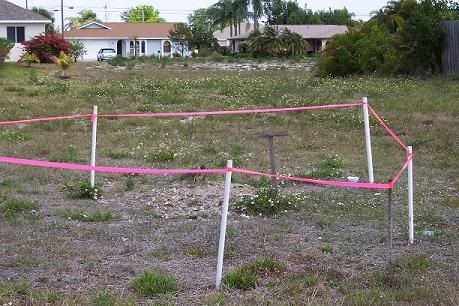
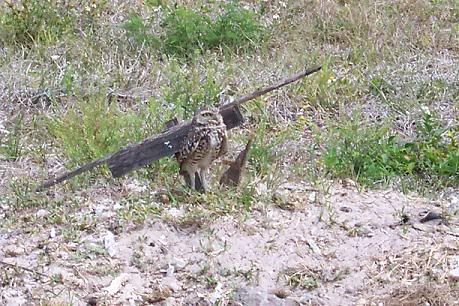
When I was living in the cape during the rainy season I would feed the owls that gathered in the TJ Max parking lot right on Del Prado Blvd. Sometimes 20 owls would gather.I would throw them white mice and they wouldn't know what exactly to do with them. As for monitors eating up the owls and wiping them out, nope. This is the typical scare/Sympathy tactic used by activist and their supporters to alarm the public and hide the facts.

For some reason people seem to think or want to make others think that these animals don't possess any type of effective defensive strategy against aggressive predators. If that was the case they would have been gone along time ago. The capes population of aggressive nest robbing predators, raccoons, skunks, snakes, foxes (are extremely common ), hawks, eagles , large owls and domestic predators , dogs and cats is thriving and so is the capes Owl population. The pics are of a few owls that have taken advantage the way many have of the habitat destruction . The swampy wetlands that did not support these owls were replaced by high and dry housing developments that created great owl habitat. These owls no more belong were they are then the monitors but the old eco system is completely gone and the new one is in place.

Ernie Eison
WESTWOOD CARES REPTILE FARM INC.


bob Jan 24, 2010 12:17 PM

You do bring up some valid points, I live in the north part of the country and only know what I read. I do believe that the owls maybe only one small issue, as this viable non native population of niles or other species grows we would see more issues that have not happened yet. All we have to go by is history and the toads in Australia are a good example of what can happen with non native species introduction. Their is no reason to comment anymore on this subject as there is nothing anyone can say that will make this situation natural/normal or acceptable. Playing the devils advocate will not change the truth of what is occuring. Making keepers responsible is the goal to avoid further issues such as this one.
Bob

wstreps Jan 24, 2010 07:08 PM

Their is no reason to comment anymore on this subject as there is nothing anyone can say that will make this situation natural/normal or acceptable. Playing the devils advocate will not change the truth of what is occurring. Making keepers responsible is the goal to avoid further issues such as this one.

Maybe from your current perspective there is no reason to comment anymore and thats fine, but there is a lot to be added. Starting with the conflicts that occur between sound fact based biological science and the corruption and convolution that takes place, when learned philosophies and personal agenda are incorporated and facts ignored. All to common place. Its ridiculous to think that keepers will become more responsible. People will always be people and as with any segment of society there will always be screw ups. Again, if looked at factually the number of incidents involving reckless keepers when compared to the overall number of animals being kept is very small. The reality is these incidents are intensely magnified , things blown way out of proportion, fears played upon, all resulting in what we have now, thousands of innocent pet owners, breeders and private business's at risk of being thrown under the bus, all in the name of saving us from the "boogie man." and disguised as environmental and societal concern. Idealism's, ill conceived precautionary principles etc.

Bringing ALL the facts to light and debunking fallacies is not playing devils advocate, its what is needed.

Using cane toads as an example.

In Australia, I have no first hand knowledge what the truth is,

Here in Florida cane toads were introduced and established 50 years ago to date their impact has been negligible. The walking catfish was supposed to be the end of Florida's native fish ..........nope, over and over doomsday scenarios have been painted by certain factions. What history has shown is that there's not a single introduced reptile species that has been proven to be overly destructive to the habitat it was introduced into. In addition reptiles make up the smallest percentage of invasives. In most cases the natural habitat was already in shambles. The Nile monitors are found in places where the entire habitat is entirely man made or at the very least drastically altered well past the point of what could be called "Natural." This is the case with most invasive. Many incorporate themselves into what ever exist for a current system and in time will become a "Natural" part of it, not decimate it.

as this viable non native population of Niles or other species grows we would see more issues that have not happened yet.

Monitor sightings have been steadily declining. The last I saw they were down by 50% from what they were in 04. Im not convinced the drop off if any has been that dramatic but I will say the monitors certainly have not become more abundant. The recent freeze could have wiped out a good number as well. True the lizards burrows might have protected some but iguanas also burrow and I have found dead animals that have lived in the same place for ten years. Its to early to tell.

Ernie Eison
WESTWOOD ACRES REPTILES FARM INC.

twillis10 Jan 24, 2010 10:05 PM

This is just my opinion, but I feel that the type of people who would let there animals go in the wild are the kind of people who will still illegally keep these animals. You can make it completely illegal to own large constrictors/monitors but these people will still own them. it's not that hard to hide them. The only people any laws like this will effect are good keepers. So really even if there was a problem, there really isn't a way to take care of the real problem.

nevermind Jan 25, 2010 06:12 AM

Just like gun laws.

Calparsoni Jan 25, 2010 10:41 AM

I think you've got it a bit wrong on that. first actually living in Fl. and having been opposed to some of the details of fl.'s roc law and yet still supportive of the concept I have some insights here. One of the things that really was never addressed was the roc thing is that while it is true that irresponsible people turning their pets loose are part of the problem they were not the whole problem. There have been cases of careless reptile dealers who either had things escape or in the case of one here in central fl. actually deliberately released unhealthy imports in hopes that they would recover and could be recaptured later.BTW I witnessed this latter scenario first hand(savannah monitors) and reported it to FWC and I don't believe anything was ever done about it as the person is still in business many years later. There is now a population of red-headed agamas at one of his former locations. I also remember witnessing first hand an individual at a reptile dealer in S. fl. actually chasing off some kids who were trying to catch some lizards (same species oddly enough) on the outside of the fence that surrounded their facility. I also remember A friend who once was looking through a copy of Dick Bartletts book that had the range maps for all the non-native reptiles in it and joking about how the ranges all seemed to coincide with where particular importers are. I am not trying to paint all importers and dealers with the same brush but some of the irresponsibles one bear some of the blame for what we are seeing now.
Now as for the roc law..... I have an issue with the idea of the govt. telling me that I need to pay $100 annually to keep animals that I have kept for years (Hypothetically speaking as I currently keep no rocs at this time but I think it is only a matter of time before water monitors go on the list.) That I HAVE to put micro chips in my animals that I am opposed to on personal religious grounds being in my household. The icing on the cake is that I need to give up my 4th amendment right to unreasonable search and seizure and allow officials access to my house at any time they want so they can look at my cages. All that said I like the idea of having someone who is interested in getting into keeping large snakes and perhaps some of the larger monitors having to jump through some
hoops before they first purchase one. I am well aware that the other side of the problem with feral exotics is that that some of the problem species (burms and niles in particular) have been cheaply available as juveniles to people who have no idea what they are getting into, of course we all know where that can lead in some instances. Anybody can get the permits btw you pay them $100 answer a few questions and they give you one then you just have to give your pet the mark of the beast and make sure your caging is ok and have a disaster plan. Most people won't bother to go through that much trouble and you see very few burms or niles in the pet stores these days and the other species were generally specialty items anyway. Needless to say they just buy something else. I did not see all that many rocs at the daytona show this last year I think it has had a good effect on the casual purchase of such animals. The law is not perfect as I said I have some issues with it their amnesty day thing is flawed. You can turn your animals in and get amnesty but if you want to keep your pet and come into compliance there seems to be no amnesty available which is a problem when the state admits they believe the level on non-compliance is around .
I would have rather seen the roc thing be more like hunting or diving or boating where you have to take a small course (for a fee obviously so state gets more money to blow) and get certified before you can purchase rocs and then not have to deal with the more invasive measures of the law. But either way flaws aside I think the system they have will cut down on irresponsible people purchasing these animals and then turning them loose.

twillis10 Jan 25, 2010 06:59 PM

That would be a great idea to do something like getting a hunting license. Im not at all against any problems being taken care of im just worried they will try forever and only hurt good, responsible keepers. If anything is ever done correctly its going to take true experts from the inside. real people with real ideas.

bob Jan 25, 2010 06:59 PM

Very good point.
Bob

lwcamp Jan 25, 2010 01:15 PM

>> What history has shown is that there's not a single
>> introduced reptile species that has been proven to be
>> overly destructive to the habitat it was introduced into.

Ahem. Brown tree snake. Guam.

Luke

bob Jan 26, 2010 06:47 PM

I think the toads in Australia have proven to be a bad situation, many of the native herps die after ingesting them, this would include varanid species. The niles in Fl have proven to eat burrowing owls which are endangered and like someone said habitat loss for the owls is the main reason for their low numbers but a breeding population of hungry niles does not help the situation. Eliminating some of the many risks to endangered species can only be seen as living in the solution or trying to. I think by a bunch of herpers making an effort to educate the general public herpers on the risks of releasing non native herps into the local wildlife populations would at least prove to the lawmakers that we do care and are not the ignorant crowd of people we are painted up to be. The problem now is nothing [or next to] I know of is being done by any of the herper assosiations,groups,clubs ect. to counteract the problem.
Bob

WSTREPS Jan 28, 2010 08:53 AM

I should have specified via the pet trade. But since the poster child invasive has been introduced into the conversation. Its interesting to note that all the "information" as to the cause and effect of the brown tree snake on Guam. Is sourced from people who have built their careers and generated incredible amounts of funding out of promoting this monster. A lot of things have happened on Guam in addition to brown tree snakes that turned the tide for some of its native species. Im not saying that the tree snakes didn't do a lot of damage in what was is a pretty unique situation, I don't know all the facts, I will say the more I researched it, the more I question what's been put out. It could all be true but its a good bet based on what Ive seen that much of it was fudged at least in some way.

Not only was this a pretty unique situation for the snakes but it was also a pretty unique situation for Federal wildlife biologist Gordon Rodda. This guy created a very impressive career for himself on the coattails of the brown tree snake and Guam.

How much "burrowing owl hype" has been presented? No body knows there wasn't any independent study. Nothing was ever independently tested, surveyed or evaluated. Everything we know about the tree snakes and Guam has been filtered thru the same source that is telling us we will have Burmese pythons in Delaware

Burrowing Owls are NOT listed as an endangered species in Florida they are listed as a "species of special concern" You can find documents stating the demise of Florida's burrowing Owls dating back to the 50's but ..................we still have plenty of owls today. Hum................................

These animals have a huge range that spans across the US down to the tip of South America. Interesting to note that these owls manage to thrive side by side with large nest robbing predatory lizards, Tegus. In large parts of their range.In the US the overlapping ranges between the Owls and Nile monitors is represented by only small fragment of the owls range in Florida.

In some places the owls range is expanding due to forest being replaced with farm land. Sound familiar? As I pointed out habitat isn't being destroyed its being created for the owls. This new world is also good for a number of other species including invasive types and equally bad for others. Im not saying invasive don't sometimes create problems what Im saying is I think its important to a have true picture of what's really going on. Knee jerk reactions are the direct result of people being mislead and not knowing the truth, the facts. These knee jerk reactions like environmental change benefit some but eliminating others.

Ernie Eison
WESTWOOD ACRES REPTILE FARM INC.

jburokas Jan 29, 2010 10:37 PM

You are correct they are currently a species "of concern" and not critically endangered. There are only estimated to be about 5,000 in Florida (heavily in Cape Coral) and they are recognized as a distinct subspecies from the western US populations, so they are a concern here with those types of numbers. Seeing them in your yards can be displacement from preferred habitat and the animals adapting, but I wouldn't go calling this humans "helping" them. I think they move to whatever they can find and "settle" on dry, sandy scrub near houses if that's what's available to them. When Cape Coral first started developing for housing, commerce, etc yes, they cleared out dry scrub land and filled in some wetlands and the Owls probably got an advantage. But once those lots start contracting out and building ensues, the birds are driven off of the property in most cases (permits obtainable in non-mating season to fill in the holes believe it or not). Some people have to rope off the area, but will sod their yards (along with pesticides and fertilizer to keep that St. Aug looking green and cinch bugs out) right up to the burrow entrance legally. So I wouldn't be too hasty to say the development helps them in the grande scheme. Concrete and asphalt is not habitat, open sandy scrubland is. Open sandy land is prime subdivision human habitat here.

Getting back to the Nile Monitors, I would presume this shy, wary species would stay tight to their mangrove and canal habitats where they are normally seen for the most part. There is a ton of food for them right there with crustaceans, mollusks, waterfowl, etc etc without patrolling open, dry, sandy highland areas for the most part. Most sightings and captures are very close to the canal and preserve island in one particular area of homes.

wstreps Jan 30, 2010 07:40 AM

Concrete and asphalt is not habitat, open sandy scrubland is. Open sandy land is prime subdivision human habitat here.

Concrete and asphalt is not habitat exactly but they sure use these places as easy hunting grounds, open sandy scrubland might be the owls preferred natural habitat but if given a choice they like the stuff we build just as much and maybe more,

Golf courses are very popular with the owls and Florida has more golf courses then anywhere in the world. In addition the birds aren't just existing on vacant lots that are waiting to be contracting out, they are found in old firmly established and developed residential areas. Development can certainly benefit a native species,

Im familiar with both the taxonomical status of these birds and population estimates, both are subject to speculation . The mythical population estimate is one way that can be used to influence people into seeing things your way, Dean Rippa wrote an interesting piece called, degenerated science.Its definitely worth reading.

This resource is based on the following source:

Kale, H. W., II, B. Pranty, B. M. Stith, and C. W. Biggs. The atlas of the breeding birds of Florida. Final Report. Florida Game an
Fresh Water Fish Commission, Tallahassee, Florida.

The center of the Burrowing Owls range in Florida remains as it was in the early 1900s the prairies of Osceola,
DeSoto, and Okeechobee counties. However, since the 1920s, and fairly rapidly since the 1950s, Burrowing Owl have expanded their range to the north and south as these areas have been cleared for cattle grazing and land development.Because much of its native habitat has been converted to other uses, the Burrowing Owl is listed as a Species of Special Concern in Florida (Wood 1991). Fortunately, it readily adapts to human-made habitats.

Ernie Eison
WESTWOOD ACRES REPTILE FARM INC.

Site Tools